













By Sophia Richards
If the soundtrack of your home lately is a loop of “That’s mine!”, “She’s touching me!”, and the particular shriek only a little brother can produce, come sit by me for a minute. Sibling rivalry is one of the most exhausting, most normal, and most misunderstood parts of raising more than one child, and almost every parent I have ever talked to hits a season where the bickering feels constant and they quietly wonder, “Do my kids even like each other?” They do. I promise they do. What you are hearing is not a family that is broken; it is two or three little people learning, loudly, how to share a world, a home, and the one thing they all want most, which is you.
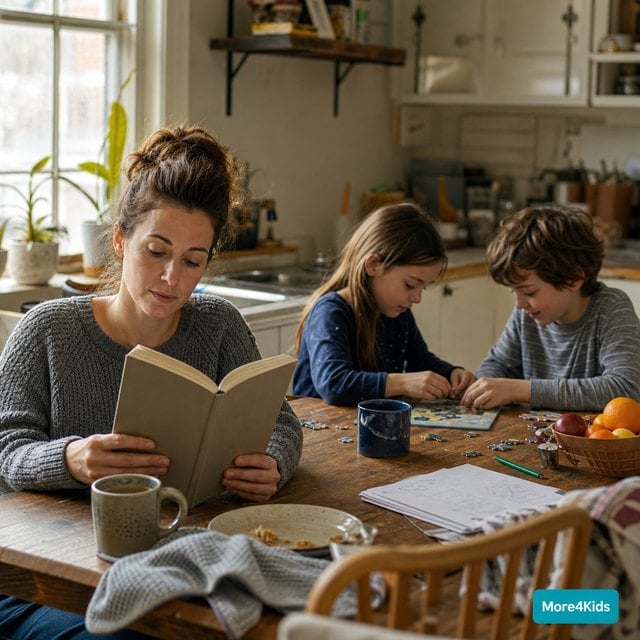
Here is what I want to lead with, because I know how worn down that endless refereeing makes you feel by dinnertime. Some sibling rivalry is completely normal and even healthy. When your kids squabble over the good spot on the couch, they are practicing how to stand up for what they want, how to negotiate, how to lose and recover, and how to make up afterward. Those are enormous life skills, and the living room is the safest possible place to fumble through them. Our job is not to erase every disagreement, which is neither possible nor good for them. It is to keep the fighting from turning cruel, to teach them the tools to work things out, and to protect the relationship underneath the noise.
As a mom of three and a former early-childhood educator, I have broken up more sibling battles than I could ever count, refereed fights over things as absurd as who got to press the elevator button, and also watched those same kids fall asleep tangled together like puppies an hour later. What I have learned is that easing sibling rivalry is not about a stricter punishment or finally figuring out “who started it.” It is a handful of calm, consistent shifts in how you respond, repeated until your children slowly build the skills to handle each other. Below are the seven that actually work.
Why Siblings Fight in the First Place
Table of Contents
Before the how-to, it helps to understand what is really driving the conflict, because sibling rivalry makes a lot more sense once you can see what your kids are actually fighting about, which is almost never the toy. Underneath most sibling battles is a competition for the most precious resource in the house: your attention, your approval, and the sense of being loved best. Nemours KidsHealth explains that sibling rivalry often starts even before a second child arrives and continues as kids grow and compete for everything from toys to parental attention, shifting as each child hits new developmental stages with new needs.
Layer on top of that a few very human ingredients. Kids have wildly different temperaments, so an intense, fast-moving child and a slow-to-warm, sensitive one can rub each other raw just by being themselves. They are at different stages, so a preschooler who cannot yet share collides with a big kid who cannot stand having their things touched. And they take their cues from us; children learn how to handle conflict largely by watching how the adults around them handle it. When you add the ordinary fuel of hunger, tiredness, boredom, and too much togetherness on a long rainy afternoon, you get the perfect conditions for sibling rivalry to flare.
So when the fighting erupts for the fifth time before lunch, try to read it as information rather than as evidence that your kids are ungrateful or that you are doing it all wrong. The rivalry usually spikes around predictable pressure points: a new baby stealing the spotlight, one child feeling that another gets more or gets away with more, transitions, and those depleted late-afternoon hours. Seeing the pattern is what lets you stop playing whack-a-mole with every argument and start changing the conditions that produce them.
1. Stop Refereeing Every Single Fight
The instinct when the yelling starts is to rush in, demand “who started it,” decide who was wrong, and hand down a verdict. I did this for years, and here is what I eventually noticed: it made the fighting worse, not better. When you become the family judge, you accidentally teach your kids that the fastest route to what they want is to run to you and make the best case against their sibling. You become the prize they compete for, and every squabble turns into a courtroom.
Instead, unless someone is in danger, try stepping back and letting them attempt to work it out first. If you do step in, come in as a calm coach, not a judge. Describe what you see without assigning blame: “You both want the same tablet, and you are both really frustrated.” Then hand the problem back to them: “That is tricky. What can we do so this feels fair to both of you?” You will be amazed how often kids land on a solution, taking turns, setting a timer, finding a second thing to do, once they realize you are not going to solve it for them. This is exactly the approach the American Academy of Pediatrics points to in its guidance on building healthy sibling relationships: coaching cooperation and conflict resolution rather than refereeing teaches skills that last a lifetime. Refusing to referee is not neglect; it is trust, and it is one of the single most powerful things you can do to shrink day-to-day sibling rivalry.
2. Set Clear House Rules Against Hurting
Stepping back from refereeing does not mean anything goes. There is a firm floor under all of this, and it needs to be crystal clear: we do not hurt each other. No hitting, no kicking, no name-calling, no breaking each other’s things. Those are the non-negotiables, and they are different from ordinary bickering. Your kids can be annoyed, can disagree loudly, can even say “I am so mad at you right now,” but the moment it turns physical or cruel, you step in calmly and stop it every time.
The key word there is calmly, and the second key word is consistently. KidsHealth notes that families do best when the rules are clear and the follow-through is predictable, so kids learn that the limit is the limit no matter who is enforcing it or how loud the day has been. Decide on your simple house rules, say them often in peacetime, not just mid-battle, and respond the same way each time they are crossed. If a rule is broken, keep the consequence calm and connected to the behavior rather than harsh, much like the steady limits in our guide to gentle parenting discipline techniques. Predictable, unshaming enforcement is what makes the rules feel safe rather than arbitrary, and safety is what finally lowers the temperature on chronic sibling rivalry.

3. Fill Each Child’s Attention Cup With One-on-One Time
If most sibling rivalry is a competition for you, then one of the most effective things you can do happens away from the fighting entirely, in small pockets of undivided, one-on-one time with each child. A child who feels genuinely seen and full of your attention has far less need to fight their sibling for it. When the tank is empty, kids will take negative attention over none at all, and picking a fight with a brother is a reliable way to summon a parent instantly.
It does not have to be elaborate or long. Ten or fifteen unhurried, phone-down minutes where you follow one child’s lead, reading their favorite book, building their weird Lego creation, letting them tell you the entire plot of a show, does more than an expensive outing. What matters is that it is predictable and truly theirs, a little island where they do not have to share you with anyone. I like to name it out loud, “This is our special time,” so the child registers that the connection is real. Protecting these small rituals of attention is quiet, behind-the-scenes work, but it drains a huge amount of the fuel that feeds sibling rivalry, because so much of the fighting was really a bid for exactly this.
4. Aim for Fair, Not Identical
Somewhere along the way many of us absorbed the idea that fair means the same, so we cut the sandwich into perfectly equal halves and buy two of everything to head off the “that’s not fair!” chorus. But chasing sameness is a trap; it teaches kids to stand there with a measuring cup, watching their sibling’s portion instead of tending to their own needs, and it is exhausting and impossible to sustain. Fair does not mean identical. Fair means each child gets what they actually need.
Your children are different people with different needs at different ages, and treating them as interchangeable does none of them any favors. One might need more help with homework while another needs more comfort at bedtime; one earns a later curfew because they are older, and that is genuinely fair even when it is loudly protested. The AAP’s work on healthy sibling bonds emphasizes meeting each child as an individual rather than running the family like a vending machine of equal outputs. When the “it’s not fair” complaint comes, you can validate the feeling without caving to the math: “You wish you could stay up as late as your sister. When you are her age, you will. Right now your body needs more sleep because it’s still growing.” Teaching kids that love is not a pie to be sliced, that there is enough for everyone and they will each get what they need, is a deep antidote to sibling rivalry.
5. Teach the Skills to Work It Out
A huge amount of sibling rivalry happens simply because kids do not yet have the skills to do anything else. They want the same toy and have no idea how to negotiate, so they grab. They feel wronged and have no words, so they hit. Much like teaching a toddler to use words instead of fists, a big part of stopping sibling rivalry is patiently handing your kids the tools of conflict resolution, over and over, in calm moments and hot ones.
Coach the concrete moves. Teach them to take turns and use a timer, to trade instead of grab, to say “Can I have it when you’re done?” and to walk away and cool off before things boil over. Narrate feelings on both sides so each child starts to see the other as a person with wants too: “You are frustrated he knocked your tower, and he is sad because he wanted to play and didn’t know how to ask.” This slow work of naming feelings and building empathy is the same muscle behind emotional regulation for kids, and it is the long game that finally lets your children handle each other without you in the room. When big feelings are running the show, our guide to helping kids manage big emotions has calming tools you can teach before the next blowup, so both kids arrive at the conflict with a little more capacity to cope.
6. Catch Them Being Kind and Drop the Labels
We are wired to notice the fighting and to go quiet when things are peaceful, which means our kids get a burst of our energy for conflict and near silence for cooperation. Flip that. Make a point of noticing and naming the good moments: “You two figured out how to share the swing all by yourselves, that took real teamwork,” or “I saw you help your brother reach his cup. That was so kind.” Kids do more of what gets warm attention, and shining a light on their moments of connection quietly teaches them that getting along feels good and gets noticed.
Just as important, drop the labels and the comparisons, because they pour gasoline on sibling rivalry. Casting one child as “the responsible one” and another as “the wild one,” or asking “why can’t you be more like your sister?”, locks kids into roles and turns them into competitors for a fixed identity. Comparison tells a child they are being ranked, and ranked children fight to win. Speak to each child about their own behavior and their own strengths, never measured against a sibling. Over time, this steady, comparison-free warmth helps siblings see each other as teammates rather than rivals, which quietly starves sibling rivalry of the competition it feeds on.

7. Get Ahead of the Triggers
So much sibling rivalry is not really about the argument you are watching; it is about the state your kids were already in when it started. Two children who are tired, hungry, bored, or cooped up together with nothing to do have almost no margin, and the smallest spark, one crossing into the other’s space, sets off a blaze. That means some of your most powerful anti-fighting work happens hours before any fighting, in the ordinary rhythms of the day.
Watch for your family’s reliable danger zones and plan around them. Protect sleep and keep snacks handy, because a hungry, overtired child has nothing left to share graciously. Give kids their own space and a little time apart when the togetherness gets too thick, since even siblings who adore each other need a break from constant proximity. Head off the classic flashpoints by giving each child a turn, a defined zone, or a clear plan before you hand over the one coveted thing. And build in enough physical activity and unstructured play that restless energy has an outlet other than needling a sibling. None of this makes your kids stop being kids, but it dramatically shrinks the number of moments where a fight is even likely, which is a far quieter fix than breaking up battle after battle. When one child is especially prone to digging in and pushing back, the steady strategies in our guide to the defiant child pair well with this trigger-proofing.
Sibling Rivalry at Different Ages
Sibling rivalry wears different clothes as your kids grow, so it helps to match your expectations and your tools to the ages in front of you.
- The new baby and toddler years: for a young child, a new sibling can feel like a demotion, and rivalry often shows up as regression, clinginess, or acting out rather than direct fighting. Keep the older child close, give them a special role, and expect some big feelings; a wave of extra tantrums after a baby arrives is common and manageable, and our guide to toddler tantrums can help you ride it out with more calm.
- Preschool and early school age: this is peak “that’s mine” and “she’s cheating” territory, because kids this age are intensely focused on fairness and possession while still short on impulse control. Lean hard on clear house rules, turn-taking, and coaching the conflict-resolution skills above; they can learn them now, but they will need a lot of reminders.
- Big kids and tweens: the fighting gets more verbal and more about identity, privacy, and being treated fairly relative to a sibling. Respect their growing need for their own space and things, involve them in setting family rules, and coach them toward handling more of the conflict themselves. This is also the age where teaching them to truly listen to each other pays off in fewer blowups.
The thread through every age is the same: keep the floor of no-hurting firm, coach the skills, protect each child’s sense of being loved for who they are, and expect a little more independence as they grow. The shape of sibling rivalry changes; the calm, steady response does not.
Rivalry, or Something More? When to Reach Out for Support
For the vast majority of families, sibling rivalry is a normal, if noisy, phase that eases as kids grow the skills and security to handle each other, usually with nothing more than the calm, consistent shifts above. But you know your children best, and it is always okay to ask for guidance. There is an important line worth watching: ordinary rivalry goes back and forth, with both kids sometimes winning and sometimes losing, and it does not leave one child chronically afraid. When one child is always the target, when the aggression is one-directional, deliberate, and meant to hurt or frighten, that has crossed from rivalry into sibling bullying, and it deserves a different, more active response.
It is worth a relaxed conversation with your pediatrician if the fighting is frequently physical to the point of real injury, if one child seems genuinely fearful of a sibling, if the conflict is not easing at all despite your steady efforts over time, or if it comes alongside other worries about a child’s mood, behavior, or development. Reaching out is not a sign that you have failed or that your family is uniquely broken; it is a sign of a tuned-in parent gathering more tools. Often a pediatrician will simply reassure you that what you are seeing is developmentally normal, and sometimes they will spot a piece you could not see from inside the daily chaos. Either way, you do not have to figure it out alone.
Frequently Asked Questions
Is sibling rivalry normal, or is something wrong with my kids?
For most families, sibling rivalry is completely normal and even healthy in moderation. When kids squabble and negotiate over toys, space, and attention, they are practicing real skills, standing up for themselves, compromising, and repairing a relationship afterward, in the safest place there is. It usually flares because children are competing for parental attention, are at different developmental stages, have different temperaments, or are simply tired and hungry. What is not typical, and worth a closer look, is when one child is always the target of deliberate, hurtful aggression, when a child seems genuinely afraid of a sibling, or when the fighting regularly causes real injury. That has shifted from ordinary rivalry toward bullying and deserves a more active response, and often a chat with your pediatrician.
How do I stop my kids from constant fighting?
There is no single trick, but the shift that helps most families is to stop refereeing every fight and start coaching. Unless someone is in danger, resist the urge to figure out “who started it,” and instead describe the problem neutrally and hand it back to them to solve: “You both want the same toy, that’s tricky, what can we do?” Pair that with clear house rules against hurting, plenty of one-on-one attention for each child so they are not fighting for it, and patient teaching of skills like taking turns and using words. Getting ahead of the triggers, hunger, tiredness, and boredom, prevents a huge share of the battles before they start. It is slow, repeated work, but it steadily lowers the constant fighting and softens the sibling rivalry underneath it.
Should I figure out who started the fight and punish them?
Usually not. Playing detective and judge tends to make sibling rivalry worse, because it teaches kids that the way to win is to run to you with the best case against their sibling, which turns every disagreement into a competition for your verdict. Unless there is a clear safety issue where one child is genuinely hurting another, it is more effective to treat the fight as a shared problem: stop any hurting calmly, acknowledge both kids’ feelings, and coach them to work out a solution together. Save consequences for broken house rules like hitting or name-calling, not for the ordinary crime of “he had it first.” Coaching, rather than convicting, builds the skills that actually reduce the fighting.
My older child is jealous of the new baby. What can I do?
Jealousy of a new baby is one of the most common and understandable forms of sibling rivalry, because from the older child’s point of view, someone new just arrived and absorbed a huge amount of your attention. Lean into extra connection with your older child through small pockets of one-on-one time that are just theirs, and give them a meaningful role as the big helper so they feel valued rather than displaced. Expect some regression or acting out, and meet it with patience instead of punishment; it is a bid for reassurance, not defiance. Name their feelings out loud, “It’s hard to share Mommy, and you can still tell me when you feel that way,” so the jealousy has words instead of coming out sideways at the baby.
How can I get my kids to actually get along, not just stop fighting?
Reducing the fighting and building real closeness are two sides of the same coin, but the closeness grows fastest when you actively nurture it. Catch and warmly name the moments they cooperate or show kindness, because kids do more of what earns your genuine attention. Create chances for them to be a team rather than competitors, a shared fort to build, a game where they are on the same side, a chore they tackle together, so they stack up positive experiences of each other. Drop comparisons and fixed labels entirely, since ranking siblings turns them into rivals. And keep protecting each child’s individual sense of being loved for exactly who they are; siblings who feel secure, not measured against each other, have far more room to actually enjoy one another.
The Bottom Line
Sibling rivalry is common, normal, and very much something you can soften, not with a stricter punishment or by finally cracking the case of who started it, but with a handful of calm, steady shifts repeated with love. Stopping the constant fighting is a slow teaching project, not a one-time fix. Step back from refereeing and coach instead, hold a firm floor of no-hurting, fill each child’s attention cup with one-on-one time, aim for fair rather than identical, teach the actual skills of working it out, catch them being kind while dropping the labels, and get ahead of the triggers like hunger and tiredness.
Pick just one of these to focus on this week. Maybe it is ten minutes of undivided time with each child, or biting your tongue the next time you are tempted to play judge and instead asking, “What can you two do to solve this?” Small, warm, repeated shifts are what teach siblings that they are teammates, not rivals, and that there is more than enough love to go around. Your kids will not become best friends overnight, and honestly, they are not supposed to get along all the time. But with your patient, steady guidance, the constant fighting really does fade, and the skills you are building now, negotiating, empathizing, repairing, will serve them in every relationship for the rest of their lives. For more calm, parent-to-parent guidance, our whole parenting section is here to walk it with you.
Related Articles
- Gentle Parenting Discipline Techniques
- Emotional Regulation For Kids
- How To Help Kids Manage Big Emotions
- How To Deal With A Defiant Child
- How To Handle Toddler Tantrums
- How To Get Kids To Listen

Meet Sophia Richards Sophia Richards is an early childhood educator, passionate writer, and the proud mom of three energetic kids. With a degree in Education and over a decade of hands-on classroom experience, Sophia bridges the gap between professional teaching strategies and everyday family life. At More4Kids, she translates complex child development concepts into practical, actionable parenting tips that families can use at home.
Whether she is sharing positive reinforcement techniques, educational crafts, or honest reflections on the chaos of raising three children under one roof, Sophia’s goal is to empower parents to foster resilience and joy in their kids. When she isn't writing or lesson planning, you can find her organizing neighborhood scavenger hunts or trying out new kid-friendly recipes.
Areas of Expertise: Early Childhood Education, Positive Parenting, Sibling Dynamics, Educational Play, Family Wellness.

Add Comment