












By Sophia Richards
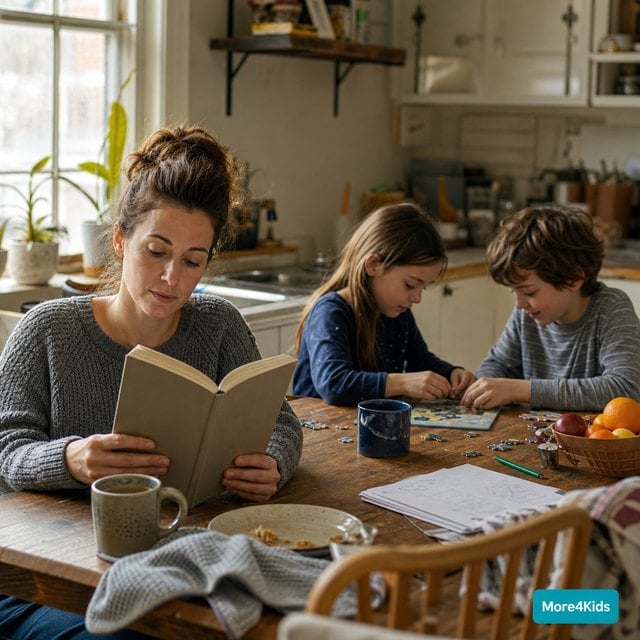
The sunroom was quiet for approximately ninety seconds. Then came the pounding of small feet down the hall and the announcement, delivered at the volume of a fire alarm: “MO-om! He’s looking at me with his weird face AGAIN.” Before I could answer, the other one arrived, breathless and wounded: “She said my drawing was ugly, well she THINKS it, I can tell.” My oldest wandered in a beat later, purely to report that his little sister had left one sock on the stairs, a crime he clearly felt I needed to know about immediately. It was 8:40 in the morning. If you have a small person who narrates every rule-break in the house like a tiny courtroom stenographer — who tugs your sleeve while you’re on the phone to tell you their brother is chewing too loudly, who has appointed themselves the family’s unpaid hall monitor — pull up a chair. I have been the very tired judge in that courtroom more mornings than I can count, and I want to walk you through what actually helps when you’re figuring out how to stop a child from tattling, gently, without teaching them to swallow the things that genuinely matter.
Here’s the reassuring truth I wish someone had handed me back when the tattling felt relentless: your little reporter is not being a bad kid, and you are not raising a snitch. Tattling is one of the most normal, even logical, stages of childhood there is. We spend years teaching kids the rules — use your inside voice, keep your hands to yourself, share your toys — and then we’re surprised when they take those rules so seriously that they report every single infraction they witness. To a young child, telling you that someone broke a rule feels like the right thing to do; many kids genuinely expect a little praise for it. The trouble is that they can’t yet reliably tell the difference between “someone is about to get hurt” and “someone is merely annoying me,” so it all comes out in the same urgent stream. Your job isn’t to shush the tattling out of them. It’s to gently teach them the difference between tattling and telling — and to hand them the words and confidence to solve the small stuff themselves. Let me show you what’s really going on when your child tattles, and seven calm, doable ways to help.
Why Kids Tattle in the First Place
Table of Contents
The first thing to hold onto is that tattling isn’t a sign of a mean streak or a flaw in your parenting — it’s a sign that your child has been paying close attention to everything you’ve taught them. Young kids are, by nature, deeply focused on their own experience and not yet able to easily step into someone else’s shoes. That’s not selfishness; it’s just where their brains are. So instead of reasoning through the nuance of a situation, they lean hard on the rules, because the rules are simple, clear, and something they can actually master. As the folks at PBS KIDS for Parents explain in their wonderful guide to whether it’s tattling or telling, “Rules work well with young children because their cognitive and moral development allows for mastering a set of simple instructions, and they are motivated to receive praise from adults for following them. For these reasons, kids usually believe it’s the right thing to do to tattle on kids who break the rules.”
Read that again, because it’s freeing: your child usually thinks they’re being helpful when they tattle. PBS notes that kids “may even think that they are being helpful when they tattle, and might expect praise for it.” From inside their little heads, they’ve spotted a broken rule and dutifully brought it to the authorities — you. This puts us parents in a genuinely tricky spot, one PBS names honestly: we need our kids to understand there’s an unspoken rule not to tattle on every small thing, and at the very same time to understand that we absolutely do want them to report the situations that matter. That’s a confusing, almost contradictory ask for a young child, and it’s worth remembering how illogical it must seem to them when we sigh at the very reporting behavior we spent years encouraging.
It also helps to know that kids sometimes tattle for reasons that have nothing to do with the rule at all. Sometimes the tattling is really a bid for your attention and connection — a guaranteed way to get you to stop, turn, and focus on them for a moment. Sometimes it’s about a sibling squabble where they want the other kid to get in trouble, plain and simple. And sometimes a child who feels powerless in a moment reaches for the one lever they know works: bringing in a grown-up. None of these make your child manipulative or bad. They make your child young. Once you see the tattling for what it usually is — a normal developmental stage, tangled up with a hunger for your attention and a still-forming sense of what’s genuinely serious — it gets a lot easier to respond with patience instead of exasperation, the same calm, realistic lens we try to bring to all the everyday realities of family life. And responding well is the whole game, because it’s your calm, consistent responses that gently shape the tattling down over time.
Tattling vs. Telling: The Difference That Changes Everything
If there’s one idea to build this whole thing around, it’s the difference between tattling and telling — because once your child truly gets it, most of the rest falls into place. PBS KIDS for Parents draws the line about as clearly as it can be drawn. “Tattling,” they write, “is reporting a peer’s wrongdoing, when the situation is safe and the child can handle it herself.” “Telling,” on the other hand, “is alerting adults that the situation is not safe and/or your child needs help managing the situation.” Or, in the version that finally stuck in my house: tattling is when you’re trying to get someone in trouble, and telling is when you’re trying to get someone out of trouble or keep them safe. PBS frames the heart of it beautifully — “Tattling to get a peer in trouble can be mean-spirited,” while “Telling to protect a peer from harm is civic-minded or showing concern for others.”
The reason this matters so much is that a lot of well-meaning parents accidentally overcorrect. Worn down by the constant reporting, we start snapping “stop tattling!” at everything — and a child who hears that often enough learns a dangerous lesson: that coming to a grown-up is bad, full stop. That’s the last thing we want, because the day something genuinely serious happens — someone’s getting hurt, someone’s being bullied, someone’s touching them in a way that scares them — we need that child to run to us without a flicker of hesitation. So the goal is never to shut down the telling. It’s to help your child sort their reports into the right buckets, so the small stuff gets handled small and the big stuff comes straight to you. Teaching that difference is a gift that protects them, and it’s the reason “how to stop a child from tattling” is really a question about teaching, not silencing.
How to Stop a Child From Tattling: 7 Gentle Ways to Teach the Difference
None of these will turn your little hall monitor into a serene diplomat overnight, and none of them will stop tomorrow morning’s sock report. Think of them as gentle, repeatable habits — small, consistent responses that, over weeks and months, teach your child the difference between tattling and telling and hand them the confidence to handle the small stuff themselves.
1. Start by understanding it’s normal — and stay calm
The single most important shift happens inside you, before you say a word. When you can see the tattling as a normal stage rather than a personal irritation or a character problem, your whole tone changes — and your tone is what your child reads first. Remember that from their point of view, they’ve spotted a broken rule and brought it to you in good faith, often expecting a little credit. If you snap, sigh, or roll your eyes, the lesson they absorb isn’t “handle small things yourself” — it’s “Mom gets mad when I come to her,” which is precisely the opposite of what you want long term. So take the breath first. Nothing about a sock on the stairs or a weird face across the room requires an urgent reaction from you.
Staying calm also keeps you from accidentally rewarding the tattle with the very thing many kids are fishing for: a big reaction and your full, dramatic attention. When you respond to a minor tattle with a neutral, unbothered “Okay, thank you for letting me know — is anyone hurt or in danger?” and then let it quietly deflate, you’re teaching your child that small reports don’t produce fireworks. It doesn’t mean being cold; it means being warm and underwhelmed. This is the same patient, low-drama presence that helps in so much of parenting, the kind we lean on in helping kids manage big emotions — you’re the calm the room borrows. Get your own reaction settled, and everything after it works better.
2. Teach the tattling-vs-telling difference in kid language
Once you’re calm, teach the concept directly — but in words a child can actually hold. Grown-up definitions won’t land; a simple, repeatable phrase will. In our house it became: “Are you trying to get someone in trouble, or trying to get someone out of trouble?” Other families use “Is someone in danger, or just being annoying?” or “Is this a big deal or a little deal?” Pick one, keep it short, and use it every single time until your child can say it back to you before you even ask. The consistency is what does the teaching.
Concrete examples land far better than abstract rules, and PBS offers some perfect ones. They contrast tattling — “He touched my lunchbox!” — with telling — “She took my lunch!” — and tattling — “She took one of the blocks I wanted to use!” — with telling — “He pushed the block tower on top of me!” As PBS points out, in the tattling examples “neither scenario caused an unsafe situation and might have been solved if children used their words,” while the telling examples carry “potential for a harmful situation that would best be resolved by an adult.” Sit down when everyone’s calm — not mid-tattle — and play a little sorting game with examples from your own house: “Someone budged in line — tattling or telling? Someone’s climbing the bookshelf and could fall — tattling or telling?” Kids genuinely enjoy this, and you’re building the mental filter they’ll use in the heat of the moment.

3. Give them the words to solve small problems themselves
A huge share of tattling happens simply because a child doesn’t yet know what else to do. Something small and annoying happens, they don’t have the words to handle it, so they outsource the whole thing to you. The fix is to give them the words. PBS puts it plainly: “Children may be able to solve a minor problem themselves if they can identify the problem and use their words effectively to express their frustrations.” So instead of solving it for them, coach them toward their own script. When your child reports that someone’s rushing them at the water fountain, PBS suggests helping them learn to say, “It’s my turn.” When a friend is being unkind, they can practice, “That’s my friend. Don’t talk to him like that!”
The magic sentence in my house became, “That sounds like a problem you can solve. What could you say to her yourself?” — and then I’d wait, and often help them rehearse the actual words. The first few times it feels slower than just refereeing it yourself, but you’re teaching a skill that pays off for life. This is also where you draw the honest line for them: using your words works for the small stuff, PBS notes, “But if it keeps happening, or the bully is a bigger kid or is being scary, then it’s time to tell the teacher.” So you’re not sending them off alone into anything unsafe — you’re handing them the first tool and being crystal clear about when to come get you. Every problem your child solves with their own words is a deposit in a confidence account, the same quiet, from-the-inside confidence that helps a child thrive. “I handled that myself” is a powerful thing for a small person to feel.
4. Don’t rush to rescue — coach instead
This one is especially true for tattling between siblings, and it’s the piece I got wrong the longest. When my kids came to me with their reports, my instinct was to swoop in, sort out who did what, and issue a ruling — which, it turns out, is exactly how you train children to keep coming back for more. The team at Nemours KidsHealth makes the point directly in their guide to sibling rivalry: when kids argue, “if possible, don’t get involved. Step in only if there’s a danger of physical harm. If you always intervene, you risk creating other problems. The kids may start expecting your help and wait for you to come to the rescue rather than learning to work out the problems on their own.” Every time I refereed a squabble that the kids could have sorted themselves, I was quietly teaching them that tattling to Mom was the fastest route to a verdict.

The alternative isn’t to ignore them — it’s to coach rather than intervene. KidsHealth draws that exact distinction: it’s fine to “‘coach’ kids through what they’re feeling by using appropriate words,” which “is different from intervening or stepping in and separating the kids.” And when you do step in, they advise, “try to resolve problems with your kids, not for them.” One more piece of their wisdom saved me a lot of pointless detective work: “Don’t put too much focus on figuring out which child is to blame. It takes two to fight — anyone who is involved is partly responsible.” So when the tattle is really a sibling turf war, resist the urge to hold court. Hand it back: “It sounds like you two have a problem to work out. I know you can find a fair fix. Come get me if someone could get hurt.” You’re teaching them, as KidsHealth puts it, the lifelong skills of “how to value another person’s point of view, how to compromise and negotiate, and how to control aggressive impulses.”
5. Always keep the door wide open for real telling
Here’s the guardrail that keeps everything else safe: your child must always, always know that when something is genuinely serious, telling you is not only allowed but exactly right — and will be met with warmth, never a “stop tattling.” This is the non-negotiable half of the lesson. As you gently discourage the small reports, you have to just as actively encourage the big ones, or you risk raising a child who’s learned to stay quiet when it counts. PBS captures the whole balance in one simple line worth repeating to your kids often: “If someone is about to be hurt, tell me. If no one is being hurt, try to work it out among yourselves.”
Say the “if someone’s about to be hurt, come to me right away” part out loud, on purpose, and repeat it. Make sure your child knows that telling you about danger, cruelty, bullying, or anything that scares or confuses them is never tattling — it’s brave, and it’s their job. I make a point of telling my kids, in calm moments, “There is nothing you could ever come tell me that would get you in trouble for telling me.” Because the stakes here go far beyond spilled juice: the same child who trusts you with the small serious things is the child who will come to you with the big ones. Keep that door not just unlocked but propped wide open, and make sure your child knows that when they walk through it about something real, they’ll always be met by the calm, steady grown-up they need — the kind of dependable listener we talk about becoming in how to get kids to listen, where listening runs both directions.
6. Praise problem-solving and real telling
We’re quick to correct the tattling and slow to celebrate the flip side — but if you want more of the good behavior, catch it and name it. When your child solves a small problem with their own words instead of running to report it, notice it out loud: “You told your brother it was your turn and you worked it out yourselves — that took real problem-solving, and I’m proud of you.” And when your child does tell you about something genuinely important — a friend who got hurt, a kid being picked on — thank them warmly and specifically for telling, even if it turns out to be nothing. You never want a child to regret having told you.
This is straight out of the PBS playbook, which recommends shaping the behavior through your responses: “A child who tattles can be reminded that the perceived rule breaking harmed no one and to return to play, whereas a child who tells can be rewarded for looking out for his peers.” That word — rewarded — matters. Kids repeat what gets warmly noticed. So make sure the warm noticing lands on the behaviors you actually want: handling small stuff independently, and speaking up about the things that matter. Over time, PBS notes, kids “will begin to use these social and problem-solving skills to avoid tattling, but also understand that being a good friend means involving adults when more help is needed.” That’s the exact grown-up you’re growing — one who can sort it out themselves and knows when to raise a hand for help.

7. Model it — and check your own reactions
The last one asks the most of us, because children learn far more from what we do than from what we say. If your kids regularly overhear you reporting other people’s small failings — griping about a neighbor’s parking, narrating a coworker’s every misstep, keeping a running commentary on who did what wrong — they’re absorbing a model of exactly the behavior you’re trying to gentle out of them. KidsHealth makes this point squarely about sibling conflict: “The way that parents deal with problems and disagreements sets a strong example for kids.” Kids who watch grown-ups handle friction directly and calmly are far more likely to do the same; kids who watch us stew, complain, and tattle to each other tend to pick up those habits too.
So let your kids catch you handling small annoyances directly and generously — going straight to the person, letting the truly minor stuff go, and speaking up plainly when something actually matters. And keep a gentle eye on your own reactions in the moment, because they’re teaching constantly. When you respond to a tiny tattle with a giant reaction, you accidentally make tattling thrilling; when you meet a real “telling” with warmth and action, you make honesty safe. Setting a few clear family ground rules together helps here too — KidsHealth suggests getting kids’ input on the rules, which “teaches kids that they’re responsible for their own actions … and discourages fixating on who was ‘right’ or ‘wrong.'” This is the same steady, expectations-first groundwork that keeps a household running gently, including staying intentional about the reflexive habits — like reaching for a screen to smooth over every squabble — that quietly shape behavior, the balance we dig into in how much screen time is healthy for kids. Model the difference between tattling and telling in your own life, and your kids will grow into it almost without noticing.
When Tattling Might Need a Closer Look
Almost always, a child who tattles constantly is simply a young child moving through a normal stage — and these gentle habits, plus time and maturity, will carry them out the other side. As kids grow and their empathy and social skills develop, the reflexive reporting naturally fades, and they start handling small problems and reserving grown-ups for the real ones. Try not to measure your child against the calmest kid in the class; measure them against themselves a few months ago, and you’ll usually see the change quietly arriving.
That said, part of loving your child well is noticing when the tattling might be pointing at something underneath. If your child’s tattling is relentless and seems driven by real anxiety, a deep worry about rules and getting things “wrong,” or a constant, almost desperate need for your attention, it’s worth gently looking closer at what need might be going unmet. And here’s the most important one: sometimes what looks like tattling is actually a child working up the courage to tell you something serious they don’t quite have the words for — that they’re being bullied, that a sibling conflict has turned genuinely mean or frightening, or that something happened that scared or confused them. Never wave those away as “just tattling.” KidsHealth notes that, rarely, conflict between kids can become “so severe that it disrupts daily functioning, or particularly affects kids emotionally or psychologically,” and in those cases it’s wise to loop in your pediatrician, your child’s teacher, or a mental health provider. Trust your gut. If something about the pattern feels less like a stage and more like a signal, a calm, no-alarm conversation with a professional who knows children is never an overreaction — it’s exactly what a tuned-in parent does.

Frequently Asked Questions
Why does my child tattle so much?
Because it makes complete sense from inside their head. Young children are wired to learn and follow rules, and they’re motivated by grown-ups’ praise for following them — so, as PBS KIDS for Parents explains, they “usually believe it’s the right thing to do to tattle on kids who break the rules,” and many even expect to be praised for it. On top of that, kids this age can’t yet easily tell the difference between “someone could get hurt” and “someone is just annoying me,” so it all comes out as one urgent report. Tattling is also sometimes a bid for your attention or a way to get a sibling in trouble. None of it means your child is mean or that you’re doing something wrong — it’s a normal developmental stage that gentle, consistent teaching will shape over time.
What's the difference between tattling and telling?
Tattling, as PBS KIDS for Parents defines it, “is reporting a peer’s wrongdoing, when the situation is safe and the child can handle it herself” — usually to get someone in trouble. Telling “is alerting adults that the situation is not safe and/or your child needs help managing the situation” — to keep someone safe or get real help. The kid-friendly version many families use is: tattling is trying to get someone in trouble; telling is trying to get someone out of trouble or keep them safe. PBS sums up the rule to teach your child simply: “If someone is about to be hurt, tell me. If no one is being hurt, try to work it out among yourselves.”
How do I stop my child from tattling without teaching them to stay quiet about serious things?
This is the key balance, and it’s worth getting right. As you gently discourage small tattling, you must just as actively encourage real telling, so your child never learns that coming to you is bad. Never respond to any report with a flat “stop tattling.” Instead, ask a calm sorting question — “Is anyone hurt or in danger?” — and route small stuff back to them with words to solve it, while warmly thanking them for telling you anything genuinely serious. Say out loud, often, that telling you about danger, cruelty, or anything scary is always right and will never get them in trouble. The same child who trusts you with small serious things is the one who’ll bring you the big ones.
At what age do kids stop tattling?
There’s no exact finish line, because it fades gradually as children’s empathy, perspective-taking, and social skills develop. Tattling is most intense in the preschool and early elementary years, when kids are focused on rules and can’t yet easily judge what’s genuinely serious. As they mature, PBS KIDS for Parents notes, kids “begin to use these social and problem-solving skills to avoid tattling, but also understand that being a good friend means involving adults when more help is needed.” Expect lots of variation from child to child and plenty of backsliding on tired, hungry, or stressful days. Your calm, consistent responses are what move it along.
Is tattling ever a sign of a bigger problem?
Usually not — it’s a normal stage. But it’s worth a closer look if the tattling is relentless and seems fueled by real anxiety, a deep worry about rules, or a constant, urgent hunger for attention, or if it doesn’t ease at all over many months despite your steady coaching. Most important, never dismiss “tattling” that might actually be your child trying to tell you something serious they don’t have the words for — bullying, a frightening conflict, or something that scared them. Nemours KidsHealth advises that when conflict becomes severe enough to disrupt daily functioning or affect a child emotionally, it’s wise to consult your pediatrician, teacher, or a mental health provider. Trust your instincts: ordinary tattling, coach it; a pattern that feels like a signal, get a caring professional’s read.
Related Articles
- Parenting
- Emotional Regulation For Kids
- How To Build Confidence In A Child
- How To Get Kids To Listen
- How Much Screen Time For Kids

Meet Sophia Richards Sophia Richards is an early childhood educator, passionate writer, and the proud mom of three energetic kids. With a degree in Education and over a decade of hands-on classroom experience, Sophia bridges the gap between professional teaching strategies and everyday family life. At More4Kids, she translates complex child development concepts into practical, actionable parenting tips that families can use at home.
Whether she is sharing positive reinforcement techniques, educational crafts, or honest reflections on the chaos of raising three children under one roof, Sophia’s goal is to empower parents to foster resilience and joy in their kids. When she isn't writing or lesson planning, you can find her organizing neighborhood scavenger hunts or trying out new kid-friendly recipes.
Areas of Expertise: Early Childhood Education, Positive Parenting, Sibling Dynamics, Educational Play, Family Wellness.

Add Comment