














By Sophia Richards
Every parent knows the moment. The cup is the wrong color, the sock has a seam, the game ended two minutes too soon, and suddenly your child is a puddle on the kitchen floor while you stand there wondering how a Tuesday afternoon went sideways so fast. In that moment it feels like something is wrong. It isn’t. Big feelings in a small body are exactly what childhood looks like.

I’ve raised three kids and taught many more, and here’s the reassuring truth I wish someone had handed me sooner: emotional regulation for kids is not something they either have or don’t. It’s a skill, like tying shoes or riding a bike, and it develops slowly, with a lot of wobbling and a lot of practice. Your job isn’t to make the big feelings disappear. It’s to be the steady, calm coach on the sideline while your child learns to steer their own storms. These seven approaches are the ones I keep coming back to.
What Emotional Regulation for Kids Really Means
Table of Contents
Before the how, a quick word on the what. Emotional regulation is the ability to notice a feeling, sit with it, and choose a response instead of just reacting on impulse. Nemours KidsHealth puts it plainly: parents can help kids learn self-control and teach them to respond without just acting on impulse, and these are some of the most important skills for success later in life.
Notice what that definition does not say. It doesn’t say a regulated child is a quiet child, or a child who never melts down. Regulation isn’t the absence of anger, sadness, or frustration; it’s what a person learns to do with those feelings. A four-year-old who stomps to their room instead of hitting their brother is regulating. So is a ten-year-old who slams a book shut, takes a breath, and comes back to the math. The feelings are allowed. It’s the next move we’re teaching.
And here’s the part that takes the pressure off: this develops on a timeline. KidsHealth notes that a toddler tantrums because of the gap between what they want to do and what they can do, while an older child can begin to pause, think, and even analyze what set them off. You are not failing because your preschooler can’t talk themselves down. Their brain literally isn’t there yet. Your steady practice is what builds the wiring.
Step 1: Name the Feeling Before You Fix It
When a child is flooded, our instinct is to solve the problem fast, make the crying stop, get out of the store. But the first, most powerful move is smaller than that: put a word on what’s happening.
“You’re really frustrated that we have to leave the park.” “That was so disappointing.” “You look angry, and that’s okay.” Naming the feeling does two things at once. It tells your child you actually see them, which lowers the temperature, and it slowly builds their emotional vocabulary so that one day they can say “I’m frustrated” instead of throwing the shoe. KidsHealth points out that older kids handle feelings better in part because they can start to think about what’s causing them to lose control and put language to it. That vocabulary starts with you narrating it, hundreds of small times, long before they can do it alone.
You are not agreeing that leaving the park is a tragedy. You’re just refusing to argue a child out of a feeling. Feelings aren’t up for debate; behavior is where the coaching comes in. If you want a deeper playbook for the in-the-moment storms, our guide to helping kids manage big emotions walks through the meltdown moment step by step.
Step 2: Lend Your Calm Instead of Catching Their Chaos

Here’s the hardest and most important one. A dysregulated child cannot borrow calm you do not have. When your voice rises to meet their scream, two people are now out of control, and nothing gets better. When you stay steady, you become the calm they can climb back onto.
Researchers call this co-regulation, and it’s the engine under everything else. Young children settle by syncing to a regulated adult, which is exactly why the same tantrum goes differently depending on how the grown-up shows up. This is not about being a saint. As a parent, I’ve lost my cool plenty. It’s about noticing your own rising heat first and buying yourself three seconds before you respond. Drop your voice instead of raising it. Slow down instead of speeding up. Get low, to their eye level, and soften.
If yelling has become the default in your house, and it does in every house sometimes, you are not a bad parent. You’re a tired one. Our honest guide on how to stop yelling at your kids is full of realistic resets, because your regulation is the first lesson your child ever gets in theirs. They learn far more from watching you handle a hard moment than from anything you say once it’s over.
Step 3: Build a Calm-Down Toolkit Together

You can’t teach a skill in the middle of the emergency. Nobody learns to swim while they’re drowning. The trick is to build the tools during calm, ordinary times, so they’re ready when the wave hits.
Sit down with your child on a peaceful afternoon and make a short list of things that help their body feel better when it’s upset. Keep it concrete and kid-sized: take three big “smell the flower, blow out the candle” breaths, squeeze a stuffed animal, get a drink of cold water, push against a wall, draw the mad feeling, or go to a cozy spot. Some families make a physical “calm-down corner” with a beanbag and a basket of these tools; others just talk them through. What matters is that the child helped choose them, so they feel like their strategies, not your punishments. In my house, the season we built a little calm-down corner together was the season the evening meltdowns finally began to shrink.
Then practice when nobody’s upset. Rehearse the breaths while you’re reading together. Point out the calm-down corner as a nice place, never a place you get sent. The goal, as KidsHealth describes for school-age kids, is to help a child learn to walk away from a frustrating situation to cool off instead of erupting, and then to actually have somewhere and something to do once they walk away.
Step 4: Teach the Pause
The whole ballgame of emotional regulation for kids comes down to one tiny gap: the space between feeling something and doing something. Widen that gap even a little, and everything changes.
KidsHealth offers a wonderful, concrete image for younger school-age children: teach them to imagine a stop sign they have to obey, a moment to think about a situation before responding. For older kids, the same source suggests helping them understand a subtle, life-changing idea, that it’s often not the situation itself that upsets them but what they think about the situation. A sibling knocking down the block tower is a fact; “he did it on purpose to ruin my day” is a story, and the story is what lights the fuse.
You can coach the pause with simple language in the moment: “Stop sign. Take a breath. What do you want to do next?” It will feel clunky at first. Kids resist it, roll their eyes at it, forget it entirely mid-meltdown. Keep offering it anyway. You’re not looking for a perfect pause today; you’re wearing a groove in the brain that, over months and years, becomes the reflex to think before reacting.
Step 5: Catch the Calm and Say It Out Loud
We are exquisitely tuned to notice our kids when they fall apart and strangely silent when they hold it together. Flip that. The single most underused tool in emotional regulation is specific praise for the moments a child managed themselves.
KidsHealth is direct about this: praise your child for not losing control in a hard moment, with lines like “I like how you stayed calm” or “Good job keeping your cool,” because kids repeat what gets noticed. The same principle runs through the tantrum research, which urges parents to catch your child being good and be specific about the behavior you want to see more of.
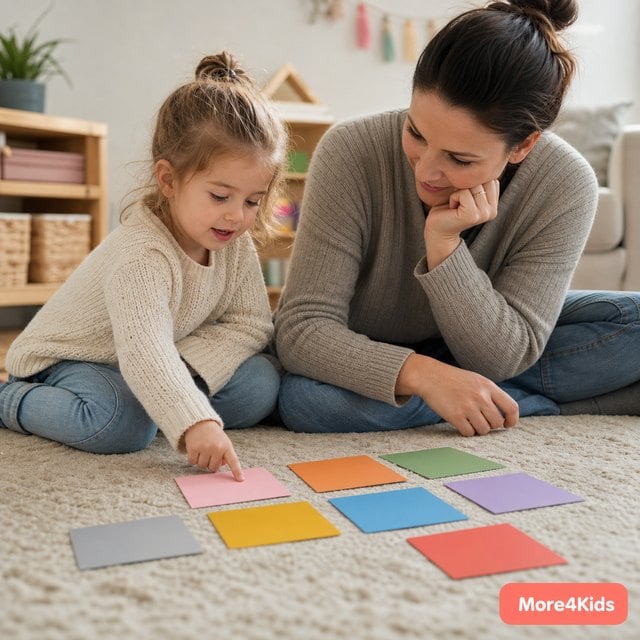
So when your child takes a breath instead of screaming, when they say “I’m mad” instead of hitting, when they walk away and come back, name it. “You were so frustrated and you took a break and calmed your body all by yourself. That is hard to do.” That sentence is worth more than any consequence, because you’ve just shown them that regulating felt good and got them seen. This is the same muscle we build in building confidence in children: kids grow toward the version of themselves we describe out loud.
Step 6: Give Small Choices and a Little Control
A surprising amount of dysregulation is really a power struggle in a trench coat. A young child who feels they have no say in anything will find something, anything, to plant a flag on, and that flag is often the meltdown.
The fix is to hand back small, safe pieces of control before the standoff starts. The tantrum research from KidsHealth recommends offering minor choices like “orange juice or apple juice?” or “brush teeth before or after your bath?” and allowing control when it doesn’t really matter. You’re not negotiating the non-negotiables. Bedtime is still bedtime. But whether they wear the red pajamas or the blue ones, walk or hop to the bathroom, pick the first book or the second, those are gifts you can give freely, and they fill up a child’s tank of autonomy so they have less to fight about.
This also lowers the number of collisions per day, which matters, because a regulated child is often just a child who isn’t cornered. When kids do dig in, the calm, boundaried approach in our gentle parenting discipline techniques pairs naturally with this: hold the limit, but hold it kindly, and leave the child a shred of dignity to climb down with.
Step 7: Match Your Expectations to Their Age
The reason so many of us feel like we’re failing is that we quietly expect a five-year-old to regulate like a ten-year-old. They can’t, and knowing the real timeline is a mercy. KidsHealth lays out roughly what to expect at each stage:
- Up to age 2: Tantrums are normal and expected; the best tool is prevention and distraction, redirecting to a toy or activity before the storm fully lands.
- Ages 3 to 5: Short breaks that end when the child calms down (not on a timer) help build their sense of self-control, paired with lots of praise for keeping cool.
- Ages 6 to 9: Kids grasp consequences and can use the “stop sign” pause and the walk-away-to-cool-off strategy.
- Ages 10 to 12: Kids can start to analyze what’s triggering them and understand that their thoughts about a situation drive their feelings about it.
- Teens: They can control most of their actions and should be nudged to weigh long-term consequences and talk problems through rather than blow up.
Tantrums themselves, KidsHealth notes, are most common between ages 1 and 3 and tend to fade as language develops, because a child who can say “I’m mad that we’re leaving” has less need to throw themselves on the ground to say it. Meeting your child where they actually are, not where you wish they were, is half the battle. It’s the same principle behind why a predictable daily routine helps kids feel secure: less overwhelm going in means more room to cope. The American Academy of Pediatrics frames all of this as part of a child’s broader emotional wellness and resilience, the capacity to move through hard things and come out steady.
When to Reach for More Help
Big feelings are normal. So are hard weeks, rough patches, and phases that test everyone. But you know your child. If the meltdowns are far more intense, frequent, or long-lasting than other kids their age, if your child is regularly hurting themselves or others, or if the struggle is bleeding into school, friendships, and sleep in a way that isn’t lifting, it’s completely reasonable to loop in your pediatrician. Reaching out isn’t an overreaction, and it isn’t a verdict on your parenting. It’s exactly what a good coach does when a player needs a specialist. For more everyday parenting support, our parenting hub is always here.

Frequently Asked Questions
At what age do kids develop emotional regulation?
Emotional regulation develops gradually across all of childhood, not at one magic age. KidsHealth describes toddlers as prone to tantrums because of the gap between what they want and what they can do, preschoolers as beginning to build self-control with short calm-down breaks, school-age kids as able to use a mental “stop sign” to pause, and preteens as able to analyze what’s triggering them. Expect slow, uneven progress with plenty of backsliding, especially when a child is tired or hungry.
Is it bad to give my child a time-out?
Not when it’s used as a calm-down break rather than a punishment. KidsHealth suggests that for preschoolers, ending a break when the child calms down, instead of on a fixed timer, actually helps build their sense of self-control. The spirit matters more than the label: a quiet spot to reset the body is a tool, not a banishment. A “calm-down corner” your child helped set up carries none of the shame of being sent away.
How do I stay calm when my child is melting down?
Start by noticing your own rising heat and buying three seconds before you respond. Lower your voice instead of raising it, slow down, and get to your child’s eye level. This co-regulation, lending your calm rather than catching their chaos, is what helps a flooded child settle, because young kids borrow steadiness from a regulated adult. You won’t do it perfectly every time, and that’s okay; repairing after a hard moment teaches your child that calm can always be found again.
What's the difference between emotional regulation and just obeying?
Obedience is doing what you’re told; emotional regulation is learning to manage an inner state and then choose a response. A child can comply out of fear without learning any self-control, and a regulated child may still feel angry, they’ve just learned what to do with the anger instead of acting on impulse. The goal isn’t a quiet, compliant child, it’s a child who can feel a big feeling and steer it.
When should I talk to a doctor about my child's emotions?
Reach out to your pediatrician if the meltdowns are far more intense, frequent, or lasting than is typical for your child’s age, if your child regularly hurts themselves or others, or if emotional struggles are consistently disrupting school, friendships, or sleep and aren’t improving with a steady, supportive routine. Asking for guidance is a normal, responsible step, not a sign that anything has gone wrong with your parenting.
Related Articles
- How To Help Kids Manage Big Emotions
- How To Stop Yelling At Your Kids
- Building Confidence In Children
- Gentle Parenting Discipline Techniques
- A Secret To Happy Kids Daily Routines
- Parenting

Meet Sophia Richards Sophia Richards is an early childhood educator, passionate writer, and the proud mom of three energetic kids. With a degree in Education and over a decade of hands-on classroom experience, Sophia bridges the gap between professional teaching strategies and everyday family life. At More4Kids, she translates complex child development concepts into practical, actionable parenting tips that families can use at home.
Whether she is sharing positive reinforcement techniques, educational crafts, or honest reflections on the chaos of raising three children under one roof, Sophia’s goal is to empower parents to foster resilience and joy in their kids. When she isn't writing or lesson planning, you can find her organizing neighborhood scavenger hunts or trying out new kid-friendly recipes.
Areas of Expertise: Early Childhood Education, Positive Parenting, Sibling Dynamics, Educational Play, Family Wellness.

Add Comment