
















By Sophia Richards
There’s a particular kind of tired that comes from arguing with someone who’s three feet tall. You ask them to put their shoes on. They say no. You ask again, calmer this time, jaw a little tighter. They drop to the floor like their bones have left their body. By the third round you can feel your own voice climbing, and some part of you thinks, how did putting on shoes become a war? If that’s your house lately, take a breath with me. Learning how to deal with a defiant child isn’t about winning the shoe fight — it’s about staying the steady grown-up while your kid figures out how to be a person.
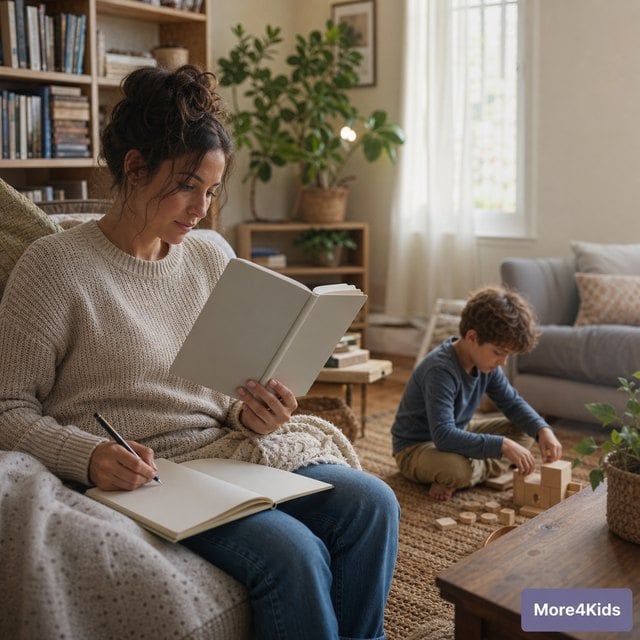
I’m a mom of three, and before that I spent years in early childhood classrooms. So I’ve met defiance in just about every form — the toddler who plants her feet and refuses to budge, the six-year-old who negotiates like a tiny lawyer, the kid who hears “time to go” as a personal insult. Let me share what actually helped, on the good days and the ones I’d rather forget.
Start by understanding what the defiance is telling you
Table of Contents
Here’s the reframe that changed everything for me: defiance is rarely about the shoes. A defiant child is almost always a child who’s overwhelmed, tired, hungry, anxious, or desperate for a scrap of control in a world where grown-ups decide almost everything. The “no” is the only lever they’ve got, so they pull it hard.
That doesn’t mean you let the behavior slide. It means you stop reading it as your child being bad and start reading it as information. When I treated my kids’ defiant behavior as a signal — “something’s off, let me look closer” — I parented from curiosity instead of from anger, which, for the record, is a much less exhausting way to spend an evening. The folks at the Child Mind Institute make a similar point: a lot of defiance is a child reaching for attention and connection in the clumsiest way they know how. The same patient lens that helps with a contrary, “no”-to-everything stage helps here too.
How to deal with a defiant child in the moment: stay calm so you can lead
I’ll be honest — this is the hardest one, and I sometimes still blow it. But it’s also the one that matters most. A defiant child is a dysregulated child, and you cannot calm a storm by becoming a second storm. If I meet my kid’s “NO” with my own raised voice, we just escalate together until somebody’s crying (occasionally me, in the pantry, over spilled cereal).
Your calm is the tool. Not because you’re faking serenity, but because a steady, low voice tells your child’s nervous system that the situation is safe and you’ve got it handled. Drop your volume instead of raising it. Slow your own body down. You can be completely firm about a limit while staying warm about the child — those two things live perfectly well together, even though it doesn’t feel that way at minute four of a meltdown. If you’re running on empty yourself, that steadiness gets a lot harder, which is exactly why taking care of your own reserves isn’t a luxury here. It’s part of the job.

Pick your battles, then offer real choices
Not every hill is worth dying on. In my house, when I started asking myself “does this actually matter, or am I just used to being obeyed?” about half my daily standoffs quietly disappeared. Whether she wears the striped shirt or the polka-dot one is not a battle, no matter how strongly she disagrees. Whether she climbs into the car seat is. Save your firmness for the things that genuinely matter — safety, kindness, the real boundaries — and loosen your grip on the rest.
And inside the limits that matter, hand back some control. A defiant child is hungry for agency, so give them some on your terms. “Do you want to walk to the car or hop like a bunny?” “Shoes first or jacket first?” Both answers get you where you’re going, but your child gets to feel like a decision-maker instead of a prisoner being marched to the minivan. This is the heart of positive parenting — guiding with connection and choice rather than sheer force.
Give clear, kind instructions — one at a time
So much of what looks like defiance is really a kid who got a foggy, fast, over-stacked instruction and checked out somewhere around word three. “Go upstairs, brush your teeth, find your pajamas, and don’t forget your library book” is four commands fired at a brain that can barely hold one. Then we call the freeze that follows “not listening.”
Get down to eye level. Use their name. Give one clear instruction, in a calm voice, and wait — actually wait, don’t fill the silence. The Child Mind Institute has a great breakdown of effective instructions — make them specific, doable, and few. I also learned to stop phrasing commands as questions when they weren’t optional. “Can you put your cup in the sink?” invites a no. “Please put your cup in the sink” doesn’t. Small shift, big difference.

Catch them being good
This one feels almost too simple to work, but it’s the quiet engine behind everything. Kids will take negative attention over no attention every single time — so if the only moment they reliably get your full focus is when they’re defiant, guess what they’ll keep serving up. Flip it. Narrate and notice the cooperation out loud. “You came the first time I called — that was a big help.” “I saw you take a breath instead of yelling. That’s hard to do.”
It feels lopsided at first because the rough moments are so loud and the good ones are so easy to miss, tucked in between all the noise. But attention is fertilizer; whatever you shine it on grows. The same principle drives the practical, research-backed strategies for cultivating better behavior — you build the behavior you want by catching it, not just by punishing what you don’t.

Connect first, correct second
When the storm has actually passed — not mid-meltdown, but after — that’s when the real teaching happens. A child who feels connected to you wants to cooperate with you. A child who feels constantly managed and corrected digs in harder. So I try to make sure the ratio of warm, ordinary, no-agenda moments far outweighs the correcting ones.
That can be five minutes of doing whatever they want to do, no phone in my hand, no agenda of my own. It can be a hug before a hard transition. None of it excuses the behavior, and none of it means there are no limits. It just fills the tank that makes a kid willing to follow your lead in the first place. The American Academy of Pediatrics says much the same in its guidance on discipline: the goal is to teach and guide, never to frighten or shame.
When defiant behavior might be more than a phase
Most defiance is a normal, exhausting, completely age-appropriate part of growing up — toddlers testing independence, big kids pushing limits to find where they are. It passes. But sometimes the resistance is louder, longer, and more constant than the usual, and it’s worth paying attention to that.
If the defiant behavior is severe, happens across every setting, includes a lot of aggression, or just doesn’t budge no matter what calm, consistent thing you try, that can be a signal rather than a character flaw. It’s worth a gentle conversation with your pediatrician. Sometimes what looks like pure stubbornness is tangled up with frustration a child can’t name — the kind that can show up alongside attention challenges like ADHD. Yale Medicine has a clear, non-alarming overview of when defiant behavior may need a closer look. Asking for help isn’t failing. It’s parenting with your eyes open.
Frequently Asked Questions
Why is my child so defiant all of a sudden?
Sudden defiance usually traces back to a change a child can’t put into words — a new sibling, a move, less sleep, a developmental leap, or stress they’re soaking up from around them. It’s also simply how kids test independence at certain ages. Look for what shifted recently, meet the underlying need where you can, and stay consistent. The behavior is loud, but it’s almost always communication, not a personality change.
What is the best way to respond to a defiant child in the moment?
In the heat of it, lower your voice instead of raising it and get to your child’s eye level. Name what you see (“you’re really mad we have to leave”), hold the limit calmly, and give a simple choice inside it. Save the teaching and consequences for after everyone is calm, because nobody — child or parent — thinks clearly mid-meltdown.
Is it normal for a toddler or young child to be defiant?
Yes. Pushing back, saying no, and testing limits are normal, healthy signs that your child is figuring out they’re a separate person with their own will. It’s developmentally expected, especially between about 18 months and the early school years. It’s still worth guiding firmly and kindly — normal doesn’t mean you ignore it — but it usually isn’t a sign that anything is wrong.
When should I worry about my child's defiant behavior?
Consider checking in with your pediatrician if the defiance is intense, lasts many months, shows up in every setting (home, school, with other caregivers), includes frequent aggression, or doesn’t improve with calm, consistent parenting. Those patterns can point to an underlying need worth understanding. Reaching out early gives you support and answers, not a label to fear.
Do punishments work for a defiant child?
Harsh or frequent punishment tends to fuel more defiance, because it adds fear and disconnection to a child who’s already dysregulated. Clear, predictable, calmly delivered consequences paired with lots of positive attention work far better. The aim is to teach the behavior you want, not to win or to make your child feel small.
A gentle word before you go
So how do you deal with a defiant child without losing your cool? You read the behavior as information, you stay the calm one in the room, you pick the battles that truly matter and hand back control on the rest, you give clear instructions and catch the good, and you keep connection ahead of correction. Then, if the resistance still feels bigger than the moment, you ask for help without shame.

Some days you’ll do all of it and still end up negotiating about shoes on the kitchen floor. That’s not failure — that’s parenting a small human who’s learning how to be in the world. Stay steady, stay warm, and trust that the patient version of you is teaching them more than any perfectly-won argument ever could.
Related Articles
- Parenting Tips for Contrary Kids
- Creating a Self-Care Plan for Parents
- What Is Positive Parenting
- Cultivating Better Behavior in Children
- Parenting a Child With ADHD

Meet Sophia Richards Sophia Richards is an early childhood educator, passionate writer, and the proud mom of three energetic kids. With a degree in Education and over a decade of hands-on classroom experience, Sophia bridges the gap between professional teaching strategies and everyday family life. At More4Kids, she translates complex child development concepts into practical, actionable parenting tips that families can use at home.
Whether she is sharing positive reinforcement techniques, educational crafts, or honest reflections on the chaos of raising three children under one roof, Sophia’s goal is to empower parents to foster resilience and joy in their kids. When she isn't writing or lesson planning, you can find her organizing neighborhood scavenger hunts or trying out new kid-friendly recipes.
Areas of Expertise: Early Childhood Education, Positive Parenting, Sibling Dynamics, Educational Play, Family Wellness.

Add Comment