
















By Sophia Richards
The morning after our old dog Biscuit died, my middle one padded into the kitchen, stopped at the empty spot by the back door where his bed used to be, and just stood there in her socks. No tears yet — that came later. Just a small, stunned stillness, the kind that cracks you right open, because you know exactly what she’s feeling and you can’t fix a single bit of it. Biscuit had been there her whole life. He was the one who greeted her off the bus, who slept on her feet when she was sick, who ate the vegetables she smuggled off her plate. And now there was a leash on a hook and a water bowl nobody had the heart to move. If you’re reading this with a lump in your own throat, maybe because the vet call is coming or maybe because it already came, come sit with me. Helping kids cope when a pet dies is one of the tenderest jobs we get as parents, and I want you to know up front: you don’t have to do it perfectly. You just have to do it honestly, and with a lot of love.
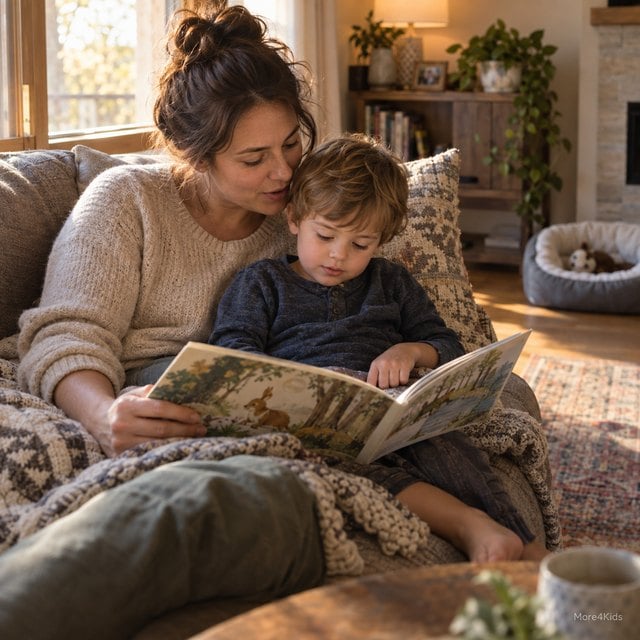
Here’s the gentle short version before we walk through it together. For a lot of children, losing a pet is their very first real brush with death — and that makes it huge, even if the animal was “just” a hamster or a goldfish to someone on the outside. Their grief is real, it deserves to be taken seriously, and the way we walk them through this first loss quietly teaches them how to survive every loss that comes after. The good news is that you don’t need the perfect words or a tidy explanation. You need the truth, told kindly; room for the messy feelings; and a few small, doable ways to remember and to heal. Let me share what I’ve learned — from the experts I trust and from more than one heartbroken kid in my own house — about helping kids cope when a pet dies, so the goodbye can hold as much love as it does sorrow.
Why Losing a Pet Hits Kids So Hard
Table of Contents
Before we get to the how, I want to name the why, because it helps us meet our kids with the right amount of tenderness. To a child, a pet isn’t a possession — it’s a friend. As Nemours KidsHealth puts it, “for most kids, pets are more than just animals their families own — they’re members of the family and the best of friends.” Think about it from their small vantage point: the family pet “often are the first to greet kids in the morning and after school,” and often the one “your child looks to for comfort and companionship when ill or feeling sad or upset.” That’s not a minor relationship. That’s a daily, uncomplicated, always-happy-to-see-you love, and losing it leaves a real hole.
There’s something else that makes this loss so weighty. For many children, KidsHealth notes, a pet’s death “might be their first time losing a loved one.” That means we’re not just helping them grieve one animal — we’re introducing them to grief itself. And that reframe changed everything for me. When I stopped thinking “it’s just the dog” and started thinking “this is how she learns that loss is survivable,” I slowed down. I stopped rushing her toward feeling better. Because, as KidsHealth reminds us, “the grieving process can help kids learn how to cope with other losses throughout life.” This hard, sad week is also, quietly, a lesson in resilience — the same steady, feelings-first work we do when we’re raising resilient children.
One more thing worth saying out loud, because the world doesn’t always say it: your child’s grief is not an overreaction. Humane World for Animals (the organization long known as the Humane Society) is clear that although people “often feel the same feelings of grief when they lose a beloved pet,” that grief “might go unacknowledged by others.” Their words are worth taping to the fridge: “Know that your grief is normal, and it’s OK (and even important) to mourn the relationship you had with your pet.” If that’s true for us as adults, it’s doubly true for a child who has never known a home without that animal in it.
Helping Kids Cope When a Pet Dies: 7 Gentle Ways to Ease Their Grief
None of what follows requires you to have it together. I have delivered the worst news of a small child’s life while my own voice wobbled and my eyes leaked, and it was fine — better than fine, actually, as you’ll see. Helping kids cope when a pet dies isn’t about getting the words right; it’s about staying honest and staying close while the grief moves through. Think of these seven as gentle guideposts, not a checklist you can fail. Take them in whatever order your family needs, and be kind to yourself along the way.
1. Tell the truth — skip “ran away” and “put to sleep”
Every instinct in a loving parent screams to soften the blow with a story. Please resist it. Both of my trusted sources are unusually firm on this point, because the gentle-sounding lies backfire. KidsHealth warns plainly: “Avoid trying to gloss over the event with a lie. Telling a child that ‘Buster ran away’ or ‘Max went on a trip’ is not a good idea.” It won’t ease the sadness, and “if the truth does come out, your child might be angry that you lied.” Humane World echoes it exactly: saying the pet ran away “doesn’t allow your child to move through the grief process in an emotionally healthy way. Your child may expect the pet’s return and feel betrayed or confused after discovering the truth.”
There’s a second euphemism to retire, and it surprised me: “put to sleep.” KidsHealth cautions to “be careful about saying the animal went ‘to sleep’ or ‘got put to sleep,'” because “young kids can take things literally, so this can conjure up scary ideas about sleep or surgery and anesthesia.” The last thing a grieving four-year-old needs is to become afraid of bedtime. So we use the real, plain words — died, death — gently and simply. They’re harder to say. They’re also the kindest thing you can offer.
2. Share the news gently, one-on-one, in words that fit their age
How you tell them matters almost as much as what you tell them. KidsHealth suggests you “try to do this one-on-one in a place where they feel safe and comfortable and aren’t easily distracted” — not in the car on the way to school, not thirty seconds before the bus. And then you tailor it: base “how much information kids should hear based on their age, maturity level, and life experience.” A preschooler needs a few true, simple sentences. An older child can hold more, and will have more questions.
Let those questions lead. KidsHealth’s advice for a sudden death is to “calmly explain what has happened. Be brief, and let your child’s questions guide how much information you provide.” You do not have to have every answer, either. When my daughter asked me where Biscuit was now, I told her the honest truth — that different people believe different things, and that I wasn’t completely sure. KidsHealth actually blesses this: an honest “I don’t know” “can be an appropriate answer — it’s OK to tell kids that death is a mystery.” Whatever your family’s faith or understanding of death is, KidsHealth says to “draw on your own.” Kids don’t need a perfect theology. They need your steady, honest presence.
3. When you can, give them the chance to say goodbye
Not every loss gives us warning. But when it does — an old pet, a long illness, a planned euthanasia — that heads-up is a gift you can hand your child. KidsHealth recommends that if a pet is very old or has a long illness, you “consider talking to kids before the death happens.” Humane World agrees: “If your pet’s death is expected, you can prepare children for the loss by allowing them to say goodbye.”
If you’re facing the impossibly hard decision to euthanize, KidsHealth offers language that helped me breathe: you can explain that “the veterinarians have done everything that they can,” that the pet “would never get better,” that “this is the kindest way to take the pet’s pain away,” and that “the pet will die peacefully, without feeling hurt or scared.” And “many kids want a chance to say goodbye first” — some older or more mature kids may even want to be there to comfort the pet. You know your child. A goodbye can be a last cuddle, a favorite treat, a whispered thank-you into soft fur. Whatever it looks like, the chance to close the door themselves, gently, can spare a child a lifetime of “I never got to say goodbye.”
4. Welcome the whole messy mix of feelings
Grief in children rarely looks like the tidy sadness we expect. It’s lumpy and strange and sometimes it doesn’t look like sadness at all. KidsHealth prepares us beautifully: kids “usually feel a variety of emotions besides sadness,” including “loneliness, anger if the pet was euthanized, frustration that the pet couldn’t get better, or guilt about times that they were mean to or didn’t care for the pet as promised.” Humane World adds that a child “may blame themselves, their parents or the veterinarian,” and “may feel guilty, depressed or frightened that others they love may be taken from them.”
That guilt one gutted me — my son quietly confessed, days later, that he was sure Biscuit died because he’d forgotten to fill the water bowl one time. Oh, sweet boy. Guilt like that is one of the quietest parts of a child’s grief, and it will not surface unless we make it safe to. Our job here isn’t to argue them out of the feelings; it’s to make room for all of them. KidsHealth says to help kids understand “that it’s natural to feel all of those emotions, that it’s OK to not want to talk about them at first, and that you’re there when they are ready to talk.” So we say the true thing: You can feel sad and mad and confused all at once, and none of it means you did anything wrong. This is the heart of all emotional regulation for kids — we name the feeling, we welcome it, and only then do we help it settle. If you want a deeper toolkit for the big waves, our guide to helping kids manage big emotions folds right in here.

5. Let them see you grieve, too
Here is the permission I most wish someone had handed me sooner: you don’t have to be a rock. In fact, you shouldn’t be. KidsHealth is direct about it — “Don’t feel compelled to hide your own sadness about losing a pet. Showing how you feel and talking about it openly sets an example for kids.” When they watch you cry a little and say, out loud, “I miss him so much,” you teach them something no lecture ever could: that sadness is safe, that it’s what love does when someone is gone, and that big feelings don’t break the people we count on. Humane World puts it simply — “Expressing your own grief may reassure your child that sadness is OK and help them work through their feelings.”
One of the most healing things I did was tell my kids about the pets I loved and lost when I was little — the cat I had at their age, how hard it was to say goodbye, how I still smiled thinking about her decades later. KidsHealth specifically suggests you “share stories about the pets you had — and lost — when you were young and how hard it was to say goodbye.” It shrinks the loneliness. It tells them, without a single “you’ll be fine,” that this pain is survivable — because look, here’s Mom, who survived it, remembering with a smile.
6. Make a way to remember — a small ritual or memory project
Grief needs somewhere to go, and for kids especially, doing something with their hands can carry what words can’t. Both sources land in the same warm place here. KidsHealth suggests you help kids “find special ways to remember a pet” — “have a ceremony to honor your pet,” “share memories of fun times,” “write a prayer together,” “share stories of your pet’s funny moments,” even “make a scrapbook.” Humane World specifically points to child-sized rituals: kids “benefit from participating in age-appropriate mourning rituals alongside you, such as drawing pictures of their pet, writing to their pet or sharing happy memories.”
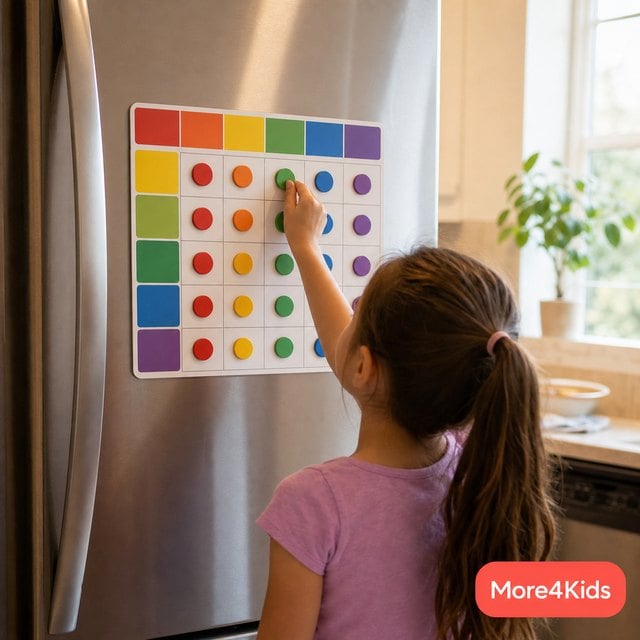
In our house, we made a little memory jar. Everyone wrote or drew a favorite Biscuit moment on a slip of paper — the time he stole a whole birthday cupcake, the way he “sang” along to the vacuum — and we read a few whenever the missing him got heavy. My youngest drew a wobbly crayon portrait that still hangs on the fridge. These rituals do quiet, important work: they turn a scary absence into a story the family gets to keep telling. As KidsHealth reminds us, “the pain will go away, the happy memories of the pet will always remain,” if we “talk about your pet, often and with love.”
7. Give grief time — and know when to reach for more help
Of all the parts of helping kids cope when a pet dies, this last one asks the most of us, because it asks for patience. Grief is not a straight line, for us or for our kids, and expecting it to be one only adds pressure nobody needs. Humane World describes it honestly: “The grief process is not linear. You may meander in and out of the stages of grief, going back and forth… It’s not uncommon to start to feel better, and then feel like a wave of grief has washed over you again.” Your child might seem totally fine at breakfast and fall apart at bedtime, or be cheerful for a week and then sob over a stray dog toy. That’s not backsliding — that’s grieving. And “healthy grieving does not mean that you forget or ‘get over’ your friend,” Humane World reminds us; “it simply allows you to accept that they’re gone and eventually smile at their memory.”
So we give it time, and we keep the door open. Most children move through this loss, at their own pace, with the love and honesty above. But trust your gut. If your child’s sadness deepens instead of softening over the weeks — if it’s stealing their sleep, appetite, or joy, or bleeding into fear that other people they love will disappear — it’s a strength, not a failure, to loop in your pediatrician, the school counselor, or a children’s therapist. Grief can sit close to anxiety, and if you’re noticing that kind of worry taking root, our gentle guide to helping an anxious child and our broader look at dealing with trauma and grief can help you tell ordinary sadness from the kind that deserves a professional’s steady hand. Adding a caring, skilled grown-up to your child’s corner is exactly the right move.
A Few Tender Practicalities: Surviving Pets and “Can We Get a New One?”
Two questions come up in almost every grieving household, so let me speak to both gently.
First, your other animals may be grieving too. Humane World notes that surviving pets “may whimper, refuse to eat or drink, or simply ‘act depressed,'” especially if they were bonded — and even if they weren’t, “pets thrive on consistency,” and the change in the home (and in your own mood) can unsettle them. Their advice: “Give surviving pets lots of TLC and try to maintain a normal routine,” and if the symptoms don’t ease, “take your surviving pet to your veterinarian to rule out medical causes.” Kids often find real comfort in helping care for the pet who’s still here — it gives their tender hearts a job.
Second, the big one: Can we get a new one? Sometimes it comes within hours, and it’s tempting to say yes just to stop the hurting. But both sources gently counsel patience. Humane World: “Rushing into this decision isn’t fair to you or your new pet… a new animal cannot replace the one you lost. You’ll know when the time is right to adopt a new pet after giving yourself time to grieve.” KidsHealth frames the eventual welcome perfectly — when the time is right, a new pet comes “not as a replacement, but as a way to welcome another animal friend into your family.” That distinction matters, and kids can understand it: we’re not swapping out Biscuit like a broken toy. We loved him completely, we always will, and someday there may be room in our hearts — not instead of him, but alongside the memory of him — for someone new.
The Bigger Picture
If there’s one thing I’d press into your hand as you close this tab and go find your kid, it’s this: you are not failing them by not making the pain disappear. The pain is love with nowhere to go for a little while, and it will find its way to softer places. What your child will remember isn’t that you had the perfect words — it’s that you told them the truth, let them feel every hard feeling, cried right along with them, and helped them keep the good memories close. That’s the whole job, and you can do it.
And the tender skills you’re building this week travel far beyond one goodbye. The honesty, the room for big feelings, the belief that hard things are survivable — those are the same muscles behind building confidence in a child and every bit of steady resilience we hope to grow in them. Even something as ordinary as protecting their downtime matters now; grieving kids need gentle, low-pressure days, so this is a good week to loosen the schedule and be thoughtful about how much screen time is healthy so the quiet leaves room for the feelings to move through. The through-line is always the same: your child isn’t facing the hard thing alone, because they have you — honest, tender, and unshakably on their side.

Frequently Asked Questions
How do I tell my child our pet died?
Tell them the plain truth, gently, one-on-one, in a calm place where they feel safe and won’t be distracted. Match how much you say to your child’s age and maturity — a few simple, true sentences for a little one, and more room for questions with an older child. Use the real words, “died” and “death,” rather than softer stand-ins. Avoid saying the pet “ran away” or “went to sleep,” since those can leave a child waiting for the pet to come back or afraid of bedtime. Then let your child’s questions guide how much more you explain, and stay close for the tears that follow.
Should I let my kids see me cry over our pet?
Yes. Hiding your own grief sends the accidental message that sadness is something to be ashamed of, when the opposite is true. When children see you cry a little and hear you say “I miss him,” they learn that big feelings are safe and that grief is simply what love does when someone is gone. It also comforts them to know they’re not sad alone. Talking openly about your sadness — and even sharing stories of pets you loved and lost as a child — models exactly the healthy grieving you want your child to learn, and reassures them that this pain is survivable.
How can I help my child remember our pet?
Give their grief something to do with their hands. Simple rituals help enormously: draw pictures of the pet, write a letter or a prayer to them, make a scrapbook or a memory jar of favorite moments, or hold a small family ceremony to say goodbye. Sharing funny stories keeps the pet present in a warm, comforting way. These acts turn a frightening absence into a story your family gets to keep telling, and they gently teach your child that while the sharp pain fades, the happy memories stay. Let your child lead — the memorial that means the most is usually the one they thought of themselves.
When should I get my child a new pet after one dies?
Not right away, however much you want to stop the hurting. A new pet can’t replace the one you lost, and bringing one home before the family has grieved isn’t fair to anyone, including the new animal who deserves to be welcomed for who they are. Give yourselves real time to mourn; you’ll sense when hearts have room again. When that day comes, frame it honestly for your kids: the new pet joins your family not as a replacement for the one who died, but as a new friend to love alongside the memories you’ll always keep. That distinction helps children welcome a newcomer without feeling disloyal.
Is it normal for my child to grieve a pet this much?
Completely normal — and it deserves to be taken seriously. For many children, losing a pet is their very first experience with death, which makes it a genuinely big loss, no matter how small the animal was. Grief also isn’t linear: your child may seem fine one moment and fall apart the next, or feel better for a while before a wave of sadness returns. That’s healthy grieving, not a setback. Give it time and keep listening. If the sadness deepens rather than eases over the weeks — disrupting sleep, appetite, or joy, or turning into fear of losing others — check in with your pediatrician, school counselor, or a children’s therapist.
Related Articles
- Raising Resilient Children
- Emotional Regulation For Kids
- How To Help Kids Manage Big Emotions
- How To Help An Anxious Child
- Dealing With Trauma And Grief
- How To Build Confidence In A Child

Meet Sophia Richards Sophia Richards is an early childhood educator, passionate writer, and the proud mom of three energetic kids. With a degree in Education and over a decade of hands-on classroom experience, Sophia bridges the gap between professional teaching strategies and everyday family life. At More4Kids, she translates complex child development concepts into practical, actionable parenting tips that families can use at home.
Whether she is sharing positive reinforcement techniques, educational crafts, or honest reflections on the chaos of raising three children under one roof, Sophia’s goal is to empower parents to foster resilience and joy in their kids. When she isn't writing or lesson planning, you can find her organizing neighborhood scavenger hunts or trying out new kid-friendly recipes.
Areas of Expertise: Early Childhood Education, Positive Parenting, Sibling Dynamics, Educational Play, Family Wellness.

Add Comment