
















By Sophia Richards
The first time it really landed for me, my middle one was five, standing on the coffee table like a tiny general, directing her cousins through an elaborate game with the crisp authority of a woman who runs a mid-size company. “You sit there. No — there. You’re the baby. I said you’re the baby. We’re doing it my way.” One cousin was already crying; the other had quietly gone to find a grown-up. I remember the hot flush of embarrassment, and right underneath it, a quieter, more uncomfortable question: where does this come from, and did I do this? If you have ever watched your child mow down a playdate, boss a sibling to tears, or inform you — hands on hips — how bedtime is going to go tonight, come sit with me. I have wiped up those tears, and I want to tell you what I wish someone had told me sooner about how to help a bossy child without ever making them feel like there’s something wrong with who they are.

Here’s the short version, and then we’ll take it apart together gently: your bossy child is not a bully in training, and you did not break them. That take-charge streak is leadership showing up years before your child has the social skills to steer it. The instinct underneath the bossiness — I have a vision, I want things a certain way, I’ll organize everyone to make it happen — is the exact instinct we admire in grown-ups who start things, lead teams, and refuse to be pushed around. It’s just arriving raw, loud, and without a filter. So our job isn’t to crush the bossiness out of a bossy child. It’s to keep the strong, wonderful engine and gently install the steering, the brakes, and the manners. Let me show you what’s really going on underneath the ordering-everyone-around, and seven calm, doable ways to guide that leadership so it grows into something your child — and everyone around them — will be glad they have.
What “Bossy” Really Means (It’s Leadership Looking for Direction)
Table of Contents
The single most freeing thing I ever learned is that “bossy” is almost always a strength wearing the wrong clothes. Think about what your child is actually doing when they boss: they have an idea of how things should go, they believe in it, and they’re willing to organize the whole room to get there. Strip away the stomping and the demanding tone, and you’re looking at initiative, vision, confidence, and drive — the raw materials of a leader. The problem isn’t the drive. The problem is that a young child has a five-year-old’s toolkit for expressing it, so it comes out as ordering, controlling, and steamrolling instead of inviting, negotiating, and leading.
Even the more no-nonsense parenting experts land on this. Writing about bossy children, James Lehman of Empowering Parents points out that an older child taking on a leadership role among siblings is completely natural, and that “it works well when the child is responsible and mature.” In other words, the leadership instinct itself is a good thing — the goal is to grow the maturity and responsibility to match it. When you can see your bossy child that way, everything softens. You stop reacting to a “bad attitude” and start coaching a budding leader who simply hasn’t learned yet that the best leaders make people want to follow.
So when the bossiness flies, try to hear the sentence underneath the sentence. “You have to be the baby, I said so” often means I have a whole story in my head and I don’t know how to invite you into it. “Give me that, it’s mine, do it now” can mean I feel out of control and grabbing control feels safer. “No, you’re doing it wrong, let me” frequently means I have high standards and zero patience, and I haven’t learned that other people get to try too. Once you can hear the need under the bossy behavior, you stop fighting your child and start teaching them — which is the whole game.
Why Kids Get Bossy in the First Place
Bossiness rarely comes out of nowhere, and it almost never means your child is unkind at the core. A big piece of it is simply developmental. Young children are wired to figure out that they are separate people with their own will, and one of the most satisfying ways to test that new power is to exert it over the people and the play around them. A child who bosses has discovered something intoxicating: that words can make things happen and make people move. That’s a sign of a capable, spirited kid — it just needs shaping.
Temperament plays a real part, too. Some children arrive on this earth with more voltage than others — more certainty, more intensity, more opinions. If you’ve got a strong-willed, high-energy kid, you will see more bossiness than your friend with the easygoing one, and that is about wiring, not about your parenting. (That same intensity, aimed well, is what will keep your child from being flattened by peer pressure someday, so it’s worth protecting even while you shape it. It’s the close cousin of the fire you’re channeling when you work on emotions with a defiant child, where the pushback is more about refusing than directing — here we’re zeroing in on the take-charge, run-the-show flavor.)
And then there’s control. Children reach hardest for control precisely when they feel they have the least of it. A new baby, a move, a divorce, a chaotic schedule, a big feeling they can’t name — any of it can send a child grabbing for the one lever they can still pull: bossing the people around them. Empowering Parents describes it memorably, noting that “if there’s a power vacuum in a family, somebody’s going to try to fill it.” That doesn’t mean you’re failing; it means your child is telling you, in the only language they’ve got, that they need a little more predictable structure and a little more appropriate say-so. When we give them healthy, real ways to feel powerful, the desperate, over-the-top bossiness usually eases on its own.
None of that makes bossiness pleasant when it’s mowing down a playdate. But it does mean that if your child is bossy, you are not raising a tyrant and you are not failing. You’re raising a natural-born leader whose drive is, for now, running out ahead of their skills.
How to Help a Bossy Child: 7 Gentle Ways to Guide Their Leadership
None of these are scripts to perform perfectly. Think of them as a path you walk with your child, over and over, until the walking teaches them. Do them warmly. Do them imperfectly. Do them a thousand times.
1. Reframe it in your own head first — you’re raising a leader
Before you can help a bossy child, you have to stop seeing “brat” and start seeing “leader-in-progress,” because your child reads your face and your tone long before they process your words. When you sigh, “Why are you always so bossy?” your child hears this is who you are, and it’s bad. When you say, warmly, “Wow, you have big ideas about how this should go — let’s find a way everybody wants to play,” your child hears my drive is good; I just need to learn to use it. Same behavior, completely different story about who they’re becoming.
This reframe isn’t about excusing rudeness — we’ll absolutely hold the line on that. It’s about protecting the beautiful thing underneath while we shape the delivery. I actually started saying it out loud to my daughter: “You’re a leader, kiddo. And the very best leaders are the ones people want to follow. Let’s practice being that kind.” Naming the strength gave her something to grow toward instead of something to feel ashamed of, and it quietly grew her real confidence in herself at the same time.
2. Give real choices and real control — within your limits
Remember that a bossy child is often a child starving for a legitimate sense of control. So feed it — on purpose, in ways that work for everyone. This is the single most effective thing that calmed the bossiness in our house. Instead of a day full of directives your child can only resist or grab power back from, build in a steady diet of real, bounded choices: “Do you want to wear the red coat or the blue one?” “Should we read the story before or after teeth?” “You’re in charge of picking the vegetable tonight.” The limits are yours; the choices inside them are theirs. A child who gets to steer real things all day has far less need to seize the wheel by force.
You can hand over genuine, age-appropriate authority, too, and watch the leadership drive light up in a good direction. Let them be the one who decides the rules for tonight’s family game, or who leads little sister in the bedtime cleanup, or who gets a real say in something that matters to them — even something as ordinary as helping shape the family’s screen-time plan so the rules feel like theirs, not just yours. When kids feel powerful in ways that are welcome, they stop reaching for power in ways that aren’t.

3. Teach the difference between asking and ordering — with a redo
Bossiness is, at bottom, a communication problem: your child has a real want and reached for a bulldozing delivery. So don’t just shut the ordering down — hand them the better version. The AAP makes this point plainly in its guidance on positive discipline: “Teach children right from wrong with calm words and actions. Model behaviors you would like to see in your children.” Telling a child only what not to do leaves them stuck; showing them the words that do work gives them a way forward.
I call it the redo, and it has rescued more of our afternoons than anything else on this list. When my son barks, “Give me the blue marker, NOW,” I stay calm and say, “Let’s try that again. I can’t say yes when it comes out like an order. Ask me the way that works.” Nine times out of ten he resets — “Mom, can I please have the blue marker?” — and I answer that child warmly, even if I still have to say no. You’re not humiliating them; you’re rewinding the tape and letting them practice the script that will actually get them what they want in life. The same goes for the way they talk to other kids: “Instead of ‘You have to be the dog,’ try ‘Do you want to be the dog or the owner?'” Teaching the exact words is far more useful than a lecture about being bossy.
4. Coach turn-taking and “check first” with friends and siblings
The hardest place bossiness shows up is with other children, because that’s where it costs your child the most — a friend who stops wanting to come over, a sibling relationship stretched thin. This is worth patient coaching, because the ability to share control is the exact skill that lets a leader keep followers. Before a playdate, I do a thirty-second huddle: “Your friend gets to pick a game too, remember. If you feel bossy coming on, take a breath and ask, ‘What do you want to play?'” Little pre-teaches like that head off far more meltdowns than any correction in the moment.
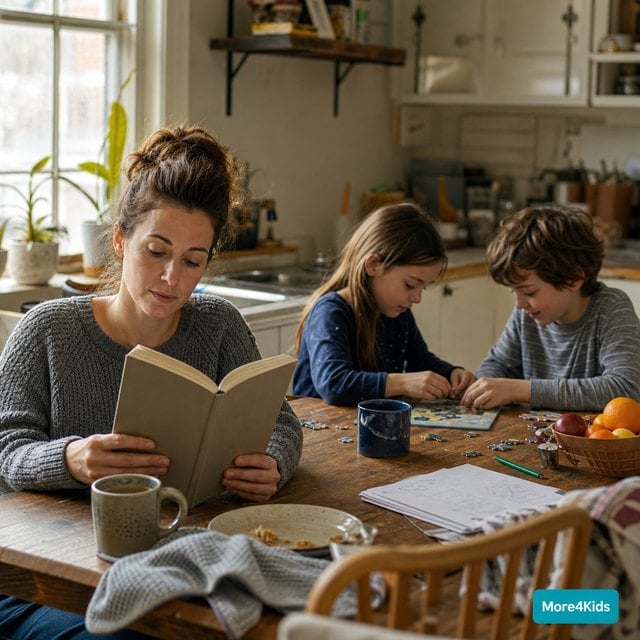
Two phrases became gold in our house: “Check first” and “You get to decide for you, not for them.” When my daughter starts assigning roles like a casting director, I’ll quietly cue, “Check first — ask if they want that part.” And when she tries to run a sibling’s every move, “You’re the boss of you. Your brother’s the boss of him.” If the bossiness is fueling constant clashes at home, it’s worth reading up on sibling rivalry too, because a bossy child and a resentful sibling feed each other, and calming one usually calms the other. This is also the quiet work that helps a strong-willed kid actually make and keep friends — because friends stay when they feel like partners, not staff.
5. Give the leadership drive a real, worthy job
A leader with no one to lead will lead whoever’s nearby, whether they like it or not. So give that drive somewhere good to go. Real responsibility is like a release valve for a bossy child — it takes all that organizing energy and points it at something genuinely useful. In our house that’s looked like being the “line leader” for family walks, the one who plans the menu for pizza night, the captain of the backyard cleanup, the helper who teaches the baby a new word. Age-appropriate jobs where they get to be in charge of a task (not a person) let them feel that satisfying hit of authority in a way that helps instead of hurts.
Group settings help enormously here, too. A bossy child often blossoms with a coach, a teacher, or a team, where their take-charge energy gets a healthy container and real feedback from someone who isn’t you. And when you notice the leadership going well, connect it to the feeling underneath: “Did you see how good it felt when everyone had fun and you helped make it happen? That’s what a great leader does.” You’re teaching them that the best kind of power is the kind that lifts other people up.

Give the leadership drive a worthy job. The best kind of power is the kind that lifts everyone up — and kids feel how good that is.
6. Hold a calm, firm line on the behavior — kindly and consistently
Reframing bossiness as leadership does not mean tolerating rudeness or letting a child run the household. It means we’re warm about the child and firm about the behavior — both at once. When the ordering crosses into unkindness, name it and hold the line, once, quietly: “You can be in charge of your own game. You may not speak to your friend that way. Being a leader never means being mean.” Feeling and drive: welcome. Bossing people cruelly: off the table.
Consistency is what makes this stick, because nothing fuels bossiness like a limit that folds under pressure. If “we take turns choosing” melts the second your child pushes hard enough, they learn that pushing hard works — and they’ll push harder next time. The AAP reminds us to “set limits” with “clear and consistent rules,” and to “give them your attention,” noting that “the most powerful tool for effective discipline is attention.” So be careful what you feed: a giant, dramatic reaction to every bossy moment can accidentally reward it. Save your big, warm attention for the moments they lead well — which brings us to the last, and maybe most important, one.
7. Catch them leading kindly — and model it yourself
Children grow the behavior we shine a light on. So go hunting for the moments your bossy child gets it right, and name them out loud with real specificity: “You asked your sister if she wanted a turn before you started — that was so kind, and she wanted to keep playing with you because of it.” The AAP calls this catching them being good — “Notice good behavior and point it out, praising success and good tries. Be specific.” Every time you spotlight kind leadership, you’re telling your child that is the version of their strength that gets them love and connection. That’s the version they’ll grow.
And then there’s the mirror, which is the humbling part. Kids learn how powerful people treat others by watching the powerful people in their own home. If our own requests to them come out as constant commands — “Sit down. Stop. Because I said so.” — we quietly teach the exact bossy tone we’re trying to soften. When we can say “Could you please set the table?” instead of “Set the table, now,” and when we own it and apologize on the days we snap, we hand our child the single most powerful lesson on this list. Learning to lead without steamrolling is the same deep muscle as managing big emotions — and you build it in your child mostly by letting them watch you use yours.
When Bossiness Might Need a Closer Look
Almost all bossiness is ordinary, healthy leadership-in-progress that softens beautifully with the gentle coaching above. Now and then, though, it’s worth a closer, calmer look — not to panic, just to pay attention. If the need for control seems to be causing your child real distress, if it’s costing them every friendship despite lots of patient coaching, if it appears suddenly and intensely alongside big changes in mood, sleep, or worry, or if it comes with aggression that scares you or other kids, those are good reasons to loop in your pediatrician or a child therapist. Sometimes an intense need to control everything is a child’s way of coping with anxiety or a hard transition, and a professional can help you find the root. Trust your gut. You know your child, and asking for support is itself a form of good, loving leadership.

Frequently Asked Questions
Why is my child so bossy all of a sudden?
Usually because they’ve hit a normal stage where their drive to be in charge has outpaced their social skills, or because something in their world has left them feeling short on control — a new sibling, a move, a schedule that’s too much, or a big feeling they can’t name. Bossiness tends to spike right when a child needs to feel powerful and hasn’t yet learned the gentler ways to get there. It’s not a sign you’ve raised a tyrant or lost your authority; it’s a sign of a spirited, capable kid reaching for the wheel. Give them more real, bounded choices and appropriate responsibility, hold a calm line on unkind behavior, and it typically eases as their skills catch up.
Is being bossy a bad thing, or is it actually leadership?
It’s leadership that hasn’t learned its manners yet. The instinct underneath bossiness — having a vision, believing in it, and organizing others to make it happen — is the same instinct we admire in grown-ups who start things and lead teams. The goal isn’t to erase that strength; it’s to keep the confidence and drive while teaching the child to invite instead of order, to share control, and to lift others up rather than steamroll them. When you reframe a bossy child as a leader-in-progress, you protect a genuine gift and simply coach the delivery — which is a far more hopeful project than trying to make a strong-willed kid stop being strong-willed.
How do I stop my child from bossing other kids around?
Coach the skill before and during play rather than only correcting after. Do a quick pre-teach before playdates (“Your friend gets to pick a game too”), and use simple in-the-moment cues like “Check first — ask if they want that part” and “You’re the boss of you, not of them.” Offer redos when an order slips out, showing the asking version of what they wanted to say. And give their leadership drive a worthy outlet — a real job or a team — so it isn’t aimed at controlling peers. Kids share control much more willingly when they feel powerful in welcome ways and when they understand that friends stay when they feel like partners, not staff.
Should I punish my child for being bossy?
Punishing bossiness by itself usually backfires, because it shames the strength instead of teaching the skill — and a big dramatic reaction can accidentally reward the behavior with a flood of your attention. Aim your response at building ability instead: reframe the drive as leadership, give real choices and responsibility, coach asking-versus-ordering with redos, and hold a calm, consistent line on genuinely unkind behavior. Calm, natural consequences have their place when a real limit is broken, but they work best paired with teaching the better words and catching the kind-leadership moments out loud. Over time, connection and coaching grow considerate leaders far more reliably than punishment grows compliant ones.
Can a bossy child grow out of it?
Most do, in the sense that the raw, steamrolling delivery softens as their social skills, empathy, and self-control mature — especially with the gentle coaching here. What you usually don’t want them to grow out of is the underlying drive itself: the confidence, initiative, and refusal to be a pushover that, aimed well, become real leadership. So think less “grow out of it” and more “grow into it.” With warmth about the child and consistency about the behavior, the bossy five-year-old on the coffee table often becomes the kid other children genuinely want to follow — and, eventually, the adult who leads with both backbone and heart.
Related Articles
- How To Deal With A Defiant Child
- How To Build Confidence In A Child
- How Much Screen Time For Kids
- Sibling Rivalry
- How To Help Your Child Make Friends
- Emotional Regulation For Kids

Meet Sophia Richards Sophia Richards is an early childhood educator, passionate writer, and the proud mom of three energetic kids. With a degree in Education and over a decade of hands-on classroom experience, Sophia bridges the gap between professional teaching strategies and everyday family life. At More4Kids, she translates complex child development concepts into practical, actionable parenting tips that families can use at home.
Whether she is sharing positive reinforcement techniques, educational crafts, or honest reflections on the chaos of raising three children under one roof, Sophia’s goal is to empower parents to foster resilience and joy in their kids. When she isn't writing or lesson planning, you can find her organizing neighborhood scavenger hunts or trying out new kid-friendly recipes.
Areas of Expertise: Early Childhood Education, Positive Parenting, Sibling Dynamics, Educational Play, Family Wellness.

Add Comment