















By Sophia Richards
The first time my youngest dissolved into a full-body puddle on the grocery store floor because I’d handed her the wrong color cup, I could feel every set of eyes in the cereal aisle land on us. My whole body wanted to make it stop — fast, quiet, before we became the story a stranger told at dinner that night. It took me years, three kids, and an earlier career as an early childhood educator to finally understand that those enormous, floor-flooding feelings weren’t a discipline problem I needed to shut down. They were a skill my daughter simply hadn’t learned yet. So if you’ve landed here searching for how to help kids manage big emotions without either exploding at them or caving to every demand, pull up a chair. I’ve stood exactly where you’re standing, and it really does get more manageable.

Here’s the thing I wish someone had told me sooner: big emotions aren’t proof that something’s broken in your child, or in you. They’re a sign of a small person carrying a big inner world around inside a brain that’s still very much under construction. Our job was never to erase the feelings. It’s to be the calm, steady guide while our kids slowly figure out how to ride the waves on their own.
Why Big Emotions Feel So Big (What’s Actually Happening)
Table of Contents
When a toddler shrieks like the world is ending because you cut the sandwich the “wrong” way, it looks wildly out of proportion. To us, it is. To a young child, it genuinely isn’t.
The part of the brain responsible for impulse control, perspective, and talking yourself down — that thoughtful, planning region tucked behind the forehead — is one of the very last parts to finish developing, and it isn’t fully done until the mid-twenties. Meanwhile, the emotional alarm system has been online and loud since day one. So when a child gets overwhelmed, they aren’t choosing drama for the fun of it. Their feeling brain has essentially grabbed the wheel, and the reasoning brain that might otherwise talk them down just isn’t strong enough yet to take it back. The American Academy of Pediatrics has a warm, plain-language piece on how to shape and manage young children’s behavior that made this click for me.
Once that landed, everything about parenting softened. A meltdown stopped feeling like defiance aimed squarely at me and started looking like what it actually is: a child temporarily flooded, waiting for a grown-up to help them find the shore.
How to Help Kids Manage Big Emotions in the Heat of the Moment
In the middle of a meltdown, nobody is learning a lesson. Your child can’t hear a word of a lecture while their feeling brain is running the show, and honestly, neither can we once we’re activated ourselves. So the first move is almost always identical: get yourself calm, then lend that calm to your kid.
Here’s the sequence that finally, actually worked for our family, over and over again:
- Steady your own body first. One slow breath before a single word comes out. Kids co-regulate off of us — a calm nervous system is contagious, and so, unfortunately, is a frantic one. This is the part I got wrong for years.
- Get low and get close. Kneel down to their eye level. A soft voice and an open posture tell a flooded child you are safe, I’ve got you far faster than any words could.
- Name the feeling out loud. “You are so mad the cup is the wrong color. That’s really disappointing.” Naming a feeling takes some of the charge out of it — the Child Mind Institute lays this out well in its guide on how to help children calm down. You’re not agreeing the reaction is reasonable; you’re acknowledging that the feeling underneath it makes sense.
- Wait out the wave. Once you’ve connected, resist the urge to fix, explain, or teach anything. Just be a calm anchor until the storm rolls through. The teaching happens later, once everyone’s regulated again.
- Reconnect and reflect afterward. When it’s over, a short, low-key debrief — “That was a big one. What could we try next time?” — is where the real skill-building actually lives.
I want to be honest with you: this is simple, but it is not easy, especially by the third meltdown before 9 a.m. You will not do it perfectly. I still don’t. The goal is often, not always.

Big Emotions by Age: What to Expect
What’s typical looks completely different at three than it does at thirteen, and just knowing the terrain took so much of the worry out of it for me.
Toddlers and preschoolers (roughly 2–5). This is peak meltdown season, and it’s supposed to be. Little kids feel everything at full volume and have almost no tools yet to bring it back down. Tantrums at this age aren’t manipulation — they’re an overwhelmed nervous system with no other exit available. Your calm presence is the tool they’re borrowing until they build their own. If you’ve got a particularly intense or deeply feeling little one, our piece on parenting a sensitive child is a gentle companion read.
School-age kids (roughly 6–11). Now they’ve got more words and more control, but the feelings are still enormous — frustration over homework, hurt over friendships, anger that seems to come from nowhere at all. This is a rich window for teaching real coping skills, and for gently cultivating better behavior through connection instead of control. When a child this age keeps struggling to bounce back, our thoughts on dealing with a difficult child come from a been-there, understand-it kind of place.
Tweens and teens (12+). The feelings get quieter on the surface and often stormier underneath it. Hormones, identity, social pressure — it adds up to a lot. Big emotions at this age can look like slammed doors or a flat “I’m fine,” and the relationship matters more than it ever has. If stress and worry are part of the picture, our guide to talking with your teen about stress and anxiety can help you open that door.
Building Everyday Skills So Big Feelings Get Easier
The real work of helping kids manage big emotions doesn’t happen during the meltdown at all. It happens in the calm, ordinary moments around it, and it quietly adds up over years.
A few things that genuinely moved the needle in our house:
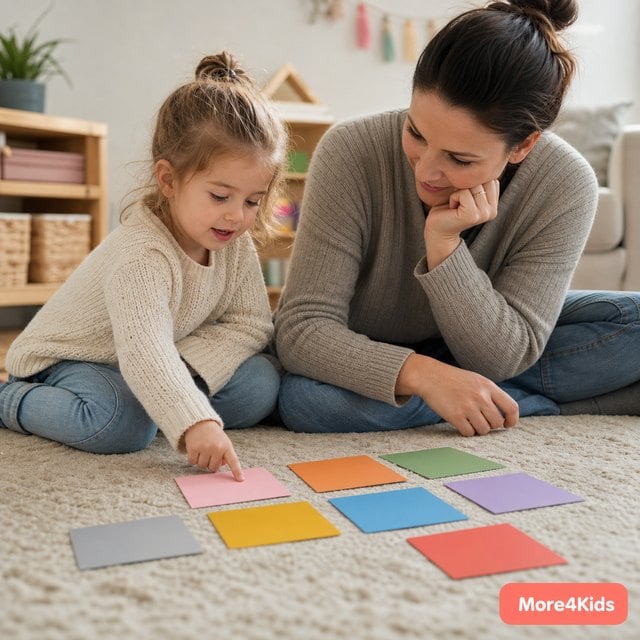
- Give feelings a shared vocabulary. Kids can’t manage what they don’t have words for. Narrate emotions casually all day long — yours, theirs, the character’s in whatever book you’re reading. “I felt frustrated when I spilled the coffee, so I took a breath.” A child who has language for feelings is far less likely to communicate them by hitting or screaming instead.
- Practice calm-down tools when everyone’s already calm. You can’t teach swimming during a flood. Blow out “birthday candle” breaths, name five things you can see, squeeze and release your fists — turn it into a game at bedtime, in the car, anywhere low-stakes. Then the tools are actually available once the real wave hits.
- Let small feelings be okay. When we rush to fix or shush every frown, kids learn that emotions are emergencies to be handled immediately. Letting a child sit with mild disappointment, with you right there beside them, builds the muscle for bigger feelings later. Watch, too, for shame sneaking in; our piece on guilt and its effects on children is a good reminder that big feelings should never come bundled with the message that the child themselves is bad.
- Connect before you correct. A child who feels seen calms faster and cooperates more readily afterward. Zero to Three has a lovely, honest look at how self-control develops in young kids that reassured me on plenty of hard days.
None of this is a quick fix, and I’d be lying if I said otherwise. Emotional skills grow at the pace a garden grows — slowly, unevenly, and mostly when you aren’t staring straight at it.

Taking Care of Your Own Big Emotions Too
I can’t talk about any of this honestly without saying the quiet part out loud: our kids’ meltdowns hook our own. When my child was screaming in that cereal aisle, my heart rate spiked, my patience went thin, and some old voice in my head hissed that a good parent would have this handled by now. That voice is a liar.
You cannot pour calm out of an empty cup. Some of the most important emotional-coaching work you’ll ever do is tending your own nervous system — a real breath, a beat before you respond, a moment of grace when you lose it anyway (because you will, and so do I, still). When you repair after snapping — “I got too loud earlier, that wasn’t about you, I’m sorry” — you are not failing. You’re teaching the single most valuable emotional skill there is: what to do after the wave, once you didn’t handle it as well as you’d hoped. That’s the lesson that actually sticks with them.
When Big Emotions Might Need Extra Support
Almost always, big feelings are ordinary childhood, and steady, patient guidance at home is exactly the right response. But it’s worth checking in with your pediatrician if the emotional storms are extreme, frequent, and dragging on far longer than they do for other kids the same age; if they include hurting themselves or others, or regularly derail school, friendships, and family life; or if your gut is simply telling you something more is going on underneath. Reaching out isn’t an overreaction — it’s you knowing your own child, and there’s real, kind help out there when it’s needed.
Most days, though, the work is beautifully simple, even when it’s genuinely hard: stay close, stay calm, name the feeling, and ride the wave together until your child can ride it alone. You are not raising a kid who never falls apart. You’re raising one who learns, slowly and safely, how to put themselves back together — with you standing there as the steady proof that big feelings are survivable, every single time.
Frequently Asked Questions
At what age should kids be able to manage their emotions on their own?
Emotional regulation develops gradually well into the late teens and early twenties, so there’s no clean finish line. Toddlers rely almost entirely on you to co-regulate; school-age kids can start using calm-down tools with reminders; and teens can often self-regulate but still need support during the hardest moments. Progress is bumpy and uneven, and a child who copes beautifully one week may fall apart the next — that’s completely normal, not a step backward.
How do I stay calm when my child is having a huge meltdown?
Start with your own body before you say a word — one slow breath, softening your shoulders, lowering your voice. Kids borrow our calm, so steadying yourself first is genuinely the most effective thing you can do. It helps to remember, in the moment, that your child isn’t giving you a hard time; they’re having a hard time. And when you don’t manage to stay calm, repairing afterward teaches just as much as staying composed would have.
Is it bad to give my child space during big emotions?
Not at all, as long as it’s offered with warmth rather than used as punishment. Some kids need closeness to settle and others need a little room, and you’ll learn your child’s pattern over time. The key is staying emotionally available — “I’m right here when you’re ready” — so space feels like a safe choice, never like being sent away or abandoned with a big, scary feeling.
What's the difference between a normal meltdown and something to worry about?
Ordinary big emotions, even loud and frequent ones, are a normal part of growing up and ease with patient guidance. It’s worth talking to your pediatrician when the reactions are extreme and constant, last far longer than in same-age peers, involve regularly hurting themselves or others, or steadily disrupt school, friendships, and home life. Trust your instincts — knowing your own child is exactly what makes you the right person to notice when something needs a closer look.
Related Articles
- Parenting A Sensitive Child
- Cultivating Better Behavior In Children
- Dealing With A Difficult Child
- Teen Stress And Anxiety
- Guilt And Children

Meet Sophia Richards Sophia Richards is an early childhood educator, passionate writer, and the proud mom of three energetic kids. With a degree in Education and over a decade of hands-on classroom experience, Sophia bridges the gap between professional teaching strategies and everyday family life. At More4Kids, she translates complex child development concepts into practical, actionable parenting tips that families can use at home.
Whether she is sharing positive reinforcement techniques, educational crafts, or honest reflections on the chaos of raising three children under one roof, Sophia’s goal is to empower parents to foster resilience and joy in their kids. When she isn't writing or lesson planning, you can find her organizing neighborhood scavenger hunts or trying out new kid-friendly recipes.
Areas of Expertise: Early Childhood Education, Positive Parenting, Sibling Dynamics, Educational Play, Family Wellness.

Add Comment