
















By Sophia Richards
I used to think I was just bad at mornings. For years, the stretch between the first alarm and the front door was the loudest, most frantic part of my whole day, and I was sure it was a me problem. Then I had three kids, went back into an early-childhood classroom, and watched twenty preschoolers move through a calm, predictable morning without a single adult raising their voice. That is when it clicked. The problem was never me, and it was never my kids. It was that we had no plan.
A good morning routine for kids is not about being a drill sergeant or waking up at five to make matching lunches. It is about building a handful of predictable steps that your child can eventually run without you narrating every second. As a mom of three and a former teacher, I can promise you this: a calmer morning is a skill you build, not a personality you are born with. Let’s walk through how to make school mornings feel less like a countdown to a meltdown and more like a soft, ordinary start to the day.
Why a Morning Routine for Kids Works
Table of Contents
Before we get to the how, I want to explain the why, because it is the part that kept me going on the hard days.
Children are wired for predictability. The American Academy of Pediatrics explains that consistent family routines give kids a comforting sense of security and help them feel safe, cared for, and in control of their world. When a child knows exactly what comes next, their brain does not have to spend energy bracing for the unknown, and that freed-up energy is why routines quietly reduce anxiety and power struggles. It is also how kids slowly build self-regulation and independence, because a step they have done a hundred times becomes a step they can eventually do alone.
This matches everything I saw in the classroom. The morning I stopped announcing every single transition and instead pointed to a simple picture chart on the wall was the morning my group got calmer. The routine did the reminding, not my voice. Your kitchen can work the same way. A morning routine for kids is really just a set of rails that lets a still-developing brain succeed without a running stream of nagging.
There is a relationship payoff too, and honestly it is the reason I care about this at all. When mornings are not a fight, the last thing my kids feel before they leave is my calm face, not my frustrated one. That matters more than a perfectly packed bag. Kids carry the tone of the morning with them into the classroom, and so do we into our own day. A goodbye that ends in a hug instead of a snapped reminder is the kind of small, repeated moment that quietly tells a child they are safe and loved, even on a busy Tuesday.
A Calm Morning Actually Starts the Night Before
Here is the truth almost no one wants to hear: most morning meltdowns are really sleep problems wearing a disguise. You cannot build stress-free school mornings on top of an overtired kid.
The AAP, following the recommendations of the American Academy of Sleep Medicine, notes that children ages 6 to 12 generally need 9 to 12 hours of sleep, and teens ages 13 to 18 need 8 to 10 hours on a regular basis. When kids consistently fall short, the morning is where it shows up. Nemours KidsHealth points out that overtired children are harder to wake and more irritable, which is a fair description of the kid who dissolves because their socks feel wrong at 7:15. And the Sleep Foundation notes that insufficient or irregular sleep affects children’s mood, attention, and behavior, the exact three things you need most before school.
So the first move in any morning routine is a boring one: protect bedtime. Consistent sleep and wake times, even close to the same on weekends, do more for your morning than any clever chart. If your evenings need help too, our school night bedtime routine walks through the wind-down side of this, and the two routines really are two halves of the same calm day. When back-to-school season starts, shift bedtime earlier gradually, by ten or fifteen minutes every few nights, rather than expecting a summer sleeper to suddenly conk out at eight.
A few other night-before wins that quietly buy you morning peace:
- Lay out clothes the night before. Full outfit, socks and shoes included. This single habit erased about half of our morning arguments.
- Pack the bag and park it by the door. Homework in, water bottle in, permission slip signed, everything waiting in one launch spot.
- Prep or decide breakfast in advance. Even just knowing the plan removes a decision from your tired morning brain.
- Set out anything for you, too. Your coffee, your keys, your bag. A calm parent is part of the routine.
The Step-by-Step Morning Routine
Now the main event. You do not need all of these to be elaborate; you need them to be the same, in the same order, most days. Here is the framework I use, and that I have watched work for a lot of families.
1. Wake with a buffer, not a jolt. Build in 10 to 15 more minutes than you think you need. A rushed wake-up sets a frantic tone for everyone. A gentle alarm, open curtains, or a quiet song works better than flipping on a light and clapping. 2. Do the same first three things, every day. In our house it is bathroom, get dressed, come to the kitchen. Same order, always. When the first stretch is automatic, no one is negotiating at 7 a.m. 3. Eat a real, simple breakfast. It does not need to be fancy. Something with a little protein keeps kids steadier through the morning than sugar alone. Sit down for even five minutes if you can; it is a calm anchor. 4. Handle teeth, hair, shoes as a fixed block. Group the fiddly finishing tasks together so they do not get scattered and forgotten. This is where a checklist earns its keep. 5. The launch pad check. Everyone grabs their pre-packed bag from the one spot by the door. Because you packed last night, this is a grab-and-go, not a scavenger hunt. 6. Leave with a warm goodbye, not a lecture. The last 60 seconds matter. A hug, an “I love you, have a good day,” and out. Save the reminders about the field trip for the car or, better, a note in the bag.
The magic is not any single step. It is the sameness. A morning routine for kids works because repetition turns a chaotic list into muscle memory, and muscle memory does not need you hovering.

Make It Stick: Charts, Timers, and Kid Ownership
A routine only reduces your workload if your child can run it without you. That is the whole point, and it is where a few simple tools change everything.
Use a visual chart. This is the number-one thing I bring home from the classroom. For kids who are not reading yet, use pictures: a little drawing or photo for dressed, breakfast, teeth, shoes, bag. For older kids, a short written list works. Hang it where the action happens, at their eye level. Now when they ask “what do I do next,” you get to smile and say, “check your chart,” instead of repeating yourself for the fourth time. The chart becomes the boss, which is a gift to your voice and your patience.
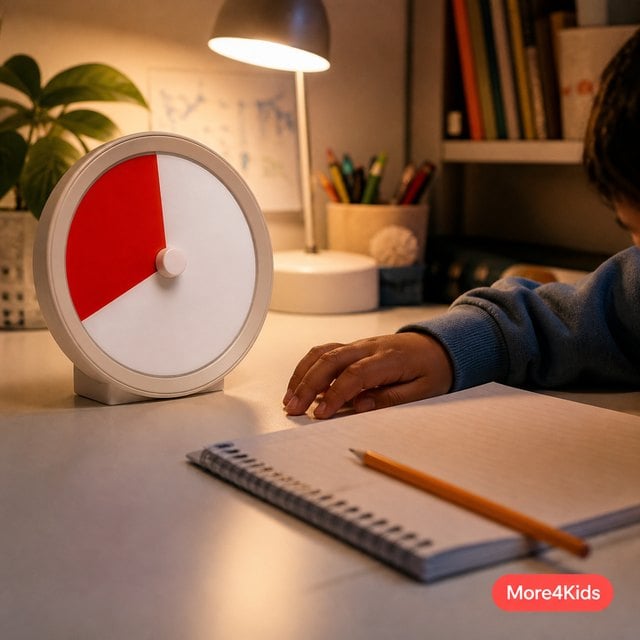
Let a timer be the bad guy. Kids have almost no internal sense of time, so “hurry up” means nothing to them. A visual timer, or even a specific song that has to be finished by the time it ends, makes time something they can see. When the timer beeps instead of you nagging, you stop being the enemy of the morning.
Give them real ownership. Let your child help build the routine and choose the order where it is flexible. Kids protect what they help create. And resist the urge to jump in and do it faster yourself. Yes, a five-year-old buttoning their own shirt takes longer today. But every morning you let them struggle through it is an investment in the morning, a year from now, when they do it in twenty seconds without you. Building independence is slow, and it is worth every slow minute.
Handling the Hard Mornings
Even the best morning routine for kids will have off days, and I want to be honest about that, because “stress-free” does not mean perfect. It means you have a plan to come back to when things wobble.
When a child melts down, remember they are usually not giving you a hard time; they are having a hard time. A morning meltdown is often tiredness, hunger, or anxiety about the school day talking. Your calm is the fastest way through it. Get low, keep your voice quiet, name what you see (“You’re really frustrated those shoes are tricky”), and help them take the next small step. If big feelings at the door are a regular thing in your house, our guide to emotional regulation for kids has gentler tools than “just hurry up.”
For the chronic dawdler, resist adding more reminders, which usually backfires. Instead, tie the routine to a natural, pleasant consequence they can feel: finishing the chart with time to spare earns a few minutes of something they like before you leave, like a page of a book or a quick game. And if mornings have completely fallen apart, do not try to fix everything at once. Pick the single messiest step, fix only that for a week, then add the next. A whole-day overhaul, like our back to school routine reset, works best one calm layer at a time.

Age-by-Age Morning Routine Tweaks
The same framework flexes as kids grow. Here is how I adjust it.
Toddlers and preschoolers (2 to 5). Keep it short and picture-based, and expect to be a warm coach through every step. Offer two-choice control (“red shirt or blue shirt”) to head off power struggles. Sensory stuff matters at this age; scratchy tags and tight socks are real. Build in extra time and lots of patience, because independence here is measured in months.
Early elementary (6 to 9). This is the sweet spot for a written or picture chart they can own. Hand over one or two steps completely and stay out of them, even when it is slower. Let natural consequences do some teaching. A child who forgot to pack their bag last night and feels a little rushed learns more than one who is rescued every time.
Tweens (10 to 12). Move into the background and become a consultant, not a manager. Let them set their own alarm and own their morning, with the routine as a backstop you built together. This is the age to talk with them about why sleep and a decent breakfast make their whole day easier, so the routine becomes their choice, not just your rule.
Frequently Asked Questions
How long should a morning routine for kids take?
Most families do well with a 45- to 60-minute window from wake-up to out-the-door, but the exact length matters far less than the buffer inside it. Time your real mornings for a few days, then add 10 to 15 minutes of cushion so a slow patch does not tip everyone into panic. A routine that is technically shorter but constantly rushed will feel more stressful than a slightly longer one with breathing room.
At what age can kids do a morning routine independently?
It is a gradual handoff, not a switch that flips. Toddlers and preschoolers need you coaching every step, early-elementary kids can own one or two steps and grow from there, and many tweens can run the whole thing with a chart as backup. The trick is to let each step take longer than you would like while they learn it, because that patience now is exactly what buys you the independent morning later.
My child has a meltdown every single morning. What do I do?
First, look at sleep, since overtired kids melt down more, and protect an earlier, more consistent bedtime for a week or two before anything else. Then simplify: pick the one step that causes the most tears and fix only that, using a visual chart and a timer so you are not the one nagging. Keep your own voice calm and low, name the feeling, and help with the next small step. If the meltdowns are intense or tied to real school anxiety, it is always fair to check in with your pediatrician.
Do kids really need breakfast before school?
A morning meal genuinely helps most kids show up steadier and more focused, and it does not have to be elaborate or homemade. Something with a bit of protein tends to hold them better than sugar alone, but a piece of toast eaten calmly beats a “perfect” breakfast eaten in tears. If your child is not hungry first thing, a packed grab-and-go option they can eat a little later is a completely reasonable plan.
How do I fix mornings that have completely fallen apart?
Do not overhaul everything at once, because that is how good intentions collapse by Wednesday. Choose the single messiest moment, whether that is wake-up, getting dressed, or the door, and put one simple support on just that step, like laying clothes out the night before or adding a picture chart. Run it for a week until it feels automatic, then add the next layer. Slow and steady is what actually sticks.
The Bottom Line
A calm morning is not a personality trait, and it is not luck. It is a plain, repeatable morning routine for kids that starts the night before, runs on the same few steps, and slowly hands more of itself over to your child. Some mornings will still go sideways, because you are raising humans, not robots. But a routine gives you something steady to come back to, and it means the last thing your kid feels on the way out the door is your calm, not your countdown.

Pick one change this week. Maybe it is laying out clothes tonight, or hanging a little picture chart by the bathroom, or simply setting the alarm ten minutes earlier so no one has to rush. Small, boring, repeated steps are what build the mornings we actually want. For more parent-to-parent, real-life help with the ordinary hard parts of the day, our parenting section is always here, and the calm afternoon version lives in our after school routine guide for when everyone lands back home.
Related Articles
- School Night Bedtime Routine
- Emotional Regulation For Kids
- Back To School Routine Reset
- Parenting
- After School Routine

Meet Sophia Richards Sophia Richards is an early childhood educator, passionate writer, and the proud mom of three energetic kids. With a degree in Education and over a decade of hands-on classroom experience, Sophia bridges the gap between professional teaching strategies and everyday family life. At More4Kids, she translates complex child development concepts into practical, actionable parenting tips that families can use at home.
Whether she is sharing positive reinforcement techniques, educational crafts, or honest reflections on the chaos of raising three children under one roof, Sophia’s goal is to empower parents to foster resilience and joy in their kids. When she isn't writing or lesson planning, you can find her organizing neighborhood scavenger hunts or trying out new kid-friendly recipes.
Areas of Expertise: Early Childhood Education, Positive Parenting, Sibling Dynamics, Educational Play, Family Wellness.

Add Comment