
















By Sophia Richards
The hour after school can feel like a tiny emotional weather system rolling through the front door. One child is starving. One has a crumpled permission slip in the bottom of a backpack. One wants to tell you every detail of recess, but only while you’re standing over the stove with a timer beeping. If your house runs anything like mine, the evening can tip from “we’re fine” to “why is everyone crying near the shoes?” in about seven minutes.
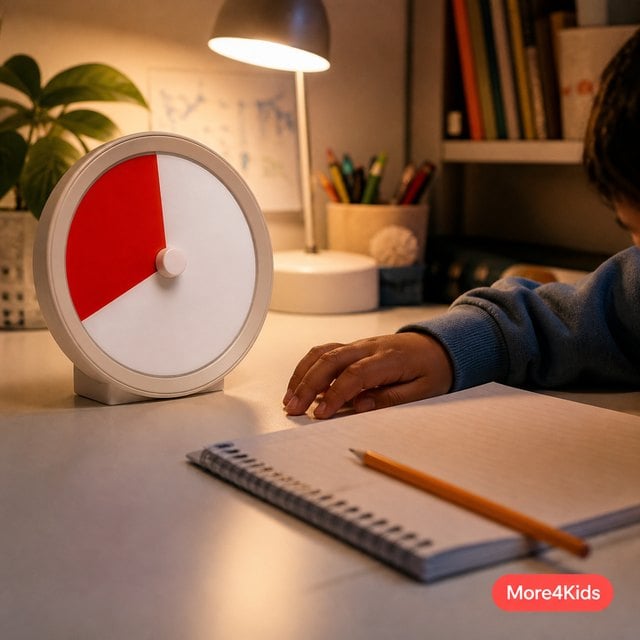
That is why an after school routine matters so much. Not a color-coded fantasy routine that requires three calm adults and a silent kitchen. A real one. The kind that gives kids a soft landing, protects homework and dinner from becoming a nightly fight, and still leaves room for the child who needs ten quiet minutes before they can answer a single question. As a mom of three and an early-childhood educator, I’ve learned that the best after school routine is less about controlling every minute and more about giving the same few minutes a predictable shape.
Below is the reset I wish I had built earlier: seven small steps that can carry your family from backpack chaos to a calmer evening.
Why an After School Routine Helps More Than Another Reminder
Table of Contents
Kids hold a lot together during the school day. They follow rules, shift rooms, manage friendships, listen, sit, move, wait, and try again. By the time they get home, even a child who had a good day may be running on fumes. A simple after school routine tells their body and brain, “You’re home. Here’s what happens next.”
More4Kids has long talked about how simple daily routines give children structure and predictability. That same principle matters after school because this is where the day changes gears. Nemours KidsHealth notes that parent support helps children succeed in school, and that homework works best with a quiet, comfortable, well-supplied space and fewer distractions. The routine is what makes that support repeatable instead of reinvented every afternoon.
For parents, the routine helps too. Instead of making twelve tiny decisions while everyone is tired, you make a few decisions once and let them carry the evening. That is not rigid parenting. That is mercy with a backpack hook.
Step 1: Start With a Soft Landing

The first ten minutes set the tone. In our house, I eventually learned not to greet every child with questions. “How was your day?” sounds harmless, but for a tired kid it can feel like another assignment. Some children spill everything right away. Others need food, water, a hug, or silence before their words come back online.
Build a soft landing into your after school routine before you ask for homework folders or spelling lists. Shoes off. Backpack down. Bathroom. Water. Snack. A little space. If your child wants to talk, listen. If they need quiet, let quiet count as connection. I like one gentle sentence: “I’m glad you’re home.” It does more work than a dozen questions.
This is also the moment to lower the sensory volume if your home allows it. Dim the overhead lights, turn off background TV, keep the first snack simple, and avoid launching straight into corrections. The child who felt steady at school may save their messiest feelings for the place they feel safest. That does not mean you have to absorb chaos forever, but it does mean the first step is landing, not lecturing.
Step 2: Empty the Backpack Before It Becomes a Museum
Every after school routine needs a backpack station. Not an elaborate command center. Just one reliable spot where the backpack opens before dinner, papers come out, lunch containers surface, and tomorrow’s surprises stop hiding.
With younger kids, do this together. Sit nearby and make it a two-minute ritual: folder out, lunchbox to the sink, water bottle to refill, library book to the basket. Older kids can own more of it, but even they benefit from a visible checklist while the habit is still forming. I have learned the hard way that “check your backpack” means something very different to a nine-year-old than it does to a parent.
This is a good place to build independence without turning the afternoon into a test. Try saying, “Show me what needs a parent signature,” instead of digging through every pocket yourself. The goal is a child who slowly learns, “My school things are mine to manage, and my parent will help me learn how.”
Step 3: Feed the Body Before You Ask for Focus
Hungry kids do not become calmer because we remind them to be calm. They become calmer when their bodies are cared for. Nemours KidsHealth points out that children need enough sleep and steady routines to be ready to learn; the same common-sense principle applies after school. A child who has been sitting, learning, and negotiating cafeteria food needs fuel before they can face math.
Keep the snack boring in the best way: predictable, filling, and easy. Protein plus fiber usually works better than a sweet snack alone. Think cheese and crackers, yogurt and fruit, peanut butter toast, hummus and vegetables, leftovers, or whatever your family actually eats. If dinner is soon, call it a bridge snack and keep it small.
In my house, snack also works as a transition cue. Snack means school is done, home has begun, and homework is coming after bodies settle. That rhythm is part of the after school routine, and it keeps me from asking tired kids to produce focus out of thin air.
Step 4: Decide Where Homework Lives
Homework does not need a perfect desk. It needs a predictable place. KidsHealth recommends a well-lit, comfortable, quiet workspace stocked with basic supplies and away from distractions like TV, games, and unnecessary phone use. For younger kids, the kitchen table may be better than a bedroom because they can stay near you without needing you to hover. Older kids may want more privacy, but a quick check-in still helps.
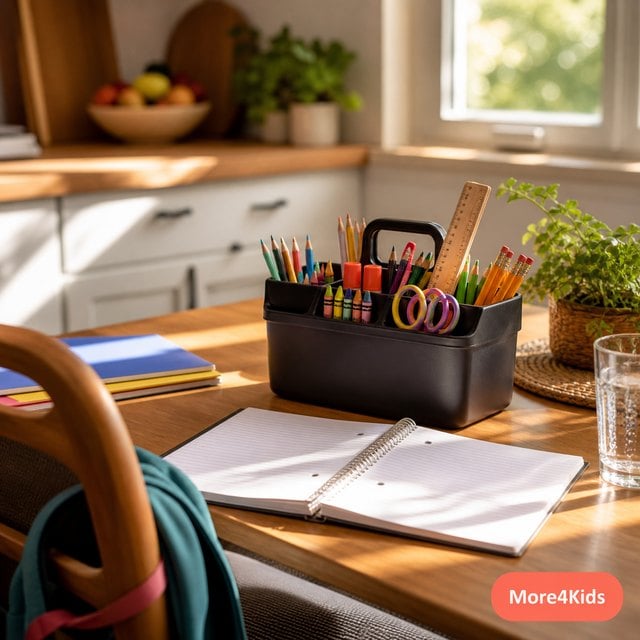
The trick is to choose the homework spot before the daily debate begins. Put pencils, scrap paper, scissors, glue sticks, and a charger where your child can reach them. If your family has several kids, consider a small supply basket that travels to the table. Nothing derails an after school routine quite like a missing pencil becoming a 20-minute search mission.
Parents have a supporting role here, not a rescuing role. KidsHealth is clear that parents can answer questions, help interpret directions, and review finished work, but should resist doing the assignment for the child. That line matters. You can sit close. You can encourage. You can break the task into first, next, last. But the learning belongs to them.
Step 5: Put Screens in Their Place

Screens are not the enemy of every afternoon. They are just terrible at quietly staying in their lane unless we give them one. The American Academy of Pediatrics says families should create media rules that fit their routines and values, including screen-free times such as during homework and before bed to support learning, connection, and sleep.
That makes screen expectations a key part of an after school routine. Decide when screens are available and when they are not. For many families, homework first and screens later works. For others, a short decompression show before homework is realistic, but it needs a clear ending. Use a timer, not a debate. Charge devices outside bedrooms if that helps bedtime. Keep your rules simple enough that you can hold them on a tired Tuesday.
If this is a sore spot in your house, our guide to how much screen time is healthy can help you think beyond minute-counting and focus on what screens are crowding out. After school, the big things to protect are connection, movement, homework, dinner, and sleep.
Step 6: Build in Movement Before You Demand Stillness
Some kids need quiet after school. Others need to move as if they have been personally wronged by chairs. Both responses are normal. A strong after school routine leaves room for the child in front of you.
For high-energy kids, try ten to twenty minutes of outside play, a walk, shooting baskets, scooter time, a dance break, or simply carrying groceries in from the car. For slower-to-transition kids, movement may be gentler: stretching, a warm shower, or walking the dog with you. The point is not to squeeze in another achievement. It is to help the body shift from school mode to home mode.
This is where Sophia-the-teacher and Sophia-the-mom agree completely: many behavior problems shrink when the schedule respects the child’s body. If your child cannot sit for homework yet, movement may be the bridge, not the reward.
Step 7: End With Tomorrow in Mind
The best after school routine quietly protects the next morning. Before the evening gets too late, build in a tiny reset for tomorrow: backpack repacked, folder returned, lunchbox washed, clothes chosen if mornings are rough, device charging where it belongs.
This does not have to happen all at once. Some families do backpack reset right after homework. Others do it after dinner. Pick one reliable time and attach it to something that already happens. If mornings are your family pain point, pair this with a gentler school morning routine so the two halves support each other.
Nemours KidsHealth says school-age children need 9 to 12 hours of sleep, and that homework, activities, screens, and hectic schedules can crowd out the sleep they need. That means the after-school plan has to protect bedtime, not just homework. A routine that saves the math sheet but ruins sleep is not really saving the evening.
A Sample After School Routine You Can Adapt
Here is a simple version to steal and make your own:
1. Home landing: shoes, bathroom, water, snack. 2. Backpack reset: papers out, lunchbox emptied, parent forms handled. 3. Decompression: quiet time, outside time, or movement. 4. Homework block: same place, same basic supplies, short breaks as needed. 5. Screen time: only in the family lane you have already chosen. 6. Dinner and connection: even ten minutes counts. 7. Tomorrow reset: backpack repacked, clothes or lunch plan handled, devices away.
You may need to flip the order. Some children truly do homework better right away before they lose steam. Others need a snack and movement first. A child in sports may need a mini routine on practice days and a fuller routine on home days. That is fine. A working after school routine should serve the family you actually have, not the family a printable chart imagined.
For broader parenting rhythms, the parenting hub has more support for the ordinary days that make up family life. And if you are balancing work calls, dinner, and pickup all at once, you are not failing; you may simply need a smaller routine. Our piece on family and work balance pairs well with this because the grown-up schedule matters too.
Start with one change this week. Maybe snack before questions. Maybe the backpack station. Maybe screens charging away from the homework table. One small after school routine that happens most days will beat a gorgeous chart that everyone abandons by Wednesday.

Frequently Asked Questions
What is a good after school routine for kids?
A good after school routine gives kids a soft landing first, then moves through backpack reset, snack, decompression, homework, screen boundaries, dinner, and a small reset for tomorrow. The exact order can change by child and schedule. The key is predictability, not perfection. Kids do better when they know what happens next and parents are not rebuilding the whole evening from scratch every day.
Should kids do homework right after school?
Some kids do best starting homework soon after school while they still have momentum. Others need food, movement, or quiet before they can focus. Try a short snack-and-reset period first, then watch your child. If homework turns into tears every day, the timing may be wrong. A strong after school routine can include a break as long as homework still has a reliable start time.
How do I stop after-school meltdowns?
You may not stop every meltdown, but you can make them less frequent and less intense by lowering demands right after pickup, offering food and water, reducing noise, and building in decompression before corrections or homework. Keep your voice steady and your routine simple. If meltdowns are severe, persistent, or tied to school refusal or safety concerns, talk with your child’s teacher or pediatrician.
How much screen time should be in an after school routine?
There is no one perfect number for every family. The American Academy of Pediatrics recommends a family media plan that fits your routines and values, with screen-free times during homework and before bed. After school, screens should not crowd out connection, movement, homework, dinner, or sleep. Decide the screen lane ahead of time so it does not become a daily negotiation.
How can working parents create an after school routine?
Working parents can keep the routine small and visible. Choose two or three anchors: snack, backpack reset, and homework start time. If a caregiver or older child handles the first part, write the routine in simple steps and keep supplies in one place. The routine does not need to look hands-on every minute to work. It just needs to be clear enough that everyone knows the next right step.
Related Articles
- A Secret To Happy Kids Daily Routines
- How Much Screen Time For Kids
- Getting Kids Up
- Parenting
- Family And Work Balance

Meet Sophia Richards Sophia Richards is an early childhood educator, passionate writer, and the proud mom of three energetic kids. With a degree in Education and over a decade of hands-on classroom experience, Sophia bridges the gap between professional teaching strategies and everyday family life. At More4Kids, she translates complex child development concepts into practical, actionable parenting tips that families can use at home.
Whether she is sharing positive reinforcement techniques, educational crafts, or honest reflections on the chaos of raising three children under one roof, Sophia’s goal is to empower parents to foster resilience and joy in their kids. When she isn't writing or lesson planning, you can find her organizing neighborhood scavenger hunts or trying out new kid-friendly recipes.
Areas of Expertise: Early Childhood Education, Positive Parenting, Sibling Dynamics, Educational Play, Family Wellness.



Add Comment