














By Sophia Richards
The first time one of my kids sat straight up in bed screaming, eyes wide open but looking straight through me, I genuinely thought something was terribly wrong. I scooped her up, said her name, tried everything I knew to comfort her, and none of it landed. She thrashed and cried like I wasn’t even in the room, because in a sense, I wasn’t there to her at all. Ten minutes later she flopped back onto the pillow, fast asleep, and the next morning she remembered absolutely nothing. That was my crash course in the difference between a nightmare and a night terror, and I remember how helpless I felt not knowing which one I was even looking at.
If you have ever stood in a dark hallway at 2 a.m. with your heart pounding, wondering why you cannot soothe your own child, I want you to know two things right away. You are not doing anything wrong, and your child is almost certainly going to be just fine. Nightmares and night terrors are both incredibly common in childhood, they are usually a normal part of a developing brain and a busy little imagination, and there are calm, simple things you can do that genuinely help.
Here is what I have learned, both as a mom of three and as a former early-childhood educator, and what the pediatric experts back up: the two are not the same thing, and knowing which one your child is having completely changes how you respond. So let’s walk through what nightmares and night terrors actually are, why they happen, exactly what to do in the moment for each one, and how to gently set the stage for calmer nights.
Nightmares vs. Night Terrors: What’s Actually Happening
Table of Contents
Before anything else, it helps to understand that nightmares and night terrors come from two completely different parts of the night, and that single fact explains almost everything about how they look and what your child needs from you.
A nightmare is a scary or upsetting dream that usually wakes your child up. According to Nemours KidsHealth, nightmares happen during REM sleep, the stage when the brain is very active and most dreaming occurs, and they tend to strike in the second half of the night when REM periods get longer. The important part for you is this: your child truly wakes up, the scary images still feel real, and they will remember it, at least in pieces. That is why they cry out for you, and it is why your comfort works so beautifully. They know you are there, and they need you.
A night terror is a different animal entirely. The American Academy of Pediatrics explains that night terrors happen during the deepest, non-REM stages of sleep, usually early in the night, often before the parents have even gone to bed themselves. During a night terror your child might cry uncontrollably, sweat, shake, breathe fast, thrash around, scream or kick, and have a terrified, confused, or glassy-eyed look. Here is the part that catches every parent off guard: your child will not recognize you, may push you away, and is not actually awake. KidsHealth describes it as the brain’s fight-or-flight center becoming briefly overexcited while the child is still asleep. That is why comforting does not seem to reach them, and it is not because you are failing. They simply are not awake to be comforted.
The other big difference is memory. A child wakes from a nightmare and remembers being scared. A child comes out of a night terror, settles right back into sleep, and remembers nothing at all the next morning. As KidsHealth puts it, night terrors can be alarming to watch but they are not harmful, and kids almost always grow out of them. Once I understood that my daughter was asleep the whole time and would not carry any of it into the morning, the whole thing got so much less frightening for me, too.
Why Kids Have Nightmares
Nightmares can feel mysterious, but they usually make more sense than we think. KidsHealth is honest that no one knows exactly what causes them, but dreams and nightmares seem to be one of the ways kids process their thoughts, feelings, and worries. A busy little brain works through the day while the body rests, and sometimes the worries come out sideways, with a scary twist.
That is why nightmares so often spike during times of stress or change. Moving to a new house, starting at a new school, the arrival of a new sibling, or tension at home can all show up in unsettling dreams, even when your child cannot put the worry into words during the day. Sometimes nightmares are part of a child’s reaction to something genuinely upsetting, like an accident or a scary event. And for kids with big, vivid imaginations, a scary movie, a spooky book, or too much screen time right before bed is often all it takes to fuel a bad dream.
Age plays a role, too. The American Academy of Pediatrics notes that children can start having nightmares as young as six months old, and they tend to peak between ages three and twelve. The Sleep Foundation adds that frequent nightmares are more common in children than adults and are most prevalent between ages three and six, easing up as kids get older. None of that means something is wrong with your child. It means their imagination is developing right on schedule, and a little more nighttime reassurance is simply part of the territory for a while.
What to Do During a Nightmare
Because your child is genuinely awake after a nightmare, your calm presence is the medicine. The AAP’s guidance here is refreshingly simple, and it matches what most of us do on instinct once we take a breath.
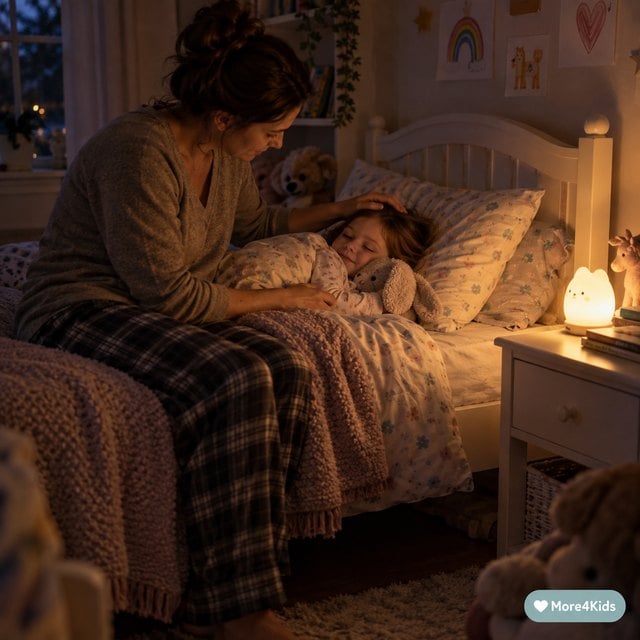
Go to your child as quickly as you can, and let them feel you there. Reassure them that you are present and you will not let anything harm them. If they want to tell you what happened in the dream, let them, and then gently remind them that dreams are not real and cannot hurt them. Look for anything in the room that might be feeding the fear, like a shadow that looks like a monster, and make it disappear. If a light helps them feel safer, let them keep one on. Once they are calm, encourage them to settle back to sleep.
KidsHealth offers one more move I love, especially for preschoolers and young school-age kids with those wonderful, overactive imaginations. They call it doing your magic. Name what happened out loud in the simplest terms, something like, “You had a bad dream, but now you’re awake and everything is okay.” Then, if your child believes in the monster, you are allowed to believe in the cure. A quick spritz of pretend monster spray, a special guardian stuffed animal on watch, a nightlight that “scares the scaries away,” these little rituals give a frightened child a sense of control, and control is exactly what a nightmare steals. You are not lying to them; you are meeting their imagination on its own turf and handing them a tool. Building this kind of steadiness ties right into helping kids with emotional regulation, because you are teaching them that big, scary feelings are survivable and they are never alone with them.
What to Do During a Night Terror
A night terror asks something very different of you, and it is almost the opposite of your instinct. Your instinct is to wake your child, hold them tight, and comfort them out of it. With a night terror, the kindest and most effective thing you can do is mostly wait.
Both the AAP and KidsHealth are clear on this: do not try to wake a child in the middle of a night terror. Waking them usually does not work, and the kids who do get jolted awake tend to be confused and upset and take even longer to settle back down. Instead, stay calm, keep your voice low, and stay close. Your main job is safety. Make sure your child cannot hurt themselves by thrashing or bolting out of bed, gently guiding them back if they try to run, but without forcing them awake. Then you simply sit quietly nearby and wait. Most night terrors pass within a few minutes, and your child slides right back into peaceful sleep as if nothing happened.

I know how hard it is to sit on your hands while your child screams. It feels like doing nothing. But remember, your child is asleep, they are not suffering the way it looks, and they will not remember a second of it in the morning. The person a night terror is hardest on is you. One practical tip from KidsHealth that has saved more than a few families: be sure to tell babysitters and grandparents what a night terror looks like and what to do, so a caregiver who has never seen one does not panic. And if the terrors tend to strike around the same time each night, KidsHealth suggests you can try gently rousing your child about fifteen to thirty minutes beforehand, just enough to nudge them out of that deep sleep stage, which sometimes heads the terror off entirely.

How to Stop Nightmares Before They Start
You cannot prevent every bad dream, and you should not expect to. But the single most powerful lever you have over both nightmares and night terrors is the same one: a well-rested, calm child at bedtime. When kids are overtired, stressed, or wound up, both nightmares and night terrors become more likely, so almost everything that helps comes back to protecting sleep and lowering the temperature before lights-out.

Start with a steady, soothing wind-down. A regular bedtime and wake-up time, plus a calming bedtime routine that helps your child slow down and feel safe, does more to prevent scary nights than anything else on this list. KidsHealth’s short list of sweet-dream helpers is worth taping to the fridge: keep bedtime and wake time consistent; build in cozy, slowing-down rituals like a bath, a snuggle, a story, or quiet talk about the nice parts of the day; make the bed a peaceful place with a favorite stuffed animal or a nightlight; skip scary movies, shows, and stories before bed, especially if they have triggered nightmares before; cut out screens close to bedtime; and avoid caffeine, which hides in chocolate and soda and quietly wrecks sleep.
Because stress is such a big driver, daytime matters as much as nighttime. If your child is wrestling with a worry, a change, or some daytime anxiety, gently helping them name it and feel heard during waking hours often calms the nights, too. Night terrors specifically get more likely when a child is simply not getting enough sleep, so an earlier bedtime is sometimes the whole fix. And if bedtime itself has become a source of fear or clinginess, our guide to separation anxiety walks through building that sense of safety back up. None of this is about doing bedtime perfectly. It is about giving a tired little brain the calm, predictable runway it needs to settle.
Nightmares and Night Terrors by Age
What you see changes as your child grows, so it helps to picture the general arc. In the toddler and preschool years, roughly ages one to five, night terrors are at their most common, and they are often the more dramatic thing you will witness. This is also when nightmares begin in earnest, because imagination is exploding and the line between real and pretend is still blurry. For the littlest ones, keep your response short, physical, and calm: safety during a terror, a quick cuddle and simple words after a nightmare.
Through the school-age years, roughly six to twelve, nightmares tend to take over as the more frequent event, peaking somewhere in this window before easing off. The upside is that older kids can understand more. They can grasp that a dream is not real, talk through what scared them, and even help brainstorm their own comfort tricks, which builds real resilience. Night terrors usually fade as kids move toward the teen years; both the AAP and KidsHealth note that most children simply outgrow them, generally before adolescence. Across every age, the formula holds steady: comfort a nightmare, keep a night-terror child safe and wait, and protect good sleep all the way through.
When to Call the Doctor
The vast majority of nightmares and night terrors need nothing more than patience and reassurance. But you know your child, and there are a few signs worth a conversation with your pediatrician. This is not about scaring you; it is about knowing where the ordinary ends.
KidsHealth suggests checking in with the doctor if night terrors last longer than thirty minutes, happen more than once a week, or keep your child from getting enough sleep. It is also worth a call if your child seems very sad, fearful, or stressed during the daytime, since persistent daytime distress can be worth exploring on its own. And a few specific physical signs during an episode, like drooling, stiffening, or jerking movements, should always be mentioned to your doctor, because those can look different from a typical night terror. The Sleep Foundation adds that frequent nightmares that genuinely disrupt your child’s mood, daytime functioning, or sleep are also a reasonable reason to seek advice. Trust your gut here. Asking is always okay, and your pediatrician would far rather hear from you than have you lie awake worrying.

Frequently Asked Questions
What is the difference between a nightmare and a night terror?
A nightmare is a scary dream that wakes your child up during REM sleep, usually in the second half of the night; they will be upset, will want comfort, and will remember it. A night terror happens during deep, non-REM sleep earlier in the night, and your child is not actually awake, will not recognize you, and will not remember it in the morning. The simplest test: if your child wants you, it is likely a nightmare, so comfort them. If they seem to look right through you, it is likely a night terror, so keep them safe and wait.
Should I wake my child during a night terror?
No. Both the AAP and Nemours KidsHealth advise against trying to wake a child mid-terror. It usually does not work, and a child who does get startled awake is often more confused and upset and takes longer to settle back to sleep. Stay calm, make sure they cannot hurt themselves, and quietly wait. Most night terrors pass on their own within a few minutes.
How can I stop my child's nightmares?
You cannot prevent every nightmare, but you can make them much less likely. A consistent, calming bedtime routine, a regular sleep schedule, and enough total sleep are the biggest levers. Keep scary movies, shows, and screens out of the hour before bed, skip caffeine, and give your child a cozy, safe-feeling bed with a comfort object or nightlight. Because stress and change feed nightmares, helping your child talk through daytime worries often quiets the nights, too.
Are night terrors harmful or a sign something is wrong?
In almost all cases, no. KidsHealth describes night terrors as alarming to watch but not harmful, and notes that children nearly always grow out of them, usually before their teens. They tend to run in families and are often just a feature of a young, developing sleep cycle. They are worth a doctor’s visit only if they are very frequent or long, cost your child real sleep, come with unusual physical movements, or pair with significant daytime distress.
At what age do nightmares and night terrors stop?
It varies from child to child, but the general pattern is reassuring. Night terrors are most common in toddlers and preschoolers and usually fade before the teen years. Nightmares can begin as early as six months, tend to peak between ages three and twelve, and generally become less frequent as kids get older and better able to understand that dreams are not real. For most families, scary nights become a smaller and smaller part of the picture over time.
The Bottom Line
Standing in the dark with a crying child is one of the lonelier moments of parenting, but you are far from alone in it, and you are more equipped than you feel. Nightmares and night terrors are a normal, common, and almost always temporary part of childhood. The whole game comes down to a few calm moves: know which one you are looking at, comfort a nightmare and keep a night-terror child safe while you wait it out, and protect good, unhurried sleep so scary nights get rarer over time. That steady, reassuring presence you bring at 2 a.m. is doing more than you know.
You will not handle every midnight wake-up perfectly, and you do not need to. Pick the one small change that feels most doable in your house this week, maybe an earlier bedtime, a gentler wind-down, or a nightlight and a little monster spray by the bed, and start there. Your calm is contagious, and over time it teaches your child the most important lesson of all: that the dark is survivable, the scary passes, and someone who loves them is always close by. For more calm, practical help with the ups and downs of these years, our parenting section is right here with you.
Related Articles
- Emotional Regulation For Kids
- School Night Bedtime Routine
- How To Help An Anxious Child
- Childrens Sleep
- Separation Anxiety
- Parenting

Meet Sophia Richards Sophia Richards is an early childhood educator, passionate writer, and the proud mom of three energetic kids. With a degree in Education and over a decade of hands-on classroom experience, Sophia bridges the gap between professional teaching strategies and everyday family life. At More4Kids, she translates complex child development concepts into practical, actionable parenting tips that families can use at home.
Whether she is sharing positive reinforcement techniques, educational crafts, or honest reflections on the chaos of raising three children under one roof, Sophia’s goal is to empower parents to foster resilience and joy in their kids. When she isn't writing or lesson planning, you can find her organizing neighborhood scavenger hunts or trying out new kid-friendly recipes.
Areas of Expertise: Early Childhood Education, Positive Parenting, Sibling Dynamics, Educational Play, Family Wellness.




Add Comment