













The most commonly reported and studied types of child sleeping disorders are that of parasomnias, night terrors, somnambulism, nocturnal enuresis, obstructive sleep apnea syndrome and narcolepsy. Sleep disorders can affect kids in almost any Family, that is why it is important to stay informed and consult a health professional if you are concerned.
Child Sleeping Disorders #1: Parasomnias
Parasomnias are sleeping disorders that are characterized by that of abnormal polysomnography. There is often a family history for these parasomnias, and they are usually episodic in nature and are a basic reflection of central nervous system immaturity. Many parasomnias such as sleepwalking are often used in comedy, but in fact can have incredibly serious consequences.
Child Sleeping Disorders #2: Night Terrors
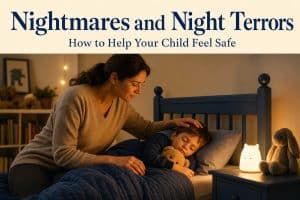
Night terrors typically occur within the child’s first 90 minutes of sleep, where the child will then suddenly bolt upright and scream, and will usually be inconsolable for a period of time before being able to relax and fall back asleep. Night terrors are most common in children from three to eight years old, and it is important to be able to distinguish night terrors from nightmares, as they are more likely to occur during times of stress or fatigue.
Child Sleeping Disorders #3: Somnambulism
In the act of somnambulism, the child will sit up in bed with their eyes open and yet they are ‘unseeing’; this is otherwise often known as sleepwalking. These disorders typically occur in the school-aged child, and more often in boys than girls. Activity of the child during somnambulism may range from a purposeless restlessness in bed to actual walking throughout the house or location.
Child Sleeping Disorders #4: Nocturnal Enuresis
Nocturnal enuresis, which is more commonly known as bed-wetting, is easily one of the most prevalent and persistent sleep problems in children. This sleep disorder is classified as primary when the child has never been persistently dry through the night and as secondary when the child only starts wetting the bed after one year of continence.
Child Sleeping Disorders #5: Obstructive Sleep Apnea Syndrome
The symptoms of obstructive sleep apnea syndrome include: Snoring, difficulty breathing during sleep, or mouth breathing during sleep. Obstructive sleep apnea syndrome (OSAS) in children is most frequently caused by adenotonsillar hypertrophy, and other possible causes include: Craniofacial abnormalities, obesity, and neuromuscular disease. To eliminate snoring, your doctor may recommend CPAP machines to keep your child’s upper airway passages open, preventing snoring and sleep apnea.
Child Sleeping Disorder #6: Narcolepsy
Although narcolepsy is typically uncommon in children, it may sometimes occur in adolescence. The predominant symptom of this sleep disorder is that of excessive daytime sleepiness, and initially, children with narcolepsy will find it difficult to get up in the morning. As well, when awakened, the child may appear to be confused or may be aggressive or verbally abusive.
Posting Search Tags: Health Sleep Disorders




Add Comment