













By Sophia Richards
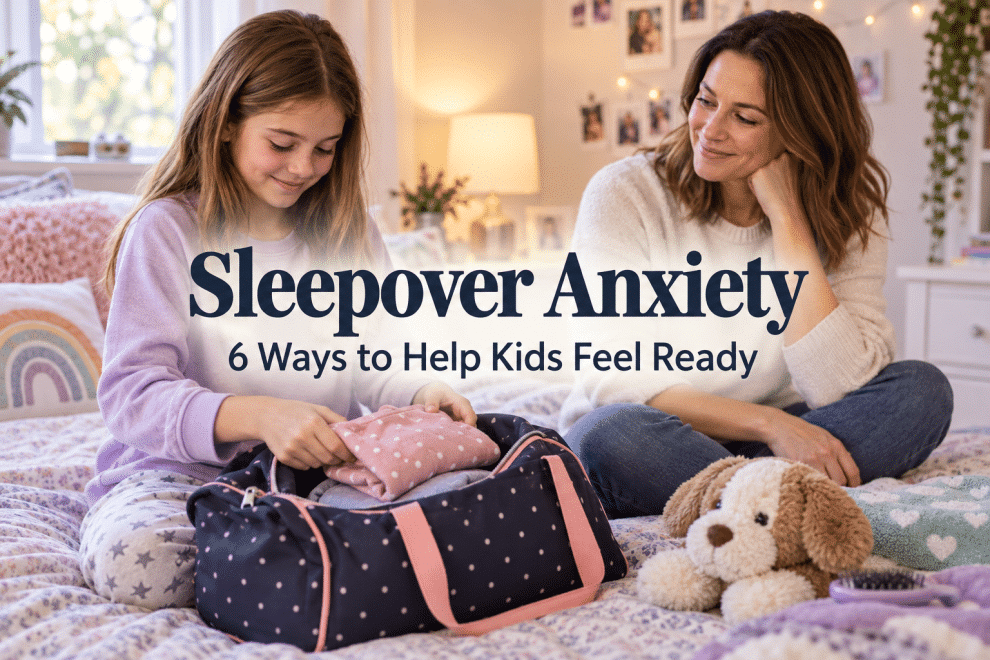
Sleepover anxiety can sneak up on a family in the most ordinary way. One minute your child is thrilled because a friend invited them over for pizza, pajamas, and pancakes. The next minute they are standing in the kitchen with the permission slip in one hand and a very worried look on their face. What if they cannot fall asleep? What if they miss you? What if the other kids stay up too late? What if they need the bathroom and cannot find it? What if they want to come home and everyone thinks they are a baby?
I have sat with those questions at my own table, both as a mom of three and as an early childhood educator. I have also watched very confident kids melt down at bedtime because being brave at 4 p.m. and being brave in a sleeping bag at 10:30 p.m. are two different things. A first sleepover asks a child to handle friendship, new rules, darkness, body needs, tiredness, privacy, and separation all at once. That is a lot for a growing nervous system.
The good news is that sleepover anxiety is not a character flaw, and it is not proof that your child is behind. Some kids need more practice separating. Some are sensitive sleepers. Some are worriers. Some are perfectly social all afternoon and then feel lonely once the house gets quiet. Nemours KidsHealth explains that anxiety can show up as repeated reassurance seeking, stomachaches, trouble sleeping, avoidance, clinging, or imagining the worst. That fits what many parents see before a sleepover: not drama, but a child whose body is saying, This is new. Are we safe?
Parents do not have to force a sleepover to prove independence. We also do not have to rescue children from every uncomfortable feeling. There is a gentler middle: prepare honestly, practice in small steps, protect safety, and make a clear plan so your child knows what to do if the night feels bigger than expected.
Why Sleepover Anxiety Hits at Bedtime
Table of Contents
Sleepover anxiety is rarely only about the sleepover. It is usually a stack of worries.
There is separation: Will Mom come if I need her? There is social pressure: Will my friends laugh if I call home? There is sleep pressure: What if I am the only one awake? There are body worries: Where is the bathroom? What if I wet the bed? What if I feel sick? There are rule worries: What if their family does things differently? For some kids, there are sensory worries too: a dog barking, an unfamiliar night-light, scratchy blankets, movie noise, or a bedroom that feels too hot.
That stack makes sense. Sleep is one of the most vulnerable parts of a child’s day. At home, bedtime has invisible supports: the usual hallway sounds, the same cup of water, the exact stuffed animal, the familiar bathroom, and a parent who knows whether “one more hug” means worry or stalling. At a friend’s house, even a kind house, those supports change.
For younger school-age kids, separation anxiety may still be part of the picture. KidsHealth notes that separation anxiety can vary by temperament and stress, and that practicing separations and introducing new people or places slowly can help children cope. More4Kids also has a parent-to-parent look at separation anxiety that can help if sleepover anxiety is one piece of a larger goodbye struggle. For older kids and tweens, the worry may be less about leaving you and more about embarrassment. They may think, I should be able to do this by now.
That is why I like to take sleepover anxiety seriously without making it scary. Your child is learning a skill. The skill is not “sleep anywhere without feelings.” The skill is “notice what I need, use a plan, ask for help appropriately, and try the next brave step.”
1. Decide Whether This Sleepover Is a Yes, a Later, or a No
Before you start preparing, pause and ask whether this particular sleepover is actually a good fit. Not every invitation needs to become a growth exercise.
A good first sleepover usually has a few green lights. Your child knows the friend well. You know and trust the host parent. The plan is simple. The sleepover is close enough that pickup is possible if truly needed. There is no major stress already happening that week, such as illness, travel, school testing, family conflict, grief, or a child who has barely slept for days.
A “later” answer may be kinder if your child wants to want it but is panicking every time it comes up. Later can sound like, “You are interested, and your body is saying this feels too big today. Let’s practice with a late-over first.” A late-over means the child goes for dinner, games, pajamas, and maybe a movie, then comes home to sleep. It gives them the fun and the practice without asking them to handle the whole night yet.
A clear “no” is appropriate if you do not know the host family well enough, if supervision feels unclear, if older siblings or mixed-age guests make you uneasy, if screens or safety rules do not line up, or if your child is saying no with their whole body. Sleepovers are optional. Some families skip them entirely or only do them with relatives and very close friends. That is a valid parenting choice, not a failure of confidence.
If your child is ready-ish, use that word. “Ready-ish” is honest. It means the door is open, the plan is careful, and feelings are allowed.
2. Turn Big Worries Into a Small Plan
Sleepover anxiety grows when worries stay foggy. A child says, “I just can’t,” and the parent either argues or reassures. Neither one gives the child much to hold.
Try getting specific instead. Sit together in a calm moment, not at bedtime, and ask, “What are the three parts that feel hardest?” Write them down if your child likes lists. Common answers are missing home, not sleeping, being embarrassed, scary movies, needing the bathroom, food, pets, sibling noise, or not knowing the rules.
Then turn each worry into one concrete plan.
If the worry is missing home: “You can bring your pillowcase, and we will do one goodnight text before lights out.”
If the worry is not sleeping: “You can rest quietly with your audiobook or book light until your body settles. You do not have to force sleep.”
If the worry is the bathroom: “We will ask where it is when we arrive, and you can keep a small flashlight in your bag.”
If the worry is a scary movie: “I will ask the parent what movie is planned. You can say, ‘I do not watch scary movies. Could we choose something else?’”
If the worry is wanting to come home: “You can ask the host parent to call me. We will make a calm decision together.”
This is also where parents can borrow from the same calm communication habits that help with getting kids to listen: fewer lectures, clear next steps, and a tone that says, “I believe you can handle a piece of this.”
Be careful with reassurance loops. If a child asks “What if?” twenty times, answering twenty times may accidentally teach their brain that the worry needs constant checking. I usually answer once with warmth, then point back to the plan: “That is the worry talking again. We already made the bathroom plan. Show me where your flashlight will go.”
3. Practice the Brave Parts Before the Big Night
Children often do better when the sleepover is not their first practice with separation, darkness, or unfamiliar routines.
Practice can be tiny. Your child might stay at a grandparent’s house until bedtime and come home. They might have a late-over with the same friend. They might pack their overnight bag and sleep in a sleeping bag on the floor of their own room. They might practice using a new travel toothbrush case, setting up a small night-light, or putting pajamas and tomorrow’s clothes in separate bags.
For younger kids, practice the goodbye. A calm, loving, firm goodbye helps more than a long emotional one. KidsHealth’s separation-anxiety guidance recommends calm, consistent goodbyes and following through on promises. For a sleepover, that might sound like, “I love you. You have your plan. I will answer the goodnight text, and I will see you after breakfast.” Then leave without hovering in the doorway for ten extra minutes.
For older kids, practice the words they may need. A tween may not want a parent-scripted speech, but they still need language.
Try:
- “I am going to skip that movie.”
- “Can you show me where the bathroom is?”
- “I need to call my mom for a minute.”
- “I am tired, so I am going to read for a little bit.”
- “No thanks, I am not comfortable with that.”
Those lines matter. Sleepover anxiety in kids often gets worse when they do not know how to ask for ordinary needs without feeling awkward. A child who can name a need is less trapped by it.

4. Talk to the Host Parent Like a Teammate
Parents sometimes avoid giving the host a heads-up because they do not want to make their child seem difficult. I understand the hesitation. Still, a simple message can prevent a lot of nighttime confusion.
Keep it brief and respectful. “Thanks so much for having Maya. She is excited and a little nervous about sleeping away. We made a plan that she can text goodnight once, and if she gets really upset she can ask you to call me. Also, she does better without scary movies. Does that work for your house?”
That message does four things. It tells the host what to expect. It avoids a secret rescue plan. It gives your child permission to ask the adult for help. It lets you notice whether the other parent responds with warmth and common sense.
You can also ask practical questions without turning the invitation into an interrogation:
- What time do you expect lights out?
- Will any older siblings or other guests be there?
- Are phones/tablets put away at bedtime?
- What movie or game is planned?
- Where will the kids sleep?
- Are there pets, food allergies, or house rules my child should know about?
Screens deserve a special mention. A lot of sleepover anxiety starts as social worry and turns into exhaustion because the group stays on devices too late. KidsHealth recommends turning off screens at least one hour before bedtime, and that principle still helps when kids are away from home. You may not control another house, but you can ask. If the plan is unlimited late-night screens and your child is a sensitive sleeper, you are allowed to say, “This one may not be the right fit.” For a broader family baseline, a calm guide to how much screen time is healthy can help you decide what is flexible and what is not.
The goal is not to make the host parent manage every feeling. The goal is shared expectations.
5. Pack Comfort Without Packing Avoidance
A familiar item can help. A whole suitcase of emergency comforts can sometimes feed the worry. Aim for enough support that your child feels grounded, not so much that the bag says, “This is dangerous.”
A good sleepover anxiety kit might include pajamas, toothbrush, a small flashlight, a book, a water bottle if allowed, any needed medication with parent-to-parent instructions, a comfort item that will not embarrass the child, and tomorrow’s clothes. Younger kids may want a stuffed animal. Older kids may prefer a familiar hoodie, pillowcase, or family photo tucked inside a pocket.
Keep phones thoughtful. Some children feel safer knowing they can contact you. Others spiral if they can text every anxious thought from under the blanket. If your child has a device, set the plan before drop-off: one goodnight text, phone away after that, and if they truly need help they ask the host parent to call. If they do not have a phone, the host parent is the contact plan.
Do not promise, “Text me anytime and I will come get you immediately,” unless that is truly your plan. It can sound comforting, but it may also keep your child’s attention pointed toward escape. A steadier promise is, “If you feel really upset, the grown-up will call me. We will help you decide what to do. You will never be stuck.”
That last sentence is powerful: You will never be stuck. It protects safety without making bravery impossible.
6. Make the Pickup Plan Boring and Clear
Every sleepover should have a pickup plan. The question is whether the plan is calm or dramatic.
Before the sleepover, tell your child exactly what will happen in the morning. “I will pick you up at 9:30 after breakfast.” If the host family is dropping off, say that. If there is a game or church or another event afterward, say that too. An anxious child often handles separation better when time has shape.
Also name the middle-of-the-night plan. I like a three-step version:
1. Try the planned comfort tool first: bathroom, water, book, breathing, stuffed animal, or quiet rest. 2. Ask the host parent for help. 3. If the feeling stays too big, the host parent calls home and the adults decide the next step.
This keeps your child from feeling alone, but it does not make calling home the first move for every flutter of nerves.
If the call comes, stay warm and boring. A panicked parent voice can make the child feel more endangered. Try, “I hear you. It is hard when the house is quiet and different. Did you try the bathroom and your book? Is Mrs. Patel with you? Let’s take three breaths and decide together.”

Sometimes the decision will be to stay. Sometimes the decision will be pickup. If you do pick up, do not turn it into a shame story on the ride home. You might say, “You tried something new. Your body got overwhelmed tonight. We will talk tomorrow about what helped and what we can practice next time.” Then let the child sleep.
In the morning, review lightly. What part was fun? What part got hard? What would make the next attempt easier? Avoid “See, I told you” if they stayed and avoid “You couldn’t do it” if they came home. The point is learning, not proving.
When Sleepover Anxiety Means Wait or Get More Support
Some sleepover nerves are ordinary. Other signs mean it may be time to slow down or ask for help.
Consider postponing if your child is losing sleep for several nights before the event, having repeated stomachaches or headaches, crying daily about it, begging not to go, or saying they feel unsafe. Also pause if they recently had a hard experience at that house, if supervision is unclear, if there is bullying, if older kids are pressuring them, or if your parent gut says no.
Consider talking with your pediatrician, school counselor, or a child therapist if sleepover anxiety is part of a bigger pattern: avoiding school, refusing playdates, struggling to sleep alone, frequent panic-like symptoms, constant reassurance seeking, or worries that are interfering with normal life. KidsHealth notes that anxiety becomes more concerning when it does not go away and prevents kids from doing or enjoying activities. The National Institute of Mental Health similarly advises seeking professional help when stress or anxiety symptoms do not go away or interfere with daily life. If you are parenting an older child, this More4Kids guide to teen stress and anxiety may also help you listen for the difference between one hard invitation and a wider stress pattern.
That support is not a punishment. It is help with a skill that has become too heavy for the child to carry alone.
And please hear this part: your child does not need to master sleepovers to become independent. Independence also grows through ordering at a restaurant, walking into practice, trying a club, spending an afternoon with cousins, taking care of a pet, packing their own backpack, or using brave words with a friend. Sleepovers are one lane, not the whole highway.
What to Say the Day of the Sleepover
The day of the sleepover is not the time for a long motivational speech. Keep the rhythm ordinary.
You might say:
“You are excited and nervous. Both can be true.”
“We made a plan for the parts that worry you.”
“You do not have to feel perfectly calm to try.”
“If something feels unsafe, ask the grown-up to call me.”
“I believe you can handle the next step.”
Then help your child eat, move their body, and avoid filling the afternoon with too much anticipation. Anxiety loves empty waiting time. A normal errand, a short walk, or a small chore can be more helpful than another hour of talking about the sleepover.
If your child starts asking the same question again and again, point back to the plan. “We already answered that one. Show me the card with the three steps.” You can even write a small card together:
- Bathroom, water, book.
- Ask Mrs. Patel.
- Call home if it stays too big.
That card is not babyish. It is a tool. Adults use lists, calendars, alarms, and GPS because our brains like support too.
The Quiet Win: Your Child Learns They Can Try
The best outcome of a first sleepover is not always that a child stays all night. Sometimes the win is that they told the truth about their worry. Sometimes the win is that they went for dinner and came home at bedtime. Sometimes the win is that they asked where the bathroom was. Sometimes the win is that they called, cried for five minutes, and then decided to stay. Sometimes the win is that they came home and later said, “Maybe next time I could try again.”
Sleepover anxiety gives parents a chance to teach bravery without bullying a child into it. Bravery is not a performance for other families. It is a child learning, little by little, “My feelings can be loud, and I can still use a plan. My parents will not shame me. Other safe adults can help me. I can try new things in steps.”
That is the part worth protecting.
A sleepover is just one night. The bigger lesson is trust: your child can trust their body’s signals, trust you to listen, trust safe adults to help, and trust themselves to practice independence at a pace that still respects who they are. If they sleep through and come home proud, wonderful. If they need a late-over first, wonderful. If your family decides sleepovers are not your lane right now, that can be wise too.
The goal is not a perfect pajama-party story. The goal is a child who feels prepared, respected, and a little more ready for the next brave thing.
Frequently Asked Questions
How do I know if my child is ready for a sleepover?
Your child may be ready for a sleepover if they want to go, know the host family well, can ask an adult for help, and can talk through a simple plan for bedtime worries. They do not need to be completely calm. Sleepover anxiety is manageable when the child is nervous but willing and the adults have a clear safety plan.
What should I do if my child wants to come home from a sleepover?
Stay calm and help your child use the plan. Ask whether they tried the bathroom, water, quiet reading, breathing, or asking the host parent for support. If the anxiety remains too big or your child feels unsafe, pick them up without shame. The next day, talk about what helped and what to practice before trying again.
Is it okay to say no to sleepovers?
Yes. Sleepovers are optional, and every family gets to set its own safety and comfort rules. You can say no because you do not know the host well, supervision is unclear, the plan is not a fit, or your child is not ready. A late-over, daytime playdate, or family-only overnight can still build independence.
How can I help sleepover anxiety in kids without over-reassuring?
Answer the worry once with warmth, then point back to the plan. For example, say, “You are worried you will miss home. That makes sense. Your plan is one goodnight text, your book, and asking the grown-up for help if it stays too big.” Repeating reassurance all night can feed the worry, while a steady plan builds confidence.
When should I get help for sleepover anxiety?
Ask your pediatrician, school counselor, or a child therapist for guidance if sleepover anxiety is part of a larger pattern, such as avoiding school, refusing most separations, frequent stomachaches or headaches, panic-like symptoms, trouble sleeping alone, or worries that interfere with normal activities. Support can help your child build coping skills without shame.
Related Articles

Meet Sophia Richards Sophia Richards is an early childhood educator, passionate writer, and the proud mom of three energetic kids. With a degree in Education and over a decade of hands-on classroom experience, Sophia bridges the gap between professional teaching strategies and everyday family life. At More4Kids, she translates complex child development concepts into practical, actionable parenting tips that families can use at home.
Whether she is sharing positive reinforcement techniques, educational crafts, or honest reflections on the chaos of raising three children under one roof, Sophia’s goal is to empower parents to foster resilience and joy in their kids. When she isn't writing or lesson planning, you can find her organizing neighborhood scavenger hunts or trying out new kid-friendly recipes.
Areas of Expertise: Early Childhood Education, Positive Parenting, Sibling Dynamics, Educational Play, Family Wellness.

Add Comment