














By Sophia Richards
Part of our Life Skills by Age guide — this is the deep dive for the preschool years.
Somewhere between four and five, a switch flips. The toddler who needed you for everything becomes a small person with strong opinions about which socks are “the good socks,” a plan for how the morning should go, and a fierce need to do it the right way — which is to say, their way. It can look like stubbornness. Mostly it’s readiness.
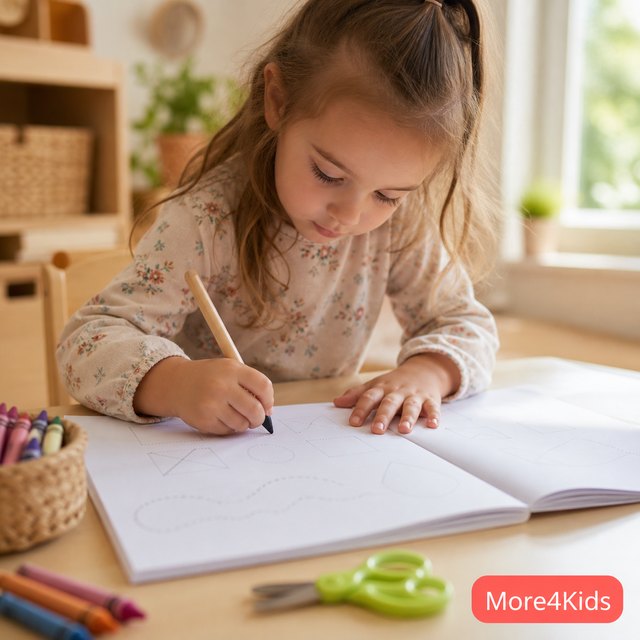
Preschoolers are wired to practice being competent. Screen time can back that up when it is chosen well; these are the preschool shows we actually recommend. This is the age when “help me” quietly turns into “watch me,” and the life skills for preschoolers you focus on now — dressing all the way, packing a bag, pouring without flooding the counter, calming down after a big feeling — are the ones that walk into kindergarten with them. The best part? You’ve moved past the pure toddler chaos. A four- or five-year-old can actually follow a short sequence, remember a rule from yesterday, and feel real pride in a job finished. That makes this one of the most rewarding stretches for teaching independence, if you know what to aim for.
This guide covers what’s genuinely realistic at ages 4–5, why these skills matter more than they look, and exactly how to teach them without the whole thing turning into a power struggle.
Why the preschool years are a turning point
Table of Contents
Toddlers start to try. Preschoolers can start to finish. That’s the leap.
The American Academy of Pediatrics’ developmental guidance (on its parent site, HealthyChildren.org) describes the preschool years as a stretch of rapid gains in independence, language, and self-control: children this age can dress themselves with less help, use the toilet on their own, follow multi-step directions, and play cooperatively with other kids. The CDC’s positive-parenting guidance for preschoolers points to the same window — more independence, longer attention, and a growing ability to manage emotions and take turns.
Underneath the new skills is a bigger engine. A preschooler’s working memory and impulse control — what researchers call executive function — are developing fast, which is exactly why they can now hold a two- or three-step routine in their head (“shoes, then coat, then backpack”) instead of losing the thread after step one. The child-development nonprofit Zero to Three frames the sense of “I can do it myself” as core to a young child’s confidence, and the preschool years are when that feeling gets its first real workout. Every time a four-year-old zips a jacket or wipes up a spill, they’re not just completing a chore — they’re building the mental muscles for focus, follow-through, and bouncing back.
Here’s what makes it a turning point rather than just a milestone: the habits that stick at five are astonishingly hard to install at ten. A preschooler who learns that we clean up our own plate and we try before we ask isn’t just being helpful today. You’re wiring in the default that makes the elementary years — homework, chores, getting out the door — dramatically less of a fight later on.
The life skills for preschoolers checklist: what a 4- to 5-year-old can realistically do
Every child develops on their own timeline, and there’s a wide, normal range. Treat this as a menu of what’s possible at this age, not a scorecard. Across the preschool years, most children can learn to:
Take care of their body
- Get dressed independently, including tricky bits — big buttons, zippers once started, pulling on socks and shoes (Velcro before laces)
- Brush teeth with a final check from you, and wash and dry hands without being walked through it
- Use the bathroom on their own, including wiping and flushing, and manage most of it at preschool
- Blow their own nose and cover a cough
Handle food and drink
- Pour from a small pitcher, spread with a butter knife, and peel an easy fruit like a banana or clementine
- Carry their plate to the counter, scrape scraps, and put a cup in the sink
- Get themselves a simple snack from a low, “yes” shelf you’ve set up
- Set the table with napkins and forks
Contribute to the home
- Do a real chore start to finish: feed a pet, water a plant, match socks, wipe the table, put laundry in the basket
- Clean up a play area with a simple system (bins by type) and a little company
- Help with cooking steps — stirring, sprinkling, tearing lettuce, pressing buttons
Manage themselves and their stuff
- Follow a two- or three-step routine with a picture chart instead of constant reminders
- Pack and carry their own small backpack for preschool
- Put on and hang up their own coat
Manage feelings and get along
- Name bigger feelings — “frustrated,” “disappointed,” “excited,” “nervous”
- Use a calming strategy with help (a few deep “belly breaths,” a cozy corner)
- Wait a short turn, share sometimes, and start to solve a small conflict with words instead of hands
If your child isn’t doing all of these yet, that’s completely normal — preschoolers still develop in bursts and plateaus, and a skill that’s shaky at four is often solid by five and a half. This is a map of the territory, not a race.

The method: how to teach without a power struggle
Preschoolers have just enough independence to want full control and not quite enough skill to always pull it off — which is the exact recipe for a standoff. The good news is that teaching life skills for preschoolers rarely takes a big program; a handful of small moves keeps you out of the ring and gets the skill learned.
1. Teach the sequence, not just the task. The preschool superpower is holding a short routine in mind, so give them one to hold. Instead of narrating every step forever, teach the whole chain a few times — “getting ready is shoes, coat, backpack” — then step back and let them run it. A simple picture chart on the wall does the reminding so you don’t have to, and hands the ownership to them.
2. Give real, bounded choices. A preschooler who feels bossed will plant their feet. One who gets to decide how cooperates. Keep the choices to two you’re fine with either way:
- “Do you want to set the forks or the napkins?”
- “Backpack first, or coat first?”
- “Should we do the timer challenge, or the slow-and-careful way?”
You own the what; they own the how. Nobody has to win.
3. Set up the environment so success is the easy path. Half of teaching independence at this age is just lowering the shelf. A hook they can reach for the coat. A step stool at the sink. Cups and plates in a bottom drawer. A small pitcher half-full instead of a heavy jug. When the room is built for a four-year-old, the four-year-old can do it without you — and “I did it myself” becomes the whole reward.
4. Let them own a real, repeating job. Preschoolers take enormous pride in being genuinely useful, so give them a job that actually matters and is theirs every day — feeding the dog, watering the herbs, matching the socks. A repeating responsibility beats a one-off “helper” moment because it becomes part of who they are: I’m the person who feeds the dog. Our guide to raising responsible kids goes deeper on turning helping into real responsibility, and if you want age-matched jobs, our list of age-appropriate chores for kids is a good next stop.
5. Praise the effort and the specifics, not “good job.” Describe what they actually did: “You poured the whole glass and stopped right at the top — steady hands.” Specific praise tells a preschooler exactly which move to repeat, and it lands as true because it is. Skip re-doing their work in front of them; a wobbly-made bed they’re proud of teaches more than a perfect one you made.
Word-for-word scripts for the hard moments
Sometimes you just need the words in the moment. Here are the ones I reach for most with this age:
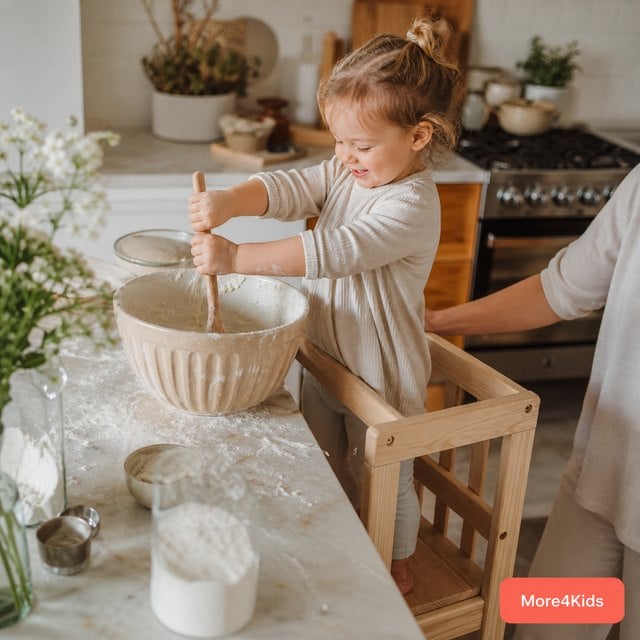
When they insist “I can do it!” and you’re out of time: “You can do it — and I love that. This morning is a fast one, so I’ll zip and you pull the tab. After school, it’s all yours to do slowly.” You honor the drive and the clock, and you keep the after-school promise.
When they give up mid-task and melt down: “That zipper is tricky. You got it halfway — that’s the hard part done. Want to try again, or do it together, my hands under yours?” Name the difficulty, credit the progress, offer partnership instead of a rescue.
When they refuse a chore that’s theirs: “Feeding Max is your job, and he’s waiting. Do you want to scoop the food, or fill the water first?” Calm, no lecture — the expectation holds, the choice is about how.
When a big feeling takes over: “You’re really frustrated. That’s okay — feelings are allowed. Let’s do three dragon breaths together, then we’ll figure it out.” You’re coaching the calming skill, not demanding they already have it. If big feelings are a daily sticking point, our guide to emotional regulation for kids has more age-appropriate tools.
When they stall in the middle of the routine: “What’s next on your chart?” Then wait. Handing the question back — instead of barking the answer — is what builds the independence you’re after.

Troubleshooting the resistance
“My kid can do it but suddenly ‘can’t’ and wants me to.” Extremely common at this age, and it’s usually about connection, not ability. A tired or overwhelmed preschooler asks you to do it to feel close and cared for. Offer a small dose of together — “I’ll start it, you finish” — rather than a full takeover or a fight, and the skill comes back once they feel filled up.
“Getting dressed turns into a daily battle.” Shrink the decisions and the friction. Lay out two outfit choices the night before, put clothes on a low hook they can reach, and build in a few extra minutes so their pace isn’t colliding with your clock. A dressing race against a two-minute timer works wonders when it’s a game, not a threat.
“They start a chore and wander off.” Preschool attention is short — that’s not defiance, it’s development. Make the job small and concrete (“just the blue bin”), do it nearby, and use a visible finish line like a timer or a song. Then notice out loud when they finish: “You matched every sock. Done.”
“Every ‘no’ becomes a huge feeling.” Lower the stimulation and stay steady. Hungry, tired, or over-scheduled preschoolers have no bandwidth for a new skill, so save teaching for the calm parts of the day and ride out the storm before trying again. Warm and firm beats loud and negotiating every time.
“It’s honestly faster if I just do it.” Today, absolutely. But you’re not buying speed this morning — you’re buying a seven-year-old who gets themselves dressed, packs their own bag, and pours their own cereal while you handle the rest of the house. The slow, patient mornings at four and five are the deposit.
What to relax about
A quick permission slip, because preschool-parent anxiety is real and mostly unnecessary. Uneven skills are normal — a child who’s a confident dresser might still want help in the bathroom, and that’s fine; independence grows in patches, not all at once. Bathroom accidents still happen at four and five, especially when kids are absorbed in play or in a new setting, and they don’t mean anything is wrong. You also don’t need a Pinterest-perfect chore chart or a rigid system; at this age the whole curriculum is set it up so they can, let them try, keep it warm. Messy, real, and theirs beats tidy and yours. And if potty independence is still a work in progress, our potty-training walkthrough follows the same child-led approach.
Getting ready for kindergarten
If your five-year-old is heading to kindergarten, the life skills for preschoolers matter as much as the ABCs — sometimes more, because they’re what let a child function in a room with one teacher and twenty kids. Teachers consistently say the children who settle in fastest are the ones who can manage the bathroom on their own, open their own snack, put on their own coat, follow a two-step direction, and recover from a small frustration without falling apart.
None of that requires a curriculum. It’s the same everyday practice — zipping the coat, packing the bag, waiting a turn, taking a breath when it’s hard — just aimed at the classroom. Give your preschooler small, real jobs and the room to fumble through them now, and they’ll walk in able to take care of themselves. That confidence is the whole point.
Frequently Asked Questions
What life skills should a 4- or 5-year-old have?
By the preschool years, most children can dress themselves with a little help, use the bathroom independently, wash their hands, pour a drink, carry their plate to the counter, do a simple daily chore, follow a two- or three-step routine, and start naming and calming big feelings. Expect an uneven mix — solid on some, still learning others — and count the trying as the win. The most valuable life skills for preschoolers are the everyday self-help and responsibility habits, not academics.
How do I get my preschooler to do a chore without a fight?
Give them a real job that’s theirs every day, make it small and concrete, and offer a choice about how rather than whether (“scoop the food or fill the water?”). Set up the space so they can actually reach and manage the task, use a visible finish line like a timer or song, and then name it out loud when they’re done. Joining in beside them beats commanding from across the room.
My preschooler can dress himself but suddenly refuses. What's going on?
This is normal at four and five and usually about connection or being overtired, not a loss of skill. A preschooler who asks you to do it is often looking for closeness or is simply out of gas. Offer a small dose of together — start the task and let them finish — instead of a full takeover or a standoff, build in a little extra time, and the independence returns once they feel reconnected.
What life skills does my child need before kindergarten?
Teachers point to the same short list: managing the bathroom alone, opening a snack, putting on a coat, following a two-step direction, and bouncing back from a small frustration without melting down. These self-help and self-regulation skills help a child function in a busy classroom and settle in faster. You build them through everyday practice at home, not worksheets — let your child dress, pack, pour, and calm down with your coaching, and they’ll arrive ready.
The takeaway
The preschool years are where independence stops being a cute attempt and starts being a real skill. Every time you set the shelf a little lower, hand back the question instead of the answer, and let your four- or five-year-old finish the messy job themselves, you’re telling them something they’ll carry into that kindergarten classroom and far beyond: you are capable, and I trust you to do it.
Set it up, step back, and let it be imperfect. The life skills for preschoolers you’re building now are the quiet foundation for every year that comes next.
Ready for the next stage? Head back to the full Life Skills by Age guide — the early-elementary deep dive for ages 6–7 is coming next in this series.
Related Articles
- Life Skills By Age
- Parenting Tips For Responsible Kids
- Chores For Kids
- Emotional Regulation For Kids
- How To Potty Train A Toddler

Meet Sophia Richards Sophia Richards is an early childhood educator, passionate writer, and the proud mom of three energetic kids. With a degree in Education and over a decade of hands-on classroom experience, Sophia bridges the gap between professional teaching strategies and everyday family life. At More4Kids, she translates complex child development concepts into practical, actionable parenting tips that families can use at home.
Whether she is sharing positive reinforcement techniques, educational crafts, or honest reflections on the chaos of raising three children under one roof, Sophia’s goal is to empower parents to foster resilience and joy in their kids. When she isn't writing or lesson planning, you can find her organizing neighborhood scavenger hunts or trying out new kid-friendly recipes.
Areas of Expertise: Early Childhood Education, Positive Parenting, Sibling Dynamics, Educational Play, Family Wellness.

Add Comment