
















By Sophia Richards
Somewhere between wiping a two-year-old’s chin and watching a sixteen-year-old back the car down the driveway, we are quietly doing the biggest job of parenting there is: raising a person who can eventually take care of themselves. It rarely feels that momentous in the moment. Most days it looks like reminding someone to put their shoes away for the four-hundredth time. But those small, repeated asks are exactly how a capable adult gets built, one age-appropriate life skill at a time.
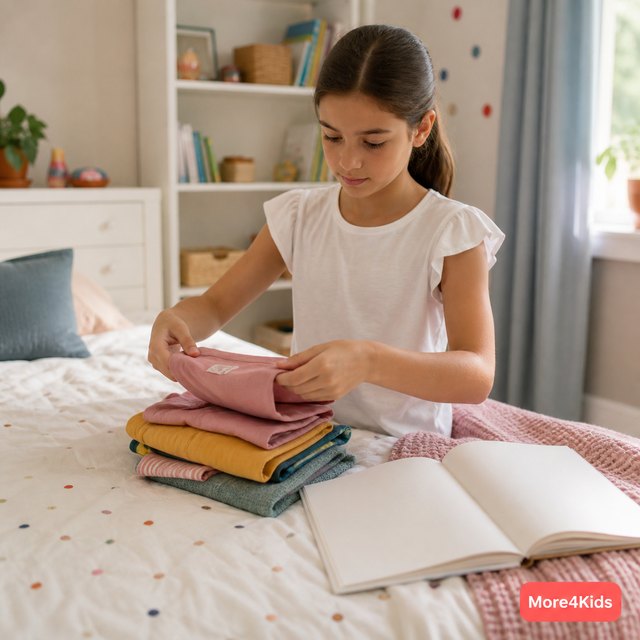
I keep a version of the classic “life skills by age” checklist on my fridge, and as a mom of three with kids at very different stages, I can tell you it has saved me from two opposite mistakes: expecting too much too soon, and expecting far too little for far too long. That second one is sneakier. It is so much faster to just make the sandwich yourself that you can blink and realize your ten-year-old has never once made their own lunch. This guide walks through what most kids are ready to learn at each stage, from toddlerhood all the way to the launch pad of the late teens, with the why behind it and gentle, real-world ways to teach it without turning your home into a chore boot camp.
Why Age-Appropriate Life Skills Matter More Than We Think
Table of Contents
It is tempting to file “life skills” under nice-to-have, the stuff kids will pick up eventually. The research suggests it is closer to foundational. The American Academy of Pediatrics is refreshingly direct that giving children real household responsibility is not busywork; it teaches cooperation, builds self-worth, and helps a child feel like a genuinely needed part of the family, and their guidance on chores and responsibility is a lovely, practical starting point for any parent.
There is longer-range evidence too, and it is worth stating carefully rather than overselling. A frequently cited University of Minnesota analysis by researcher Marty Rossmann, drawing on decades of longitudinal data, found that one of the better childhood predictors of young-adult success — measured across school, career, relationships, and self-sufficiency — was whether a child started doing household chores early, around ages three and four. It is a research finding about correlation, not a guarantee that dishes produce a CEO. But it lines up with what the famous 80-plus-year Harvard Grant Study kept concluding about thriving adults: that a real work ethic, the plain habit of pitching in, tends to travel with people for life. In other words, the small competencies we are talking about here are quietly connected to confidence, resilience, and independence down the road.
The other reason this matters is developmental. Kids are wired to grow into new capabilities in a fairly predictable sequence, which is why the CDC organizes its positive parenting guidance by stage. When we match the skill to the stage, we are working with that wiring instead of against it. Ask too early and everyone ends up frustrated. Ask right on time and you catch a child at the exact moment they are dying to prove they can.
How to Use This Life Skills by Age Guide
One thing before we dive into the ages, and it matters: every list of milestones is a guide, not a grading rubric. Children develop at their own pace. Some kids are ready to safely use a real knife at seven; others need to be nine. A late bloomer on one skill is often early on another. So please read the ages that follow as a gentle sequence to aim for, not a scorecard to panic over. If your child is a little behind on a skill, you have not failed and neither have they — you simply have your next thing to practice. Use your judgment about your own kid, because you know them better than any checklist ever could.
With that said, here is what most children are ready to take on, stage by stage.
Ages 2–3: The Helper Years
Toddlers are not known for their efficiency, but they are absolutely wired to imitate you, and that instinct is pure gold. This is the age to lean into “me do it” rather than dread it, because a two-year-old who is invited to help genuinely believes putting a napkin on the table is the most important job in the house.
At this stage, most children can start to put their toys away, get dressed with help, drop dirty clothes in the hamper, help set the table, use a fork and spoon, carry an unbreakable plate to the sink, and brush teeth and wash their face with your assistance. None of it will be done well. That is not the point. The point is that your toddler learns, in their body, that being part of a family means contributing, and that they are capable of doing things.
The trick here is to slow way down and lower your standards on purpose. Sing a quick clean-up song and put toys away together, hand over hand at first. Buy clothes with easy pull-on waists so getting dressed ends in a win instead of a meltdown. Narrate what you are doing as you do it, because at this age your calm, cheerful modeling teaches more than any instruction. And resist the very strong urge to redo their work in front of them; a crooked fork placement that they are proud of is worth more than a perfect table they had no part in. If mealtimes feel chaotic, folding tiny jobs into a predictable rhythm helps, and our take on why daily routines make kids happier is written exactly for this age of beautiful, messy independence.

Ages 4–5: The “I Can Do It Myself” Years
Preschoolers hit a sweet spot: they are physically more coordinated, hungry for responsibility, and still delighted to have your approval. The CDC’s stage guidance for preschoolers ages three to five highlights exactly this surge in independence and the growing ability to follow simple multi-step directions, which is what makes these such productive years for life skills.
Most four- and five-year-olds can do simple cleaning tasks like dusting and wiping low surfaces, help sort laundry and match socks, choose their own clothes and get dressed, brush their teeth and comb their hair with only light help, make their bed (loosely), feed and water a pet, and state their full name, address, and phone number. That last one is not a chore at all — it is a safety skill, and this is the ideal age to practice it as a little song or game until it is automatic. Many kids this age can also learn to make a basic, supervised emergency call and start learning to swim, both of which sit in the “quietly could save their life” category.
The way to teach at this age is to turn skills into play and give real but bounded choices. “Do you want to feed the fish or water the plant?” gets far more cooperation than a command. Make a picture chart for a short getting-ready routine so your preschooler can “read” it themselves and feel in charge. Praise the effort and the trying, not just the result, which is a small habit that builds the kind of resilience that helps kids keep going when something is hard — the same muscle behind learning from their mistakes. And keep the safety skills warm and low-pressure: rehearsing your address should feel like a fun secret code, never a fearful drill.

Ages 6–7: The Real Responsibility Years
Once kids hit early elementary, something clicks. They can hold a sequence of steps in their head, they take pride in doing a “big kid” job start to finish, and they are ready for responsibilities that genuinely help the household rather than just simulate helping.
Children this age can typically make their bed without help, fold and put away their own clothes, bathe with less supervision, tidy the bathroom after using it, safely use basic household cleaners, help put away groceries, mix and stir and carefully use a knife to slice soft foods, make a simple meal like a sandwich or scrambled eggs, serve food, wash and put away dishes, and begin to understand what money is and how it is used. This is the age where cooking together really takes off, and it is worth the flour on the floor.
Here is the key at six and seven: introduce one new responsibility at a time. The AAP specifically warns that handing a school-age child a long list of chores at once tends to overwhelm them, and suggests posting a clear, simple chart of expectations and adding tasks gradually. So pick the sandwich this month, the laundry-folding next month. Teach knife skills hand-over-hand with a small, appropriate knife and lots of calm supervision, because competence here comes from being shown and trusted, not shooed away from the counter. Money is ripe now too — a simple allowance, a clear jar for save/spend, and letting them hand over the cash at the store makes the abstract idea of money concrete. If mornings and after-school hours feel like a scramble, a light structure helps these new jobs actually stick, and our back-to-school routine tips fold neatly into this stage.

Ages 8–9: The Independence Warm-Up
Eight and nine are wonderfully underrated years. Kids this age are competent enough to do real things and still (mostly) willing to be taught by you before the pull of the teen years takes hold. This is the window to hand over ownership of their own daily maintenance.
Most eight- and nine-year-olds can see to their own hygiene without being reminded, clean and trim their nails, use a broom, mop, and vacuum properly, do simple sewing like a button, help create a grocery list, read a recipe and prepare a simple dish, order their own food in a restaurant, take a written phone message, help with light yard work like watering and weeding, set an alarm clock and get themselves out of bed on time, count back money and make change, and start deciding whether to give, save, or spend their money. That is a serious jump in real-world capability, and it happens almost invisibly if you let it.
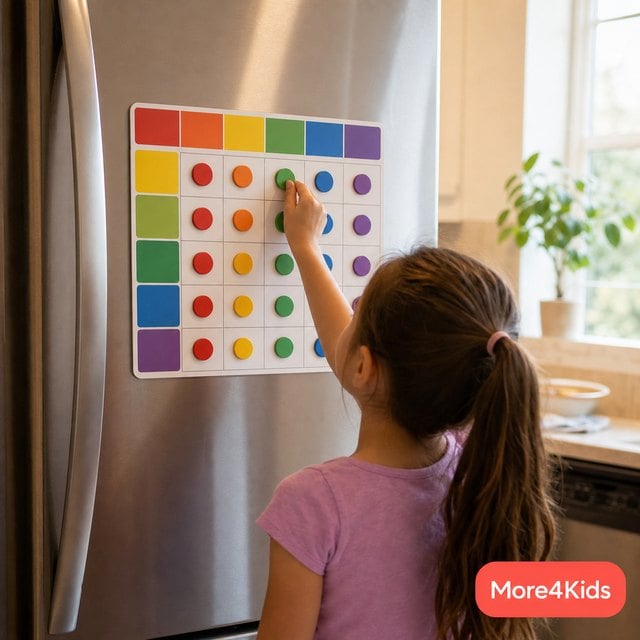
The parenting move that matters most here is stepping back on purpose. Let your child order for themselves at a restaurant even when it is slower and a little awkward — that small social skill builds real confidence. Hand them the alarm clock and let them experience being a little late once rather than being their permanent human snooze button. Give them a tiny budget at the store and let them do the math on change. The theme of these years is scaffolding then fading: you show them, you do it beside them, then you deliberately get out of the way and let them own it, including the occasional small failure that teaches more than a lecture ever could.

Ages 10–12: The Pre-Teen Capability Leap
By the tween years, kids are capable of far more than we usually ask of them, and giving them meaningful responsibility at this stage is one of the best antidotes to the “everything is boring” slump. They are old enough to run a task from start to finish and to be genuinely trusted.
Children ten to twelve can typically use the washer and dryer, iron clothes, change their own bed sheets, plan and prepare a meal with a few ingredients, read labels on food and household products with some help, use basic hand tools, mow the lawn, and stay home alone for a stretch. That last one deserves a real conversation, because readiness for staying home alone is about maturity and your family’s circumstances, not just the birthday, and many regions offer guidance worth checking. When your tween is ready, walk through the plan together: who to call, what to do about the door and the phone, where the first-aid kit is, and what counts as an emergency.
Teaching at this age works best when you frame it as growing trust rather than piling on work. Tie new privileges to new responsibilities — later bedtime, more freedom — so capability feels like a door opening, not a punishment. Let your tween fully own one weeknight dinner, menu and all, even if it is quesadillas three weeks running; the pride of feeding the family is huge. This is also the age to loop in real safety competence like basic first aid. And keep leaning on the reading-and-following-directions skills that school is building; if homework has become a nightly standoff, our guide to helping with homework without the battle applies just as well to following a recipe or an appliance manual.

Ages 13–15: The Real-World Skills Years
Early teens can do essentially adult-level tasks; what they are still developing is judgment, follow-through, and the quiet confidence that comes from repetition. Our job shifts from teaching the mechanics to handing over responsibility and staying available as a consultant.
Teens this age can plan and prepare a full meal with several ingredients, use the oven to broil or bake, take on more sophisticated cleaning and home-maintenance tasks like changing a light bulb or cleaning the oven, babysit younger siblings or neighbors, perform basic first aid and CPR, make purchases at a store, compare prices, tip appropriately, understand core banking concepts like the difference between checking and savings and how interest works, use a planner for time management, and set a goal and build a plan to reach it. Notice how many of these are money and time-management skills — that is not an accident, because these are exactly the competencies that determine whether the launch into adulthood goes smoothly.
Financial literacy especially deserves focus here. Youth money skills are a documented gap, and resources like the Consumer Financial Protection Bureau’s Money as You Grow offer age-based conversations that make this doable. Practically, this is the age for a real (supervised) bank account, a debit card with a budget, and honest conversations about wants versus needs. Let your teen manage a monthly allowance for their own discretionary spending and feel the natural consequence of running out. Teach tipping by handing them the bill at a restaurant. Coach the planner habit rather than nagging, because time management is a skill they will lean on for the rest of their lives. Stay their calm consultant here, not their manager — offer the tool, then let them use it their way, mistakes and all.

Ages 16–18: The Launch Pad
These are the final, high-stakes practice years, and the goal is beautifully simple: by eighteen, your child should be able to run their own life in miniature while still under your roof, so that leaving home is a graduation, not a cliff. This is the stage to actively transfer the last adult responsibilities before they are doing it all alone.
Older teens should be building toward menu planning and preparing a wide variety of meals, sophisticated cleaning and home maintenance like unclogging a drain or clearing a gutter, basic car care such as pumping gas, checking and adding air to tires, and scheduling oil changes, using a rideshare or cab, reading and understanding medicine labels and dosages, making their own regular doctor and dentist appointments, filling out a job application and building a resume, interviewing for and holding a job, understanding the basics of insurance, grasping a wide range of financial matters like balancing an account and paying bills, reading and understanding contracts like a lease or utility agreement, and using reliable sources to check the truth of what they read in the news and on social media. That is the full adult toolkit, and it is a lot — which is exactly why we spread it across two years of practice rather than dumping it on them the summer before college.
The parenting posture here is to hand over control while the safety net is still under them. Let your sixteen-year-old make and keep their own dentist appointment. Have them fill out a real job application with you nearby for questions, not doing it for them. Sit down and read an actual phone contract or apartment lease together so the fine print is not a mystery later. Talk openly about insurance, interest, and how to spot a scam or a fake headline, because media literacy is now a genuine survival skill. Every task you let them own now is a mistake they get to make cheaply, at home, with you there — instead of expensively, alone, at nineteen. That is the whole point of the launch pad.

How to Teach Life Skills Without Turning It Into a Battle
If there is one thing I have learned raising three kids through all of these stages, it is that how you teach a life skill matters as much as when. A few principles carry across every age:
- Let it be imperfect. The bed will be lumpy, the eggs will be rubbery, the change will be counted slowly. Competence grows out of a thousand imperfect attempts, and redoing their work in front of them quietly teaches “you’re not good enough,” which is the opposite of what we want.
- Introduce one skill at a time. This is the AAP’s advice and it is worth repeating: a long list overwhelms; one new task, practiced until it is easy, builds real momentum.
- Trust before you’re comfortable. Almost every parent’s instinct is to wait until a child is obviously ready. Usually they are ready a little before that, and the trust itself is what grows them. Supervise real risks like knives, stoves, and staying home alone, but do not confuse your own nerves for their incapacity.
- Tie responsibility to growing freedom. Kids of every age take on more when it feels like a promotion, not a punishment. New privileges that arrive alongside new responsibilities land far better than chores handed down as a decree.
- Praise the effort, not just the outcome. “I love how you stuck with that until you figured it out” builds a child who keeps trying. That mindset is the engine under every skill on this list.
And a gentle word on safety, because a few of these skills carry real risk: knife work, using the stove and oven, household cleaners, staying home alone, and eventually driving all deserve genuine supervision, clear rules, and your judgment about your specific child before you hand over the keys — literal or otherwise. The checklist is the destination; the pace is yours to set.
Frequently Asked Questions
At what age should kids start doing chores?
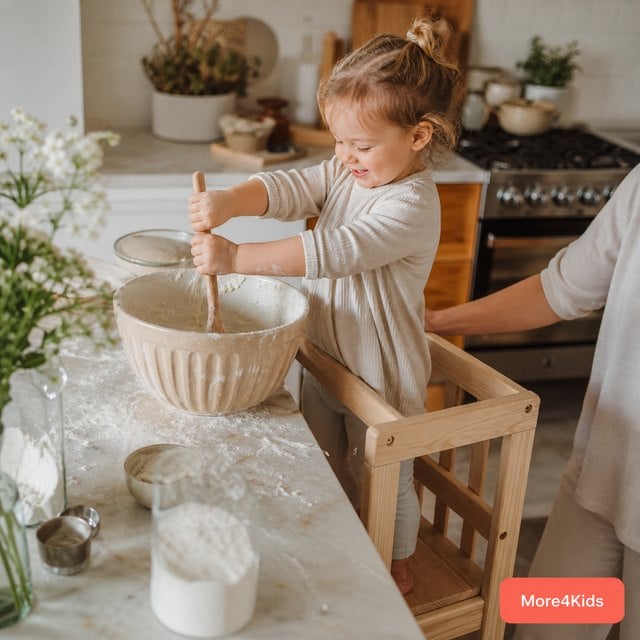
Earlier than most of us expect — around ages two and three, with lots of help and zero expectation of perfection. At this stage chores are about belonging and imitation, not efficiency. The habit of pitching in, built early, is the thing that tends to stick.
My child is "behind" on some of these skills. Should I worry?
Almost certainly not. Every one of these lists is a general guide, and kids develop on their own timelines, ahead on some skills and behind on others. If your child is a little behind on a skill, treat it simply as your next thing to practice together. Persistent, across-the-board struggles are worth a friendly chat with your pediatrician, but a slow-to-launch skill or two is completely normal.
How do I get my kid to actually do the skill without a fight?
Make it feel like growing up rather than getting stuck with a job. Offer real choices, tie new responsibilities to new freedoms, keep your standards forgiving, and praise the effort. And do it alongside them at first — most resistance comes from a task feeling too big or too lonely, and a parent working beside them shrinks both problems.
Are these ages exact?
No, and they are not meant to be. Think of them as a sensible sequence to aim for, not a deadline. Some children are ready for a skill early and others need more time, and both are perfectly normal. You know your child best; let their readiness, not the calendar, set the pace.
The Long, Beautiful Handoff
Raising a capable kid is really just one long, loving handoff — a slow transfer of responsibility from your hands to theirs, one age-appropriate skill at a time. It starts with a toddler proudly dropping socks in a hamper and ends, somehow far too soon, with a teenager who can cook dinner, hold a job, read a contract, and take care of themselves. None of it happens in a single conversation. It happens in the small, patient, repeated moments where we let them try, let them struggle a little, and let them grow.
So pick just one skill for the child in front of you and start there this week. Maybe it is teaching your six-year-old to make a sandwich, or letting your fourteen-year-old own the grocery budget. Small, warm, repeated practice is what turns our kids into adults who can stand on their own — and there are few gifts we give them that matter more. For more steady, parent-to-parent guidance for every stage, our whole parenting section is here to walk it alongside you.
Related Articles
- A Secret To Happy Kids Daily Routines
- Teaching Kids To Learn From Their Mistakes
- Back To School Tips
- How To Help A Child With Homework
- Parenting

Meet Sophia Richards Sophia Richards is an early childhood educator, passionate writer, and the proud mom of three energetic kids. With a degree in Education and over a decade of hands-on classroom experience, Sophia bridges the gap between professional teaching strategies and everyday family life. At More4Kids, she translates complex child development concepts into practical, actionable parenting tips that families can use at home.
Whether she is sharing positive reinforcement techniques, educational crafts, or honest reflections on the chaos of raising three children under one roof, Sophia’s goal is to empower parents to foster resilience and joy in their kids. When she isn't writing or lesson planning, you can find her organizing neighborhood scavenger hunts or trying out new kid-friendly recipes.
Areas of Expertise: Early Childhood Education, Positive Parenting, Sibling Dynamics, Educational Play, Family Wellness.

Add Comment