






The costume was still in its packaging on November 1st. I’d bought it in early October, my daughter had picked it out herself, and for three weeks she talked about being a fox. Then Halloween night came, she pulled the top over her head, and lasted about eleven seconds before it came back off and the crying started. We went trick-or-treating in a brown hoodie with a tail I safety-pinned on in the driveway. She had a great night. I was the one who needed a minute.
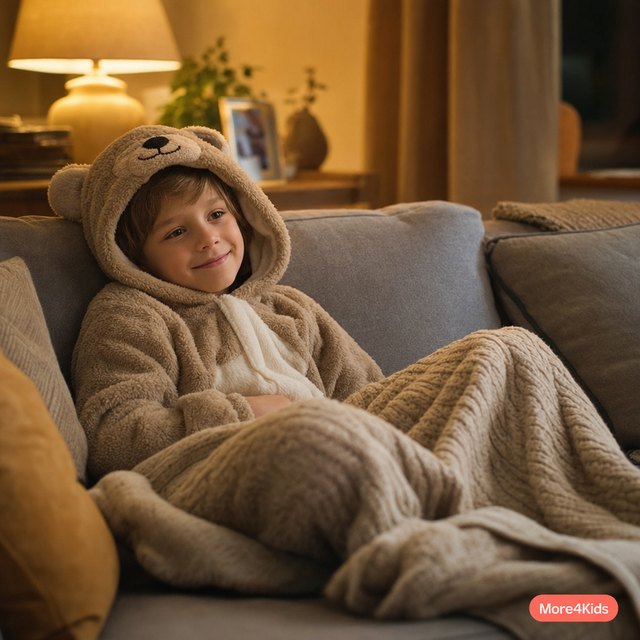
I taught preschool for years before I had three of my own, and I can tell you the classroom version of this happens every single Halloween. There is always at least one kid sitting out the parade in regular clothes, and always at least one parent standing in the doorway looking like they failed a test nobody told them about. They didn’t. The costume failed. Not the child, and not the grown-up who bought it.
Here’s the thing that took me embarrassingly long to figure out: a costume is, physically, one of the most demanding things we ask a child to wear all year. Stiff seams. Scratchy tulle. Elastic in places nothing else has elastic. A hood that muffles sound. A mask that blocks half of what you can see. We hand a kid all of that at once, at night, in the dark, in a crowd, on a sugar schedule, and then act surprised when it comes apart. For a child with sensory processing differences, that’s not a tantrum waiting to happen. That’s a completely reasonable response to a genuinely bad sensory situation.
So this piece is about what actually works. Not a list of products to buy — mostly the opposite, honestly. The best sensory-friendly Halloween costumes are usually assembled, not purchased, and the ones you do buy get chosen on the inside rather than the outside. It’s about how to build a Halloween outfit that your child will still be wearing at 7:30 PM, which is the only measure of a costume that matters.
Why Halloween Is Harder Than It Looks for Sensory Kids
Table of Contents
When people hear “sensory processing,” they usually picture a child who dislikes tags. Tags are real, and we’ll get to them. But the reason Halloween specifically goes sideways is that it stacks four or five demands on top of each other in the same hour.
Touch. Costume fabric is engineered to look good in a photo and cost twelve dollars. It is not engineered to sit against skin for four hours. Polyester satin, glued-on sequins, unfinished interior seams, a neckline with a plastic hook — these are the details nobody notices in the store and everybody notices at 6:15 PM.
Proprioception and fit. Costumes are sized generously, which means they hang and shift and drag. For a child who relies on close, predictable pressure to feel settled in their body, a loose cape that moves unpredictably behind them is genuinely disorienting. This is why a lot of kids do better in a snug costume than a “roomy, comfortable” one — the opposite of what most of us assume.
Sound and vision. Hoods and masks change how the world comes in. A hood cuts peripheral vision and dampens voices, so a child who was already working hard to track a busy street now has less information to work with. Masks are worse — more on those below.
Everything else about the night. Dark, cold, other kids shrieking, doorbells, dogs barking, motion-activated decorations that scream when you walk past them. The costume is the only variable you fully control, which is exactly why it’s worth getting right — it buys your child margin for all the parts you can’t control.
None of this is a diagnosis, and I’m not qualified to give you one. Plenty of kids with no sensory diagnosis whatsoever hate costumes, and plenty of kids with sensory processing disorder love them. If your child’s sensitivities affect eating, sleeping, or school, that’s a conversation for your pediatrician or an occupational therapist, not a Halloween article. What follows is just practical: the sensory-friendly costume choices that hold up on the actual night.
Start With What’s Already in the Drawer
This is the single best piece of advice I have, and it costs nothing: build the costume around a garment your child already wears without complaint.
You already know which clothes those are. Every parent of a sensory-sensitive kid has an unspoken inventory — the two pairs of leggings, the one sweatshirt, the pajama set that gets worn until it’s translucent. That garment has already passed the hardest test there is. Use it as the base layer and decorate outward from it.

Some combinations that have worked in my house or in my classroom:
- Black leggings and a black long-sleeve tee, plus felt ears on a soft headband: cat, bat, mouse, panther, whatever the child says it is.
- Grey sweatsuit plus a paper-plate shield: knight, elephant, koala, storm cloud.
- Their favorite hoodie, hood up, with felt shapes glued on: dinosaur spikes, a lion mane, a shark fin.
- Any solid-color pajama set plus a matching accessory — this one deserves its own paragraph.
Pajamas are the most underrated sensory-friendly Halloween costume base in existence. They’re cut for comfort, the seams are soft, they’re often tagless already, and Halloween-print pajamas are sold everywhere from September onward. A skeleton pajama set is a skeleton costume. Nobody at the door is going to file a complaint. And when your child is done with the night, they are already in pajamas, which is the kind of logistical win I have learned to take seriously.
As an Amazon Associate, More4Kids earns from qualifying purchases. We only recommend products we would use in our own homes, and we check every brand against current CPSC recall data before it appears here. Our recommendations are never paid placements.
If you want to shop this route, two categories do the heavy lifting: Halloween pajama sets in soft cotton and plain Halloween graphic tees you can layer over what they already wear. Check the fiber content before you buy — cotton and cotton blends breathe and soften; 100% polyester holds heat and static, and a child who runs warm will overheat under a jacket. Look for flat or covered seams and a printed neck label instead of a sewn-in tag, and wash the whole thing once before Halloween so it isn’t stiff out of the bag.
What to Look For in Sensory-Friendly Halloween Costumes
If you do buy a purpose-made costume, the label will not tell you whether it’s sensory-friendly. Very few are marketed as sensory-friendly Halloween costumes, and the handful that are still need checking. So here’s what I’d actually turn inside out in the store, or run my hand over the second the package opens.
Turn it inside out first. Always. The interior is where costumes fail. You’re looking for unfinished seam allowances, plastic thread ends, glue ridges under appliqués, and the scratchy backing behind anything sequined or embroidered. If the inside feels like a craft project, it will feel worse against skin after an hour of walking.
Find the tag and plan to remove it. Cut it out at the seam — don’t just snip the loop, because the stiff nub left behind is often worse than the original tag. Better yet, choose costumes with printed labels.
Check every closure against the back of the neck. Velcro is the usual offender: it’s loud, it catches hair, and the hook side abrades skin. Hook-and-eye closures and hard plastic snaps sit right on the vertebrae. A pullover neckline with no closure at all is almost always the better bet.
Size for snug, not roomy. Counterintuitive but consistent: many sensory-seeking kids settle better with firm, even contact. A costume that skims the body gives steady input. One that billows gives changing, unpredictable input all night.
Hem above the ankle. This is a safety point as much as a comfort one. Long robes and gowns on dark, uneven steps are a genuine trip hazard, and a child who is already managing a lot of sensory load has less attention left over for their feet. Our full rundown on what to check on a costume before Halloween night goes deeper on fit, visibility, and flammability labels.
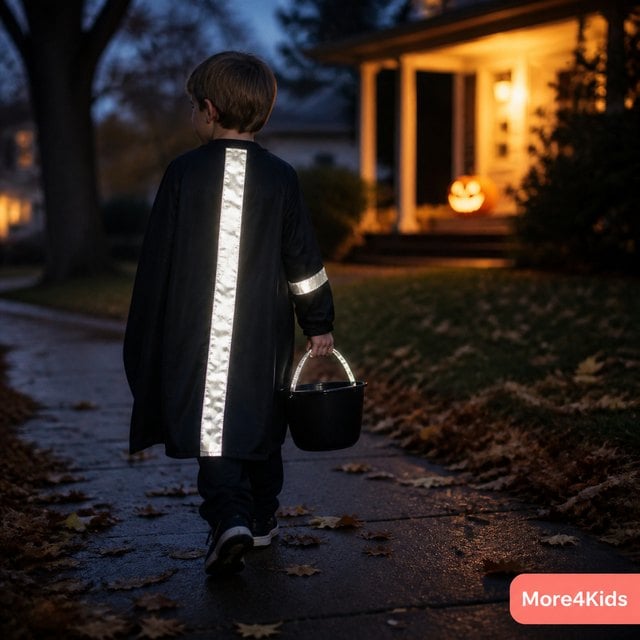
Watch the small parts on younger siblings. Costume accessories are full of them — clip-on jewels, tiny buckles, snap-on fangs, glued-on gems the size of a pea. If there is a child under three in your house, anything that can come loose and fit through a toilet-paper tube is a choking hazard, full stop. That’s not a sensory issue, but it’s the one I’d check first, because a costume accessory nobody was watching is exactly the kind of thing that ends a night badly.
The Mask Problem, and Three Ways Around It
I would skip masks entirely for most sensory-sensitive kids, and honestly for most kids under about six regardless.
A mask does four uncomfortable things at once: it presses on the face, it traps warm damp air, it narrows the visual field to two small holes, and it muffles hearing. That’s a lot to ask of any child walking a dark street. For a kid who’s already working overtime to process the evening, it’s usually the thing that tips the whole night over.
Three alternatives that get the same effect:
Face paint. The best swap by a distance — no pressure, no vision loss, no heat. It isn’t automatically the easy option, though: some kids can’t tolerate anything wet or sticky on their face, and painting a squirming child at 5 PM is its own event. Test one small stripe on the inside of the forearm a few days ahead, both to check for a skin reaction and to see whether the sensation is tolerable at all. Look for water-activated, non-toxic formulas that wash off with plain soap and water rather than needing scrubbing. Water-based face paint kits made for kids are the category to browse; skip anything oil- or grease-based, which takes real effort to remove and tends to end in a fight at bedtime.
A hat or headband instead. Ears, horns, antennae, a wizard hat. All the visual signal of a costume, none of the facial contact. If your child dislikes pressure around the head, look for a soft fabric band rather than a hard plastic headband with teeth.
Let the outfit carry it. A cape and a t-shirt with a symbol on it reads as a superhero to every adult at every door. Kids are far less attached to costume completeness than we are. The mask is usually for our photo, not their fun.
The Costume Is Only Half the Night
You can get the outfit perfect and still have the evening fall apart, because the costume was never the only sensory load. A few things that have made more difference for us than the costume itself:
Go out early. The first hour after dusk is quieter, warmer, less crowded, and the decorations that jump and scream are often still switched off. Nothing else on this list buys you as much.
Decide the exit in advance, and say it out loud. “We’re doing this street and then we’re going home” is infinitely easier than negotiating an ending in the dark with a tired, overloaded kid. Say the number of houses before you leave the driveway.
Bring the regulation tools you already use. Whatever works on a hard day works on Halloween: ear defenders, a chewy, a fidget in the pocket, a familiar water bottle. Halloween-themed fidget and sensory toys sized for small hands double as something to hold on the walk and as non-candy treats if you’re handing them out. One caution on those multipacks: they’re usually rated 3+, and the tiny pop-keychains and stretchy strings in bulk assortments are a choking risk for toddlers, so keep them away from younger siblings and check the age rating on the package rather than assuming.

Let them skip the doors. Some kids want to walk and not knock. That’s a complete Halloween. One of mine spent an entire year as the designated flashlight holder and talked about it for months.
Feed them first. An obvious one that I still forget. Hungry plus overstimulated plus dark is not a combination any of us handle well.
Run a Dress Rehearsal Two Weeks Out
If you take one procedural thing from this article, take this one. Two weeks before Halloween, have your child put the whole outfit on — shoes, hat, accessories, everything — and wear it around the house for as long as they’ll tolerate.
Two weeks is deliberate. It’s enough time to return something, alter it, or build a plan B without the panic of doing it on October 30th.
Watch for the specific tells rather than asking “does it feel okay?”, which most kids will answer yes to because they want the costume to work as much as you do. Tugging at the neckline. Rolling a shoulder. Pushing sleeves up. Standing oddly still. Going quiet. Those come well before the meltdown does, and they tell you exactly which seam to go after.
Then do a second, shorter rehearsal a couple of days out, ideally in the evening with the porch light on. A costume that’s fine at 10 AM in a warm kitchen can feel different at dusk in a coat. If your child needs predictability, walking the actual route in daylight beforehand is worth the twenty minutes — the same principle behind easing kids through any big transition, which we’ve written about in the context of getting through a nerve-wracking first week.
What We’d Skip
No links in this section on purpose. When people ask me to recommend sensory-friendly Halloween costumes, half my answer is really a list of what to avoid — so these are the categories I would leave on the shelf.
Full-head masks and latex appliances. Covered above. Heat, pressure, muffled hearing, restricted vision, all at once.
Inflatable costumes. They look hilarious and they’re a genuinely terrible sensory experience: a battery-powered fan running inches from the body, constant noise, constant airflow, and a shape the child can’t feel the edges of. Also very difficult to get through a doorway or into a car seat.
Anything with a neck drawstring. This one isn’t about comfort. Drawstrings at the neck are a strangulation hazard on children’s clothing, which is why they were phased out of kids’ garments in the first place, and costumes are exactly the corner of the market where they still turn up. Cut it out or don’t buy it.
Light-up accessories with a battery door you can open with a fingernail. Coin batteries are the hazard we see most in children’s product recall data, and the light-up Halloween category is thick with them. If the compartment isn’t secured with a screw, it doesn’t come in the house.
Scratchy tulle skirts and glued-sequin bodices. The two worst offenders in the entire costume aisle, and they show up on half the options marketed to girls. If your child loves the look, layer the tulle over soft leggings so nothing rough touches skin.
Buying a size up “so it lasts.” It won’t get worn twice anyway, and the extra fabric is the problem you’re trying to avoid.
If Your Child Decides Not to Wear It
Sometimes you do everything right and the costume still comes off in the driveway. I want to be clear that this is not a failure of preparation, and it’s definitely not a behavior problem.
Bring the brown hoodie. Have a plan B in the car — a familiar sweatshirt, the ears on their own, nothing at all. Let the child pick from what’s in the bag. A kid in regular clothes holding a bucket is fully, completely trick-or-treating.
And if the whole outing is a bust, go home. Watch something, hand out candy from your own porch, eat the good stuff out of the bowl. My kids’ most-repeated Halloween memory is not any costume. It’s the year we quit after four houses and made a nest of blankets in the living room.
The point was never the costume. It was a good night.
Frequently Asked Questions
What makes a costume sensory-friendly?
Sensory-friendly Halloween costumes share a short list of physical traits, and none of them are printed on the front of the package. Soft, broken-in fabric, flat or covered interior seams, no sewn-in tag, no closure sitting on the back of the neck, a snug rather than billowing fit, and a hem that clears the ankle. Very few costumes are labelled sensory-friendly, so you’re checking these yourself — turn it inside out before you decide.
Are pajamas really okay as a Halloween costume?
Yes, and they’re one of the best options going. Themed pajama sets are soft, usually tagless, cut for comfort, and read instantly as a skeleton, pumpkin, or ghost. Your child is also already dressed for bed when the night ends.
My child won’t wear face paint or a mask. What else is there?
Let the outfit do the work. A hat, soft-band ears, a cape, or a printed tee communicates the character perfectly well. Adults at the door respond to the overall look, and most children care far less about costume completeness than the grown-ups photographing them.
When should we try the costume on?
Two weeks before Halloween, with everything on at once, for as long as your child tolerates it. That leaves time to return, alter, or replace it. Do a second short rehearsal in the evening a few days out, since a costume can feel different at dusk under a coat.
Is it okay to skip trick-or-treating altogether?
Completely. Handing out candy from your own porch, walking the street without knocking on doors, or staying in with a movie are all real ways to do Halloween. The goal is a good evening, not a full bucket.

Meet Sophia Richards Sophia Richards is an early childhood educator, passionate writer, and the proud mom of three energetic kids. With a degree in Education and over a decade of hands-on classroom experience, Sophia bridges the gap between professional teaching strategies and everyday family life. At More4Kids, she translates complex child development concepts into practical, actionable parenting tips that families can use at home.
Whether she is sharing positive reinforcement techniques, educational crafts, or honest reflections on the chaos of raising three children under one roof, Sophia’s goal is to empower parents to foster resilience and joy in their kids. When she isn't writing or lesson planning, you can find her organizing neighborhood scavenger hunts or trying out new kid-friendly recipes.
Areas of Expertise: Early Childhood Education, Positive Parenting, Sibling Dynamics, Educational Play, Family Wellness.

Add Comment