









By Sophia Richards
I still remember sitting on the cold bathroom floor with my oldest, both of us staring at a tiny potty chair like it might do something on its own. I had read all the "three-day method" promises and felt sure I was already failing at hour four. By the time my third came along, I had loosened my grip completely — and wouldn't you know, that was the round that went the smoothest. If you're trying to figure out how to potty train a toddler without turning your whole house into a battleground, let me save you some of the worry I carried for no reason.
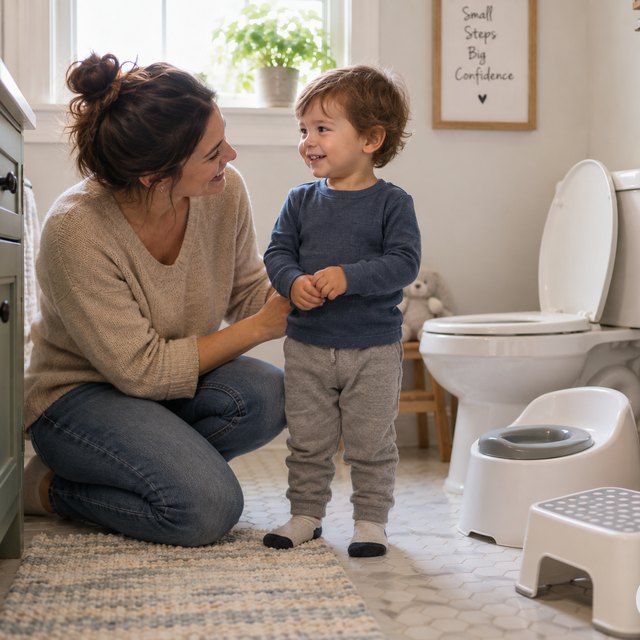
I'm a mom of three, and as an early childhood educator I walked dozens of other families through this same season. Here's the honest, gentle version — the one I wish someone had handed me on that bathroom floor.
First, look for readiness — not a birthday
Table of Contents
The single biggest thing I have learned is that potty training works when your *child* is ready, not when the calendar says so. Some kids are ready at two, plenty aren't until well past three, and both are completely normal. Pushing a toddler who isn't there yet is how families end up stuck for months.
The readiness signs are quieter than people expect: staying dry for longer stretches, telling you (or hiding) when they've gone, showing interest in the toilet, being able to pull pants up and down, and following a simple two-step direction. The American Academy of Pediatrics lays these out beautifully in its guidance on toilet training readiness. When you see a handful of those signs cluster together, that's your green light — and it matters far more than your toddler's age. If you want a sense of where your little one sits overall, our overview of your toddler's development is a gentle place to start.
How to potty train a toddler without the power struggles
Here's the heart of it: the calmer you stay, the faster this usually goes. Toddlers have very few things in their world they fully control, and what comes out of their body is one of them. The moment potty training becomes a contest of wills, most kids dig in — and you cannot win a standoff over someone else's bladder.
So I always coach parents to take the pressure off and lean into routine instead. Offer the potty at natural moments rather than demanding performance: "Let's go try before we read our book." Keep your face friendly and your voice light, even when nothing happens. A toddler who feels relaxed and in charge of their own body learns this skill so much faster than one who feels watched and graded. For the practical step-by-step, the basics of getting started with potty training covers the early mechanics well.
Build a simple, predictable rhythm
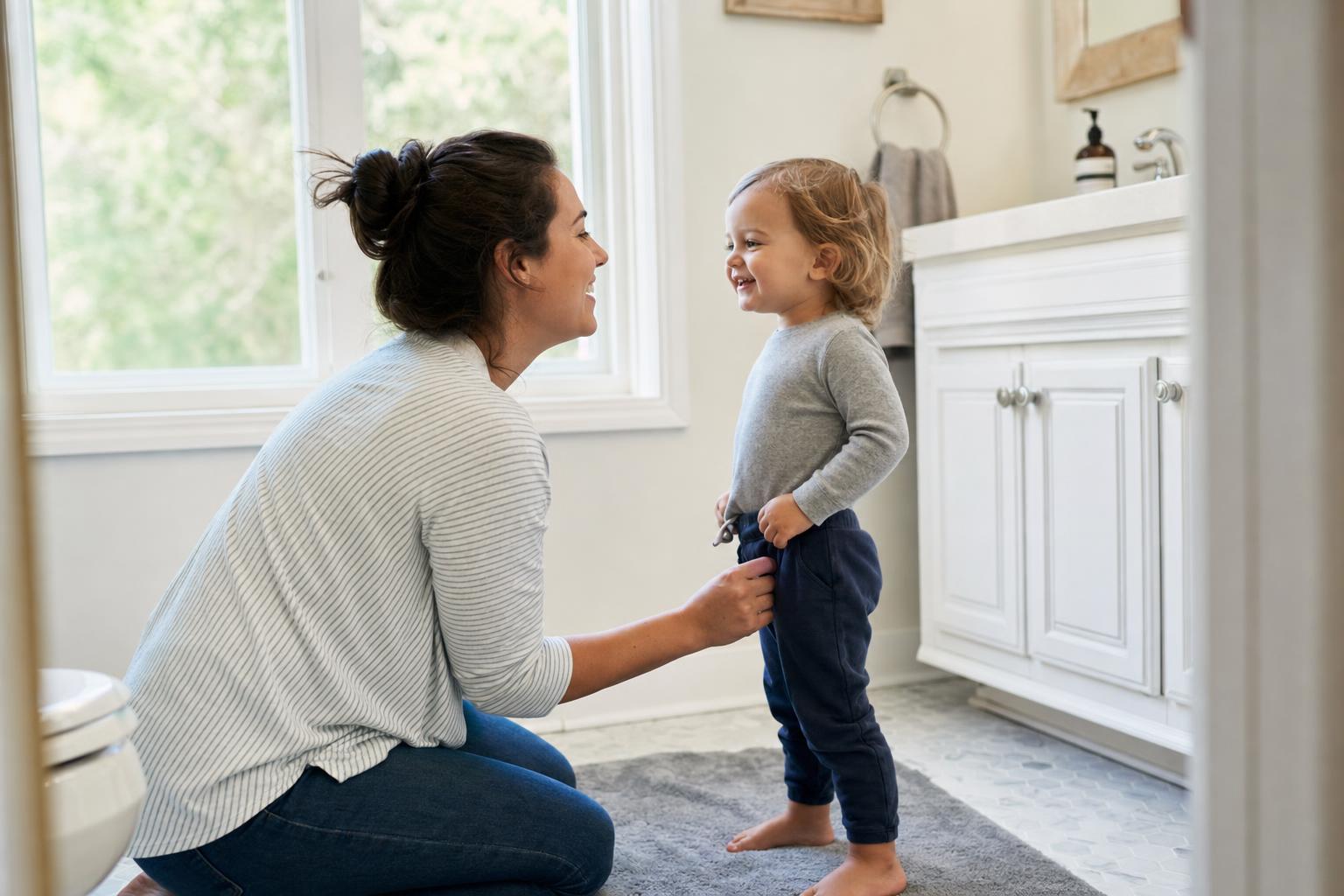
Toddlers are creatures of habit, and toilet training rides on rhythm more than willpower. In my house, the easy rule was to offer the potty at the natural seams of the day — first thing in the morning, before and after meals, before we left the house, and before bath and bed. That predictable cadence does the remembering *for* your child while their little body is still learning the signals.
Set them up for success, too. Loose, easy clothing they can manage alone. A step stool so their feet are supported and they feel secure. The potty somewhere they can reach it fast, because a toddler's warning window is roughly four seconds long. Small logistics, big difference.
Talk about it like it's the most ordinary thing in the world
Kids take their emotional cues from us. If we treat using the potty like a thrilling, high-stakes event — or worse, a tense one — they feel that charge. As an early childhood educator I watched the calmest, most matter-of-fact classrooms have the smoothest training, every single time.
Name it plainly, celebrate gently ("you did it!" with a warm smile beats a five-minute parade), and skip the elaborate sticker economies if they start to stress your child out. Nemours offers a lovely, level-headed walkthrough in its parent guide to toilet teaching that echoes this same easygoing tone. Warmth and consistency teach this skill. Pressure just teaches anxiety.
When the accidents come — and they will
Every single child has accidents. They are not a setback, a sign you chose the wrong method, or evidence your toddler is being defiant. They are simply part of the learning, the same way a wobble is part of learning to walk.
The only real rule here is to keep your reaction boringly neutral. "Oops, pee goes in the potty — let's get cleaned up," and move on. No big sighs, no disappointment, no lectures. As a parent this is genuinely the hard part, especially on day three when you're on your fourth pair of soaked leggings and your patience is thin. Staying calm through the messy moments is its own small discipline, and our piece on cultivating better behavior in children leans on the same idea: steady, kind responses teach far more than frustration ever does.
Nighttime is a completely separate timeline
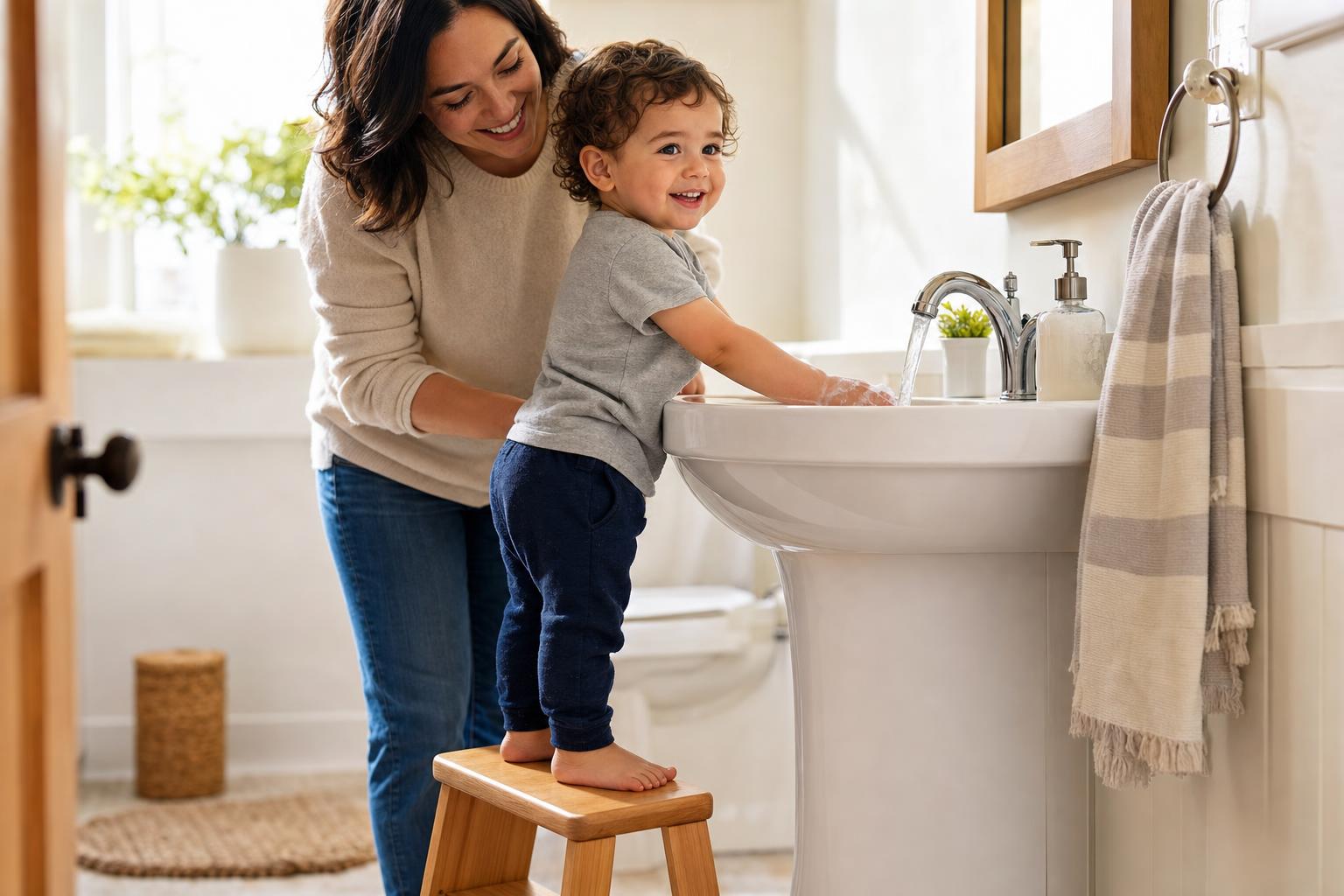
This one surprises a lot of parents, so hear me clearly: staying dry overnight is a developmental, hormonal milestone, not a willpower or training issue. Plenty of kids master the daytime potty months — sometimes years — before they reliably stay dry at night, and that gap is perfectly normal well into the early school years.

So don't fold nighttime into your daytime push. Keep them in a nighttime diaper or training pant without shame, protect the mattress, and simply wait for the dry mornings to start appearing on their own. Forcing it earlier only adds stress and laundry. Every child unfolds on their own timeline, which is really the whole spirit of flexible, adaptive parenting — meeting the child in front of you rather than the schedule in your head.
FAQ
When is a toddler truly ready to potty train?
Most children show signs of readiness somewhere between 18 and 36 months, but the range is wide and normal. The most reliable signals are physical: staying dry for at least two hours at a stretch, showing awareness when they're going or have gone, and being able to follow simple two-step instructions. Wanting to do what you do in the bathroom counts too. Attempting training before these signs appear tends to take longer, not shorter.
How long does potty training usually take?
For a child who is developmentally ready, most families see meaningful progress within two to four weeks, with accidents tapering off over the following months. Night dryness often comes later — sometimes a year or more after daytime training — and that is completely normal. Children who start before they're ready can take considerably longer. Patience with the pace almost always shortens the total runway.
What do you do when a potty-trained toddler starts having accidents again?
Regression is very common, especially after a life change like a new sibling, a move, starting preschool, or a bout of illness. The most helpful response is calm and matter-of-fact: clean up without drama, check for a stressor, and briefly return to more frequent reminders. Pushing back hard or expressing disappointment usually prolongs the regression. It typically resolves on its own within a few weeks.
Should you use pull-ups or go straight to underwear?
This is genuinely a judgment call. Pull-ups can soften the learning signal because they absorb wetness the way diapers do, which some children find confusing. Underwear makes the cause-and-effect clear immediately. Many families use pull-ups for outings and naps during the training window and switch to underwear at home when the child is showing consistent awareness. Do what reduces your stress and keeps the training low-pressure.
What if my toddler refuses to use the potty at all?
A flat refusal — especially a consistent one — is usually a sign that the child isn't ready yet, or that potty training has become a power struggle. The most effective thing you can do is take a complete break for four to six weeks, remove all pressure, and let the topic go quiet. Come back to it when the child brings it up or shows fresh interest. Toddlers train faster when they feel like it's their idea.
A gentle word before you go
If there's one thing I'd whisper to the version of me on that bathroom floor, it's this: you are not behind, and neither is your child. Potty training is not a race, and it is definitely not a referendum on your parenting. It's just one more ordinary skill your toddler grows into, best learned slowly, calmly, and with a whole lot of grace for the puddles along the way.
Pick a relaxed week, lower your expectations, keep your sense of humor close, and trust that this — like every other stage — passes. That, in the end, is really how to potty train a toddler in a way that protects both their confidence and your sanity. You've got this, and so do they.
Related Articles
- Your Toddlers Development
- Potty Training Basics
- Cultivating Better Behavior In Children
- Flexible Parenting Adapting To Your Changing Child

Meet Sophia Richards Sophia Richards is an early childhood educator, passionate writer, and the proud mom of three energetic kids. With a degree in Education and over a decade of hands-on classroom experience, Sophia bridges the gap between professional teaching strategies and everyday family life. At More4Kids, she translates complex child development concepts into practical, actionable parenting tips that families can use at home.
Whether she is sharing positive reinforcement techniques, educational crafts, or honest reflections on the chaos of raising three children under one roof, Sophia’s goal is to empower parents to foster resilience and joy in their kids. When she isn't writing or lesson planning, you can find her organizing neighborhood scavenger hunts or trying out new kid-friendly recipes.
Areas of Expertise: Early Childhood Education, Positive Parenting, Sibling Dynamics, Educational Play, Family Wellness.

Add Comment