
















By Sophia Richards
Part of our Life Skills by Age guide — this is the deep dive for the middle-childhood years.
Eight and nine is the age your kid quietly turns a corner. They can read a clock and feel time passing, follow a written recipe, remember what’s due Thursday, and hold a whole afternoon’s plan in their head. They also want more say, more privacy, and more “I’ve got it” — and they mean it. This is the stretch where the life skills for 8 and 9 year olds you build stop being about a tidy room and start being about a kid who manages their own time, cooks something real, and carries responsibility that actually matters to the household.
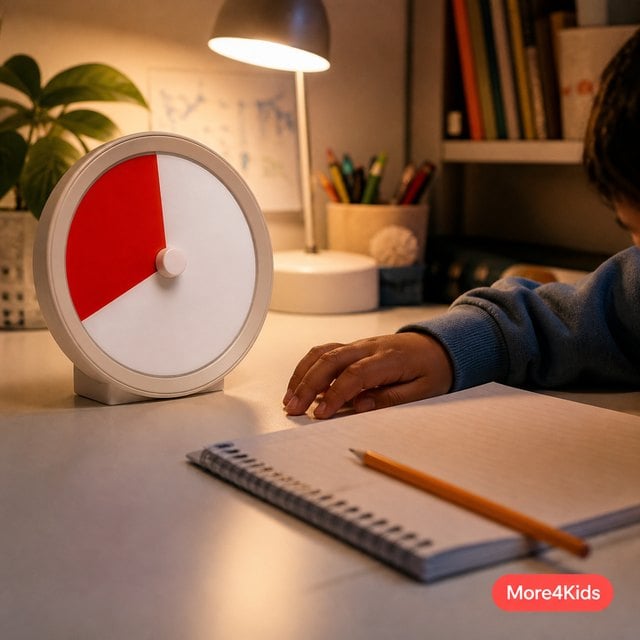
Middle childhood is the launchpad for genuine independence. Third and fourth graders can plan ahead, break a big job into steps, cook with real (supervised) heat, budget money toward a goal that’s weeks away, and own the consequences when they drop the ball. The capability is there — the job now is handing it over on purpose. Here’s what’s genuinely realistic in life skills for 8 and 9 year olds, why time management and cooking matter more than a perfect chore chart, and exactly how to teach them without micromanaging a kid who’s dying to prove they don’t need it.
Why 8-9 is the age real responsibility takes hold
Table of Contents
Six and seven was about owning a job. Eight and nine is about owning a plan. That’s the leap, and it changes what your kid can do.
The American Academy of Pediatrics’ developmental guidance (on its parent site, HealthyChildren.org) describes the grade-school years as a stretch of fast-growing independence and self-management — children take on more responsibility, work more independently, and start caring deeply about competence and doing a job well. The CDC’s positive-parenting guidance for middle childhood (6–8 years), which reaches into this age, points the same direction: kids grow steadier attention and self-control, form more complex friendships, and can handle multi-step routines and household jobs with less supervision.
Underneath it is a brain that’s caught up to the ambition. By eight or nine, working memory and planning ability have matured enough that a child can hold a several-step process in mind, sequence it, and self-correct partway through — which is exactly why time management, following a recipe, and saving toward something weeks away finally become teachable, not just aspirational. A first grader lives in the next ten minutes; a fourth grader can genuinely think about tomorrow, and even next Saturday. That new sense of future is what makes real responsibility — and real money and time skills — click at this age.
Here’s the part worth circling: the habits you install at eight and nine are the ones that carry a kid through the homework-heavy, socially complicated tween and teen years. A child who learns I check my planner, I start my work before screens, I can feed myself a real lunch, I save for what I want isn’t just being capable this month — you’re wiring the defaults that make middle school far less of a nightly battle. Miss this window and you’re teaching the same skills at thirteen against a lot more pushback. Eight and nine is where the independence gets built cheaply.
The life skills for 8 and 9 year olds checklist: what a third or fourth grader can really do
Every child develops on their own timeline, and the normal range is wide. Treat this as a menu of what’s possible in middle childhood, not a scorecard. Across the 8–9 years, most kids can learn to:
Manage their own time and schoolwork
- Read an analog clock and estimate how long a task takes
- Use a planner or checklist to track homework, activities, and what’s due when
- Start homework without a fight — jobs and homework before screens — and work with growing independence
- Break a bigger project or chore into steps and pace it over more than one day
- Get themselves up with an alarm and run a full morning routine solo
Cook and handle the kitchen with supervision
- Follow a simple written recipe start to finish
- Use a stovetop, toaster oven, or microwave with adult supervision and clear safety rules
- Use a kid-safe knife for real cutting — soft fruit, sandwiches, cheese
- Measure, mix, crack eggs, make toast, pour cereal, assemble a lunch, prep a simple snack for a sibling
- Clean up as they go and follow basic kitchen and food-safety rules (wash hands, hot-pan caution)
Handle money and real responsibility
- Earn, save, and budget an allowance across save/spend (and maybe give)
- Save toward a bigger goal that’s weeks away and track their progress
- Compare prices and make a real spending choice, then live with it
- Own a set of household chores start to finish without daily reminders — laundry, dishes, taking out trash, yard help
- Answer the phone or door appropriately and take a message
Grow independence and safety judgment
- Stay home alone for short, planned stretches where that’s age-appropriate and legal locally
- Walk or bike a known short route with agreed rules, or run a small errand within sight
- Know their full address, a parent’s phone number, and how to reach a trusted adult in an emergency
- Follow safety plans — what to do if lost, a stranger approaches, or something goes wrong at home
Navigate feelings and friendships with more skill
- Name a strong feeling and use a self-calming strategy fairly independently
- Take another kid’s perspective and work through a real friendship conflict with less adult refereeing
- Handle losing, disappointment, and “no” without a full meltdown, most of the time
- Show up for others — notice when a friend or sibling needs help and pitch in
If your child isn’t doing all of these yet, that’s completely normal — kids this age still grow in bursts, and a skill that’s shaky in third grade is often solid by the end of fourth. This is a map of the territory, not a race.

The method: how to hand over responsibility without hovering
Eight- and nine-year-olds have real capability and a real need to feel trusted. Teaching life skills for 8 and 9 year olds is mostly about transferring ownership in a way that respects their growing competence — coaching from a step back instead of running the show. A few moves do most of the work.
1. Make time visible and let them own the clock. This is the age to hand over time itself. Put a real clock where they work, teach them to estimate (“How long do you think homework will take? Let’s see”), and let a planner or checklist — not your voice — track what’s due. When work stalls, you’re not the drill sergeant; you ask “What’s your plan for getting this done before dinner?” and hand the scheduling back. Owning time is the single most transferable skill of this age.
2. Teach cooking as a real job, not a cute activity. Nothing builds competence like feeding yourself. Start with a simple written recipe, teach the safety rules once and hold them, and let your child do the real steps — cut with a kid-safe knife, measure, crack, stir at the stove with you right there. Yes, it’s slower and messier than doing it yourself. You’re not making dinner faster; you’re building a kid who can make their own lunch, then their own dinner, then feed a younger sibling. Let the pancakes be lopsided and proud.
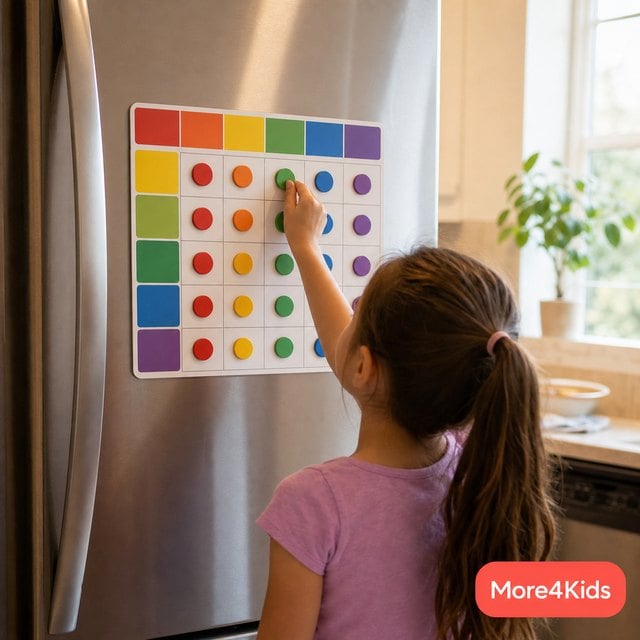
3. Move money from coins to a real budget. At six and seven, money was about holding it and running out. At eight and nine, it becomes a budget. Whether it comes from an allowance, earned chores, or a gift, help your child split it into save and spend, set a goal that’s genuinely weeks away, and track it. The Consumer Financial Protection Bureau’s Money as You Grow offers age-based activities and makes a point most of us learned the hard way: kids build money habits by doing — saving toward a goal, comparing two prices, feeling the tradeoff — not by lectures. When you’re ready to go deeper, our guide to teaching kids about money has age-matched steps.
4. Give consequences, not reminders. The instinct at this age is to keep nagging — “Did you pack your homework? Your cleats? Your water bottle?” Trade the reminders for real (safe) consequences. A forgotten assignment, a chore that means no screens until it’s done, an allowance blown before the thing they wanted — these teach far more than your voice ever will. Set the expectation clearly once, then let the outcome do the teaching. Our guide to teaching kids responsibility goes deeper on letting natural consequences carry the lesson.
5. Coach the plan, then step back — and let it be imperfect. The temptation at eight and nine is to fix the wobbly plan and quietly redo the half-cleaned kitchen. Don’t. A project they paced themselves — even badly the first time — teaches more than one you managed for them. Describe what they actually pulled off: “You planned your whole book report over two nights and got it done without me reminding you — that’s real.” Let the imperfect, self-run version stand, because the pride in I did that myself is the whole engine.
Word-for-word scripts for the hard moments
Sometimes you just need the words in the moment. Here are the ones I reach for most with this age:
When homework turns into a standoff: “What’s your plan to get it done before screens tonight?” Then wait. Handing back the planning question instead of listing the steps is the point — that’s the time-management skill you’re building.

When they want to cook but you’re nervous about the stove: “Yes — and here are the three kitchen rules while the burner’s on. I’m right here. Show me you’ve got the rules and it’s yours.” You say yes to the independence and hold the safety line at the same time.
When they beg for something at the store: “That’s a great goal. How much of your own money do you have saved? If it’s not enough yet, this can be what you’re saving for.” You turn a whine into a budgeting lesson, and “no” becomes “not yet, here’s the plan.”
When they forget something important — again: “That’s a bummer. What’s a system that would help you remember it next time?” You skip the lecture, hold the natural consequence, and hand them the problem to solve — which is exactly how the remembering gets stronger.
When a friendship conflict gets real: “That sounds hard. What do you think was going on for them, and what would make it fair for both of you?” You coach perspective-taking and repair instead of refereeing. If big feelings are running the show, our guide to emotional regulation for kids has age-appropriate tools.

Troubleshooting the resistance
“My kid can do the work but won’t start until the last minute.” Extremely common at this age — the planning brain is there, but the pull of later is strong. Don’t manage it for them; build the system with them. A visible planner, a set “work before screens” sequence, and a clock they can see turn time into their problem to solve. Let a missed deadline land as a real (small) consequence once, and the internal alarm starts to grow.
“They want to cook but leave a disaster or almost burn something.” That’s the learning, not a reason to stop. Teach the safety rules explicitly and hold them every single time, stay right there while heat is involved, and build “clean as you go” into the recipe itself. The mess and the near-misses shrink fast with reps — but only if they get the reps.
“They blow their whole allowance the second they get it.” Let it land. The natural consequence — no bailout, no advance — is the most powerful money teacher there is at this age. Next time, sit with them before they spend and split it into save and spend, and point at the goal they’re saving toward. Running out once is often what finally makes saving feel worth it.
“Everything is a negotiation now, and they want way more independence than I’m ready for.” Welcome to eight and nine — pushing for autonomy is the developmental job, not defiance. Say yes to the independence they’re ready for (cooking, a planned stretch home alone where legal, a known route) and hold a clear, calm line on the rest. Autonomy earned through demonstrated responsibility beats autonomy handed over or refused flat.
“It’s honestly faster and cleaner if I just do it.” Today, absolutely. But you’re not buying a clean kitchen tonight — you’re buying a twelve-year-old who cooks, a fourteen-year-old who manages their own homework, and a teen who doesn’t need you standing over anything. The slower, messier version at eight and nine is the deposit that pays out for a decade.
What to relax about
A quick permission slip, because middle-childhood-parent worry is real and mostly unnecessary. Uneven skills are the norm — a kid who cooks eggs and budgets an allowance might still forget their homework folder three days running, and that’s development, not a red flag. Time management, kitchen confidence, and money sense all click on wildly different schedules from kid to kid; late on one is not behind overall. You also don’t need a color-coded reward economy or a flawless chore system; at this age the whole curriculum is make it visible, make it theirs, let the consequences teach, keep it warm. And forgotten items and blown budgets are part of learning responsibility — the occasional missed assignment or spent allowance, felt as a small natural consequence, teaches more than a parent who remembers and rescues everything ever could.
Building the “runs their own week” kid
If there’s one skill to pour energy into at 8–9, it’s independent time management — because it’s the daily rehearsal for every kind of self-direction that comes later. The goal isn’t a scheduled-to-the-minute household; it’s a kid who checks a planner, sees what’s due, makes a plan, and works through it while you’re doing your own thing instead of narrating every step.
Build it in plain sight and hand it over. Set up the planner or checklist together so they own it, put a real clock where they work, and anchor the sequence once — homework and jobs before screens. Then step back and let the system lead. When work stalls, ask for their plan instead of giving them yours. And when it works — unevenly, in fits and starts — name it: “You planned your own week and pulled it off. That was all you.” That sentence, repeated over months, is how an eight-year-old becomes a kid who genuinely runs their own days. For turning helping and follow-through into lasting responsibility, our guides to age-appropriate chores for kids and raising responsible kids dig into the long game.
Frequently Asked Questions
What life skills should an 8 or 9 year old have?
By middle childhood, most kids can manage their own time with a planner or checklist, read a clock and estimate how long tasks take, start homework independently, and follow a simple written recipe using a stovetop or kid-safe knife with supervision. Many can also budget and save an allowance toward a bigger goal, own a set of household chores start to finish, stay home alone for short planned stretches where that’s appropriate and legal, know their address and emergency contacts, and work through a friendship conflict with less adult refereeing. Expect an uneven mix — solid on some, still learning others — and count the effort as the win.
How do I teach my 8-9 year old time management?
Make time visible and hand it over. Put a real clock where they work, set up a planner or checklist together so they own it, and anchor a clear sequence — homework and jobs before screens. When work stalls, ask “What’s your plan to get this done?” instead of listing the steps for them, so the scheduling stays their job. Let a missed deadline land as a small natural consequence once rather than rescuing every time, and their own internal sense of pacing will grow over the year.
Is it safe to let an 8 or 9 year old cook?
With supervision and clear rules, cooking is one of the best skills to build at this age. Teach the kitchen and food-safety rules explicitly — wash hands, hot-pan and burner caution, knife safety — and hold them every time. Start with a simple written recipe and kid-safe tools, stay right there whenever heat is involved, and let your child do the real steps: measuring, cracking eggs, cutting soft foods, stirring at the stove beside you. Expect it to be slower and messier at first; the competence and the caution both grow quickly with practice.
My 8-year-old procrastinates and forgets things constantly. Is that normal?
Completely normal. At eight and nine the planning brain is developing but the pull of “later” is strong, so procrastination and forgotten folders are a systems gap, not defiance. The fix is external structure they own, not more nagging: a visible planner, a set work-before-screens routine, and a clock they can see. Let small natural consequences — an occasional missed assignment — do some of the teaching, and build a “what system would help you remember?” habit so they start solving it themselves.
The takeaway
Eight and nine is when responsibility gets real: a kid who plans their own week, cooks something they’re proud of, budgets their own money — and, yes, sometimes procrastinates, blows the allowance, and learns why. Every time you ask for their plan instead of giving them yours, hand them a real (supervised) knife instead of doing it faster, and let the missed deadline and the spent allowance stand, you’re telling your child something they’ll carry for years: you are capable, and I trust you to run more of your own life every day.
Make it visible, make it theirs, and let it be imperfect. The life skills for 8 and 9 year olds you’re building now — the time management, the cooking, the real responsibility — are the working foundation for every more independent year that follows.
Ready for the next stage? Head back to the full Life Skills by Age guide — the tween deep dive for ages 10–12 is coming next in this series.
Related Articles
- Life Skills By Age
- How To Teach Kids About Money
- Teaching Kids Responsibility
- Emotional Regulation For Kids
- Chores For Kids
- Parenting Tips For Responsible Kids

Meet Sophia Richards Sophia Richards is an early childhood educator, passionate writer, and the proud mom of three energetic kids. With a degree in Education and over a decade of hands-on classroom experience, Sophia bridges the gap between professional teaching strategies and everyday family life. At More4Kids, she translates complex child development concepts into practical, actionable parenting tips that families can use at home.
Whether she is sharing positive reinforcement techniques, educational crafts, or honest reflections on the chaos of raising three children under one roof, Sophia’s goal is to empower parents to foster resilience and joy in their kids. When she isn't writing or lesson planning, you can find her organizing neighborhood scavenger hunts or trying out new kid-friendly recipes.
Areas of Expertise: Early Childhood Education, Positive Parenting, Sibling Dynamics, Educational Play, Family Wellness.

Add Comment