















By Sophia Richards
I still remember my oldest, at about five, asking why we couldn't just "get more money from the wall." To him, the ATM was a magic box that handed out cash whenever we needed it. That little moment is exactly why learning how to teach kids about money matters so much — because if we don't explain it, they'll happily invent their own version, and it usually involves a magic wall.
I'm a mom of three and a former early childhood educator, and I've learned that money lessons don't need a special curriculum or a perfect plan. They happen in the small, ordinary moments: the grocery line, the piggy bank, the lemonade stand that makes four dollars and feels like a fortune. Here are the simple, joyful money habits I've leaned on, and the order I'd start them in.
Start younger than you think
Table of Contents
You don't need to wait for a "money talk." Toddlers and preschoolers are already watching every time you pay for something, and they're building their first ideas about how the world works. Around age three or four, kids can grasp that money is something we trade for things we want, and that we don't have an endless supply.
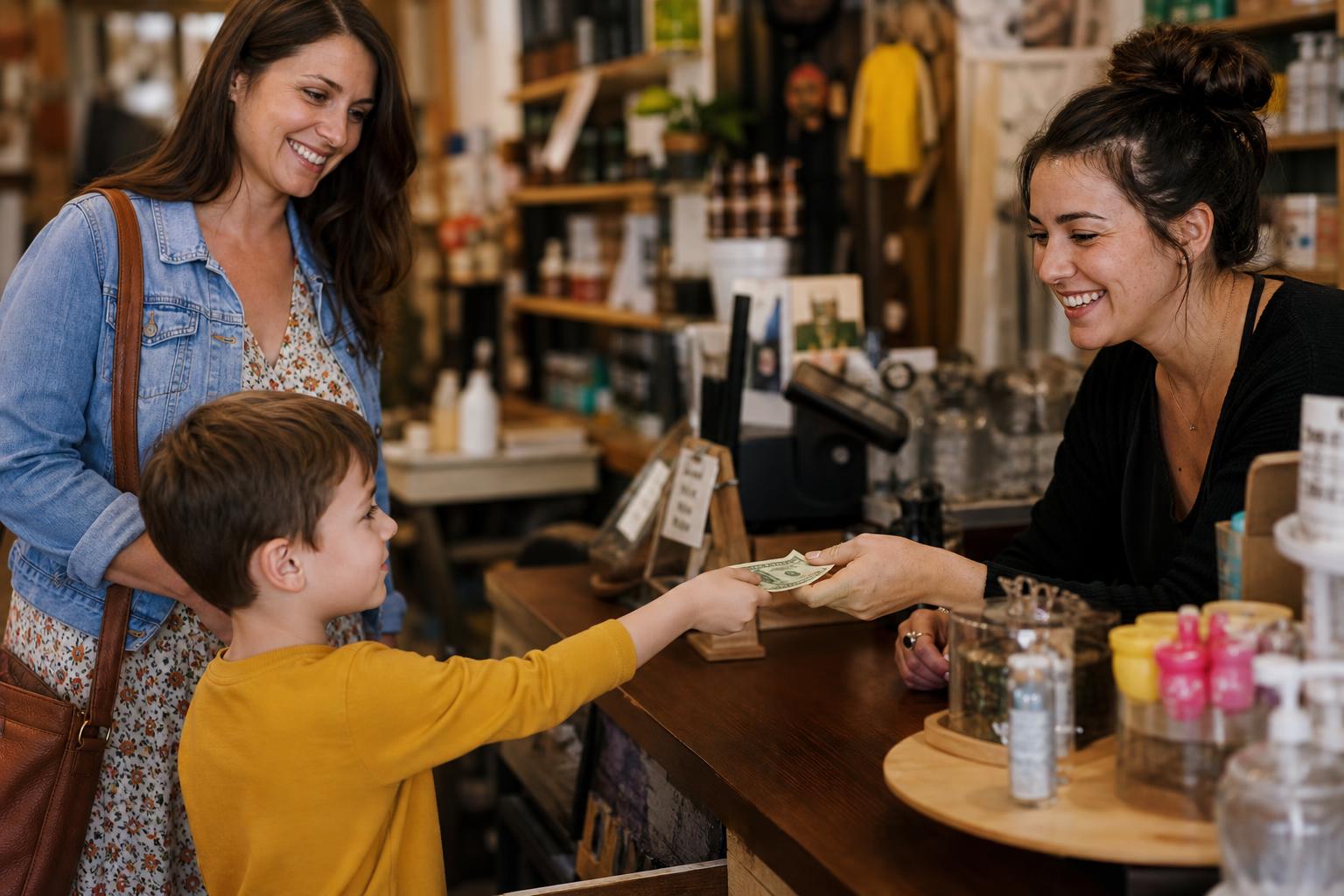
At this age it's all hands-on and tiny: naming coins, "buying" pretend groceries, letting them hand the cashier the card and take the receipt. You're not teaching budgeting yet. You're just making money real and visible instead of an invisible tap-and-go mystery.
Make money visible with the three-jar habit
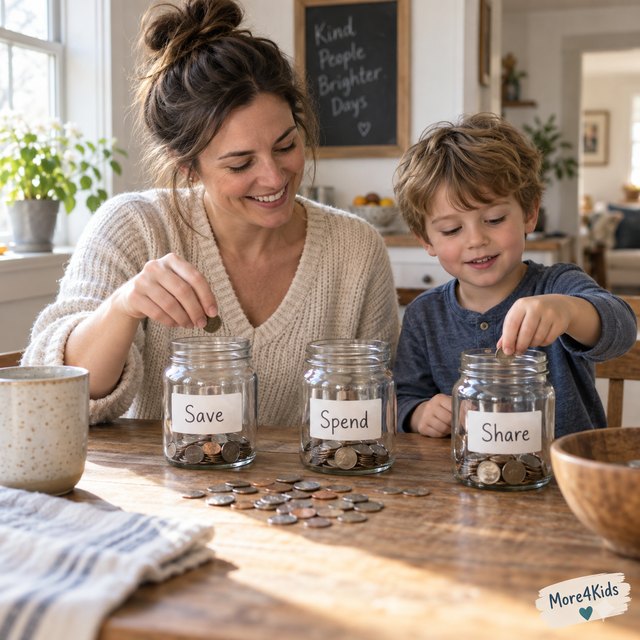
If I could only give one tip, it would be this: get three clear jars and label them Save, Spend, and Give. When money comes in — a birthday five, a few dollars for helping a neighbor — your child divides it between the three. Clear jars matter because kids are concrete thinkers; watching the Save jar fill up does something a number in an app never will.
This one habit quietly teaches the whole framework. Spend is for the small joys now. Save is for the bigger goal that takes patience. Give is for the people and causes they care about. It turns abstract money lessons into something they can literally hold in their hands.
How to teach kids about money through an allowance
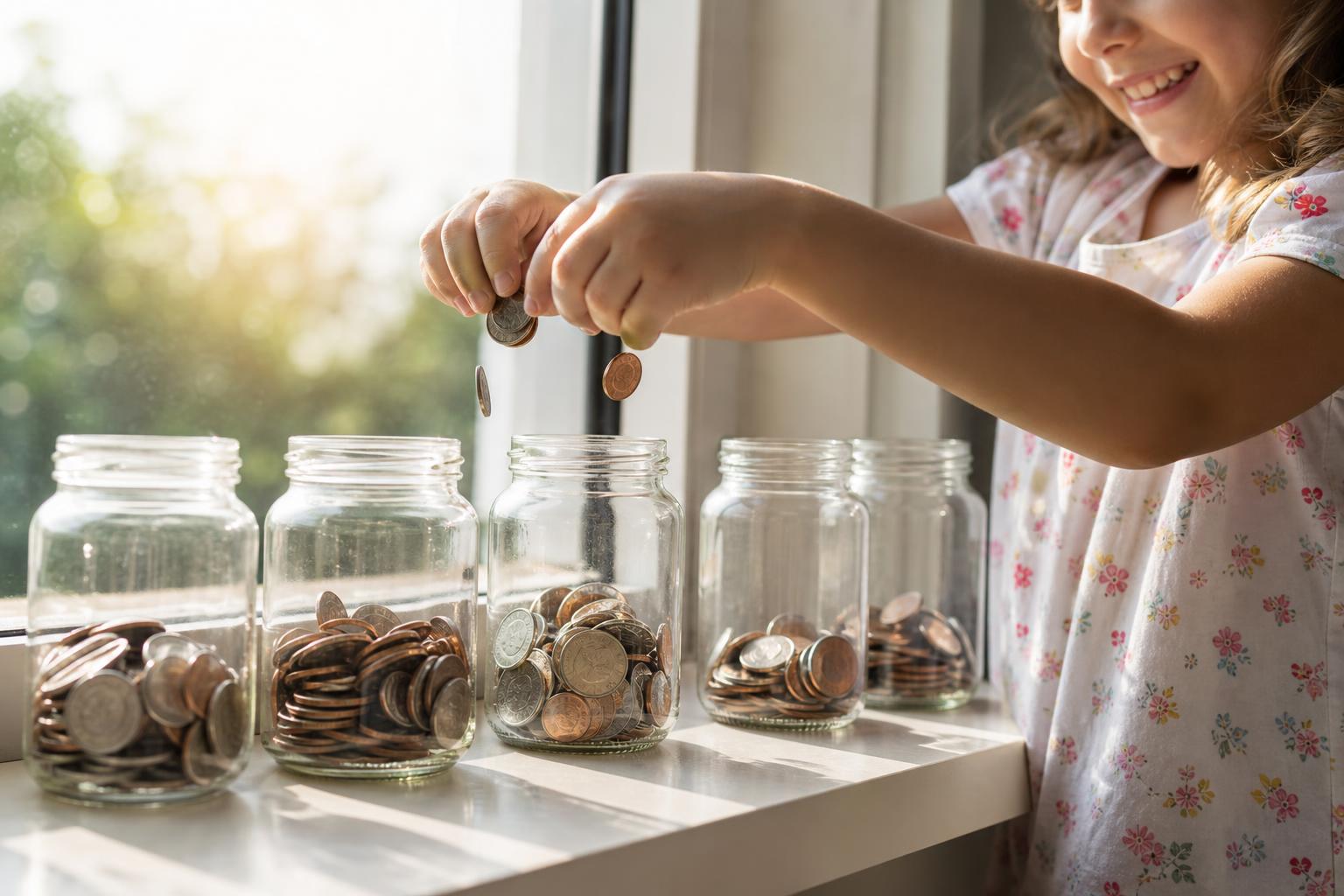
An allowance is one of the best teaching tools you have, because it gives a child their *own* money to make real decisions with. There's no single right way to do it. Some families tie a small allowance to a few regular chores; others give it freely and keep chores separate as "things we all do for our family." Both can work — pick the one that fits your values.
What matters more than the method is the consistency. A predictable little bit of money, handled the same way each week, is what builds steady money habits. And once it's *their* money, the lessons land harder. A child who blows their whole allowance on candy and then can't buy the toy they wanted at the store has just learned something no lecture from me could teach.
Let them feel small money mistakes now
This is the hard one for us as parents, because our instinct is to rescue. But a five-dollar mistake at age seven is a bargain compared to the lessons that come later. When my middle child spent every cent of her saved money on a cheap toy that broke by bedtime, I wanted to swoop in and replace it. I didn't. We talked about it instead, and the next time she had money burning a hole in her pocket, she paused — all on her own.
Letting kids stumble while the stakes are tiny is one of the kindest forms of teaching there is. Resist the urge to fix it, and let the disappointment do the gentle work.
Talk about money out loud
So much of money is invisible to kids, so narrate it. "I'd love that one too, but it's not in our budget this month." "We're choosing the store brand here so we have room for our trip." "Let's compare these two prices before we decide." You're not burdening them; you're letting them watch a thoughtful grown-up make ordinary money choices.
These offhand comments add up. Kids who grow up hearing calm, honest money talk tend to feel that money is something you manage on purpose, not something that just happens to you. The Consumer Financial Protection Bureau's Money as You Grow guide is built around exactly this idea — everyday conversations matched to your child's age.
Saving money: give the goal a face
Saving money is hard for little kids because "later" feels like forever. The fix is to make the goal concrete and visible. Help them pick one thing they truly want, find a picture of it, and tape it to the Save jar. Now every coin has a purpose, and the waiting has a finish line they can see.
For older kids, you can add a simple chart or a matching offer — "for every dollar you save toward your bike, I'll add fifty cents." It nudges patience and shows that saving money is a skill that pays off, not just a rule grown-ups invented to spoil the fun.
Giving: the part that makes it joyful
Don't skip the Give jar. If your kids want to choose a cause together, our roundup of children’s charities worth donating to is a good place to start. Some of the warmest money memories my kids have are the times we counted out their giving money together and decided where it should go — an animal shelter, a friend's fundraiser, a few cans for the food drive. It reframes money as something that can do good in the world, not just buy things.
Giving also takes the anxiety out of money for kids. When generosity is part of the routine from the start, money becomes a tool for love and connection, which is honestly the lesson I care about most.
Age by age: money habits that grow up with them
A rough map, knowing every child is different:
- Ages 3–5: Name coins, play store, let them pay the cashier. Start the three jars.
- Ages 6–9: A small allowance, real choices, saving toward one visible goal, first small mistakes.
- Ages 10–12: Bigger goals, comparing prices, a simple "earn extra" job, the basics of needs vs. wants.
- Teens: A small bank account or debit card with guardrails, tracking their own spending, earning real money. Resources like the FDIC's Money Smart for Young People can help here.
The thread through all of it is the same: real money, real choices, and a calm parent nearby. For more everyday-learning ideas, our family finance section is a good place to wander, and the way kids learn through ordinary play — see the importance of play — applies to money too. A predictable daily routine makes these little habits easier to keep.
A few honest words before you start
You don't have to do all of this at once, and you don't have to be a money expert yourself — plenty of us are still figuring it out right alongside our kids, and that's okay to say out loud. Pick one habit, maybe those three jars, and start this week. The goal isn't to raise a tiny accountant. It's to raise a kid who isn't scared of money, who knows it's a tool they can learn to handle, and who feels a little spark of pride watching that Save jar fill up. That's how to teach kids about money in a way that actually sticks — slowly, warmly, and one ordinary moment at a time.
Frequently Asked Questions
At what age should I start teaching kids about money?
Earlier than you might think. Around age three or four, kids can grasp that money is something we trade for things we want and that we don't have an endless supply. Keep it hands-on and tiny: naming coins, playing store, and letting them hand the cashier the card and take the receipt.
What's the easiest way to teach kids about money?
The three-jar habit. Get three clear jars labeled Save, Spend, and Give, and when money comes in your child divides it between them. Clear jars matter because kids are concrete thinkers — watching the Save jar fill up does something a number in an app never will.
Should I tie allowance to chores?
There's no single right way. Some families tie a small allowance to a few regular chores; others give it freely and keep chores separate as things we all do for the family. Both can work — what matters more than the method is handling it consistently each week.
How do I teach my child to save money?
Give the goal a face. Help them pick one thing they truly want, find a picture of it, and tape it to the Save jar so every coin has a purpose and the waiting has a visible finish line. For older kids, a matching offer like "for every dollar you save, I'll add fifty cents" nudges patience.
Related Articles

Meet Sophia Richards Sophia Richards is an early childhood educator, passionate writer, and the proud mom of three energetic kids. With a degree in Education and over a decade of hands-on classroom experience, Sophia bridges the gap between professional teaching strategies and everyday family life. At More4Kids, she translates complex child development concepts into practical, actionable parenting tips that families can use at home.
Whether she is sharing positive reinforcement techniques, educational crafts, or honest reflections on the chaos of raising three children under one roof, Sophia’s goal is to empower parents to foster resilience and joy in their kids. When she isn't writing or lesson planning, you can find her organizing neighborhood scavenger hunts or trying out new kid-friendly recipes.
Areas of Expertise: Early Childhood Education, Positive Parenting, Sibling Dynamics, Educational Play, Family Wellness.




Add Comment