
















By Sophia Richards
The first time I really understood after school restraint collapse, I was standing in the kitchen with one shoe still on, holding a lunchbox that smelled faintly like warm cheese. My child had been “wonderful all day,” according to the teacher. Then the backpack hit the floor, the wrong cup was on the counter, and suddenly the whole afternoon cracked open.

If that sounds familiar, you are not raising a rude child. You are probably seeing a child who used up every bit of self-control at school and finally felt safe enough to fall apart at home. After school restraint collapse is the name many parents use for that end-of-day crash: tears, anger, silliness, defiance, or total puddle-on-the-floor exhaustion after a child has held it together for hours.
As a mom of three and a former early-childhood educator, I have seen this from both sides of the school door. Some children can be bright, cooperative, and steady in class, then come home like their emotional batteries were removed on the bus. The goal is not to punish the crash out of them. The goal is to build a landing strip, so the child who comes through the door has a way to unload the day without taking the whole family with them.
What After School Restraint Collapse Really Means
Table of Contents
After school restraint collapse is not a formal medical label. It is a parent-friendly way to describe something very real: children spend the school day managing noise, transitions, rules, social pressure, hunger, tiredness, and their own big feelings. Then they get home, where they are loved, known, and less likely to be judged, and their nervous system finally lets go.
That letting go can look different from child to child. One child cries because the banana broke. Another picks a fight with a sibling before the backpack is unzipped. Another gets wildly silly, loud, and impossible to direct. A tween might slam a door and say “nothing happened” with the emotional force of someone for whom something very much happened.
PBS Kids for Parents reminds us that feelings are not good or bad; children need help expressing their emotions and having those emotions accepted before they can manage them well. That is the heart of after school restraint collapse. The feelings are not the enemy. The child needs a safer way to move through them.
This is also why a lecture at 3:35 rarely works. A child in after school restraint collapse is not usually in a teachable, reflective place. Their brain is asking for food, quiet, movement, connection, or sleep. Once the body settles, the lesson can come later.
Why Kids Melt Down After Holding It Together All Day
School asks a lot of children. Even a good school day is full of demands. Sit here. Stand there. Raise your hand. Keep track of your folder. Share the blue marker. Do not cry when your friend sits with someone else. Finish the math page. Walk in line. Remember the spelling list. Smile for the substitute.
Adults forget how much work that is because we have had years to build our filters. Children are still building theirs. Some kids can save their best behavior for school and then have nothing left for the people they trust most. It is not manipulation. It is often restraint finally wearing off.
Temperament matters too. The American Academy of Pediatrics notes through HealthyChildren.org that children vary in how they handle stress and daily hassles, and that support from family helps them build coping strength over time. Their guidance on helping children handle stress is a useful reminder that kids do better when they feel loved, capable, and supported, not shamed for struggling.
In my classroom years, the children most likely to melt down at pickup were not always the ones who struggled all day. Sometimes they were the children who worked hardest to be “easy.” They copied the rules, smiled through frustration, kept their bodies still, and saved the mess for home. That takes a lot of energy.
So before you decide your child is being difficult on purpose, ask a gentler question: what did this child spend all day managing?
1. Feed First, Talk Later
The first tool for after school restraint collapse is almost embarrassingly simple: food and water before questions.
Many children come out of school hungry, thirsty, and overstimulated. If lunch was rushed, disliked, traded away, or eaten at 10:55 in the morning, your child may be running on fumes by pickup. A tired brain plus low fuel is a recipe for tears over socks.
Try a predictable snack before you ask about homework, behavior, forms, chores, or the missing sweatshirt. In our house, the after-school snack works best when it has some staying power: cheese and crackers, yogurt, apple slices with peanut butter, hummus and pita, a smoothie, leftovers, or a turkey roll-up. It does not need to be fancy. It needs to be available fast.
If food is often a fight, keep the decision small. Offer two choices, both acceptable to you. “Do you want yogurt or toast?” lands better than “What do you want?” when a child is already fried. If you need more ideas that do not turn snack into a second job, our piece on nutrition and your child has simple, kid-friendly starting points.
The key is sequence. Feed the body first. Then talk.
2. Give Them a Quiet Landing, Not an Interview
I know the questions want to jump out of your mouth. How was school? Did you turn in the form? Who did you sit with? Did your teacher say anything? Do you have homework? Did you remember your jacket?
For a child in after school restraint collapse, that can feel like being met at the door by a tiny press conference.
Try a quieter landing. A hug if they like hugs. A warm “I’m glad you’re home.” A snack on the table. Ten minutes where nobody requires a full report. Some children will talk once they feel less cornered. Some will not, and that is fine too.
I have had better luck with side-door questions later: “What was the loudest part of today?” or “Was there a moment you wished you could redo?” or “Tell me one tiny good thing.” But right after school, when the nervous system is still buzzing, silence can be kindness.
This does not mean ignoring disrespect. It means choosing timing wisely. If your child snaps, you can keep the boundary short: “I will listen when your voice is kinder. First, eat.” The correction is there, but it does not become a ten-minute speech.
3. Build a 20-Minute Decompression Routine
After school restraint collapse improves when the first twenty minutes after school become predictable. Children relax when they know what comes next, and parents relax when they are not inventing the afternoon from scratch every day.
PBS Kids for Parents has a helpful reminder about the power of routines: routines create patterns children can count on. That does not mean a rigid schedule. It means the same few steps in the same general order.
Here is a simple decompression routine:
- Backpack in the same spot.
- Wash hands.
- Snack and water.
- Ten to twenty minutes of quiet, movement, or outdoor time.
- Then homework, chores, activities, or conversation.
That small buffer protects the whole evening. Our guide to getting your family back into a school routine is broader, but this is the restraint-collapse version: do not start with demands. Start with recovery.
When my youngest was in the thick of after school restraint collapse, we made a tiny rule that changed everything: no homework talk until snack was finished. It felt almost too simple. It also cut the daily explosions in half, because I stopped asking a hungry, overstimulated child to act like a rested adult.
4. Let the Body Discharge the Day
Some kids need quiet after school. Other kids need to move before they can be quiet. Watch the pattern in your house.
If your child comes home wild, loud, or physically restless, they may need a safe body outlet. A walk around the block. Ten minutes on the trampoline. Shooting baskets. A dance song in the kitchen. Carrying groceries from the car. Anything that lets the nervous system discharge without making the living room the crash zone.
For another child, movement might be too much and a quiet bedroom, audiobook, bath, or drawing pad might work better. The point is not one perfect reset. The point is matching the reset to the child in front of you.

If you are not sure, experiment for a week. Try outdoor movement first on Monday and Wednesday. Try quiet sensory recovery first on Tuesday and Thursday. Notice which afternoons go better. Parenting is sometimes just compassionate data collection with snacks.
And if screens are part of the after-school routine, be honest about what happens next. Some children can watch a show and transition beautifully. Others come off screens sharper, louder, and less flexible than before. If screens intensify after school restraint collapse in your house, put them later in the evening or save them for after food, movement, and homework. Our calm guide to screen time and kids can help you set that boundary without turning it into a daily war.
5. Name the Feeling Without Making It Bigger
When a child is falling apart, we often rush to fix the surface problem. I can get you the blue cup. I can tape the paper. I can find the other sock. Sometimes that helps. Sometimes it just moves the meltdown to the next object.
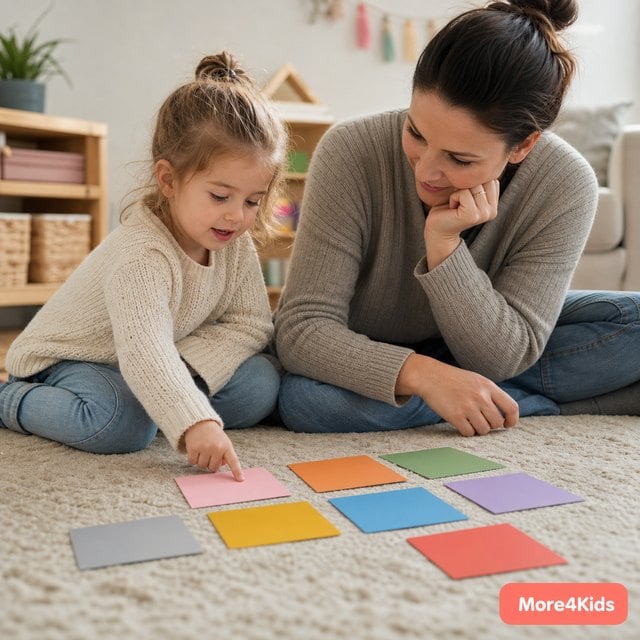
Try naming the deeper feeling gently: “You held it together all day and now your body is done.” “That was a long school day.” “You seem really disappointed.” “You wanted quiet and the house felt loud.”
Keep it short. A child in after school restraint collapse does not need a TED Talk on emotional regulation. They need a parent who can stay steady and offer language without drowning them in it.
If your child rejects the label, let it go. “No, I’m not tired!” does not need a courtroom response. You can say, “Okay. I’m here.” The goal is not to be right. The goal is to make feelings less scary and less lonely.
Over time, that language becomes a bridge. A child who can eventually say “I need quiet” or “I am too hungry to talk” is a child who has a way out besides exploding. For more skill-building around stress and feelings, the More4Kids piece on teaching kids stress management and healthy habits pairs well with this approach.
6. Delay Discipline Until the Brain Comes Back Online
This is the part that can feel soft, but it is actually practical. During after school restraint collapse, discipline works best when it is calm, brief, and delayed until your child can actually process it.
You can still hold limits. Hitting is stopped. Throwing backpacks is stopped. Cruel words are corrected. But the big conversation can wait.
In the moment, use fewer words:
- “I will not let you hit.”
- “Backpack goes on the floor, not at your brother.”
- “You may be angry. You may not call names.”
- “We will talk after snack.”
Later, when your child is regulated, repair. Ask what their body needed. Make a plan for tomorrow. Practice the sentence they can use next time. “I need ten quiet minutes” is a skill. So is “I am too hungry to answer questions yet.”
This is not permissive parenting. It is timing. You are saving the teaching for the moment when the child has access to the part of the brain that can learn.
Our house phrase became, “First calm, then fix.” I have said it to my children, and I have said it to myself in the pantry with the door half-closed. It works because it is true. Nobody solves the afternoon well while flooded.
7. Protect Sleep Like It Is Part of the Plan
After school restraint collapse often gets worse when children are short on sleep. A child can look fine all day and still have no buffer left by pickup. If the afternoon crash is becoming a daily pattern, look hard at bedtime before you redesign the whole family.
Is your child getting enough sleep for their age? Is bedtime drifting later because activities, homework, or screens are crowding the evening? Is the morning rushed because everyone is tired? Those things stack up.
If bedtime has become the nightly hill nobody wants to climb, start small. Move it earlier by fifteen minutes. Put screens to bed before kids. Make the final routine boring in the best possible way: bath, pajamas, story, prayer if that is part of your family rhythm, lights out. Predictable and unexciting is exactly what a tired body needs.
Our piece on ending the bedtime struggle can help if evenings have become one long negotiation. Better sleep will not magically solve every case of after school restraint collapse, but it gives your child more emotional margin, and margin is what the after-school hour is usually missing.

A Quick After-School Reset Plan You Can Try This Week
If everything feels chaotic, do not change twenty things. Pick one simple reset plan and repeat it for five school days.
Try this:
1. Say the same warm line at pickup: “I’m glad to see you.” 2. Do not ask school questions for the first ten minutes. 3. Offer water and a protein snack. 4. Choose one reset lane: quiet, movement, or outside. 5. Start homework or chores only after the reset. 6. Keep screens out of the first thirty minutes if they make transitions harder. 7. Repair later if the first hour went sideways.
You can even tell your child the plan ahead of time: “This week, when you get home, we are going to do snack first and questions later. Your body works hard at school, and I want home to feel easier.”
That sentence alone can soften a child. It tells them you see the effort they made all day, not just the crash you got at the end.
When After School Restraint Collapse Needs More Support
Most after school restraint collapse is a normal stress-release pattern that improves with food, rest, routine, and connection. Still, some signs deserve extra attention.
Talk with your child’s teacher, school counselor, pediatrician, or a licensed professional if the meltdowns are severe, unsafe, getting worse, lasting for hours every day, paired with school refusal, or showing up alongside frequent stomachaches, headaches, sleep problems, bullying concerns, or a major personality change. Asking for support is not overreacting. It is good stewardship of your child’s wellbeing.
Also check what is happening during the school day. A child who is constantly masking distress at school may need accommodations, a quieter transition, a lunch change, a social plan, or help with a specific class. You do not have to name a condition to gather information. Start with curiosity: “What do you notice right before pickup?” “Does my child seem tense during the day?” “Are there particular transitions that are hard?”
You are not trying to make home a place where anything goes. You are trying to understand why home is where everything spills.
Frequently Asked Questions
Is after school restraint collapse normal?
Yes, after school restraint collapse is common, especially for children who work hard to follow rules, manage emotions, and stay socially steady during the school day. It does not mean your child is bad or that school is necessarily harmful. It usually means they need a calmer landing at home, with food, quiet, movement, connection, and fewer immediate demands.
Why is my child good at school but difficult at home?
Many children use most of their self-control at school and release the pressure where they feel safest. Home is where they can be fully known, which is beautiful and exhausting. A child who melts down at home after being steady at school may need help recovering from the effort of the day, not a harsher consequence for finally running out of steam.
Should I ask my child about their school day right away?
Usually, no. If your child is prone to after school restraint collapse, give them ten to twenty minutes before asking questions. Start with a warm greeting, snack, water, and a reset. Many kids talk more easily later, especially while riding in the car, drawing, helping with dinner, or doing something side by side.
Do screens help kids unwind after school?
Sometimes, but not always. Some children can use a short show as a quiet reset and transition off easily. Others become more irritable, less flexible, or more explosive afterward. If screens make after school restraint collapse worse in your house, move them later and try food, movement, outdoor time, or quiet sensory play first.
How long does after school restraint collapse last?
For many families, the roughest window is the first twenty to sixty minutes after school. If the crash lasts for hours every day, becomes unsafe, or comes with major school avoidance, sleep problems, or physical complaints, it is wise to ask the teacher, school counselor, or pediatrician for help sorting out what else may be going on.
The Bottom Line
After school restraint collapse can make a perfectly ordinary afternoon feel like a tiny emotional weather system blew through your kitchen. But once you understand what is happening, the response gets simpler.
Feed first. Ask less. Build a predictable decompression routine. Let your child move or get quiet, depending on what their body needs. Name the feeling softly. Hold limits without turning the first meltdown into a courtroom. Protect sleep. Repair later.
Your child is not saving their worst for you because they do not care. Very often, they are saving their most exhausted self for the safest place they know. That does not make the hard behavior okay, but it does make it understandable. And when we understand it, we can lead with both warmth and boundaries.
Start with the first ten minutes after school. That small window can change the whole evening.
Related Articles
- Nutrition And Your Child
- Back To School Schedules
- Screen Time And Kids
- Teaching Kids Stress Management And Healthy Habits
- Do You Dread Bedtime

Meet Sophia Richards Sophia Richards is an early childhood educator, passionate writer, and the proud mom of three energetic kids. With a degree in Education and over a decade of hands-on classroom experience, Sophia bridges the gap between professional teaching strategies and everyday family life. At More4Kids, she translates complex child development concepts into practical, actionable parenting tips that families can use at home.
Whether she is sharing positive reinforcement techniques, educational crafts, or honest reflections on the chaos of raising three children under one roof, Sophia’s goal is to empower parents to foster resilience and joy in their kids. When she isn't writing or lesson planning, you can find her organizing neighborhood scavenger hunts or trying out new kid-friendly recipes.
Areas of Expertise: Early Childhood Education, Positive Parenting, Sibling Dynamics, Educational Play, Family Wellness.

Add Comment