










By Sophia Richards
I do not think any parent forgets the first time a child asks, “Can I stay here while you run to the store?” It sounds so small. Then suddenly you are picturing doorbells, snacks, phones, siblings, weather, and whether your child actually knows where the flashlights are.
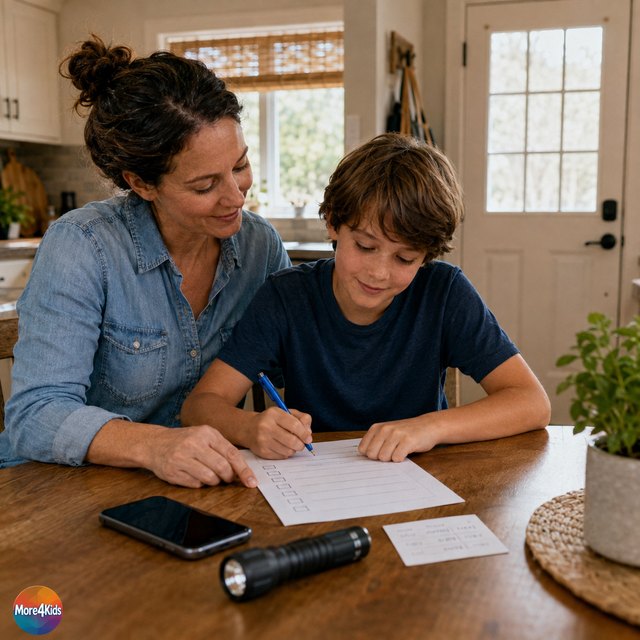
Home alone rules for kids work best when they are treated as a practice skill, not a sudden test of bravery. In my house with three kids, I have learned that independence goes better when the steps are boring, clear, and rehearsed. That is true in a classroom too. Children handle responsibility better when they know exactly what to do before the exciting or stressful moment arrives.
The goal is not to raise anxious kids. It is to raise capable kids who know the plan. A child who can follow a check-in routine, use a phone, keep the door closed, and handle a small problem calmly is building the same kind of judgment we want for bigger freedoms later. If you like thinking about it this way, it sits alongside everything in our child safety guides — small, teachable habits rather than one big scary talk.
Start With Readiness, Not Just Age
Table of Contents
Before making home alone rules for kids, start with readiness. Age matters, and local rules matter too, but maturity is the piece parents see up close.
I would ask a few plain questions before saying yes:
- Does my child usually follow safety rules when no one is reminding them every minute?
- Can they call or text a parent without help?
- Do they know their full address and how to explain where they are?
- Can they stay calm enough to solve a small problem, like a spilled drink or a locked door?
- Are they willing to be home alone, or are they quietly scared?
- Is the time short, predictable, and during the day?
That last one matters. A ten-minute practice while you walk around the block is very different from a long afternoon. HealthyChildren.org’s guidance on whether a child is ready to stay home alone puts the focus on rules, boundaries, and staying connected with a parent after arrival. That is the spirit I would keep: short first, supported always.
If your child is pushing for more independence, you can frame readiness as teamwork. “Let’s practice the skills first” feels very different from “I don’t trust you.” Children need to know that responsibility grows in steps.
Home Alone Rules for Kids That Are Clear Enough to Follow
A good home alone plan should fit on one page. If the rules are too complicated, a nervous child will forget them. When I have used classroom routines with young kids, the best rules were always short enough to remember and specific enough to act on.
Here is a practical starter list:
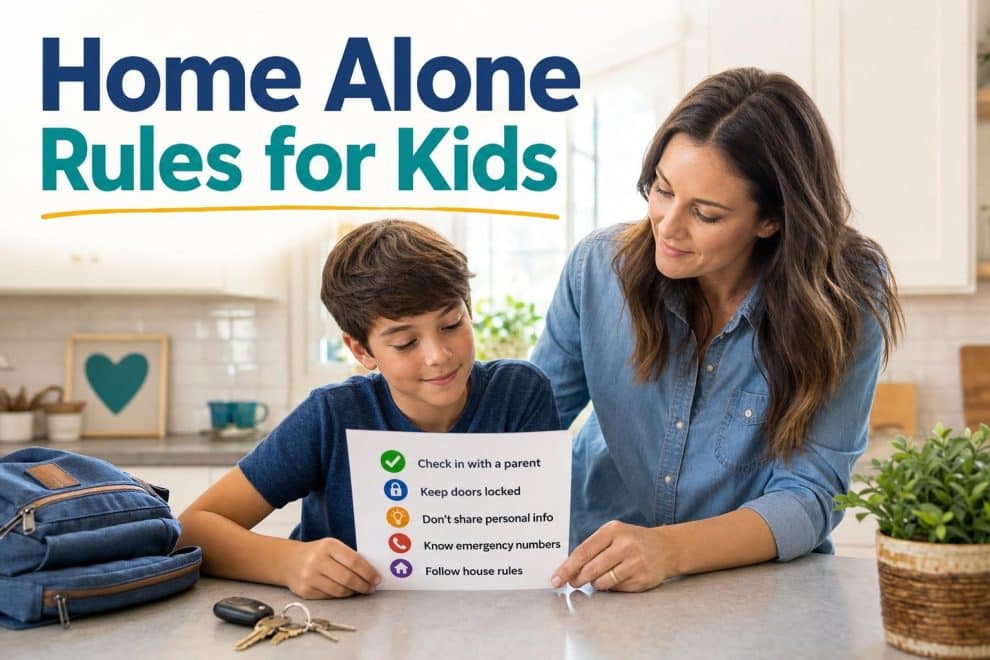
- Check in with a parent as soon as you get home.
- Keep doors and windows locked.
- Do not open the door for anyone unless a parent has clearly approved it.
- Do not tell callers, texters, delivery people, or online friends that you are home alone.
- Stay inside unless the plan says otherwise.
- No cooking with the stove or oven unless a parent has specifically taught and approved it.
- No friends over unless a parent has approved that exact friend and time.
- Keep the phone nearby and charged.
- Call a parent first for small problems; call emergency services for danger, fire, injury, or a situation that feels unsafe.
Those home alone rules for kids sound simple, but they are only useful if children practice them. I like to ask, “What would you do if the doorbell rang?” and then let the child answer out loud. Not as a quiz with a scolding tone, but as a rehearsal. Kids often know the rule in theory and freeze when the real doorbell rings.
Nationwide Children’s Hospital also emphasizes practical readiness questions, including whether a child knows names, phone numbers, address, and what to do if someone knocks or calls. Their staying home alone safety guidance is a useful check against vague “they seem fine” thinking.
Build a Check-In Routine Before You Need It
One gentle place to start is the check-in routine. The child gets home, locks the door, puts their backpack down, and contacts you. Same order every time.
In my family, routines work better when they have a little rhythm. For example:
1. Walk in. 2. Lock the door. 3. Text or call: “I’m home.” 4. Send a quick photo of the kitchen clock or the family checklist if that helps. 5. Start the approved snack or homework plan.
That may sound like overkill, but the structure gives both parent and child peace. A simple daily routine can make a new responsibility feel normal instead of huge.
If your child forgets the check-in once, treat it as information, not proof they can never try again. Shorten the time, practice again, and decide what support is missing. Sometimes the answer is as simple as a phone reminder. Sometimes the answer is that the child is not ready yet. Both are okay.

Practice Small Emergencies Out Loud
Children do not need scary stories. They do need scripts.
Try simple prompts:
- “What would you do if you smelled smoke?”
- “What would you do if you cut your finger?”
- “What would you do if the power went out?”
- “What would you do if a neighbor knocked?”
- “What would you do if your phone died?”
When I taught little ones, I noticed that practice lowers drama. The first time through, a child may giggle or panic or give a wildly creative answer. The second time, they start to remember the steps. By the third time, they are usually calmer because the situation is no longer mysterious.
Keep emergency contacts visible. Put parent numbers, a trusted neighbor, and emergency services where your child can find them quickly. If there is a family password for approved pickup or help, practice that too.
KidsHealth’s article on leaving your child home alone also reminds parents to childproof the home and secure anything that could create a safety risk. That is the unglamorous part of home alone safety, but it matters. A child may be responsible and still curious. Put away what should not be available.
Make the House Match the Rules
Home alone rules for kids are easier to follow when the house supports them.
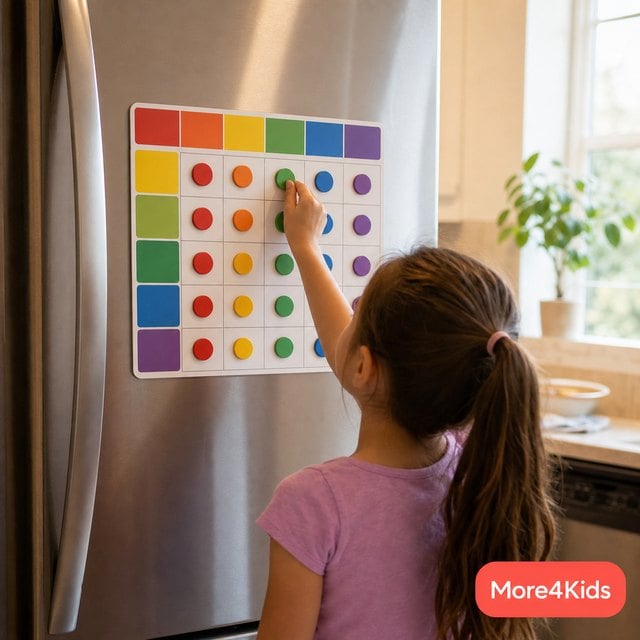
Before a first trial, walk through the home with your child. Show them:
- where the first-aid supplies are;
- where flashlights are kept;
- which snacks are approved;
- which appliances are off-limits;
- where the emergency list is posted;
- what doors should stay locked;
- what to do with pets;
- what to do if a sibling is home too.
This is also where parents need to be honest about sibling dynamics. One child may be ready to stay alone but not ready to supervise a younger sibling. In a mom-of-three house, those are not the same skill. A child who is calm alone may become bossy, silly, or overwhelmed when a sibling is added to the mix.
If responsibility is one of the skills your family is building, this pairs well with teaching responsible and self-reliant habits in everyday life. A child who practices packing their bag, following a routine, and solving small problems has already begun the work. You’ll find more of that gradual, confidence-first approach across our parenting articles.
Use a Trial Run Before a Real Need
Please do not make the first home alone moment happen because everyone is rushed. A trial run is kinder.
Start with a tiny window. You might step outside to water the garden, sit in the car for a few minutes, or walk to the mailbox while your child follows the plan. Then come back and ask:
- What felt easy?
- What felt weird?
- Did anything surprise you?
- Did you remember the check-in?
- Which rule should we practice again?
This is not a courtroom. It is a family debrief. If your child admits they felt nervous, thank them for telling you. If they forgot a step, practice it. If the trial went smoothly, try a slightly longer one next time.
Fairfax County’s family services guidance on preparing a child to stay home alone also recommends assessing maturity, skills, and comfort level before leaving a child alone. I appreciate that word comfort. A child can be technically capable and still not emotionally ready.

Keep Screens and Online Safety in the Plan
The old home alone advice focused on doors and phones. Those still matter. But today’s home alone safety also includes screens.
Set clear rules for:
- which devices may be used;
- whether video calls are allowed;
- whether gaming chat is allowed;
- what to do if a message feels strange;
- whether the child may post, stream, or share that they are home.
If devices are new territory in your house, it can help to settle the everyday screen habits first; a calm guide to screen time makes these home-alone screen rules feel like an extension of something your child already knows.
My rule of thumb is simple: no child should announce they are home alone online. Not in a group chat, not in a game, not in a “funny” post. Kids do not always understand how far a message can travel.
This is also a good moment to talk about judgment, not just obedience. The same child who is learning to stay home alone is learning how to make wise choices when adults are not hovering. That connects naturally with helping pre-teens grow into responsibility, because independence is not one big leap. It is a lot of small choices practiced over time.
When the Answer Should Be Not Yet
Sometimes the kindest answer is “not yet.”
I would wait if a child is very anxious about being alone, often ignores safety limits, cannot use the phone reliably, struggles to remember basic steps, has intense sibling conflict, or would be alone for longer than they can realistically manage. I would also pause if the home situation is unusual that day: severe weather, repair workers nearby, a sick sibling, a pet problem, or anything else that makes the plan less predictable.
“Not yet” does not have to be discouraging. You can say, “We are going to practice the skills, and we will try again.” That keeps the door open while still protecting your child.
It also helps to separate trust from readiness. Your child may be trustworthy and still too young or too uncomfortable. That distinction saves a lot of hurt feelings.
A Calm Home Alone Checklist
Here is a simple checklist you can adapt:
- I know how to reach my parent.
- I know my address.
- I know when to call emergency services.
- I know which doors stay locked.
- I know not to open the door.
- I know what food I may eat.
- I know which appliances I may use.
- I know whether friends can come over.
- I know where emergency numbers are posted.
- I know what to do if I feel worried.
Home alone rules for kids should end with confidence, not pressure. If your child can walk through that list calmly, follow a short practice routine, and tell you when something feels off, you are building more than a safety plan. You are teaching judgment.
And if your family needs more time, that is not failure. Childhood is full of practice runs. This one just happens to come with a locked door, a charged phone, and a parent trying very hard not to overthink it in the grocery aisle.
Frequently Asked Questions
What age can kids stay home alone?
There is no one age that fits every child or every location. Check your local rules, then look at maturity, comfort, phone skills, safety judgment, and how long the child would be alone.
What are the most important home alone rules for kids?
The most important home alone rules for kids are checking in, keeping doors locked, not opening the door, not telling anyone they are alone, and knowing how to reach help.
Should siblings stay home alone together?
Only if the older child is ready for the added responsibility and the sibling relationship is calm enough. Staying alone and supervising a younger sibling are different skills.
How can I tell if my child is nervous about staying home alone?
Watch for hesitation, repeated questions, stomachaches, clinginess, or a child saying yes only to please you. A short practice run can reveal whether the plan feels manageable.
Related Articles
- Joy Of Parenting Fun Kids Daily Routines
- Raising Responsible And Self Reliant Kids
- Parenting Your Pre Teen

Meet Sophia Richards Sophia Richards is an early childhood educator, passionate writer, and the proud mom of three energetic kids. With a degree in Education and over a decade of hands-on classroom experience, Sophia bridges the gap between professional teaching strategies and everyday family life. At More4Kids, she translates complex child development concepts into practical, actionable parenting tips that families can use at home.
Whether she is sharing positive reinforcement techniques, educational crafts, or honest reflections on the chaos of raising three children under one roof, Sophia’s goal is to empower parents to foster resilience and joy in their kids. When she isn't writing or lesson planning, you can find her organizing neighborhood scavenger hunts or trying out new kid-friendly recipes.
Areas of Expertise: Early Childhood Education, Positive Parenting, Sibling Dynamics, Educational Play, Family Wellness.

Add Comment