















By Sophia Richards
My middle kid stood at the top of the big slide at the park last month — the metal one, basically a small cliff — and just stopped. Kids were stacking up behind her. She looked down at the drop, then back at me, and I could see the whole calculation happening behind her eyes: can I do this, or am I about to fall apart in front of everyone? That’s the moment, right there. Not the slide itself. The question underneath it. Building confidence in children mostly comes down to how we show up for that exact moment, over and over, for years.

It’s not about raising the loudest kid at the birthday party or handing out a ribbon for showing up. Honestly, I think we’ve made “confidence” sound flashier than it actually is. It’s quieter — the slow, unglamorous work of helping a child feel capable and worth something, even on the days they mess up. I’m a mom of three very different kids, and I spent years before that in early childhood classrooms, so I’ve watched a child’s confidence take shape in slow motion — and the small, boring habits beat the big pep talks every time.
What confidence in children actually is (and what it’s not)
Table of Contents
We tend to picture a confident kid as the one who talks to strangers and volunteers first. But real confidence is quieter and sturdier than that. It’s the inner sense of I can handle this, and if I can’t yet, I’ll figure it out. A shy kid can be deeply confident. A kid who never stops talking can be secretly terrified underneath it. So when we talk about building confidence in children, we’re really talking about two threads braided together: competence — I have actual skills — and worth — I matter, even when I’m struggling.
That distinction rearranged how I parent, honestly. My three kids move through the world at three completely different speeds. One charges straight at everything. One hangs back at the edge of the pool, just watching. One needs a running start and a countdown. None of them is “more confident” than the others — they just need different kinds of support to feel capable, and a child’s confidence doesn’t grow the same way twice, even inside the same house. Chasing one tidy version of self-esteem for every kid usually backfires. If you want more of this steady, kid-by-kid approach, our whole parenting section is built around it. For a deeper, reassuring look at the mechanics, the folks at Nemours have a good rundown of how self-esteem actually develops in children.
Why praise alone doesn’t build confident kids
Here’s the part that trips up a lot of loving parents, myself included for years: piling on praise can actually shrink a kid’s confidence instead of growing it. When everything is “amazing” and “the best drawing ever,” kids stop trusting the words. Worse, some start to quietly wonder if our love is tied to how well they perform.
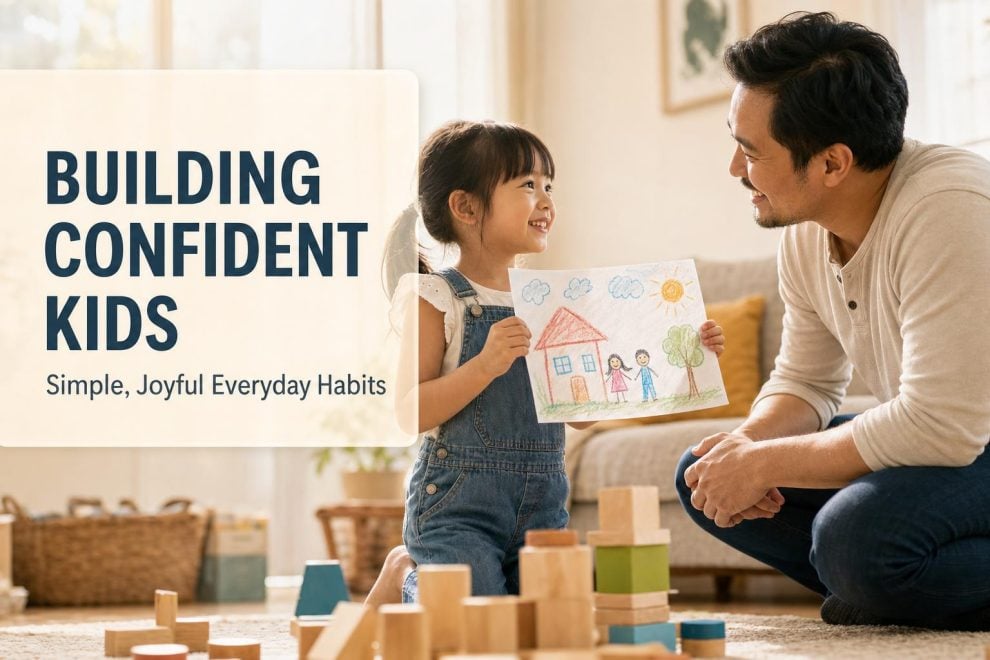
What actually helps is noticing the process instead of the result. Swap “you’re so smart” for “you kept going even when that puzzle got tricky.” Swap “beautiful picture!” for “you used so many colors here — tell me about it.” That kind of specific, effort-focused feedback teaches a child that trying and struggling is the actual good stuff — a point the Child Mind Institute makes well in its practical tips for raising confident kids. The way we talk to our kids becomes, over time, the way they talk to themselves, which is exactly why the words we choose carry so much weight.
Everyday habits for building confidence in children
You don’t need a curriculum or a color-coded chart on the fridge. A child’s confidence gets built in ordinary, repeated moments. A few habits that have earned a permanent spot in our house:
- Let them do hard things slowly, even when you’re in a hurry. Resist the urge to zip the coat, grab the backpack, or answer for them at the doctor’s office. The struggle with a task they can almost do is exactly where growth happens.
- Give real, age-appropriate responsibility. A four-year-old can feed the cat. A nine-year-old can pack their own lunch, badly, and survive it. Being trusted with something that actually matters tells a kid, in a way words never quite manage, I’m capable.
- Offer choices inside your limits. “Red cup or blue cup?” “Bath before the story or after?” Small choices give kids daily practice steering their own lives.
- Narrate their growth out loud. “Remember when the monkey bars felt impossible? Look at you now.” Kids are terrible at noticing their own progress — so name it for them, specifically, not just “good job.”
- Protect unstructured play like it’s sacred, because it kind of is. Confidence needs room to experiment and try again, and free, child-led play is where kids practice risk and bouncing back without an adult swooping in to fix it. It’s also worth protecting that play from getting crowded out by devices — a calm guide to screen time can help you find the balance without turning it into a daily fight.
None of this is dramatic. That’s kind of the whole point. Building confidence in children is less a grand gesture and more a thousand small “I’ve got you — now you try it.”
Make room for mistakes — and let them watch you make yours
A confident child, at the core of it, is a child who isn’t terrified of getting things wrong. So one of the more powerful things we can do at home is make it a genuinely safe place to mess up. When my kids spill something, forget something, or completely flub something, I try — not always successfully — to respond with curiosity instead of alarm. “Okay, that happened. What do we do now?”
It helps even more when they watch us mess up and recover out loud. “I burned the rice — okay, grilled cheese it is.” “I got frustrated and snapped at you earlier. I’m sorry, let me try that again.” Kids who watch adults recover from mistakes learn that failing isn’t the end of the story — it’s the middle of it. It’s the same muscle behind helping kids bounce back from setbacks; confidence and resilience grow out of the same soil.
Building confidence in a shy or anxious child
If your child hangs back at every party, every classroom door, every new activity — please hear this: shyness is not a problem that needs fixing. Some of the most genuinely confident adults I know were cautious, watchful kids who just needed more time to warm up. Pushing a hesitant child to “just say hi already” almost always deepens the worry instead of curing it.
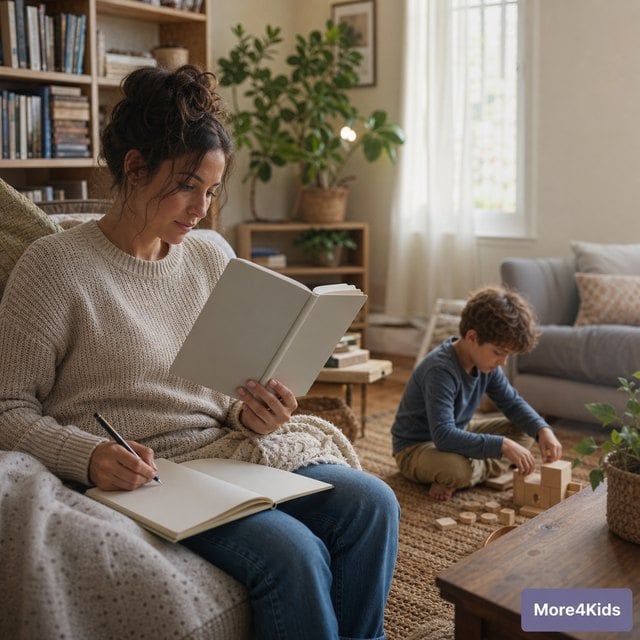
What works better is gentle, low-pressure exposure. Arrive a few minutes early so the room fills up around your child instead of them walking into a crowd. Practice the hard conversation at home first. Celebrate the small brave step instead of demanding the big leap. Let your child be the actual expert on their own pace — stay close, keep your nerves off your face, and trust that quiet courage still counts as courage. There’s real, practical help in this gentler approach to drawing out a more reserved child without ever shaming the temperament they were born with.
Step back so they can step up
This might be the hardest habit on this list, because it fights every protective instinct a parent has. But a child’s confidence can’t grow in a life where every obstacle gets cleared away before they even reach it. When we give kids room to do things for themselves, even messily, we’re sending a message that lands deeper than any pep talk: we believe in them. And a kid who feels believed in eventually starts believing in themselves too.
Start small. Let them order their own pancakes and mangle the order a little. Let them work out the playground squabble before you swoop in to referee it. Let them feel the small, safe sting of a forgotten homework folder once in a while. Every time you hold back and let your child handle something on their own, you’re making a quiet deposit into their growing confidence — the real heart of building confidence in children, not protecting them from every wobble, but trusting them to find their own footing.
When to reach for more support
Most dips in a child’s confidence are just a normal part of growing up — a rough school year, a friendship that fell apart, a hard transition. Time, connection, and steady encouragement usually carry kids through it. But trust your gut if something feels bigger. If your child seems persistently down on themselves, avoids things they used to love, pulls away from friends, or talks about feeling worthless, it’s worth a check-in with your pediatrician or a school counselor. Reaching out early isn’t overreacting — it’s one of the most confident, loving moves a parent can make.
Frequently Asked Questions
How do I start building confidence in my child?
Start small and steady rather than with big speeches. Let your child do age-appropriate things for themselves, notice their effort instead of only the result, and give them real responsibilities they can handle. Confidence grows from repeated experiences of I tried and I managed, so your main job is to step back enough to let those moments happen while staying close and encouraging.
What causes low self-esteem in children?
Low self-esteem in children usually comes from a mix of things rather than one cause — frequent criticism, comparison to siblings or peers, never being allowed to struggle, or a tough stretch like bullying, a big change, or repeated failure without support. Temperament plays a part too. The encouraging news is that warm, consistent, effort-focused parenting can rebuild a child’s self-esteem over time.
At what age does a child's confidence develop?
A child’s confidence begins forming in the toddler years, the moment they start insisting “me do it!” and testing what they can manage on their own. It keeps developing all through childhood and adolescence as kids gather evidence about what they’re capable of. There’s no single window that closes, which means it’s never too early or too late to support healthy self-esteem.
Does praising my child build confidence?
Praise helps when it’s specific and honest, and it can backfire when it’s constant or empty. Telling a child everything is “amazing” teaches them to chase approval and fear failure. Instead, praise effort, strategy, and progress — “you stuck with that hard part” — so your child learns that trying and improving are what truly matter.
How can I help a shy or anxious child feel more confident?
Go gently and never shame the shyness. Use low-pressure exposure, like arriving early or practicing at home, and celebrate small brave steps rather than pushing for big leaps. Let your child set the pace, keep your own anxiety off your face, and remind yourself that quiet, cautious kids can be every bit as confident as bold ones — they just warm up in their own time.
A gentle word before you go
So much of building confidence in children comes down to this one balance: we hold them close enough to feel safe, and we step back far enough to let them feel capable. We notice the effort. We make room for the mistakes — theirs and ours. We resist the itch to smooth every path before they’ve even hit a bump. Some days you’ll do every single one of these things and still watch your kid freeze at the top of the slide, unable to make the leap — and that’s okay. Genuinely. A child’s confidence isn’t built in one brave moment. It’s built in a thousand small ones, each one whispering you’ve got this, and I’ve got you.

Pick one habit from this list and actually try it this week — just one, not all five. Then watch, quietly, from the side, for the day your child surprises you by doing the hard thing on their own, barely looking back to check if you saw.
Related Articles
- The Power Of Words
- Importance Of Play
- Raising Resilient Children
- Empowering A Shy Child
- Parenting Kids For Independence

Meet Sophia Richards Sophia Richards is an early childhood educator, passionate writer, and the proud mom of three energetic kids. With a degree in Education and over a decade of hands-on classroom experience, Sophia bridges the gap between professional teaching strategies and everyday family life. At More4Kids, she translates complex child development concepts into practical, actionable parenting tips that families can use at home.
Whether she is sharing positive reinforcement techniques, educational crafts, or honest reflections on the chaos of raising three children under one roof, Sophia’s goal is to empower parents to foster resilience and joy in their kids. When she isn't writing or lesson planning, you can find her organizing neighborhood scavenger hunts or trying out new kid-friendly recipes.
Areas of Expertise: Early Childhood Education, Positive Parenting, Sibling Dynamics, Educational Play, Family Wellness.

Add Comment