














By Sophia Richards
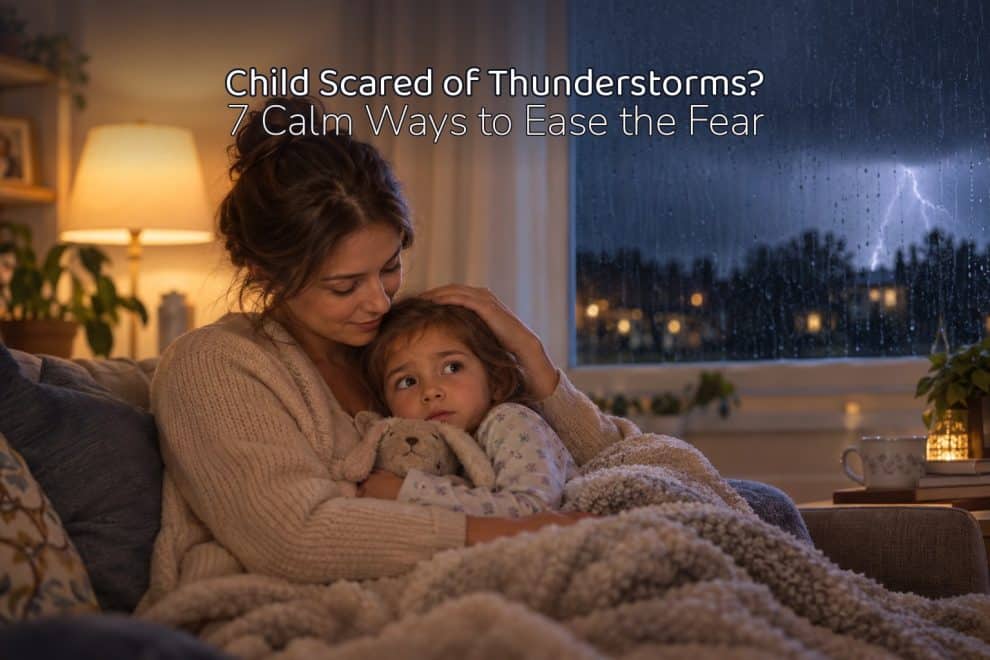
If you have a child scared of thunderstorms, you already know the drill: the first low rumble in the distance, and suddenly your kid is in your lap, under the blanket, or wide awake at 2 a.m. insisting they cannot possibly sleep. Maybe they cover their ears, cry at the flash of lightning, or ask the same anxious question on a loop: “Is it going to hit our house?” It can be exhausting, and it can tug hard at your heart, because there is almost nothing worse than watching your child be genuinely frightened and not knowing quite how to help.

I want to start with the reassuring part, because as a mom of three and an early childhood educator, I have lived this one from both chairs. A fear of thunderstorms is one of the most common, most normal fears of early childhood. It is not a sign that something is wrong with your child, and it is not a sign that you have coddled them. Their brain is doing exactly what a young brain is wired to do: react to something loud, sudden, unpredictable, and impossible to control.
The even better news is that this is a fear kids almost always grow through, and how we respond as parents makes a real difference in how quickly and how gently that happens. So instead of dreading the forecast, let’s turn storm season into something you can actually handle together. Below are seven calm, practical ways to help a child scared of thunderstorms feel safer, braver, and more in control.
Why Is My Child Scared of Thunderstorms?
Table of Contents
Before the how-to-help part, it helps to understand what is actually happening when your child is scared of thunderstorms, because once you see it through their eyes, your patience comes a lot easier. A thunderstorm hits nearly every button a young nervous system is built to react to. It is loud and it is sudden. The thunder cracks without warning, the lightning flashes bright and strange, the wind and rain roar against the windows, and none of it can be predicted or stopped. For a small person still learning that the world is mostly safe, that is a lot.
Young children also live in a world where the line between real and imagined is still blurry. A storm can feel like a giant, a monster, or an angry sky that is somehow after them specifically. They do not yet have the grown-up context that says “this is weather, it will pass, our house is safe.” What they have is a body flooded with the alarm of loud thunder and a big imagination filling in the scary blanks. A child afraid of storms is not being dramatic; their fear is a completely logical response to information their brain has not learned to file away yet.
It is also worth knowing that thunderstorm anxiety often peaks in the toddler and preschool years and tends to ease naturally as kids get older and gather more experience and understanding. Some children are simply more sensitive to loud noise and big sensory input than others, and for them the fear can linger a little longer or feel a little bigger. As KidsHealth notes, fears like storms, loud noises, and the dark are common at different ages and usually fade with reassurance and time. Knowing that your child is on a normal developmental path, not a broken one, is the ground everything else stands on.
7 Calm Ways to Help a Child Scared of Thunderstorms
Here is the part you came for. None of these require a perfect script or a fearless kid overnight. They work together, gently, over a season or two, to shrink the fear and grow your child’s sense of I can handle this.
1. Stay Calm Yourself, Because Your Child Reads Your Face
This is the quietest and most powerful tool you have. Children take their cues about danger straight from us, and they are watching your face and your body far more than they are listening to your words. If a clap of thunder makes you flinch and gasp, your child learns that thunder is worth flinching at. If you stay relaxed, maybe even a little interested, you are giving their nervous system a steady signal: the grown-up isn’t scared, so this must be okay.
That does not mean faking a calm you do not feel or dismissing the storm entirely. It means regulating yourself first so you can be your child’s calm anchor. Take your own slow breath, keep your voice low and easy, and let your relaxed body do half the talking. When a child scared of thunderstorms sees a parent who is unbothered and warm, a big part of the fear quietly loses its footing.
2. Name the Fear and Let It Be Okay
The instinct when our kids are scared is to rush in and erase it: There’s nothing to be afraid of. It’s just a little storm. Big kids aren’t scared of that. I understand the reflex completely, but arguing a child out of a feeling rarely works, and it teaches them that the fear is not safe to bring to you. A child afraid of thunderstorms who hears “stop being silly” does not stop being scared; they just stop telling you about it.
Instead, name it and normalize it. “That thunder was really loud, wasn’t it? It’s okay to feel scared. Lots of kids feel scared of storms, and I’m right here with you.” Validation is not the same as agreeing the storm is dangerous; it is letting your child know their feeling makes sense and they are not alone in it. The Child Mind Institute points out that the goal is not to eliminate a child’s anxiety but to help them manage it, and that means acknowledging the fear without amplifying it. A child who feels heard settles faster than a child who feels corrected.
3. Explain Thunder in Simple, Honest Words
A lot of fear lives in the unknown, and demystifying a thunderstorm can take real power out of it. When everyone is calm, not mid-storm, explain in simple, truthful terms what thunder and lightning actually are. You might say that lightning is a big spark of electricity in the sky, and thunder is just the sound that spark makes, like a giant clap or a burp from the clouds. The noise is loud, but the noise itself cannot hurt us, especially when we are safe inside our house.
Keep it honest and age-appropriate. You do not have to promise that storms are never dangerous, because kids can sense a fib and it undercuts your trust. Instead, pair the truth with safety: “Storms are powerful, so we stay inside where it’s safe and cozy, and then they pass.” Books and kid-friendly videos about weather, watched on a sunny day, can turn a scary mystery into something a curious child actually wants to understand. Naming and understanding big feelings and big events go hand in hand; our guide on helping kids manage big emotions pairs beautifully with these calm conversations.

4. Build a Cozy Storm-Day Plan
Fear shrinks when a child has a plan and a job to do. Instead of a storm being something that just happens to your child, make it something you move through together with a comforting little ritual. Decide as a family what you do when a storm rolls in: maybe you build a blanket fort, grab the special storm stuffed animal, dim the lights and turn on a favorite show, make hot cocoa, or read together until it passes. The storm becomes the cue for cozy time rather than the cue for panic.
A comfort kit can help too: a soft blanket, noise-reducing headphones or earmuffs for the loud claps, a flashlight in case the power flickers, and a favorite toy, all gathered in one spot your child helps put together. Giving a child scared of thunderstorms a concrete, predictable routine hands them back a sense of control, and control is exactly what a storm strips away. A little predictability goes a long way; if steady routines help your household, our take on building calm, predictable routines for kids applies here too.

5. Teach Simple Calming Tools
When the fear spikes, a child’s body is genuinely in alarm: fast heartbeat, shallow breathing, tight muscles. Giving them a simple physical tool to calm that alarm is one of the kindest things you can do, and it is a skill that will serve them far beyond storm season. Practice these during calm, sunny moments so they are ready to reach for when the thunder rolls. In my classroom, we practiced balloon breathing on ordinary sunny afternoons, long before any storm rolled in, so that by the time the sky actually darkened it was already a familiar friend rather than a brand-new thing to learn in a scary moment.
Try slow “balloon breathing,” where you breathe in slowly through the nose to blow up an imaginary balloon in the belly, then let it out even more slowly. Count the seconds between the lightning and the thunder together, which doubles as a soothing distraction and a gentle science lesson that the storm is moving away. Squeeze-and-release muscle games, a firm hug, or holding a comforting object all help discharge the nervous energy. For a fuller toolkit, our guides on emotional regulation for kids and simple mindfulness techniques for kids are full of calm-down strategies you can practice together.

6. Use Gentle, Gradual Exposure
The natural urge is to help your child avoid anything storm-related, but total avoidance quietly tells the brain that thunderstorms really are too scary to face, and the fear grows in the dark. The gentler long game is small, supported steps toward the thing they fear, always at your child’s pace and never forced. This is how a child afraid of thunderstorms slowly learns, in their own body, that they can be near a storm and be okay.
Start small and safe: read storybooks about weather, play with a toy that makes gentle rain sounds, or listen to a soft recording of a distant storm at a low volume during playtime. On a real storm day, watch the rain together from a safe window with you right beside them, narrating calmly. Each small, successful step builds a little more courage than the last. The point is not to erase the fear in one leap but to let your child gather evidence, one storm at a time, that they are braver than the thunder.
7. Keep Routines Steady and Protect Sleep
Storms love to strike at bedtime, and a child scared of thunderstorms can turn nighttime into a nightly battle. Do your best to keep the bedtime routine as normal and steady as possible, because predictability is deeply reassuring to an anxious child. If a storm hits at night, offer comfort without building brand-new habits that are hard to undo, like starting to sleep in their room every night or bringing them into your bed indefinitely. A little extra reassurance is fine; a permanent new arrangement born of one storm can be harder to unwind.
A white-noise machine or a fan can soften the startle of a thunderclap, and a nightlight can ease the darkness that a storm makes feel bigger. If your child’s storm fear is tangled up with nighttime worries generally, you are not alone, and it often overlaps with other bedtime fears; our guides on helping a child who is afraid of the dark and handling nightmares and night terrors walk through calm, sleep-protecting approaches that fit right alongside these storm strategies.
When a Child’s Fear of Thunderstorms Might Be Something More
For the vast majority of kids, a fear of thunderstorms is a normal phase that eases with the calm, patient support above. But you know your child best, and it is always okay to reach out for a little extra guidance. It can be worth a calm conversation with your pediatrician or a child therapist if the fear feels extreme or does not ease over time, if it spills far beyond storms into constant “what if” worry, or if it is genuinely interfering with your child’s daily life, sleep, school, or willingness to leave the house.
Watch, too, for a fear so intense that it triggers panic-level distress at the mere mention or forecast of a storm, or that lasts well past the age where most kids have grown out of it. The American Academy of Pediatrics notes that while many childhood fears are normal and fade with reassurance, it is worth talking with your pediatrician when a fear is intense, persistent, or interferes with everyday life. Reaching out is not an overreaction, and it does not mean you did anything wrong. It simply means you are a tuned-in parent gathering the right support, and there is real, gentle help available.
For most families, though, the path is exactly the one we walked through here: stay calm yourself, name the fear, explain the storm, build a cozy plan, teach a few calming tools, take small brave steps, and protect sleep. Season by season, storm by storm, the child who once dove under the covers at the first rumble becomes the child who peeks out the window and says, almost casually, “It’s just thunder.” For more calm, practical support, our full parenting section is always here for you.

Frequently Asked Questions
Why is my child suddenly scared of thunderstorms when storms never bothered them before?
A fear of thunderstorms often shows up seemingly overnight, and that is completely normal, especially in the toddler and preschool years. As children’s imaginations and awareness grow, they start to notice and interpret the world in new ways, and a storm’s loud, unpredictable nature suddenly registers as threatening in a way it did not before. Sometimes a single startling storm, a scary scene in a show, or a comment from another child sparks it. Because it is developmentally normal, the calm, reassuring strategies above usually help it pass with time.
How do I calm my child during a thunderstorm in the moment?
Start with yourself: take a slow breath and keep your voice and body calm, because your child is reading your reaction. Then move to comfort and connection. Offer a hug, get cozy under a blanket, and validate the feeling with something like, “That was loud, it’s okay to feel scared, I’m right here.” Use a simple calming tool such as slow belly breathing or counting the seconds between lightning and thunder, and lean on your cozy storm-day ritual, whether that is a fort, a favorite show, or a comforting toy. In the moment, your steady presence is the most powerful thing you have.
Is it normal for kids to be afraid of thunderstorms?
Yes, very much so. A fear of thunderstorms is one of the most common fears of early childhood, right alongside fears of the dark and loud noises, and it makes complete developmental sense. Storms are loud, sudden, unpredictable, and beyond anyone’s control, which is exactly the recipe a young nervous system is wired to react to. For the great majority of children, it is a normal phase they gradually grow out of as they gain understanding and experience, especially with calm, patient support at home.
Should I let my scared child sleep in my bed during storms?
A little extra comfort during a scary storm is perfectly fine, but try to avoid starting a permanent new habit born of one rough night, because those can be hard to unwind later. Instead of moving your child into your bed indefinitely, offer reassurance in their own room: sit with them a while, use a white-noise machine or fan to soften the thunderclaps, add a nightlight, and keep the bedtime routine steady. The goal is to comfort the fear without accidentally teaching your child that they can only feel safe in your bed.
When should I worry about my child's fear of thunderstorms?
Most storm fear is a normal phase, so worry less about the fear itself and more about its intensity and reach. It is worth talking with your pediatrician or a child therapist if the fear is extreme, if it does not ease over many months or years, if it triggers panic-level distress at the mere forecast of a storm, or if it is genuinely interfering with your child’s sleep, school, or daily life, or spilling into broad, constant anxiety. Reaching out early is a strength, not an overreaction, and gentle help is available.
Related Articles
- Helping a Child Who Is Afraid of the Dark
- Nightmares and Night Terrors: How to Help
- Helping Kids Cope With Fears
- Emotional Regulation for Kids
- How to Help Kids Manage Big Emotions
Related Articles
- How To Help Kids Manage Big Emotions
- Morning Routine For Kids
- Emotional Regulation For Kids
- 7 Mindfulness Techniques For Kids To Reducing Stress And Anxiety
- Child Afraid Of The Dark
- Nightmares And Night Terrors

Meet Sophia Richards Sophia Richards is an early childhood educator, passionate writer, and the proud mom of three energetic kids. With a degree in Education and over a decade of hands-on classroom experience, Sophia bridges the gap between professional teaching strategies and everyday family life. At More4Kids, she translates complex child development concepts into practical, actionable parenting tips that families can use at home.
Whether she is sharing positive reinforcement techniques, educational crafts, or honest reflections on the chaos of raising three children under one roof, Sophia’s goal is to empower parents to foster resilience and joy in their kids. When she isn't writing or lesson planning, you can find her organizing neighborhood scavenger hunts or trying out new kid-friendly recipes.
Areas of Expertise: Early Childhood Education, Positive Parenting, Sibling Dynamics, Educational Play, Family Wellness.

Add Comment