












By Sophia Richards
Two Octobers ago, a mom I half-knew from pickup line stopped at our porch, held her son back by the shoulder, and asked — quietly, like she’d asked it a hundred times already that night — “does anybody in there have a nut allergy, or is it okay if he just takes one?” Her son was maybe six, in a dinosaur costume, holding an EpiPen pouch clipped to his belt like it was just another accessory. I said of course, take two, and she thanked me in a way that made it clear that “of course” wasn’t the answer she usually got.
That’s the moment that got me actually paying attention to the teal pumpkin project, instead of just vaguely knowing it existed. It’s such a small, cheap thing — a can of teal paint and a bowl of stickers — sitting next to a genuinely exhausting nightly negotiation that a lot of us never have to think about. If your family doesn’t deal with food allergies, allergy friendly halloween can feel like an optional extra credit assignment. For roughly one in thirteen kids in this country, it’s the difference between a fun night and one more evening of being the kid who has to ask before every single house.
What the Teal Pumpkin Project Actually Is
Table of Contents
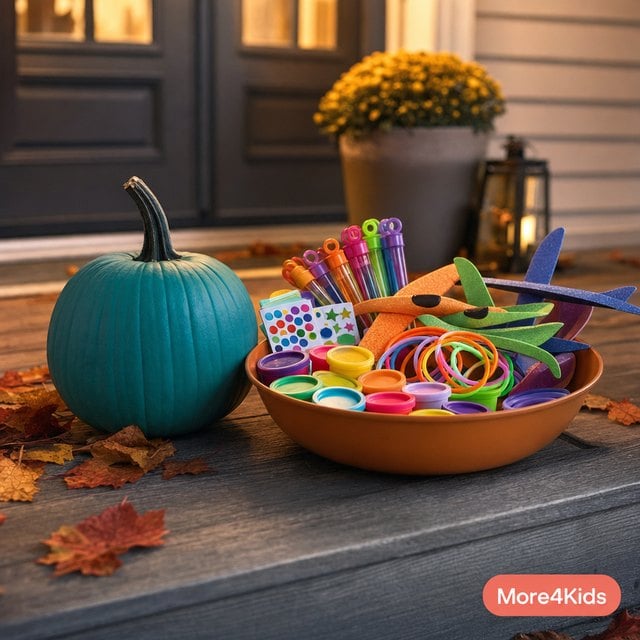
The Teal Pumpkin Project is a national awareness campaign, coordinated today by FARE (Food Allergy Research & Education), built around one simple visual signal: a teal-colored pumpkin on your porch means you’re offering non-food treats — stickers, small toys, temporary tattoos — in addition to or instead of candy. No secret code, no app, no confrontation at the door. A kid with a food allergy (or a family managing celiac disease, diabetes, or any other reason candy is complicated) can look for teal from the sidewalk and know, before they even walk up, that this house has something for them that won’t require a conversation.
It started small — a local awareness effort that a handful of families ran in their own neighborhoods — and it’s grown into a genuinely nationwide thing, with a searchable map of participating houses and organizations promoting it well beyond the neighborhoods where it began. You don’t have to register anywhere or buy an official kit to participate. You need a pumpkin, some paint (or a teal bucket, a teal sign, a printed flyer taped to your door — the paint isn’t sacred, the signal is), and a second bowl.
Why This Is Bigger Than “Some Kids Skip the Candy”
Food allergies aren’t a preference or a diet trend, and treating them like one is exactly the thing that makes Halloween harder than it needs to be for these families. FARE puts the number at roughly 1 in 13 children in the U.S. — about two kids in an average classroom — with allergies serious enough that the wrong bite can mean a trip to the ER, not just a stomachache. Peanuts, tree nuts, milk, egg, wheat, soy, sesame: read the ingredient panel on a fun-size candy bar sometime and count how many of those show up, often buried in a “may contain” line that changes batch to batch.
For a parent managing that, trick-or-treating is a night of triage. Every house is a small, unpredictable risk assessment: did this candy come from a safe brand, is the wrapper actually sealed, has it touched anything else in the bowl, is my kid old enough to check the label himself or do I need to be standing right there. Multiply that by forty houses on a Tuesday night, in the dark, with a costume mask making it hard to see clearly, and you start to understand why the night can wear a family down. FARE has polled food-allergy families directly on this, and more than 65% report having had a genuinely negative Halloween experience because of their child’s allergy — not a minor inconvenience, but an actual bad night, often at the exact holiday that’s supposed to be simple, low-stakes fun.
The teal pumpkin project doesn’t fix all of that. It’s not a substitute for reading labels or carrying an EpiPen. What it does is take a handful of houses per block — the ones that opt in — and turn them into a guaranteed safe stop. That’s not nothing on a night that’s otherwise wall-to-wall uncertainty for these families.
Setting Up Your Own Two-Bowl System
The mechanics are genuinely simple, and you don’t need to redesign your whole Halloween setup to do it.
As an Amazon Associate, More4Kids earns from qualifying purchases. We only recommend products we would use in our own homes, and we check every brand against current CPSC recall data before it appears here. Our recommendations are never paid placements.
Get a second container. It doesn’t need to match anything. A teal bucket, a second bowl, even a cardboard box with “non-food treats” written on it in marker works. What matters is that it’s visibly separate from the candy bowl, not mixed in — a kid shouldn’t have to dig through a bowl of Skittles hoping to find the one sticker packet buried at the bottom.
Fill it with something that isn’t food. This is the part people overthink. It doesn’t need to be elaborate or expensive — small stickers, temporary tattoos, bouncy pencils, little notepads, bubbles, or bracelets all work, and most of them cost less per kid than a fun-size candy bar does. If you want a starting point instead of guessing, bulk non-food Halloween party favors sized for trick-or-treating give you a big enough assortment that you’re not restocking mid-evening.
Put both bowls out, visibly, at the same time. Don’t make a kid ask for the non-food option — that’s the exact awkward moment the whole project is designed to skip. If both bowls are sitting right there, a kid or parent can just take what works for them without a word exchanged.
Paint or mark something teal, and put it where it’s visible from the sidewalk, not tucked behind a chair on your porch where nobody walking by in the dark is going to spot it. A pumpkin works because it’s already part of the visual language of the holiday — nobody has to learn a new symbol, they just have to know what teal means once, and then they recognize it every year after.

What Belongs in the Non-Food Bowl
You’ve got more options than “stickers or nothing,” and it genuinely helps to mix it up so kids in the same neighborhood who hit multiple teal-pumpkin houses aren’t getting the exact same sticker sheet five times in a row.
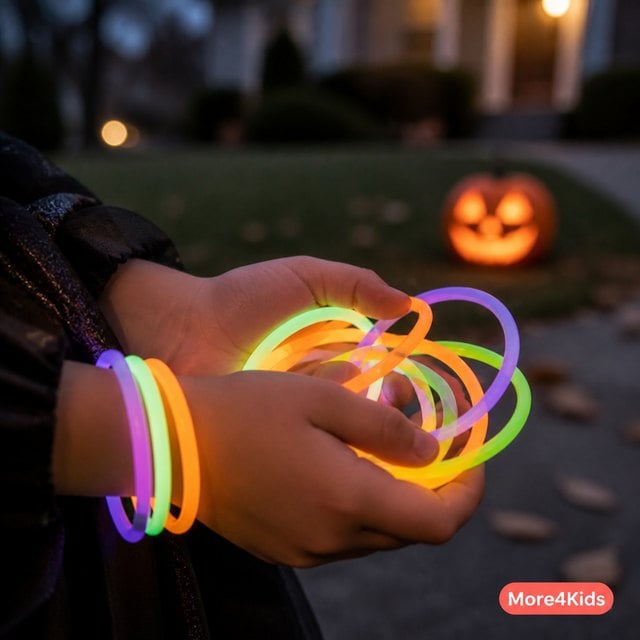
Reliable, low-cost non-food fillers that hold up well handed out to a moving line of trick-or-treaters: small sticker sheets, bouncy pencils and erasers, temporary tattoos, mini notepads, bubbles, small notebooks, and bracelets or bands that don’t involve any small hardware. If you want a little more range than a single bag of stickers, sensory and fidget-friendly small toys are worth a look too — they’re a genuine hit with a wide age range and happen to work well for sensory-sensitive kids on top of the food-allergy crowd, which is a nice overlap if you’re only buying one extra bag this year. That overlap comes up a lot in our guide to sensory-friendly costumes, too — a lot of the same “reduce the surprises” thinking applies to both.
If your own family does classroom parties, teacher gifts, or a school Halloween event on top of trick-or-treating, classroom-sized sticker packs tend to be the most cost-efficient per-kid option, and they double as trick-or-treat fillers if you buy a bit extra.
One honest note: read the packaging on anything you’re not 100% sure about. A “candy necklace” that’s actually plastic, a gummy-shaped eraser, or a bath bomb that smells edible can genuinely confuse a young child or a kid with low vision in a dark doorway. If an item could be mistaken for food at a glance, it’s not doing the job a non-food treat is supposed to do — clear, unambiguous, no second-guessing required.
What “Allergy Friendly Halloween” Actually Requires From the Rest of Us
Here’s the part I think gets skipped in a lot of “10 fun Halloween ideas” articles: allergy friendly halloween isn’t really a checklist you complete once. It’s a handful of small habits that make your house a genuinely lower-stress stop for a kid who’s had to be careful all night.
Keep your candy bowl and non-food bowl physically separate, not just labeled — cross-contact matters to some allergy families even for something you’d never think of as risky, and it costs you nothing to keep them apart. If you’re handing candy out yourself rather than letting kids grab from the bowl, wash your hands or use tongs if you’ve been snacking on something with common allergens yourself. And if a parent asks you a direct question at the door — “is this nut-free,” “does this have dairy” — the honest answer is usually “I don’t actually know, check the label,” and that’s a completely fine thing to say. Guessing to be polite is worse than admitting you’re not sure.
None of this requires becoming an allergist. It requires treating the question as a normal, reasonable thing to be asked, the same way you’d answer “is this okay for a two-year-old” without taking it personally.
The Small-Parts Safety Check Nobody Skips For Candy, So Don’t Skip It Here
Non-food treats get handed to the exact same age range as candy does, which means the same small-parts rules apply — and it’s easy to forget that when you’re shopping for “cute Halloween trinkets” instead of thinking about it as a safety category the way you would a toy aisle.
Before anything goes in that bowl, run it past the toilet-paper-tube test: if a single item, or a piece that could come off it, would fit through a cardboard tube about an inch and a quarter across, it’s a choking hazard for a child under three, and strollers full of toddlers are a normal sight at most trick-or-treat routes. Skip loose small toys, anything with beads or marbles, tiny figurines, or novelty items with small detachable parts. Watch for button or coin batteries specifically — they’re in a genuinely alarming number of small light-up novelties now, and a swallowed button battery is a medical emergency, not a stomachache. If a battery-powered item doesn’t have a screwed-shut compartment a toddler can’t pop open with a fingernail, it doesn’t belong in a bowl meant for a mixed-age crowd walking up your steps in the dark.
If you’re not sure whether something you already bought is genuinely toddler-safe, the simplest fix is to sort your bowl into two tiers before the night even starts: a general bowl safe for any age, and a smaller “ask an adult, older kids only” option you hand over yourself rather than leaving self-serve. It takes five minutes and it means you’re not making that judgment call on the fly with a line of kids waiting. We go into this same small-parts logic in more detail in our Halloween costume safety guide, if you want the checklist for capes, masks, and light-up trim too.
If your own trick-or-treater is still small enough that the whole night is more about the walk than the candy, our Halloween ideas for toddlers piece covers pacing and route length, which matters just as much as any bowl you set out.
Marking Your House So It’s Actually Visible
A teal pumpkin only works as a signal if someone can see it from the sidewalk in the dark, which is the part that trips people up most. Porch lighting matters more than the paint job — a beautifully painted pumpkin sitting in shadow behind your porch swing does nothing for a kid scanning houses from the street.
Put it somewhere your porch light actually reaches, ideally near your front steps rather than off to the side. If you want to be extra clear, a small printed sign or even a handwritten card next to the pumpkin explaining “non-food treats available, just ask” removes any ambiguity for a parent who’s never seen a teal pumpkin before and isn’t sure what it means. You can also add your house to the Teal Pumpkin Project’s public map through FARE so families in your area can plan their route around it ahead of time, rather than discovering it by accident on the night.
If your street does a trunk-or-treat instead of, or in addition to, door-to-door, the exact same two-bowl idea works from an open trunk just as well — a teal pumpkin propped on the bumper reads just as clearly in a parking lot as it does on a porch.

Talking to Your Own Kid About Other Houses
If your own child has a food allergy, the teal pumpkin project is a huge relief on the nights it works — but it’s realistically going to be a handful of houses on any given block, not every house, so it’s worth having a plain conversation before you head out.
Agree ahead of time on the plan for houses without a teal pumpkin: does your child hand you everything to check when you get home, do they skip candy at non-teal houses entirely and just enjoy the walk, or do they know their own safe brands well enough to spot-check themselves. Whatever the plan is, decide it on your porch, not on a stranger’s doorstep with other kids waiting behind you. Kids old enough to read labels can practice at home first — showing them what an allergen warning actually looks like on a wrapper they already own is a lot less stressful than teaching it for the first time under a porch light with a mask half-blocking their view.
And it’s worth saying out loud to your kid, plainly, that a house without a teal pumpkin isn’t a house that doesn’t care — most people just haven’t heard of it yet. That one framing keeps the night about candy and costumes instead of turning into a mental tally of who did and didn’t think of them.
What We’d Skip
Not every well-meaning idea earns a spot in your non-food bowl, in my opinion:
- Candy-shaped or candy-scented items. A gummy-look eraser or a bath bomb that smells like a lollipop can genuinely confuse a young child in the dark, which defeats the entire point of a clearly non-food option.
- Anything with a battery compartment that isn’t screw-sealed. This is a hard no regardless of how cute the item is — a curious toddler popping open a slide panel and finding a button battery is a real, documented risk.
- Loose small toys bought without checking the size. If you’re grabbing a bag of assorted trinkets and haven’t actually looked at what’s inside, do that before Halloween night, not after a kid’s already walked off with one.
- A single, identical item repeated all season. It’s not unsafe, just a missed chance — kids hitting several teal-pumpkin houses on one street notice when it’s the exact same sticker sheet at every stop.
A Parent’s Honest Take
I’ll be straightforward about this one: it took me longer than I’d like to admit to actually paint a pumpkin teal instead of just meaning to. It felt like a small enough gesture that I kept assuming someone else on the block already had it covered. Then I watched that mom at my door do the math on whether it was even worth knocking, and I realized the “someone else has it covered” assumption is exactly how a neighborhood ends up with zero teal pumpkins instead of five.
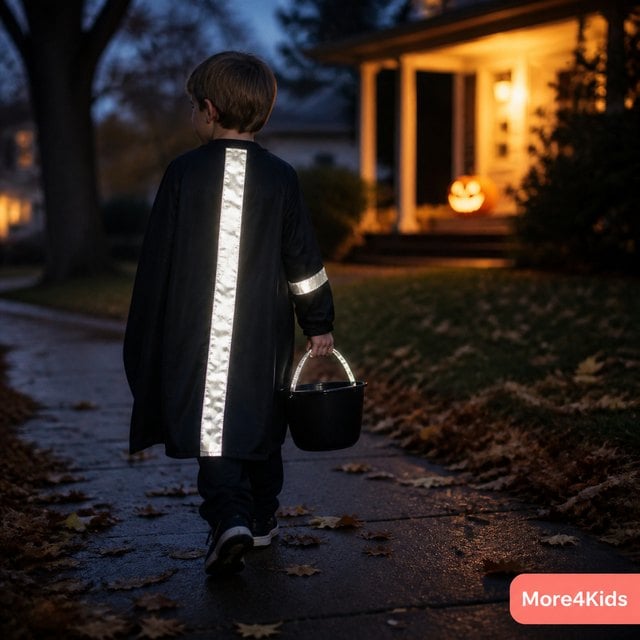
It costs a few dollars and maybe twenty minutes, most of which is paint drying time. It doesn’t require you to become an expert on food allergies, give up your candy bowl, or change anything about how your own kids trick-or-treat. It just means one more house on the route where a kid doesn’t have to ask, doesn’t have to explain, and doesn’t have to watch their parent do that quiet double-check at the door. That’s a genuinely easy trade.
Frequently Asked Questions
What is the Teal Pumpkin Project?
It’s a national awareness campaign, coordinated by FARE (Food Allergy Research & Education), that uses a teal-colored pumpkin as a visual signal that a house offers non-food treats alongside or instead of candy. It gives kids with food allergies and other conditions a way to identify safe houses from the sidewalk without having to ask or explain anything at the door.
Do I have to only give out non-food treats if I paint a pumpkin teal?
No. Most participating houses offer both — a candy bowl and a separate non-food bowl side by side, so trick-or-treaters can choose whichever works for them. The teal pumpkin signals that the non-food option exists, not that candy is unavailable.
What are good non-food treats for allergy friendly Halloween?
Small stickers, temporary tattoos, bouncy pencils, mini notepads, bubbles, and simple bracelets are reliable options most kids enjoy. Keep anything with a battery compartment sealed shut, avoid loose small pieces that could be a choking hazard for toddlers, and skip items that look or smell like candy, since that can confuse a young child in the dark.
How do I make sure people actually notice my teal pumpkin at night?
Placement matters more than the paint job. Put the pumpkin somewhere your porch light directly reaches, near your front steps rather than off to the side, and consider adding a small printed or handwritten sign next to it for anyone unfamiliar with what teal means. Registering your address on FARE’s public Teal Pumpkin Project map also helps families plan their route ahead of time.
Related Articles
- Sensory Friendly Halloween Costumes
- Halloween Costume Safety 2026
- Halloween Ideas For Toddlers
- Trunk Or Treat Ideas

Meet Sophia Richards Sophia Richards is an early childhood educator, passionate writer, and the proud mom of three energetic kids. With a degree in Education and over a decade of hands-on classroom experience, Sophia bridges the gap between professional teaching strategies and everyday family life. At More4Kids, she translates complex child development concepts into practical, actionable parenting tips that families can use at home.
Whether she is sharing positive reinforcement techniques, educational crafts, or honest reflections on the chaos of raising three children under one roof, Sophia’s goal is to empower parents to foster resilience and joy in their kids. When she isn't writing or lesson planning, you can find her organizing neighborhood scavenger hunts or trying out new kid-friendly recipes.
Areas of Expertise: Early Childhood Education, Positive Parenting, Sibling Dynamics, Educational Play, Family Wellness.

Add Comment