















By Sophia Richards
How to talk to kids about divorce is one of those parenting conversations most of us wish we could skip. Not because children do not deserve the truth. They do. But because the truth feels so big in our own hands that we worry it will be too heavy for theirs.
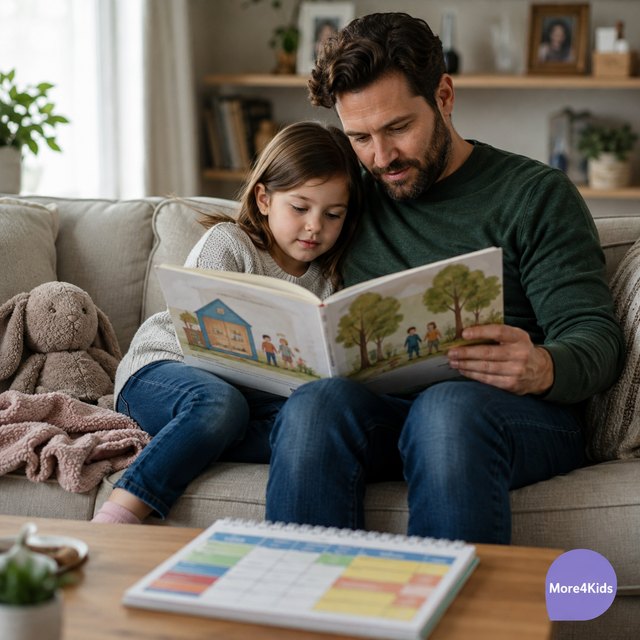
As a mom of three and an early-childhood educator, I have learned that children usually do not need a perfect speech. They need a calm grown-up, a clear sentence, and the reassurance that the grown-up can keep answering questions after the first conversation ends. They also need us to separate adult pain from child safety. That is hard, holy work in the middle of a family change, especially when children and divorce are both part of the same tender season.
Divorce is not a small thing. Children may feel sad, angry, confused, relieved, quiet, clingy, or all of those in one afternoon. Still, a thoughtful conversation can soften the fear. The goal is not to make divorce sound easy. The goal is to help children understand what is changing, what is not changing, and where they still belong.
Start With the Message Before the Details
Table of Contents
Before you sit down with your child, decide what the main message needs to be. In most families, the child needs to hear these three things plainly:
- This is an adult decision.
- You did not cause it.
- We both love you and will keep taking care of you.
HealthyChildren.org’s guidance on how to talk to your children about divorce is helpful because it keeps the focus on clear, simple reassurance. Children do not need the whole adult history of the marriage. They need enough truth to feel oriented.
One script might sound like this:
- “We need to tell you something important. Mom and Dad are going to live in two homes. This is a decision between grown-ups. You did not cause it, and you cannot fix it. We both love you very much, and we will keep taking care of you.”
That is not fancy. It is not supposed to be. In my house and in the classroom, I have seen over and over that children handle short, steady sentences better than long explanations that keep changing direction.
How to Talk to Kids About Divorce Without Blaming
The hardest part of how to talk to kids about divorce may be leaving blame out of the conversation. Parents are human. There may be hurt, betrayal, grief, exhaustion, money stress, or years of complicated history behind the decision. But children should not have to carry the role of judge, messenger, counselor, or teammate against the other parent.
KidsHealth’s page for divorcing parents reminds parents to keep adult conflict away from children and let kids have their feelings. That boundary matters. A child can love both parents without approving of every adult decision. A child can be upset without needing to choose a side.
Try to avoid lines like:
- “Your dad left us.”
- “Your mom wanted this.”
- “If your other parent had tried harder, this would not be happening.”
- “You will understand when you are older.”
Instead, keep it child-safe:
- “This is between the grown-ups.”
- “You can love both of us.”
- “You do not have to take care of either parent.”
- “We will answer what we can, and we will not ask you to carry adult problems.”
This does not mean lying. It means choosing words that protect your child’s relationship with each parent as much as safety and reality allow.
Tell Them What Will Actually Change
Children listen for practical details. Where will I sleep? Who will pick me up? Will I still see Grandma? Can I keep my stuffed animal at both homes? Do I have to change schools?
Nationwide Children’s Hospital’s guide to supporting your child during a divorce encourages parents to talk calmly, be honest, accept feelings, and tell children what changes they can expect. That practical clarity is a kindness.
If you know the plan, say it simply:
- “You will stay at this house on school nights this month.”
- “Dad will pick you up after soccer on Tuesdays.”
- “Your school is staying the same.”
- “Some details are still being worked out. When we know, we will tell you.”
If you do not know, do not make promises just to calm the room. Children remember. A better answer is, “I do not know that yet, but I know you need to know. We will tell you as soon as there is a real answer.”
As a parent, I know how tempting it is to fill silence. With three kids, silence can feel like a vacuum that wants to swallow the room. But a quiet pause gives a child time to think. Sometimes the first real question comes after breakfast the next morning or from the back seat three days later.

Keep the First Conversation Short Enough for Their Age
A preschooler and a teenager do not need the same conversation.
Very young children need concrete language: two homes, who will tuck them in, what happens tomorrow. Elementary-age children often need repeated reassurance that they did not cause the divorce and cannot fix it by behaving better. Older children and teens may ask sharper questions, notice more conflict, and need more privacy to process.
Children’s Hospital Colorado recommends direct but reassuring conversations so children feel safe and supported. That is a good north star for every age. Be direct enough that your child is not guessing. Be reassuring enough that your child is not left alone with the fear.
You might say:
- For a younger child: “Mom and Dad will live in different homes. You will still be loved and cared for.”
- For a school-age child: “This is not because of anything you did. You may feel lots of feelings, and you can ask us questions.”
- For a teen: “We know this affects your life too. We will be honest about the practical changes, and we will not ask you to take sides.”
In my classroom days, I used to watch children ask the same question again and again when they were anxious. It was not because they were not listening. It was because they were checking whether the answer was still safe. Repeating the reassurance is not a failure. It is part of the work.
Let Feelings Be Messy
One child may cry. Another may shrug and ask what is for dinner. Another may get angry about a backpack moving between houses. Try not to decide what the reaction “means” too quickly.
Children often process big news in pieces. A quiet child may need time. A loud child may need help feeling safe inside big emotion. A child who seems fine may suddenly melt down over something small because the small thing is where the big feeling finally lands.
Our article on helping kids cope with stress is a useful reminder that children can carry stress even when they do not explain it neatly. Divorce can show up as extra clinginess, irritability, sleep struggles, school worries, stomachaches, or behavior that looks younger than usual. Those signs do not automatically mean something terrible is happening, but they do mean your child may need extra steadiness.
Try these lines:
- “It is okay to be sad.”
- “It is okay to be mad at the situation.”
- “You can ask me about this again.”
- “You do not have to make me feel better.”
- “I can handle your big feelings.”
That last sentence may be the most important. Children should not feel that their sadness will break the parent.
Protect the Other Parent Relationship When You Safely Can
If both parents can safely be involved, children usually benefit from knowing they are allowed to love both homes. That does not mean pretending everything is peaceful when it is not. It means refusing to use the child as a pressure point, and it means repeating reassurance more often than adults may think should be necessary.
HelpGuide’s article on children and divorce puts strong emphasis on avoiding negative talk about the other parent and protecting children from loyalty pressure. More4Kids has also covered co-parenting through separation and divorce and putting your child first during co-parenting. The shared thread is simple: your child should not have to manage adult conflict.
That can sound like:
- “You can miss Dad here.”
- “You can miss Mom there.”
- “You do not need to report everything that happens at the other house.”
- “Adult disagreements are for adults to handle.”
If there are safety concerns, abuse, intimidation, addiction, or court-specific restrictions, follow professional and legal guidance. A general parenting article should never override a safety plan. In those situations, a child still needs calm, age-appropriate language, but the details may need to be shaped by a counselor, attorney, advocate, or court order.
Make a Tiny Routine for the Weeks After
The first conversation matters, but the weeks after may matter more. Children need proof that life is still held together by caring adults.
NDSU Extension’s resource on talking to children about divorce points toward keeping routines and allowing children to keep ordinary contact and ordinary life where appropriate. Routine does not erase grief. It gives grief a stable place to land.
Small routines help children and divorce feel less like one giant unknown:
- A two-home calendar on the fridge.
- A consistent backpack spot.
- A short goodnight call when appropriate.
- The same breakfast rhythm on school days.
- A small comfort item that can travel.
- A weekly check-in question: “Is there anything you are wondering about?”
I like a check-in that does not feel like an interrogation. In our house, a question works better when my hands are busy: folding towels, driving, making sandwiches. Some kids talk more easily when they do not have to make big eye contact with a parent who is clearly bracing for the answer.

Give Children Words They Can Use
Children may need help talking to friends, teachers, grandparents, or siblings. They do not owe everyone the whole story.
Offer simple choices:
- “My parents are living in two homes now.”
- “I do not want to talk about it today.”
- “Things are changing, but I am okay.”
- “You can ask my mom or dad about grown-up questions.”
This is also a good time to tell teachers or caregivers the minimum helpful information, especially for younger kids. You do not need to share private adult details. A simple note can help another trusted adult understand why your child may be more tender or distracted.
If your child is dealing with sadness, grief, or a traumatic change, our guide on helping children through trauma and grief may be worth reading alongside this one. Some children need more than one conversation. Some need a counselor. Some need the adults around them to slow down and notice that behavior is often a message.
What Not to Put on Your Child
A child should not become:
- The messenger between homes.
- The secret keeper.
- The emotional support person.
- The person who hears every adult complaint.
- The one asked to reassure a parent.
- The one pressured to prefer one home.
This can happen even in loving families, especially when a parent is exhausted. I say that gently. Divorce can leave adults raw. But our children still need us to find grown-up support from grown-ups.
If you need to cry, call a friend after bedtime. If you need legal advice, talk to your attorney. If you need emotional support, reach toward a counselor, pastor, support group, or trusted adult. Your child can know you are sad. Your child should not feel responsible for making you okay.
A Simple Script You Can Adapt
Here is a starting script for how to talk to kids about divorce. Use your own words. Keep it honest. Keep it kind.
“We need to tell you something important. We have decided that we are going to live in two homes. This is an adult decision, and it is not because of anything you did. You cannot cause this, and you cannot fix it. We both love you. We will keep taking care of you. Some things will change, like where each parent sleeps and how our weekly schedule works. Some things will not change: you are our child, you are loved, and you can ask questions whenever they come up.”
Then stop. Let the child breathe. Let the questions come.
If they ask, “Are you getting back together?” answer gently and truthfully. If they ask, “Where will I live?” answer only what you know. If they ask, “Why?” keep it simple: “We have adult problems in our marriage that we could not fix, but we are still your parents.”
Keep Coming Back to Reassurance
Children often need the same reassurance many times:
- “This is not your fault.”
- “You are loved.”
- “You can love both parents.”
- “You can ask questions.”
- “The grown-ups are responsible for the grown-up parts.”
How to talk to kids about divorce is not one perfect talk. It is a series of steady, honest, age-appropriate conversations. Some will happen at the kitchen table. Some will happen in the car. Some will happen when a child suddenly asks whether the dog is moving too.

You do not have to have every answer ready. You do need to keep your child’s heart at the center. Clear words, calm presence, ordinary routines, and repeated reassurance can help children feel less alone in a family change they did not choose.
Frequently Asked Questions
What should I say first when talking to kids about divorce?
Start with the safest message: this is an adult decision, your child did not cause it, and both parents will keep loving and caring for them.
How much detail should children know about divorce?
Children need honest, age-appropriate practical details, not adult blame or private marriage history. Tell them what will change, what will stay steady, and when you will share more.
Should both parents tell the kids together?
When it is safe and possible, a calm joint conversation can reassure children that both parents are still caring for them. If that is not safe, choose the calmest safe setup available.
What if my child keeps asking the same divorce questions?
Repeated questions often mean your child is checking whether the answer is still true. Keep your response steady, short, and reassuring instead of treating repetition as misbehavior.
When should I get extra help for my child?
Consider extra support if your child has intense or lasting sleep changes, school struggles, withdrawal, aggression, big mood shifts, or seems stuck in distress after the separation.
Related Articles
- Kids And Stress
- Co Parenting Through Divorce And Separation
- Divorce And Co Parenting Putting Your Child First
- Dealing With Trauma And Grief

Meet Sophia Richards Sophia Richards is an early childhood educator, passionate writer, and the proud mom of three energetic kids. With a degree in Education and over a decade of hands-on classroom experience, Sophia bridges the gap between professional teaching strategies and everyday family life. At More4Kids, she translates complex child development concepts into practical, actionable parenting tips that families can use at home.
Whether she is sharing positive reinforcement techniques, educational crafts, or honest reflections on the chaos of raising three children under one roof, Sophia’s goal is to empower parents to foster resilience and joy in their kids. When she isn't writing or lesson planning, you can find her organizing neighborhood scavenger hunts or trying out new kid-friendly recipes.
Areas of Expertise: Early Childhood Education, Positive Parenting, Sibling Dynamics, Educational Play, Family Wellness.

Add Comment