














By Sophia Richards
The first time I set up a play yard, it sat in its box in our hallway for almost a week because I couldn’t decide where it should go. Living room meant it was in the middle of everything. Kitchen doorway meant I’d trip over it eight times a day. I finally just plunked it in the corner of the living room where I could see it from the stove, the shower wasn’t an option yet, and honestly, that corner ended up being right for almost two years. That’s the part nobody tells you about playpens and play yards — the box comes with instructions for assembly, but nobody hands you a map for where the thing actually belongs in your life.
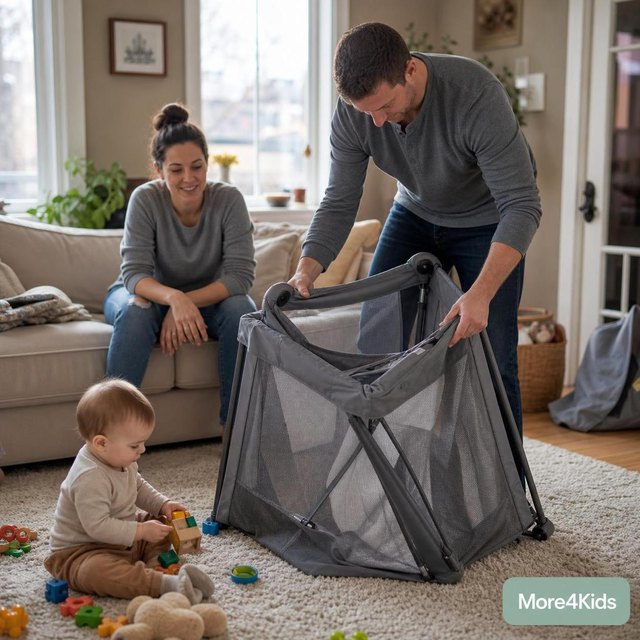
If you’re standing in that same spot right now, staring at a folded-up mesh rectangle wondering whether you even need one, or trying to figure out where on earth it fits in a house that already feels tight on space, I’ve set these up in my own home three times over and helped a lot of families in my classroom-adjacent life do the same. So here are some real baby playpen and play yard ideas — not a product roundup, just what actually works once the box is open and the thing is sitting in your living room.
Why Families Use One in the First Place
Table of Contents
A playpen or play yard isn’t about parking your baby somewhere and walking away for an hour. It’s about the ten-minute stretches — the shower, the phone call you can’t take with a baby on your hip, the moment you need both hands free to get dinner started or help your other kid with a shoe that won’t cooperate. It’s a contained, visible space where your baby can be safely occupied while you’re doing something that genuinely can’t happen with them attached to you.
I think of it less as a tool for distance and more as a tool for divided attention. You’re still in the room, or one room over with a clear sightline. That distinction matters, both for how you use it and for how you feel about using it, which I’ll get into later because the guilt question comes up more than almost anything else.
There’s also a real developmental upside that gets overlooked. A play yard with a few well-chosen toys is a low-stimulation space compared to an open living room full of siblings, pets, and general household chaos. Some babies actually play better in a slightly boxed-in space — less to compete with, more room to actually focus on the one toy in front of them.
Where to Actually Put It
This is the question I get asked most about play yard setup, and the honest answer is: wherever you can see it constantly without craning your neck. That usually means somewhere with a direct line of sight to your kitchen, or wherever you spend the most working hours of your day.
A few practical non-negotiables I’d stick to no matter which room you land on:
- Away from cords, blinds, and cables. Babies who can stand or pull up will absolutely reach for anything dangling nearby, and a play yard positioned near a window with blind cords or a lamp cord within arm’s reach defeats the purpose of the contained space.
- On a flat, stable surface, not on thick rugs that bunch up under the base or near stairs where a jostled play yard could shift toward an edge.
- Not directly in a high-traffic path. If people are stepping over or around it constantly, it becomes a tripping hazard and a source of household friction, and you’ll end up resenting where you put it.
- Close enough that you can hear a fuss before it becomes a cry. This one’s less about the manual and more about your own sanity — if it’s too far from wherever you’re working, you’ll be up and down constantly anyway, which erases half the point.
Always set it up and use it according to the manufacturer’s specific instructions that came with your model — placement, assembly, and recommended use vary by product, and the box insert is worth an actual read rather than a skim. A few extra minutes on the play yard setup instructions up front saves you from repositioning it later once you realize a cord or a heating vent is closer than you thought.

Portable vs. Stationary: The Trade-Off Nobody Explains Well
There are really two categories here, and they solve different problems.
A stationary play yard — the kind with a padded floor, taller mesh sides, sometimes a bassinet attachment for younger babies — tends to be sturdier and more comfortable for longer stretches of independent play. It’s the one that lives in your living room corner semi-permanently. The trade-off is size: these take up real floor space and aren’t something you’re folding up and stashing in a closet between uses.
A portable play yard, sometimes called a travel play yard, folds down into a carrying bag, sets up in a few minutes, and is genuinely the thing that makes a trip to grandma’s house or a weekend away with a baby manageable. The trade-off there is usually a thinner floor pad and a slightly less plush feel — fine for a getting-ready window or an overnight, less ideal as an all-day, every-day setup.
My honest take: if you’re going to be leaning on this thing daily at home, get the sturdier stationary one and treat a portable play yard as a bonus feature, not the main event. If you’re mostly solving for travel — visits to relatives, hotel stays, a pack-and-go option for chaotic weekends — the travel-style version earns its keep fast and packs down small enough to live in a car trunk indefinitely.
Either way, this is a category where reading actual current crib and play yard safety standards for your specific product matters more than any general blog advice, mine included — manufacturers update designs, and what was standard a few years ago isn’t always what’s recommended now.
Making It an Actual Play Space, Not a Holding Pen
The “baby jail” nickname exists for a reason — a play yard with the same three toys in it every single day gets boring fast, for your baby and for your own conscience watching them lose interest. A few things that made a real difference in how much mine actually wanted to be in there:
Rotate, don’t dump. Instead of tossing in everything you own, keep two or three toys in at a time and swap them every few days. Anything that’s been out of sight for a week comes back like it’s brand new. This is basically the same principle behind organizing your child’s toys into rotating bins rather than one overflowing basket — babies engage more with less, not more.
Mix textures and types. A soft board book, something with buttons or a bit of sound, a stacking toy, maybe a soft ball. Variety in what a toy actually does keeps attention longer than variety in color or brand.
Let boredom happen sometimes. Not every minute in the play yard needs to be maximally engaging. A little independent fussing-around time, where your baby is figuring out what to do with themselves without you narrating every second, is genuinely useful for attention span down the line.
Bring it into your daily rhythm, not just emergency mode. If the play yard only shows up when you desperately need ten minutes, your baby will pick up on the mood shift. Using it occasionally during calm moments too — while you fold laundry nearby, say — makes it feel like a normal part of the day rather than a signal that something urgent is happening.
When Your Toddler Outgrows It
There’s a specific moment every parent with a climber will recognize: you turn around and your baby, who has never shown the slightest interest in escape, is suddenly hoisting one leg over the mesh side like it’s the easiest thing in the world. That’s usually your sign. Once a baby is reliably pulling to stand and testing their own strength against the sides, the play yard’s job as a contained space is mostly done, even if the manual’s general guidance would still technically allow it.
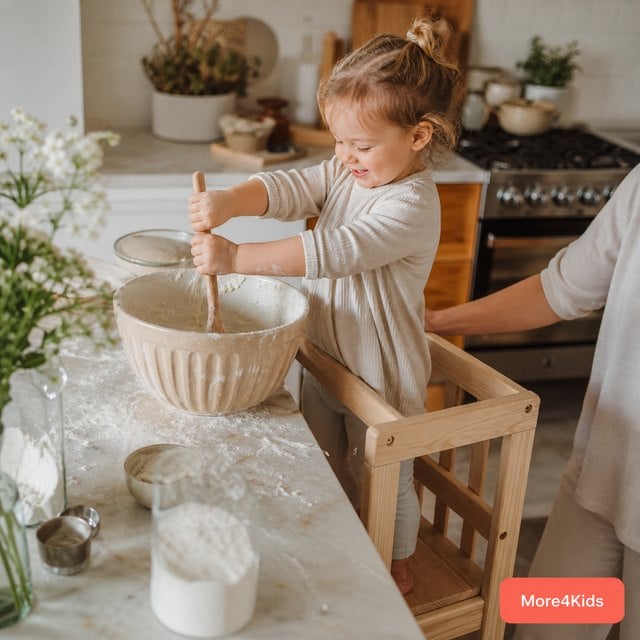
This transition tends to happen unevenly across siblings, in my experience — one kid stays perfectly content in there well into toddlerhood, another treats it as a puzzle to solve within a month of standing up. There’s no fixed timeline that applies to every baby, so keep watching your own kid’s specific behavior rather than a calendar date, and once climbing starts, it’s worth shifting toward a gated, baby-proofed room or space instead.

The Guilt Question, Addressed Honestly
I hear this a lot: does using a playpen mean I’m not engaging with my baby enough? No. It means you’re a person with more than one task and more than one child, usually, and you need a safe place to put a baby down for a few minutes that isn’t the floor next to a hot stove.
Contained, safe independent play is not the opposite of attentive parenting — it’s part of it. Kids benefit from unstructured, unsupervised-but-safe time to entertain themselves. You benefit from being able to shower, cook, or help a sibling without a baby underfoot. Both of those things can be true without one canceling out the other. If it helps, think about how you’d set up their nursery or room organization — you wouldn’t feel guilty about giving them a defined, safe corner of their own room either. This is the same idea, just portable.
Bringing These Baby Playpen and Play Yard Ideas Home
If you’re still hunting for baby playpen and play yard ideas that fit your actual house rather than a showroom, don’t overthink the “perfect” spot. Pick somewhere you can see and hear it from wherever you’re usually working, keep it clear of cords and blinds, rotate what’s inside it every few days, and expect the whole relationship with it to change as your baby gets more mobile. It’s a tool, not a verdict on your parenting — use it when it’s useful, retire it when your toddler makes that decision for you by climbing out. If you’re building a broader baby registry, it’s worth putting real thought into which style — stationary or travel — actually matches how your family lives, rather than defaulting to whatever’s most popular.
Knowing When to Retire the Play Yard
Every play yard has an expiration date in your house, and it usually arrives before you’re emotionally ready for it. The two signals to watch are height and determination. Most manufacturers set a weight and height limit, but the real-world cue comes first: once your baby can pull all the way up and get a leg over the rail, the play yard has stopped being a safe containment tool and started being a climbing challenge. That’s the moment to transition it to naps-and-supervised-play only, or to pack it away entirely.
Retiring it doesn’t mean it’s useless. A playpen that’s aged out of daily containment duty often has a great second life. The mesh sides make it a tidy corral for stuffed animals and bulky toys, and a portable play yard folds down small enough to keep in a closet for visiting younger cousins or a friend’s baby. Some parents keep one set up at a grandparent’s house purely so there’s a safe spot on visits without hauling gear back and forth.
When you do put it away, clean it properly first — wipe the mesh, spot-treat the pad, let everything dry fully before folding, or you’ll unzip a musty surprise in six months. A play yard stored clean and dry is one you’ll actually want to pull back out, whether for the next baby or to pass along to someone who needs it. Thinking about the whole arc of these baby playpen and play yard ideas — from newborn naps to toddler climber to hand-me-down — is what makes the purchase worth it.
If you’re selling or donating instead of storing, a couple of minutes of honesty helps the next family. Note the model and check whether it was ever part of a recall — playpen and play yard recalls do happen, and a quick search of the brand and model saves someone a real safety scare. Include the original manual if you still have it, or point them to the manufacturer’s site for the setup steps, since a play yard assembled wrong is a play yard that isn’t safe. Wipe it down one more time, make sure every latch clicks and locks the way it should, and you’re handing over something genuinely useful rather than offloading a problem. That small courtesy is part of what keeps good baby gear circulating instead of ending up in a landfill after one kid.
Frequently Asked Questions
How long can a baby safely stay in a playpen or play yard at one time?
There’s no universal number that applies to every baby or every product — this varies by age, product design, and your baby’s own cues. Watch for fussiness, boredom, or a baby trying to climb out as your signal to switch activities, and always check your specific product’s manual and current safety guidance for any manufacturer recommendations.
Is a playpen the same thing as a play yard?
The terms get used interchangeably, but generally a “play yard” refers to the mesh-sided, padded models often used both at home and for travel, while “playpen” is more of an umbrella term that’s been used for decades to describe any enclosed play space. Read the specific product description rather than relying on the name alone, since features vary widely between models.
What should I put on the floor of a play yard?
Most play yards come with their own included floor pad or mat designed for that specific model. Avoid adding loose extra padding, pillows, or blankets on top of it — stick with what the manufacturer designed and recommends for the space, and check current guidance if you’re unsure what’s appropriate to add.
Can I use a play yard for naps instead of a crib?
Some play yards are designed with a bassinet attachment intended for sleep in the early months, but not all models are, and this is very product-specific. Check your exact product’s manual and manufacturer guidance before using any play yard for sleep, rather than assuming it’s interchangeable with a crib.
At what point should I stop using a playpen altogether?
Watch your child’s own behavior rather than an age on a chart. Once a toddler is consistently able to climb or pull themselves over the sides, the contained-safety function is essentially gone, and it’s time to shift toward a baby-proofed room or gated space instead.
A Note on This Article
This article reflects general parenting experience and is meant as everyday guidance, not a safety certification or medical authority. Playpens and play yards vary by manufacturer and model — always follow your specific product’s assembly instructions, placement guidance, and current playpen safety recommendations rather than relying on general advice like this alone.
Related Articles

Meet Sophia Richards Sophia Richards is an early childhood educator, passionate writer, and the proud mom of three energetic kids. With a degree in Education and over a decade of hands-on classroom experience, Sophia bridges the gap between professional teaching strategies and everyday family life. At More4Kids, she translates complex child development concepts into practical, actionable parenting tips that families can use at home.
Whether she is sharing positive reinforcement techniques, educational crafts, or honest reflections on the chaos of raising three children under one roof, Sophia’s goal is to empower parents to foster resilience and joy in their kids. When she isn't writing or lesson planning, you can find her organizing neighborhood scavenger hunts or trying out new kid-friendly recipes.
Areas of Expertise: Early Childhood Education, Positive Parenting, Sibling Dynamics, Educational Play, Family Wellness.

Add Comment