















By Sophia Richards
There is a specific sound a Lego brick makes when you step on it barefoot at eleven at night, and I would bet actual money that whoever invented that toy has never once walked across their own living room in the dark. I have three kids, three very different relationships with mess, and at any given moment I could find Lego pieces in at least four rooms of my house that are not the playroom. So when people ask me for the “perfect” Lego storage system, I have to be honest: there isn’t one. There’s just a system that fails a little less often than the last one did.
That’s actually the useful way to think about lego storage and organization ideas — not as a one-time fix, but as a setup you keep adjusting as building habits change. What worked when my youngest was doing giant Duplo-style pieces looks nothing like what we use now that my oldest is deep into small, detailed sets. So this isn’t a showroom tour. It’s what’s actually survived in my house, what I’ve abandoned, and what I’d tell a friend who just stepped on a 2×4 brick.
Sort by Piece Size Before You Sort by Anything Else
Table of Contents
Most advice out there says sort by color, because it photographs beautifully. In real life, sorting by color is the first system to collapse, because kids don’t build by color — they build by shape and function. They want “a flat gray piece,” not “everything blue.”
What’s actually held up longer in our house is a rough sort by piece size and type: big base plates and large blocks in one bin, small specialty pieces (wheels, hinges, clips, tiny 1x1s) in a separate shallow container, and everything else — the bulk of ordinary bricks — in one or two big general bins. That’s it. Three categories, not thirty. The fewer categories you create, the more likely your kids are to actually put things back in the right one, because sorting fatigue is real for a seven-year-old with dinner waiting.
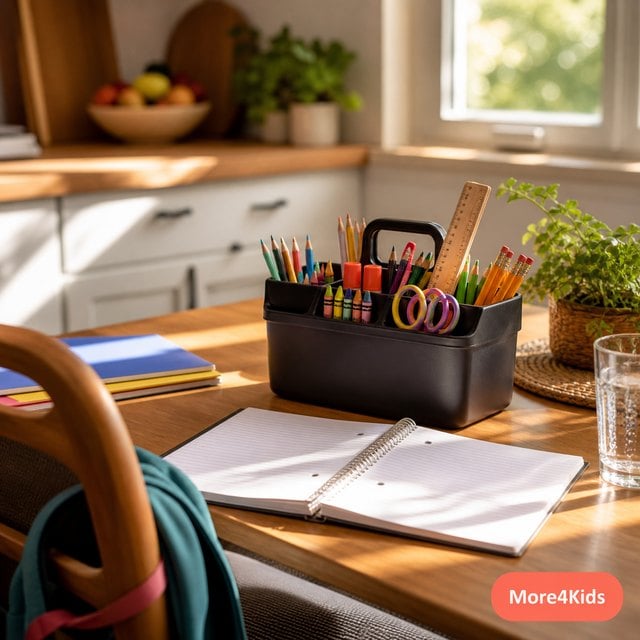
If you do want finer sorting, save it for the tiny pieces — a shallow drawer organizer or divided tackle-box-style container works well for minifig accessories, small connectors, and anything easy to lose in a shag rug. That’s the stuff genuinely worth separating, since losing one tiny piece can strand a whole finished build.
Bins, Drawers, or a Rolling Cart — the Honest Trade-Offs
Most lego storage and organization ideas come down to a choice between three containers, and I’ve used all three.
Stackable bins are cheap, flexible, and easy to grow — you just add another one. The downside is stacked bins become an archaeology dig. If the piece your kid wants is in the bottom bin, everything on top comes off first, usually onto the floor.
A drawer unit — the kind with several see-through plastic drawers in a rolling or stationary frame — solves the archaeology problem because every drawer is reachable without excavating the others. The trade-off is drawers are shallower, so you need more of them, and a determined kid can still yank a drawer clean out and dump it.
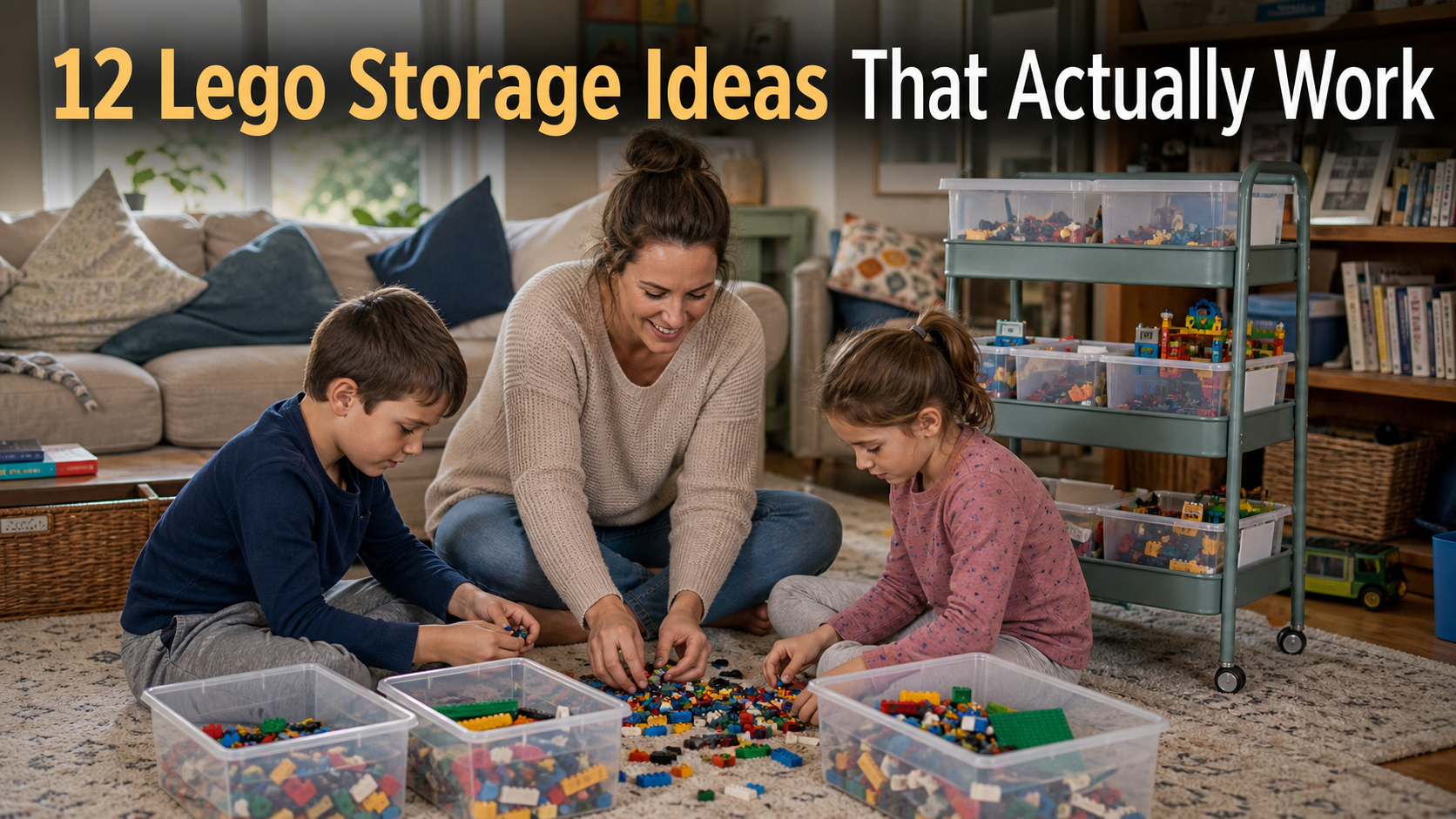
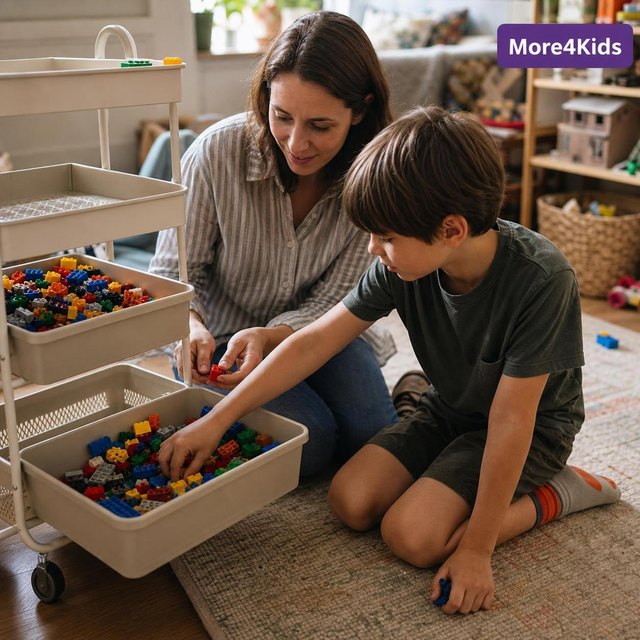
A rolling cart, the narrow multi-bin kind on wheels, has genuinely been the best fit for us, and it surprised me. It lives in a corner of the playroom and rolls over to wherever the kids are actually building — the kitchen table, the living room rug — so cleanup means rolling the cart back, not carrying armfuls of bins across the house. The wheels also mean my youngest can move it herself, which matters more than I expected for buy-in.
If I had to recommend one starting point to a parent with nothing yet: a rolling cart with a handful of open bins gets you most of the benefit of a fancy sorting system without the setup time. You can always subdivide later. For more on choosing containers that fit your space and your kid’s actual habits, this piece on organizing your child’s toys has useful general principles that apply directly to Lego.

Instruction Booklets and Minifigs: The Stuff That Actually Goes Missing
Bricks are annoying to lose. Instruction booklets and minifigs are what actually cause meltdowns, because a missing booklet can make a whole set feel unfinishable to a kid who wants to rebuild it exactly right.
What’s worked for us is keeping instruction booklets together in one flat container — a magazine file or slim document box — instead of letting them live loose with the bricks, where they get bent or buried. If you want a backup, most current Lego sets have their instructions available as a free download or app from the manufacturer’s own site, so a missing paper booklet isn’t always a dead end.
Minifigs get their own small bin or divided drawer, separate from bricks entirely. They’re small, they’re a genuine choking hazard for younger siblings if left loose, and they migrate into pockets and couch cushions with startling speed. Corralling them in one obvious spot means your kid can actually find the specific figure they want instead of dumping three bins looking for it.
Display vs. Storage: Not Every Finished Build Needs a Home Forever
This is the one that took me longest to accept: not every finished Lego build is precious, and that’s okay. Some builds are worth displaying — a shelf, a windowsill, the top of a dresser — where they stay assembled and visible for weeks. Others were fun to build and are fine to take apart the next day for parts.
The trap is trying to preserve everything. If every build gets protected, you run out of shelf space within a month and your storage system quietly turns into a museum instead of a toy collection. I’ve found it helps to let each kid pick a small number of “keeper” builds — literally, a shelf with a limit — and treat everything else as fair game to break back down into the bins. That keeps display space from taking over the house, and it teaches kids that taking something apart isn’t a loss.
For bigger builds a kid genuinely doesn’t want disassembled, a dedicated low shelf or shallow display case keeps them out of the chaos and protects them from being stepped on, sat on, or “helped” by a younger sibling. If you’re rethinking the whole room around this kind of setup, organizing your child’s room is worth a read for how to carve out a display zone without giving up floor space you need for actual play.
Protecting Feet: The Universal Parent Problem Nobody Solves Completely
I’m not going to pretend there’s a system that fully eliminates stepped-on bricks, because there isn’t — not in a house where kids actually play with the toy instead of just storing it. But there are things that cut down how often it happens.
A designated building surface — a rug, a large mat, or even just “building happens at this table” as a house rule — keeps loose pieces contained to one predictable zone instead of scattered across every room. It won’t be perfect; pieces still escape. But it narrows down where you need to watch your step, which is most of the win.
The other thing that’s actually helped: a quick “brick sweep” before bed — a thirty-second visual scan of the main walking paths, not a full cleanup — clearing anything obvious. It’s not about a spotless floor. It’s about not stepping on anything at eleven o’clock at night.
Systems That Survive a Kid Who Dumps Everything Out Anyway
Some kids sort methodically. Some kids upend an entire bin onto the rug because they’re looking for one specific piece and that’s just faster to them. If you have one of the second kind — and I do — your storage system has to be dump-proof, not just sort-friendly.
That means open bins rather than anything with a tight-fitting lid that becomes a hassle to reseal, because a lid that’s annoying to close is a lid that stays open forever. It means bins low enough for your kid to actually reach and see into, not stacked on a high shelf. And it means accepting that a dump is going to happen sometimes regardless of the system, so the real question isn’t “how do I prevent this” — it’s “how fast can this get put back.”
A big, low, wide bin for general pieces is more forgiving of a dump-and-search kid than a beautifully organized twelve-drawer system, because there’s nothing to disrupt — the pieces are already loose in there. Save the fine sorting for the small stuff genuinely worth protecting (minifigs, specialty pieces) and let the bulk bricks live in something sturdy that can take being dumped and re-scooped weekly without falling apart.
What a Kid Can Actually Maintain vs. What You’ll Be Resetting
This is maybe the most important thing I tell other parents when they ask how to organize legos, and it’s not what most organizing content wants to hear: a young kid cannot maintain a detailed multi-category sorting system by themselves, and expecting them to is setting both of you up to feel like failures.
A preschooler or early-elementary kid can manage “bricks go in the big bin” and maybe “little pieces go in the small bin,” full stop. Anything more granular than that — sorting by color, by set, by exact piece type — is a system you as the parent will be resetting, probably weekly, and that’s genuinely fine. It’s not the kid failing the system; the system is pitched above their actual developmental stage.
Older kids, once they’re into more complex sets, often start sorting on their own initiative — by set, so pieces for an in-progress build don’t get lost, or by color because it starts to matter to how they build. Let that develop naturally rather than imposing it early. The goal for a younger child isn’t a magazine-worthy system; it’s a container low enough to reach, big enough to be forgiving, and simple enough that putting bricks away doesn’t feel like a chore with too many steps. For general age-appropriate expectations around chores and tidying, tips for an organized home has some good grounding in what’s realistic at different ages, which applies just as much to toy storage as anything else in the house.

Lego Storage and Organization Ideas for a Friend Starting From Zero
If you’re staring at a mountain of loose bricks right now and looking for lego storage and organization ideas that will actually hold up, here’s the order I’d do things in: get one big open bin for general pieces and one small container for tiny/specialty pieces first — that alone solves eighty percent of the daily friction. Add a slim box for instruction booklets. Give minifigs their own small home. Then, only once that’s stable and actually being used, think about a rolling cart or drawer unit if you want more categories.
Don’t buy the full elaborate system on day one. Build up to it, and let your kid’s actual behavior — do they dump, do they sort, do they lose booklets, do they care about display — tell you which piece to add next. The best lego storage and organization ideas are the ones shaped by how your specific kid actually plays, not the ones that looked most satisfying in a before-and-after photo.
Labeling and the Weekly Reset That Keeps a Lego Storage System From Sliding Back
Here’s the part nobody warns you about: any lego storage system, no matter how good, drifts back toward chaos within a week or two. That’s not a sign you picked the wrong bins. It’s just what happens when kids actually play. So the real skill isn’t building the perfect setup once — it’s making the reset fast enough that you’ll actually do it.
Two small things have made the reset painless in our house. The first is loose labeling. I don’t mean a label maker and a color-coded chart — I mean a strip of masking tape on the front of each bin with one plain word: “big,” “little,” “minifigs.” Even my kid who can’t read yet knows the little bin has a picture of a tiny piece drawn on it. Labels turn “where does this go?” into a two-second decision instead of a debate, which is the whole reason sorting lego pieces feels like a chore in the first place.
The second is a standing weekly reset. Once a week, usually Sunday, I do a five-minute pass: dump-search casualties go back in the big bin, stray minifigs get rounded up, and any booklet that wandered goes back in its box. It’s not deep cleaning. It’s just nudging the lego storage system back to its baseline before the drift compounds. If you’re figuring out how to organize legos for the long haul, that weekly nudge matters far more than which cart or drawers you bought — the setup gets you started, but the reset is what keeps it alive.

Frequently Asked Questions
What are the best lego storage and organization ideas for a small space?
Start small and stackable: one big open bin for general bricks, one small container for tiny pieces, and a slim box for instructions covers most of what you need without eating up a room. A rolling cart is worth adding once you want more categories, since it tucks into a corner and moves with your kid rather than needing dedicated floor space.
What's the best way to sort Lego pieces for young kids?
Keep it simple: one big bin for general bricks and one smaller container for tiny or specialty pieces is genuinely enough for most young kids. Elaborate color- or type-based sorting tends to be a system the parent maintains, not the child, until kids are older and start sorting on their own.
How do I stop losing Lego instruction booklets?
Store booklets together in one flat container, like a magazine file or slim document box, separate from the bricks themselves so they don’t get bent or buried. Many current sets also have instructions available digitally through the manufacturer, which is a good backup if a paper booklet does go missing.
Should I sort Legos by color or by set?
For daily play, sorting by rough piece size and type usually works better than color, because kids build by shape and function, not color. Sorting by set can help if a kid is mid-build on something specific and you want to protect those pieces from getting mixed into the general population.
What's the best Lego storage for a kid who dumps everything out?
Open, low, wide bins that are easy to see into and don’t require resealing a lid tend to hold up best for kids who search by dumping. Save more detailed sorting for small, easily-lost pieces like minifigs, and let the bulk bricks live loose in one sturdy container.
A Note on This Article
This piece reflects storage setups and habits from our own home and classroom experience — it’s meant as practical, lived-in ideas, not a shopping guide or a claim that any single system will eliminate mess entirely. What works will depend on your space, your kids’ ages, and honestly, how determined your youngest is to dump out every bin in the house.
Related Articles

Meet Sophia Richards Sophia Richards is an early childhood educator, passionate writer, and the proud mom of three energetic kids. With a degree in Education and over a decade of hands-on classroom experience, Sophia bridges the gap between professional teaching strategies and everyday family life. At More4Kids, she translates complex child development concepts into practical, actionable parenting tips that families can use at home.
Whether she is sharing positive reinforcement techniques, educational crafts, or honest reflections on the chaos of raising three children under one roof, Sophia’s goal is to empower parents to foster resilience and joy in their kids. When she isn't writing or lesson planning, you can find her organizing neighborhood scavenger hunts or trying out new kid-friendly recipes.
Areas of Expertise: Early Childhood Education, Positive Parenting, Sibling Dynamics, Educational Play, Family Wellness.

Add Comment