
















By Sophia Richards
I remember the exact morning it hit me. Cereal bowls stacked in the sink with milk gone film-over-warm, three backpacks I’d packed myself the night before, and my five-year-old staring at an empty sock drawer like laundry was supposed to teleport in there, folded, by magic. I was running our house like the world’s most exhausted, unpaid butler. Somewhere between raising three kids and years as an early childhood educator, it finally clicked: I wasn’t doing my kids any favors by doing everything for them. If you’ve been quietly wondering about age appropriate chores for kids — what’s fair to ask, when to start, and how to get any of it done without a nightly standoff — pull up a chair. I’ve stood in that cereal-bowl trench, and I promise it gets so much better than nagging.
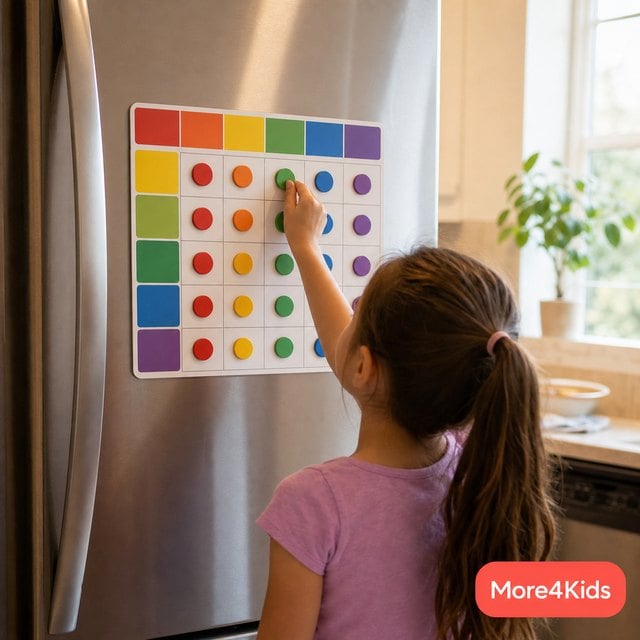
Here’s the reframe that changed everything for me: chores were never really about a spotless house. They’re one of the simplest, most everyday ways we hand our kids competence — that quiet, deep-down sense of I can do hard things, and my family actually needs me. That’s the whole game. The clean counter is just a happy side effect.
Why Chores Matter More Than a Tidy House
Table of Contents
When I finally started expecting my kids to pitch in, I braced for pushback. What I didn’t expect was how much it fed their confidence. A four-year-old who sets the table stands up a little straighter afterward. A nine-year-old trusted with the dog’s dinner starts to feel like a genuine member of the team, not just a resident.
That instinct is backed up by people who study this for a living. The American Academy of Pediatrics notes that age-appropriate chores and responsibilities teach kids real life skills, how to cooperate as part of a group, and that helping the household run smoothly quietly boosts a child’s self-esteem. In other words, the mess they help clean up matters far less than the person they’re slowly becoming while they do it — and that’s really what age appropriate chores for kids are for.
Chores also do something I didn’t see coming: they build grit. Learning to stick with a boring, unglamorous task — and finish it — is the same muscle that helps kids push through hard homework or a rough day at school. If you’re working on that steadiness in your family, our thoughts on raising resilient children go hand in hand with whatever chore chart is curling at the edges on your fridge.
Age Appropriate Chores for Kids, by Age
The single biggest mistake I made early on was matching the job to my convenience instead of my child’s stage. Here’s the terrain, age by age — meant as a gentle guide to age appropriate chores, not a scorecard. Every kid lands on this map at their own pace.
Toddlers (about 2–3). They can’t do much, but they desperately want to help, so lean into that enthusiasm while it’s still free and abundant. Think: dropping clothes in the hamper, tossing toys in a bin, handing you diapers, “wiping” a low table with a damp rag that mostly just moves the crumbs around. It will be slow. It will be gloriously imperfect. That’s fine — at this age you’re planting seeds, not saving time.
Preschoolers (about 4–5). Now they can follow simple, one- or two-step jobs: setting out napkins, feeding a pet with your help, matching socks, watering a plant, clearing their own plate after dinner. Keep instructions short and specific — “put your cup in the sink,” not “clean up.” At this age, the habit of helping matters far more than the result ever will.
Early elementary (about 6–8). This is a real sweet spot, and one of my favorite ages for chores for kids. They can make their bed (loosely), sort laundry by color, pack part of their own lunch, wipe down counters, and take on one small daily job that’s genuinely theirs. This is also when teaching real responsibility starts to stick, and where modeling and teaching responsibility day to day pays off more than any lecture ever will.
Tweens (about 9–12). They’re ready for chores with more independence and a bit more consequence: loading the dishwasher, hauling out trash and recycling, vacuuming, prepping simple food, basic yard work, helping a younger sibling get ready. This is also a natural moment to talk about money and effort — our take on kids and money can help you decide whether an allowance fits your family.
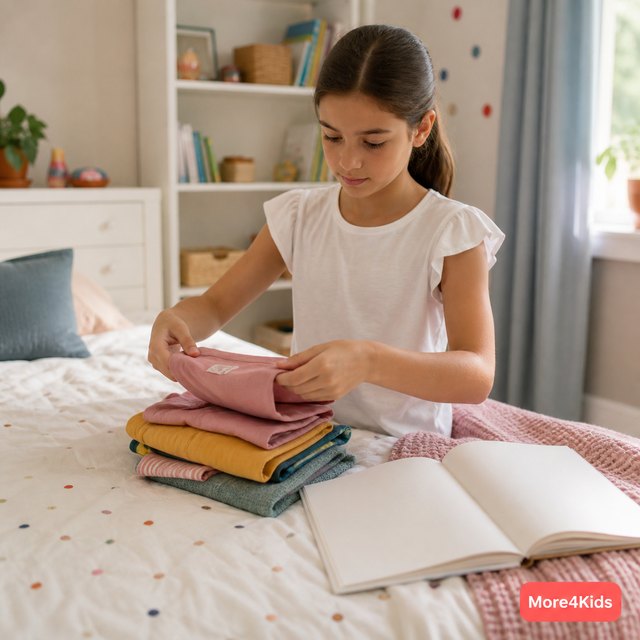
Teens (13+). Older kids can genuinely lighten the household load: cooking a full meal, doing their own laundry start to finish, mowing the lawn, running a quick errand, watching younger siblings for short stretches. The AAP has a helpful rundown of household chores for adolescents that reassured me I wasn’t asking too much of mine. And if your teen resists on principle — because of course they do — our guide to parenting teens and responsibility comes straight from the eye-rolling trenches.

How to Actually Get Kids to Do Chores Without the Nagging
Knowing which chores fit which age is the easy part. Getting them done without turning into the household nag — that’s where most of us actually live. Here’s what finally worked in our house, after plenty of trial and error.
- Make it a routine, not a debate. Chores anchored to the same rhythm every day stop being a negotiation. We tied ours to natural moments: table set before dinner, backpacks lined up by the door after homework. A predictable daily routine does more heavy lifting than any reward chart ever managed to.
- Give clear, doable instructions. “Clean your room” overwhelms a young child; “put your books on the shelf” doesn’t. The Child Mind Institute has a great, practical piece on giving kids effective instructions — specific, one thing at a time, and phrased close enough to actually be heard over the noise of a normal evening.
- Praise the effort, not the outcome. This one humbled me more than I expected. When I stopped silently re-doing their wobbly bed-making and started noticing the trying instead — “you stuck with that even though it was tricky” — cooperation went up and resentment went down, almost immediately. The CDC’s positive parenting essentials lean hard on this, and for good reason.
- Let it be imperfect. A streaky table and lumpy laundry are the price of a kid who’s genuinely learning. If I swoop in and quietly fix it, the only lesson they take away is “you’re not good enough to help.” I’ll take the streaks, every time.
- Decide your stance on pay early. Some families tie chores directly to allowance, some keep “family contributions” separate from earned money, and plenty do a blend of both. There’s no single right answer here — just pick a lane and be consistent about it.
I want to be honest: none of this makes chores magically fun. Some mornings still involve a heavy sigh and a flat “do I have to.” But routine plus patience slowly turns pitching in from a nightly battle into just… how our family works.

The Chore Mistakes I Made (So You Don’t Have To)
If it helps, here are the potholes I personally hit while sorting out chores for kids in our house, so you can steer around them:
- Redoing their work in front of them. Nothing kills a helper’s spirit faster than watching mom quietly “fix” what they just finished. Now I bite my tongue and fix things later, out of sight, and only when it truly matters.
- Using chores as punishment. When “go clean the bathroom” becomes a threat, you teach kids that helping the family is a penalty rather than a role. I try to keep chores neutral — just part of being in a family — and handle discipline as a separate conversation entirely.
- Expecting gratitude. They’re kids. The payoff is long-term character, not a thank-you note this Tuesday, or possibly ever.
- Doing it all myself because it’s faster. It is faster today. It’s a slow disaster over ten years. That short-term inefficiency is the actual investment you’re making.
When Chores Feel Like a Constant Battle
Some kids resist harder than others, and that’s not a character flaw — in yours or in them. If every request turns into a standoff, zoom out before you crack down. Is the job actually age-appropriate, or a stretch too far? Is it clearly assigned, or vaguely floating in the air? Is your child running on empty — hungry, tired, overstimulated?

Fairness matters enormously once you have more than one kid, too. Nothing sparks a mutiny like a sibling who suspects they’re doing more of the load, so keeping things visibly even is worth the effort — our piece on building strong sibling relationships has gentle ideas for sharing responsibility without the scorekeeping. And if the resistance runs deeper than chores, it’s usually about connection, not the dishes. Reconnect first; cooperation tends to follow.
Most days, though, the work of raising kids with real responsibility is beautifully ordinary: pick a couple of age appropriate chores that fit your child’s stage, tie them to your daily rhythm, praise the effort, and let go of perfect. You’re not raising a kid who keeps a flawless house. You’re raising one who knows how to show up for the people they love — and who quietly believes they’re capable. That’s a gift that outlasts every clean counter you’ll ever wipe down.
Frequently Asked Questions
At what age should kids start doing chores?
You can start as early as toddlerhood, around age two, with tiny helper tasks like putting toys in a bin or dropping clothes in the hamper. At that age it’s less about real help and more about building the habit and the joy of pitching in while they’re still eager. As kids grow, you gradually add responsibility, so starting small and early makes the bigger chores feel natural later rather than like a sudden new demand.
What chores are appropriate for a 5 year old?
Most five-year-olds can handle simple, one- or two-step jobs with a little guidance: setting out napkins, clearing their own plate, matching socks, feeding a pet with help, watering a plant, or putting away toys. Keep instructions short and specific, and expect the results to be charmingly imperfect. At this stage the point is the routine of helping, not a polished outcome, so praise the effort and resist the urge to redo their work.
Should I pay my kids for doing chores?
There’s no single right answer, and loving families land all over this question. Some tie an allowance to chores, some keep everyday “family contributions” separate from money kids can earn through extra jobs, and many do a blend of both. What matters most is picking an approach and being consistent, so your child understands the expectation. If you want to use chores to teach money skills, that can be a genuinely valuable lesson when it fits your family’s values.
How many chores is too many for a child?
Chores become too many when they regularly crowd out sleep, play, downtime, or schoolwork, or when they’re clearly beyond your child’s stage and set them up to fail. A good rule of thumb is one or two age-appropriate daily jobs for younger kids, with more added gradually as they grow and show they can handle it. If chores are causing constant exhaustion or battles, that’s a sign to scale back and rebuild slowly rather than push harder.
Related Articles
- Raising Resilient Children
- Teaching Responsibilty Through Role Modeling
- Kids And Money
- Parenting Teenagers And Responsibility
- A Secret To Happy Kids Daily Routines
- Improving Sibling Relationships

Meet Sophia Richards Sophia Richards is an early childhood educator, passionate writer, and the proud mom of three energetic kids. With a degree in Education and over a decade of hands-on classroom experience, Sophia bridges the gap between professional teaching strategies and everyday family life. At More4Kids, she translates complex child development concepts into practical, actionable parenting tips that families can use at home.
Whether she is sharing positive reinforcement techniques, educational crafts, or honest reflections on the chaos of raising three children under one roof, Sophia’s goal is to empower parents to foster resilience and joy in their kids. When she isn't writing or lesson planning, you can find her organizing neighborhood scavenger hunts or trying out new kid-friendly recipes.
Areas of Expertise: Early Childhood Education, Positive Parenting, Sibling Dynamics, Educational Play, Family Wellness.

Add Comment