















by Dr. Caron Goode
Learning to play has two more stages which can extend into six years of age (See previous article "Teaching Kids to Share").
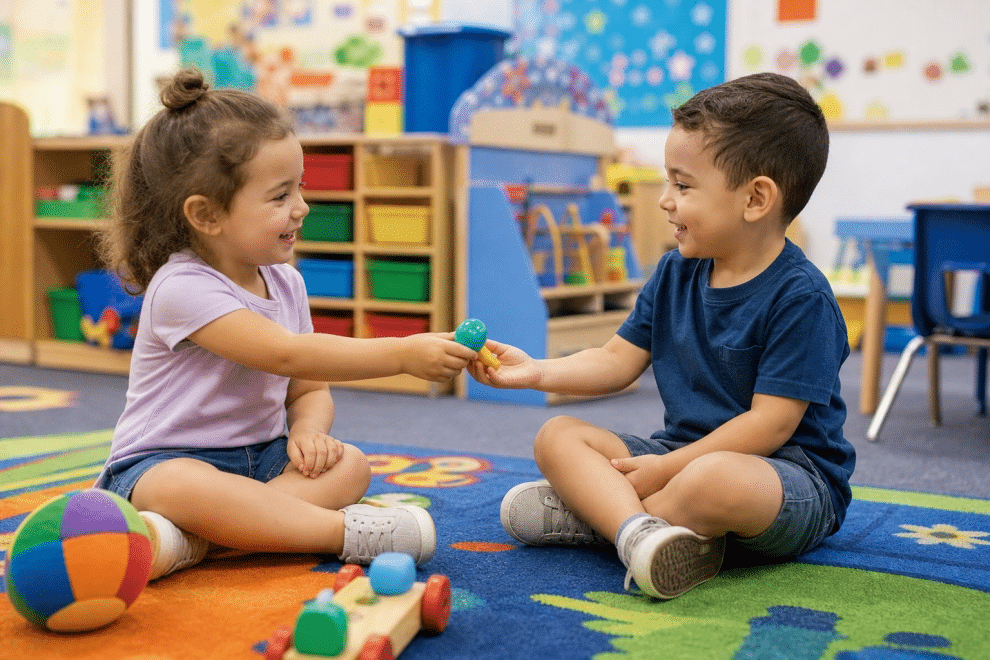
1, Sharing may begin in this stage of [tag-tec]associative play[/tag-tec]. With associate play, children engage in separate activities but can exchange toys or explore each other’s area. Sometimes it appears as if kids are dancing around one another, exploring the environment. Curiosity and budding self-awareness motivate this activity, not sharing. However, parents may see it as the first stages of sharing before toys exchange hands.
2. Finally, in cooperative play parents find children engaged in playing toward common goals like racing a car, playing school or house or using building blocks for a mutual project.
While parents can watch their children progress through this sequence of developing [tag-ice]social skills[/tag-ice], they’ll continue to see all four aspects of play from ages 2 to 6 years. For example, non-social activity like solitary play and parallel play continue well into a child’s third and fourth year. During these times, children won’t be sharing so much. So sharing play space and projects may be on and off well into the preschool years. Don’t worry if your child takes her toys and becomes completely absorbed in her private project at age 5. Remember that social skills develop along with cognitive skills, and curiosity may take precedence over sharing.
However, there are ways to encourage sharing along with the development of normal social skills in cooperative play activities.
1. Encourage [tag-self]sharing[/tag-self] only when you see your toddler ready to do so. This may look like a toddler taking a toy to another child or becoming interested in another’s project. If your toddler still likes to play by himself or likes being next to another, but not with them, respect this space.
2. Share what you have with your toddler. Break off a bite of cookie and share it with your child. Then give them the cookie and ask them to do the same. Such sharing can involve food or toys like blocks in which several of them can pass back and forth.
3. Use parallel play opportunities to share. If your child is playing quietly on the floor sit down with blocks, dominoes, or cards and start playing. When your child wants to share your space and toys, then teach about taking turns.
4. You can create sharing opportunities between two children who play together by giving them one box of crayolas to color their pictures, one cookie to share for their snack, or one puzzle that would require they take turns in order to complete it.
5. If more than two children are in a playgroup, then…..
a. Separate the “sharing” toys from the “non-sharing” toys. Give each child a space where they can leave their “non-sharing” toys. All sharing toys join a common space. Once rules are explained to the children, and then allow them to define their rules and play with minimal intervention. It is imperative that peers teach each other and work through issues together.
b. Put all art or craft activities for a group in the center of a circular table. Children can share space, and still remain in parallel play if they desire while working on a common play activity, but also having to share supplies, colors, paper, scissors, glue etc.
c. Work on collage by placing a one large role of butcher paper on the floor. The scene can be of your choice or the children’s. My children’s favorite was always ocean and beach scenes. Whether using colored pencils or watercolors, each child again has their own section of the mural or collage, and can share or not share space, but do have the opportunities to share resources.
d. Sharing stories and having children share their favorite picture in a storybook allows each child a time.

When do toddlers and preschoolers naturally start to share?
Table of Contents
Sharing develops gradually through stages of play. Toddlers first explore associative play, where they engage in separate activities but may exchange toys. Cooperative play—where children genuinely work toward common goals together—develops later in the preschool years. Solitary and parallel play continue well into ages three and four, so don’t worry if your child isn’t sharing freely before then.
How do I encourage my toddler to share without forcing it?
Wait for readiness. When you see your toddler showing interest in another child’s project or reaching out with a toy, that’s the moment to gently encourage sharing. Before then, respect their space. You can model sharing yourself by breaking off a bite of something and offering it to your child, then asking them to do the same in return.
What activities help preschoolers practice sharing in a group?
Designate sharing toys that go into a common space, separate from personal items each child can keep to themselves. Art activities work especially well: place supplies in the center of the table so children naturally share crayons, paper, and scissors, even while working on individual projects. A large sheet of butcher paper on the floor for a group mural is another playful way to practice sharing space and resources.
Is it normal for a preschooler to stop sharing and want to play alone?
Completely normal. Even at age five, it is entirely normal for a child to take her toys and become absorbed in a private project. Social skills develop alongside cognitive skills, and curiosity sometimes takes precedence over sharing. All four stages of play—including solitary play—continue through the preschool years. Gentle encouragement over time matters far more than forcing sharing in any given moment.
Dr. Caron B. Goode is the founder of the Academy for Coaching Parents International, a training and certification program for parent coaches. In addition to duties with the academy, Dr. Goode is the founding editor of the website InspiredParenting.net, and the author of eleven books, the most recent of which is Help Kids Cope with Stress & Trauma, which includes several chapters on he use of storytelling strategies. For more information on The Academy for Coaching Parents International or to sign up for academy announcements, visit www.acpi.biz .
No part of this article may be copied or reproduced in any form without the express permission of More4Kids Inc © 2006




Add Comment