
















By Sophia Richards
Part of our Life Skills by Age guide — this is the deep dive for the toddler years.
There’s a phrase every parent of a two-year-old hears about forty times a day: “Me do it!”
It usually arrives at the worst possible moment — when you’re already late, when the coat is on backwards, when the milk is about to hit the floor. My youngest went through a stretch where she wanted to buckle her own car seat, and I genuinely considered leaving for everywhere fifteen minutes early just to survive it. But here’s the thing I wish someone had told me sooner: that maddening “me do it” instinct is the single most valuable window you’ll get for teaching independence. Toddlers want to be capable. Teaching life skills for toddlers isn’t about pushing them — it’s about getting out of the way and setting them up to succeed.
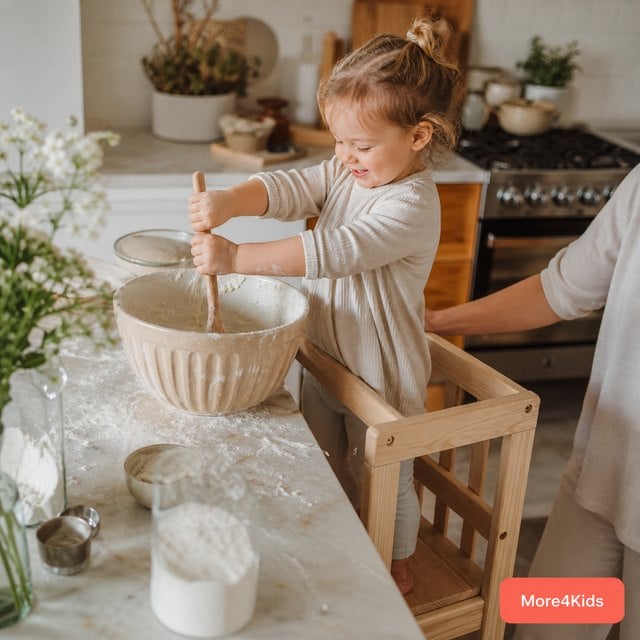
This guide walks through what’s actually realistic to expect from a 2- or 3-year-old, why these years matter so much, and — the part parents really want — how to teach it without turning every morning into a standoff.
Why the toddler years are the real foundation
Table of Contents
It’s tempting to think “life skills” are for older kids — the chores chart, the allowance, the learning-to-cook stuff. But the American Academy of Pediatrics’ developmental guidance (published on its parent site, HealthyChildren.org) describes the toddler years, roughly 2 to 3, as when children start doing things for themselves in earnest: feeding with a spoon, helping to dress and undress, following simple directions, and beginning to manage big feelings. The CDC’s milestone guidance for this age describes toddlers who can follow simple instructions, sort shapes and colors, and show a growing sense of independence and “mine.”
What’s happening underneath is a leap in both fine motor control and self-regulation — the beginnings of impulse control. When a two-year-old carries her own cup to the sink, she’s not just running an errand. She’s practicing sequencing, balance, memory, and the deeply satisfying feeling of I am someone who can do things. The child-development nonprofit Zero to Three describes this early sense of competence as a building block of confidence — one reason so many of the life skills for toddlers below are really about letting them try. The Montessori tradition has built an entire “practical life” curriculum around exactly this age for the same reason: small, real, purposeful tasks are how toddlers build focus.
The point isn’t to produce a tiny, tidy overachiever. It’s that the habits you plant now — we clean up when we’re done, we try before we ask for help, we handle disappointment and keep going — are far easier to establish at two than to install at twelve.
The life skills for toddlers checklist: what a 2- to 3-year-old can realistically do
Every child is different, and there’s a wide, totally normal range. But across the toddler years, most children can learn to:
Take care of their body
- Wash and dry their own hands (with a step stool and reminders)
- Brush teeth with help — they do a pass, you do the “real” one
- Take off shoes, socks, and easy clothes; start pulling on stretchy pants and coats
- Use the potty, or start learning, on their own timeline
Handle food and drink
- Eat with a spoon and, later, a child fork
- Drink from an open cup (yes, there will be spills — that’s the lesson, not the failure)
- Carry their plate to the counter and throw away a napkin
Contribute to the home
- Put toys into a bin when it’s time to clean up
- Put dirty clothes in the hamper
- “Help” with real tasks: wiping a table, carrying unbreakable groceries, feeding a pet with supervision
Follow routines and directions
- Do a simple two-step instruction (“Pick up the bear and put it in the basket”)
- Move through a predictable routine — pajamas, teeth, book, bed — with fewer prompts over time
Manage feelings (the hardest one)
- Start naming emotions: “mad,” “sad,” “happy”
- Wait a very short time for something they want
- Recover from a “no” without it becoming a two-hour event (some days)
If your child isn’t doing all of these, that is completely normal — toddlers develop in bursts and plateaus. This is a menu of self-help skills, not a checklist to grade yourself against. Toddler independence grows unevenly, and that’s exactly how it’s supposed to look.

The method: how to teach without a battle
Almost every toddler power struggle comes from the same place — a kid who wants control and a parent in a hurry. Teaching life skills for toddlers goes far more smoothly when you can sidestep that struggle, and a handful of small moves does most of the work.
1. Show, don’t tell — then shrink the job. Toddlers learn by watching and copying, not by instruction. Do the task slowly beside them first. Then break it into a piece small enough to win. Don’t ask a two-year-old to “clean up the playroom” — that’s an ocean. Ask them to “put the blocks in the red bin.” One clear, tiny, doable thing.
2. Give controlled choices instead of commands. A toddler who feels bossed will dig in. A toddler who gets to choose feels powerful and cooperates. The trick is to offer two options you’re happy with either way:
- “Do you want to put on your shirt first, or your pants first?”
- “Should we hop to the bathtub or march to the bathtub?”
- “Red cup or blue cup?”
You’ve decided the what; they get the how. Everyone keeps their dignity.
3. Build it into the routine so it isn’t a negotiation. Skills stick when they’re just “what we do,” not a fresh debate each time. Cleanup happens before dinner, every night. Hands get washed when we come inside, every time. Predictability does the heavy lifting so you don’t have to.
4. Narrate and praise the effort, not the outcome. Skip “good girl” and describe what they actually did: “You carried your plate all the way to the sink — that’s a big help.” Specific praise tells them exactly which behavior to repeat, and it lands as real because it is real.
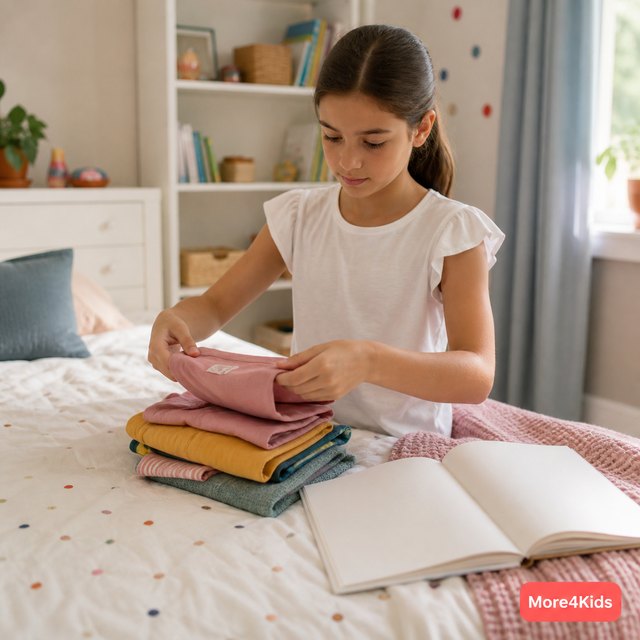
5. Let it be imperfect. The socks will be inside out. The table will still have crumbs. If you re-do their work in front of them, you teach them it wasn’t good enough — and they’ll stop trying. Let “done by them” beat “done perfectly.”
Word-for-word scripts for the hard moments
Sometimes you just need the actual words. Here are a few I come back to constantly:
When they refuse to clean up: “It’s cleanup time. Do you want to put the bear away, or the truck away? I’ll do the other one with you.” (Joining in beats commanding from the doorway. Turn it into a race if you can.)
When they melt down because they can’t do it: “That’s tricky, isn’t it? You’re working so hard. Want to do it together — my hands and your hands?” Name the frustration, then offer partnership, not takeover.
When you’re in a hurry and they want to do it themselves: “I know you want to do it yourself. Right now it’s a fast morning, so I’ll help — and after nap, it’s all yours to do slowly.” You honor the drive and the clock, and you keep the promise later.
When they say a flat “NO”: Stay calm and keep it simple: “You don’t have to like it. We still wash hands before we eat. I’ll count — one, two…” Warm, not angry; firm, not a debate.

Troubleshooting the resistance
“My kid just won’t clean up.” Make it smaller and make it together. Two or three toys, not the whole floor, and your hands in it too. A “cleanup song” gives it a start and a finish. And check the toy load — fewer toys out means a cleanup a toddler can actually finish.
“Every time backfires into a tantrum.” Lower the stakes and the stimulation. Hungry, tired, or overstimulated toddlers have no bandwidth for a new skill — save teaching for the calm parts of the day. And don’t teach mid-meltdown; ride it out, reconnect, and try again later. If big feelings are the daily sticking point, our guide to emotional regulation for kids has more gentle, age-appropriate tools.
“They can do it but they won’t.” Extremely normal. Toddlers test whether the rule holds. Keep the expectation steady and boring — no lecture, no big reaction — and offer a choice about how, not whether.
“It’s honestly faster if I just do it myself.” Today, yes. Every time. But you’re not buying speed this morning — you’re buying a six-year-old who dresses himself while you handle the baby. The slow mornings now are the investment.
What to relax about
A quick permission slip, because parent anxiety around these self-help skills is real and mostly unnecessary. Regression is normal — a new sibling, a move, or being overtired can send skills backward for a while, and they come back. Potty training runs on the child’s timeline, not the calendar, and pushing it rarely speeds it up; our potty-training walkthrough leans on the same follow-their-readiness approach. And you do not need a color-coded chore chart at two. At this age the whole curriculum is let them help, let them try, keep it warm. That’s it. (When they’re a little older and ready for real jobs, our tips for raising responsible kids pick up the thread.)

Frequently Asked Questions
What life skills should a 2-year-old have?
Realistically, a 2-year-old is just beginning: eating with a spoon, drinking from a cup, helping to undress, putting toys in a bin with help, and following one simple direction. Two is the “starting to try” year — expect help and a lot of mess, and count willingness as the win. The most useful life skills for toddlers at this age are the self-help basics, not chores.
How do I get my toddler to clean up without a fight?
Make the task tiny (“just the blocks”), do it alongside them, give a choice about which part they do, and anchor it to a predictable time like before dinner. A start-and-finish cue such as a cleanup song helps toddlers who struggle to transition. Joining in beats commanding from the doorway every time.
Is it bad to just do things for my toddler when we're rushed?
No — every parent does, and some mornings you have to. The key is that it’s the exception, not the pattern. Aim to protect a few unhurried windows a day where they get to try, so that “me do it” instinct has somewhere to go and the skill keeps growing.
My toddler was doing well and suddenly stopped. What happened?
Regression is a normal part of toddler development, especially around a big change like a new baby, a move, or a stretch of poor sleep. Keep your expectations steady and gentle; the skill almost always returns once the disruption settles. It’s a pause, not a permanent loss.
The takeaway
The toddler years look like chaos, but they’re quietly the foundation for everything that comes later. Every time you let your two-year-old carry the plate, choose the cup, or wrestle the coat on by herself, you’re telling her something she’ll carry for life: you are capable, and I trust you to try.
Start tiny, stay warm, and let it be messy. The self-help skills you’re building now — and the quiet toddler independence underneath them — are the real thing.
Ready for the next stage? Head back to the full Life Skills by Age guide — the preschool deep dive for ages 4–5 is coming next in this series.
Related Articles
- Life Skills By Age
- Emotional Regulation For Kids
- How To Potty Train A Toddler
- Parenting Tips For Responsible Kids

Meet Sophia Richards Sophia Richards is an early childhood educator, passionate writer, and the proud mom of three energetic kids. With a degree in Education and over a decade of hands-on classroom experience, Sophia bridges the gap between professional teaching strategies and everyday family life. At More4Kids, she translates complex child development concepts into practical, actionable parenting tips that families can use at home.
Whether she is sharing positive reinforcement techniques, educational crafts, or honest reflections on the chaos of raising three children under one roof, Sophia’s goal is to empower parents to foster resilience and joy in their kids. When she isn't writing or lesson planning, you can find her organizing neighborhood scavenger hunts or trying out new kid-friendly recipes.
Areas of Expertise: Early Childhood Education, Positive Parenting, Sibling Dynamics, Educational Play, Family Wellness.

Add Comment