










By Sophia Richards
The backpack was almost bigger than my child.
That is the detail I remember from our first kindergarten send-off: the giant backpack, the careful grip on the lunchbox, the brave little face trying to decide whether this was exciting or enormous. As a mom of three and an early-childhood educator, I have stood on both sides of that classroom door. I know how easy it is to turn a kindergarten readiness checklist into one more anxious parent assignment.
But kindergarten readiness is not a pass-fail test. It is a set of small, ordinary habits that help a child feel capable in a new room with new people and new routines. Some children walk in recognizing every letter. Some are still working on zippers, waiting turns, or saying, “I need help.” Both kinds of children can be ready when the adults around them stay calm, practical, and connected.
What Kindergarten Readiness Really Means
Table of Contents
The American Academy of Pediatrics reminds families that getting ready for school starts long before the first day, and it is about more than memorizing letters or numbers. A child is getting ready when they can try a small task, recover from a little frustration, listen to a short direction, use words to ask for help, and separate from a parent with support.
That is good news, because those skills are built in regular family life. Breakfast. Shoes. Story time. A short walk. Cleaning up blocks. Choosing between two shirts. Letting your child carry the library books even though it takes longer.
If you want a broader place to keep growing as your child changes stages, our parenting resources are a useful home base. For this moment, though, keep the lens narrow: what can we practice gently before the first day?
Kindergarten Readiness Checklist: 12 Skills to Practice at Home
Here is the kindergarten readiness checklist I would actually use at my own kitchen table. Not as a scorecard. More like a map.
### 1. Opening and closing basic containers
Lunch can feel surprisingly hard when a child is hungry, rushed, and staring at a yogurt tube that will not open. Practice the little mechanics: opening a lunchbox, peeling a banana, using a water bottle, snapping containers closed, and throwing wrappers away.
Make it playful. Pack a pretend lunch one afternoon and let your child be in charge. If they cannot open something yet, that is not failure. It is useful information before the first week of school.
### 2. Bathroom independence
Most kindergarten classrooms expect children to handle the bathroom with reasonable independence: pulling clothing up and down, wiping, flushing, washing hands, and telling an adult if there is a problem.
If this is still wobbly, practice at calm times rather than in a morning rush. A simple visual reminder near the bathroom sink can help: toilet, wipe, flush, wash, dry. For younger siblings still working on toileting, our guide to gentle potty training may be a better fit, but a kindergartener usually needs the more grown-up version: privacy, practice, and a matter-of-fact adult nearby.
### 3. Following two-step directions
Kindergarten is full of directions: “Put your folder in the basket and sit on the rug.” “Wash your hands and choose a book.” Children do not need to follow every instruction perfectly, but two-step directions are worth practicing.
Try it during normal routines. “Put your shoes by the door and bring me your cup.” Keep your voice calm. If your child gets lost halfway through, repeat the steps without turning it into a lecture. In my classroom days, I saw children grow this skill fastest when adults made directions short, specific, and repeatable.
### 4. Taking turns and waiting briefly
Waiting is hard because kindergarten has a lot of it. Waiting for the bathroom. Waiting for glue. Waiting for the teacher to answer another child.
Board games, card games, playground turns, and family jobs all help. The goal is not saintly patience. It is the small ability to hear, “Your turn is next,” and hold together for a minute. If your child is shy or unsure socially, the gentle ideas in nurturing social skills pair nicely with this part of the kindergarten readiness checklist.
### 5. Using words to ask for help
Some children freeze when they do not know what to do. Others cry, wander, or quit. Before school starts, practice a few simple phrases:
- “I need help, please.”
- “Can you show me again?”
- “I do not understand yet.”
- “May I go to the bathroom?”
I like practicing these during pretend school because it takes the pressure down. You be the teacher, then switch roles and let your child be the teacher. Children love correcting adults, and honestly, it works.
### 6. Recognizing their name
A child does not need to read before kindergarten, but recognizing their own name is genuinely helpful. Their name may be on a cubby, folder, table spot, artwork, or sign-in card.
Write it on a piece of paper and use it in real life. Label a backpack hook. Put it on a bedroom door. Let your child find their name among two or three family names. Reading Rockets’ guide for parents of kindergarteners focuses on early literacy skills like sounds, vocabulary, comprehension, and writing, which is a helpful reminder that reading grows from many small experiences, not one dramatic lesson.
### 7. Holding a pencil, crayon, or marker with control
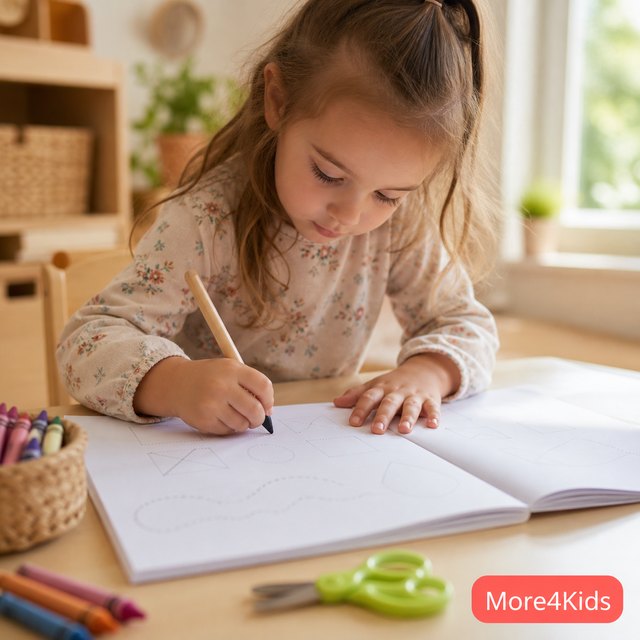
Fine-motor strength matters because kindergarten uses hands constantly: drawing, cutting, gluing, tracing, building, turning pages. You do not need worksheets to build this.
Play dough, sidewalk chalk, beads, stickers, tongs, clothespins, blocks, and simple crafts all strengthen the same little muscles. The old More4Kids piece on preschool games is a sweet reminder that play is often the best learning tool for this age. If practice starts to feel like drilling, back up and make it a game again.

### 8. Listening to a story and talking about it
One of the best school-readiness habits is also one of the simplest: read aloud and talk. Ask what your child notices. Wonder what might happen next. Laugh at the funny page. Let them retell the story in their own words.
The PBS Launching Young Readers project emphasizes the importance of parent involvement in early reading. At home, that does not need to look formal. Ten minutes on the couch counts. So does rereading the same book for the eleventh time, even if you could recite it in your sleep.
### 9. Counting ordinary things
Children do not need advanced math for kindergarten, but they benefit from number language in real life. Count socks as they go into a drawer. Count crackers on a plate. Compare who has more blocks. Sort spoons and forks.

This is where a kindergarten readiness checklist can stay beautifully low-pressure. The point is not flashcard speed. It is comfort with noticing patterns, amounts, and order.
### 10. Separating from a parent with a goodbye routine
Some children skip into kindergarten. Some cling. Many do both depending on the day.
HealthyChildren.org suggests making the first day easier by visiting the school or classroom ahead of time when possible and attending orientations. At home, practice a short goodbye routine: hug, one cheerful sentence, then leave. Do not sneak away, and do not stretch the goodbye into a long negotiation. A child can feel sad and still be safe.
If your child is starting school for the first time, the first year of school may bring more transitions than either of you expect. A simple goodbye ritual gives both of you something steady to hold.
### 11. Managing small disappointments
Kindergarten includes broken crayons, not getting the blue chair, being second in line, losing a game, and hearing “not right now.” These are tiny disappointments to adults and very real disappointments to children.
Practice naming feelings without rushing to fix everything. “You wanted the red cup. It is hard when it is in the dishwasher. Blue or green today?” That little rhythm — feeling, limit, choice — is classroom gold. I used it with groups of children, and I still use it at home when everyone wants the same chair at dinner.
### 12. Resting, eating, and starting the day with enough fuel
No kindergarten readiness checklist works well if a child is exhausted, hungry, or rushed every morning. Sleep, breakfast, clothes, shoes, backpack, and transportation are not glamorous, but they are the rails under the whole school day.
If screens make mornings or bedtime harder in your house, a calm review of how much screen time is healthy can help you protect sleep and connection without turning it into a family war.

A One-Week Practice Plan Before Kindergarten
If school starts soon, do not try to cram all 12 skills into one heroic weekend. That is how everyone ends up cranky.
Try this instead:
- Day 1: Practice lunch containers and water bottle.
- Day 2: Visit or drive past the school, if possible.
- Day 3: Read two books and ask your child to retell one favorite part.
- Day 4: Practice bathroom steps and handwashing.
- Day 5: Play a turn-taking game.
- Day 6: Pack the backpack together.
- Day 7: Lay out clothes and rehearse the goodbye routine.
That is enough. Truly.
The week before kindergarten is not the time to become a different family. It is the time to make your real family rhythm a little more predictable.
What Not to Worry About Too Much
Please do not panic if your child cannot read yet. Please do not panic if they write some letters backward. Please do not panic if they are nervous, quiet, loud, clingy, or suddenly very interested in being a baby again.
Children enter kindergarten with a wide range of skills. Teachers know this. A kindergarten readiness checklist is meant to help you notice practical areas for practice, not convince you that your child is behind before they even begin.
I would pay attention, though, if your child cannot communicate basic needs, seems unusually distressed by separation, struggles with everyday self-care far beyond what you would expect, or if your gut keeps whispering that something is harder than it should be. In that case, talk with your child’s pediatrician or future teacher. Asking early is not overreacting. It is wise parenting.

Frequently Asked Questions
What should my child know before kindergarten?
Before kindergarten, a child benefits from basic self-care, simple communication, early name recognition, turn-taking, listening to short directions, and comfort with books, counting, and routines. They do not need to read fluently or do formal math before the first day.
Is a kindergarten readiness checklist the same as a test?
No. A kindergarten readiness checklist should be a gentle planning tool, not a test your child has to pass. Use it to spot a few skills to practice at home and to notice where your child may need extra support.
How can I help my child get ready for kindergarten in one week?
Keep the week simple. Practice lunch containers, bathroom routines, a short goodbye, packing the backpack, listening to a story, and going to bed on time. Predictability matters more than squeezing in every academic skill.
What if my child cries on the first day of kindergarten?
Crying on the first day can be normal. Keep your goodbye warm, short, and predictable, then let the teacher help your child settle. If separation distress continues intensely for weeks or disrupts daily functioning, check in with the teacher or pediatrician.
Does my child need to read before kindergarten?
No. Many children start kindergarten still learning letters, sounds, and print concepts. Reading together, singing rhyming songs, noticing letters in your child’s name, and talking about stories are useful ways to build early literacy without pressure.
The Real Goal
The real goal is not a perfect first day picture. It is a child who has practiced enough ordinary skills to think, “I can try this.”
So pick two or three things from this kindergarten readiness checklist and start there. Open the lunchbox. Read the book. Practice the goodbye. Let your child zip the backpack even if it takes forever.
That slow little zipper is part of getting ready, too.
Related Articles
- Parenting
- How To Potty Train A Toddler
- Empowering A Shy Child
- Best Preschool Games
- Beginning School The First Year
- How Much Screen Time For Kids

Meet Sophia Richards Sophia Richards is an early childhood educator, passionate writer, and the proud mom of three energetic kids. With a degree in Education and over a decade of hands-on classroom experience, Sophia bridges the gap between professional teaching strategies and everyday family life. At More4Kids, she translates complex child development concepts into practical, actionable parenting tips that families can use at home.
Whether she is sharing positive reinforcement techniques, educational crafts, or honest reflections on the chaos of raising three children under one roof, Sophia’s goal is to empower parents to foster resilience and joy in their kids. When she isn't writing or lesson planning, you can find her organizing neighborhood scavenger hunts or trying out new kid-friendly recipes.
Areas of Expertise: Early Childhood Education, Positive Parenting, Sibling Dynamics, Educational Play, Family Wellness.

Add Comment