














by Ann Bowers
Objective: Explore the use of textures, shapes, and colors to decorate a holder for small items.
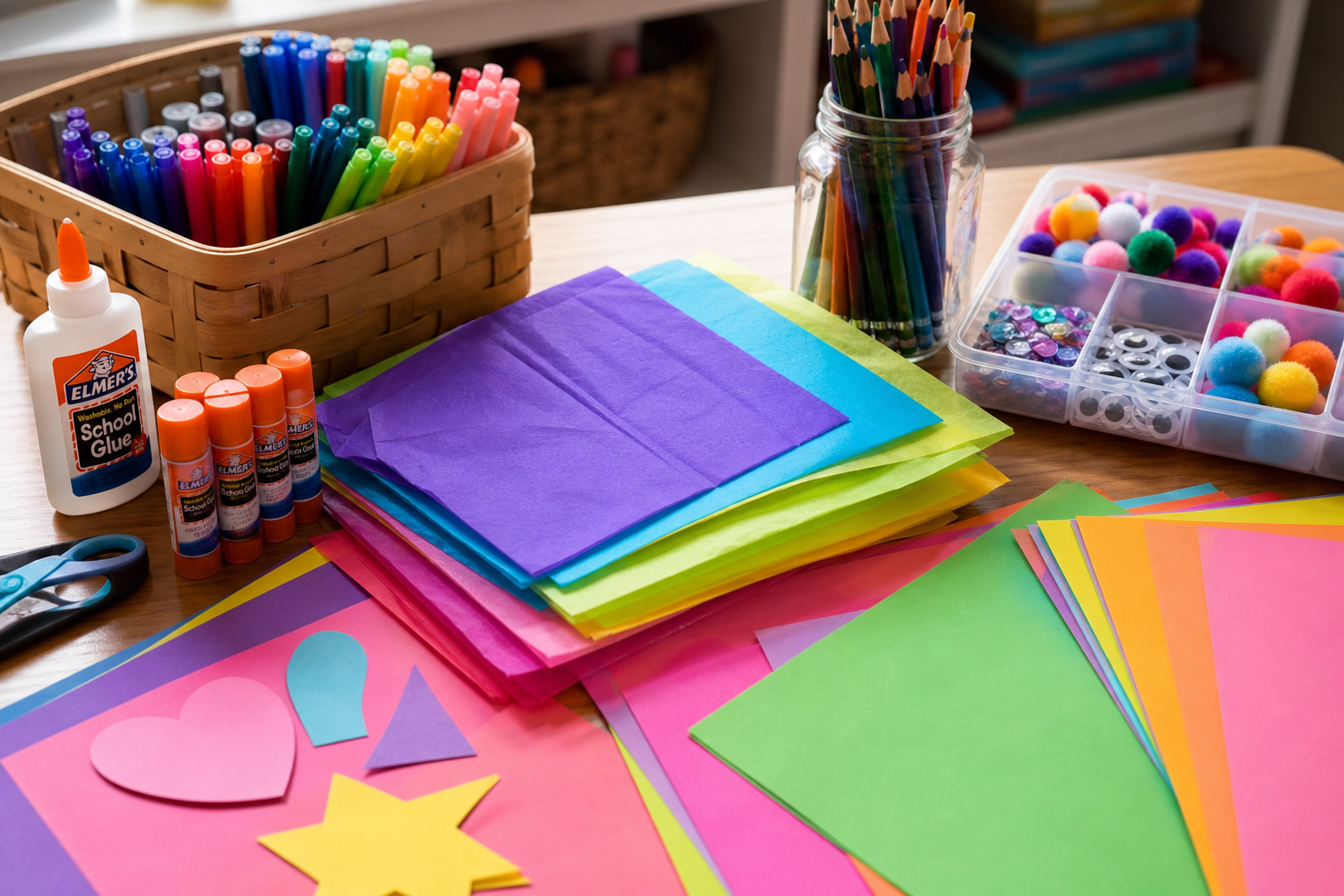
Use a strong cardboard or wooden box (small), a coffee can, a plastic bottle, a plastic or ceramic flower pot, a cigar box, or a shoe box to decorate.
Collect colored tissue and construction paper and cellophane, magazines with pictures, old photos, leaves, flowers, string and yarn, glitter, and buttons and beads to use for decorations. Use white glue or a glue stick for fastening. Have a scissors, colored felt pens, and brushes to use. Have shellac or decoupage paste ready.
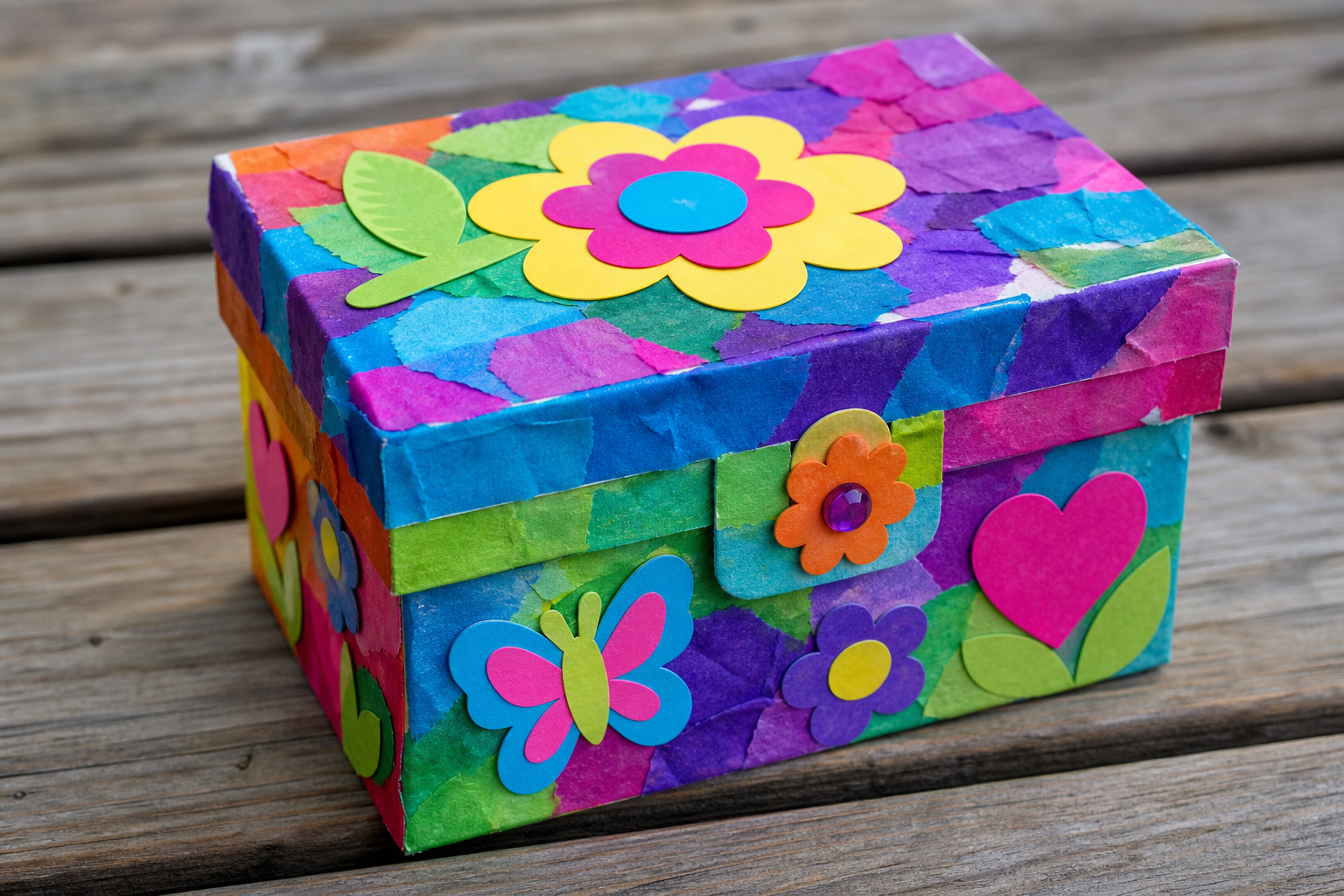
Encourage the children to choose colors, shapes, textures, and items that they like to decorate their holders. Talk about the colors, shapes, and textures as they work. This is a good way to develop vocabulary. Don’t use just basic vocabulary such as: circle, red, and soft. Use words like: oval, burgundy, and silky. Talk about theme, patterns, balance, and design before they begin and as they work. The [tag-tec]children[/tag-tec] can also cut pictures out of magazines that express their personalities and use them. Talk about what the pictures they choose mean to them. Coat the final product with decoupage paste or shellac to preserve it. A decorated holder makes a great gift for a friend or relative as well.
Music
Music is an integral part of life. To teach your children music, there are a variety of activities and lessons you can use.
• From the time the child is young, play all types of music and discuss them together. The music your child listens to between the ages of one and sixteen years will be the music he or she learns to love.
• Family sing-a-longs are a lot of fun.
• Study the lives of famous musicians, singers, conductors, and composers. Read about them and write brief biographies.
• Attend community concerts as a family; often there are free “Concerts in the Park” during the summertime.
• Study the music of other cultures, as well. There are many books and CDs available to help you do this. You can also find lessons on the internet.
• There are many music programs on television, particularly public television, such as concerts, biographies of musicians, retrospectives, etc.
• Some children enjoy participating in church choirs or dance ensembles in the community. Around age eight, the child should learn to recognize musical notation and read music. Begin lessons to learn to play an instrument at age 8 also.
Performing Arts
• Your child (and maybe you, too) might like to join a community performing arts group.
• Let the children put on plays or musical performances for family and friends.
• When studying history, encourage children to “act out” various events.
• Create historical tableaus (i.e.; participants dress up in period costumes and create a setting of an historical event; they pose without moving in the setting to create the tableau).
• Have children give famous speeches as if they were the person who originally spoke.
The most important lesson for children to learn is that enjoying the fine arts and making an effort to participate in them are goals in themselves, regardless of the quality of any products produced. So, parents who teach fine arts to homeschooled children should not worry about whether or not the children have talent, but focus on learning about fine arts in an environment that includes fun activities, as well as learning about artists and their works.
What craft activity can I use to teach textures, shapes, and colors to my homeschooled child?
Decorate a small cardboard box, coffee can, or flower pot using colored tissue paper, construction paper, cellophane, magazine pictures, yarn, glitter, and buttons. Encourage your child to choose the colors, shapes, and textures they like, then talk about the design choices — using descriptive words like oval, burgundy, and silky rather than just circle, red, or soft. Seal the finished piece with decoupage paste or shellac so it lasts.
How do I introduce music to my homeschooled child?
From an early age, play a wide variety of music and discuss it together — the music a child hears between ages one and sixteen tends to shape lifelong preferences. Enjoy family sing-alongs, study the lives of musicians and composers, attend free community concerts in the park, and explore music from other cultures through books and recordings. Around age eight, begin formal instrument lessons and teach your child to read musical notation.
What performing arts activities can homeschoolers do at home?
Have your child act out scenes from history lessons, put on plays or musical performances for family and friends, or join a community performing arts group. You can also create historical tableaux — dressing in period costumes and posing to recreate a scene from history — or have your child deliver famous speeches as if they were the original speaker.
What is the most important lesson when teaching fine arts to homeschoolers?
That enjoying the arts and making an effort are the real goals, not producing a perfect result. Parents who doubt their own artistic ability should not worry about talent — theirs or their child’s. The focus belongs on creating a fun, engaged environment where children freely explore art, music, and performance, knowing that participation itself is the point.
Ann Bowers has been an elementary school teacher, in kindergarten through 8th grade, for 20 years. She was a Bilingual Education Grant Project Coordinator for seven years and a school principal for seven. She has a B.A. in English, an M.A. in Education, and holds California Life Teaching Credentials and specialist credentials in Remedial Reading and Teaching English as a Second Language. She is retired and has started a second career as a freelance writer.
No part of this article may be copied or reproduced in any form without the express permission of More4Kids Inc © 2007

Ann Bowers




Add Comment