















By Sophia Richards
If you’ve ever stood in a doorway watching your child slump over a book like it’s a punishment, you are in very good company. I’ve raised three readers — and I use that word loosely, because for a long stretch each of them would rather have done almost anything than sit still with a story. As a mom of three and an early-childhood educator, I can tell you the secret to how to encourage kids to read is not a sticker chart or a strict twenty-minutes-a-night rule. It’s smaller and warmer than that. It’s about making books feel like something they get to do, not something they have to survive.
The good news is that you don’t need to be a teacher to raise a reader, and you don’t need a shelf full of award-winners either. What you need is a little patience, a few everyday habits, and a willingness to follow your child’s lead even when their taste runs to dinosaur facts or the same comic book for the eleventh time. Let me walk you through what’s worked in my classroom and, more honestly, at my own kitchen table.
How to Encourage Kids to Read Without Turning It Into a Chore
The fastest way to make reading feel like a chore is to treat it like one. When I first started pushing “reading time” as a scheduled block, my middle child dug in his heels so hard that bedtime stories became a nightly standoff. So I backed off the pressure and changed my goal: instead of minutes logged, I aimed for moments enjoyed.
Here’s the mindset shift that changed everything for us. Your job isn’t to produce a child who finishes books. It’s to raise a child who likes books — to build a genuine love of reading that outlasts any assignment. Those are different things, and the second one lasts a lifetime. According to Reading Rockets, one of the most reliable ways to support young readers is simply staying involved and keeping the experience positive — not drilling, not testing, just sharing.
So lower the stakes. Let a “reading session” be three pages of a joke book. Let it be your child retelling a story from memory while you fold laundry. Progress at this age is measured in affection, not chapters.
Read Aloud, Even After They Can Read Themselves
If I could hand every parent just one habit, it would be this: keep reading aloud long past the point where you think you should stop. We tend to treat read-aloud time as something for babies and toddlers, but reading to an older child who can technically read on their own is one of the most powerful things you can do.
When you read aloud, you let your child enjoy a story that’s above their own reading level. You model what fluent, expressive reading sounds like. And you turn a book into a shared, cozy experience instead of a solo assignment. PBS Parents and reading researchers consistently point to reading aloud as a cornerstone of raising a confident reader.
In our house, the read-aloud happens after teeth are brushed, lights are low, and everyone’s a little softer around the edges. Some nights all three kids pile onto one bed, even the big one who insists he’s too old for it. That nightly rhythm folds reading into the day so naturally that nobody argues — it’s just part of how we land the plane each evening. If your evenings feel chaotic, building a simple daily routine can give read-aloud time a reliable home.
Let Them Choose (Yes, Even the “Junk”)
Few things spark a love of reading faster than letting a child pick their own books — and few things kill it faster than judging those picks. If you’re figuring out how to encourage kids to read and nothing seems to stick, this is often the missing piece. Graphic novels, joke books, the same dragon series on endless repeat, magazines about minecraft, the back of the cereal box: it all counts. It all builds the same skills.
I had to learn this the hard way. I spent a season quietly steering my daughter toward “real” chapter books and away from the comics she adored, and her enthusiasm wilted. The moment I stopped, handed her a stack of graphic novels from the library, and said “go wild,” she started reading for fun again — and a reluctant reader slowly became a hungry one. Comics, by the way, are wonderful for building vocabulary and inference skills — readers have to interpret images and dialogue together.
A few gentle ways to widen their choices without taking over:
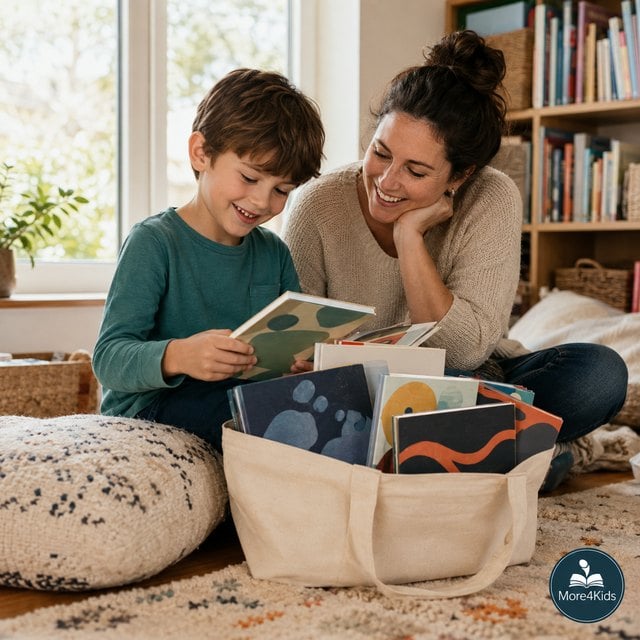
- Make the library your free playground. A weekly trip where kids fill a tote bag with whatever catches their eye costs nothing and signals that books are abundant, not precious.
- Keep books where life happens. A basket by the couch, a few in the car, one in the bathroom. Books left lying around invite curiosity.
- Follow the obsession. Dinosaur kid? Get the dinosaur encyclopedia. Interest is the engine; the topic barely matters.
Make It Easy to Stumble Into a Book
Children read more when reading is the path of least resistance. That sounds obvious, but it runs counter to how a lot of homes are set up, where screens are always within arm’s reach and books live on a high shelf nobody can see.
You don’t have to ban screens to encourage reading, but you can make books more inviting and a little more visible. Turn picture covers face-out so they catch the eye. Create a small, cozy reading nook — a beanbag, a lamp, a blanket — that feels like a destination. When my kids were small, protecting unstructured downtime mattered too, because a bored child with a book nearby often becomes a reading child. There’s real value in free time for play and quiet, and reading lives comfortably in that open space.
And model it yourself. Kids absorb what they see. If they catch you curled up with your own novel — phone down, genuinely absorbed — you’re teaching that reading is something grown-ups choose, not just something children are assigned.
When Reading Itself Is Hard
Sometimes a reluctant reader resists not out of stubbornness but because the act is genuinely difficult for them. If your child is gritting their teeth through every word, losing their place, or avoiding reading with real distress, it’s worth gently looking closer rather than pushing harder.
This is where the building blocks matter. A strong foundation in phonics — the link between letters and the sounds they make — helps decoding feel less like a wrestling match. If you suspect your child is struggling beyond the normal bumps, talk with their teacher and consider whether a reading specialist could help. There’s no shame in it, and early support makes an enormous difference. You can learn more about how kids learn to read from the foundational guides at Reading Rockets.
The goal here isn’t to diagnose anything yourself. It’s to notice, to stay warm, and to make sure a child who’s working twice as hard as their classmates gets the encouragement — and the help — they deserve.

Frequently Asked Questions
At what age should I start encouraging my child to read?
You can start sharing books from infancy, long before a child reads a single word on their own. Reading together as a baby and toddler builds vocabulary, listening skills, and a love of stories that makes formal reading feel familiar and welcome later on.
How do I encourage a reluctant reader who says they hate reading?
Lower the pressure first, then follow their interests wherever they lead, even to comics, joke books, or fact books. Keep reading aloud to them, let them choose their own material, and celebrate any reading at all rather than pushing for a certain number of pages or minutes.
How much should my child read each day?
There’s no magic number, and chasing a daily minute count often backfires by making reading feel like a chore. A short, happy reading moment most days does far more for a lasting reading habit than a long, resented session you have to enforce.
Do audiobooks and graphic novels count as real reading?
Yes, both genuinely support reading growth. Audiobooks build vocabulary, comprehension, and a love of story, while graphic novels strengthen reading skills as children interpret words and images together. They’re wonderful on-ramps, not shortcuts to avoid.
How can I encourage reading without using screens as a reward?
Make books the easy, inviting option by keeping them visible around the house and building a cozy reading nook. Read aloud together, let your child pick what interests them, and let them catch you reading for pleasure so it feels like a normal, enjoyable part of family life.
A Gentle Place to Start
If this all feels like a lot, take a breath — you don’t have to do everything at once. Pick one idea from this list and try it this week. Maybe it’s a Saturday library run, or keeping the read-aloud going a few nights longer, or simply letting your child reach for the “junk” book without a word from you.
Raising a reader is a long, slow, lovely project, and some weeks it won’t look like progress at all. That’s normal. Keep books close, keep the pressure low, and keep showing up. For more ideas to grow alongside your family, browse our reading and literacy section — including our step-by-step look at the first steps in teaching your child to read — and everything else we share at More4Kids. One warm chapter at a time is more than enough.
Related Articles

Meet Sophia Richards Sophia Richards is an early childhood educator, passionate writer, and the proud mom of three energetic kids. With a degree in Education and over a decade of hands-on classroom experience, Sophia bridges the gap between professional teaching strategies and everyday family life. At More4Kids, she translates complex child development concepts into practical, actionable parenting tips that families can use at home.
Whether she is sharing positive reinforcement techniques, educational crafts, or honest reflections on the chaos of raising three children under one roof, Sophia’s goal is to empower parents to foster resilience and joy in their kids. When she isn't writing or lesson planning, you can find her organizing neighborhood scavenger hunts or trying out new kid-friendly recipes.
Areas of Expertise: Early Childhood Education, Positive Parenting, Sibling Dynamics, Educational Play, Family Wellness.
Latest posts by Sophia Richards (see all)
About the author

Sophia Richards
Meet Sophia Richards Sophia Richards is an early childhood educator, passionate writer, and the proud mom of three energetic kids. With a degree in Education and over a decade of hands-on classroom experience, Sophia bridges the gap between professional teaching strategies and everyday family life. At More4Kids, she translates complex child development concepts into practical, actionable parenting tips that families can use at home.
Whether she is sharing positive reinforcement techniques, educational crafts, or honest reflections on the chaos of raising three children under one roof, Sophia’s goal is to empower parents to foster resilience and joy in their kids. When she isn't writing or lesson planning, you can find her organizing neighborhood scavenger hunts or trying out new kid-friendly recipes.
Areas of Expertise: Early Childhood Education, Positive Parenting, Sibling Dynamics, Educational Play, Family Wellness.



Add Comment