
















By Sophia Richards
There is a specific moment every parent knows. The kids have been inside too long, the energy in the house has gone a little feral, and someone is either lying dramatically on the floor announcing they are bored or bouncing off a couch that did not ask for this. As a mom of three and an early-childhood educator, I have learned to read that moment like a weather report. It almost always means the same thing: we need to get outside.
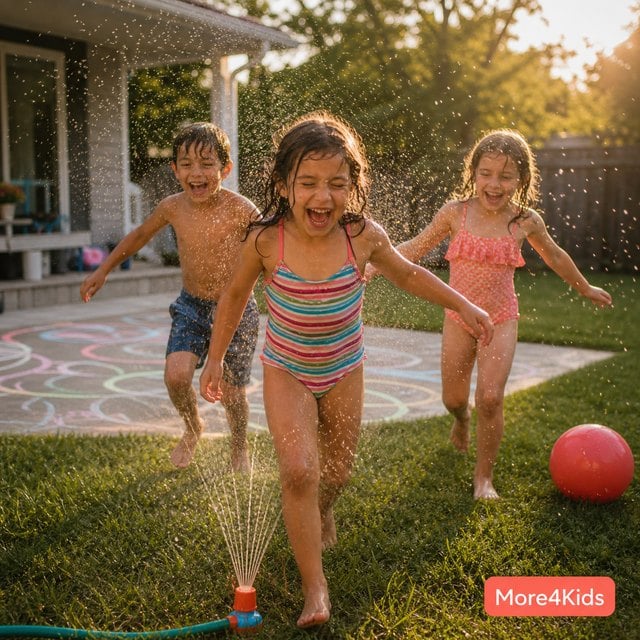
Outdoor activities for kids do not have to be elaborate. You do not need a Pinterest-worthy backyard, a bin of matching equipment, or a whole free Saturday. Most of the time, the best outdoor play is embarrassingly simple – a ball, a bucket, a stick, a patch of grass or sidewalk, and a little permission to get dirty.
This is a collection of real, low-effort outdoor activities for kids, plus a few honest thoughts on how to get resistant little humans out the door in the first place. Some are for a big yard. Plenty work in a small space, a city apartment, a driveway, or a nearby park. The goal is not a perfect afternoon. The goal is more minutes outside, more often.
Why Outdoor Activities for Kids Matter So Much
Table of Contents
Let me get the “why” out of the way quickly, because you did not come here for a lecture.
Movement matters. Nemours KidsHealth notes that children ages 6 to 17 should get about 60 minutes or more of physical activity a day, and that younger toddlers and preschoolers should be actively playing several times throughout the day. That number sounds intimidating until you realize outdoor play racks it up almost by accident. Twenty minutes of tag here, a bike ride there, some digging in the dirt after dinner, and you are most of the way there without a single “workout.”
Being active is tied to real benefits – stronger muscles and bones, better sleep, a brighter mood, and, as KidsHealth points out, kids who tend to be more focused and successful at school. Mastering a physical skill, even something as small as finally pumping their own legs on a swing, quietly builds confidence too.
Then there is the outdoor part specifically. The National Wildlife Federation’s Green Hour program encourages families to aim for about one hour a day for children to play and learn outdoors in nature. Their point is gentle but real: kids are spending less time outside and more time on screens, and the best way to grow a lifelong love of the outdoors is through regular, positive experiences – not one big nature trip a year, but small, ordinary doses of grass and sky.
And play itself, indoors or out, is doing more than burning energy. The American Academy of Pediatrics explains that play can help children learn to plan, organize, get along with others, and manage their emotions, and that it supports language, math, and social skills while helping kids cope with stress. The AAP also notes that unstructured play has been shrinking for years, squeezed out by packed schedules, fewer safe places to roam, and rising screen time.
So when your kids are digging a mud hole in the backyard, they are not wasting the afternoon. They are doing childhood correctly. (If you like this kind of down-to-earth take, our whole parenting section is written in the same spirit.)
Simple Outdoor Activities for Kids (No Special Gear Required)

These are the outdoor activities for kids that I reach for most, because they need almost nothing and work for a wide range of ages. Younger kids will play them straight; older kids like a twist or a challenge added.
- Nature scavenger hunt. Call out things to find – something smooth, something yellow, a Y-shaped stick, a bug, three different leaves. No printable needed. For older kids, add a time limit or a “find something that surprised you.”
- The classic obstacle course. Chalk lines to hop over, a jump rope to walk like a tightrope, a chair to crawl under, five jumping jacks at the end. KidsHealth points out that preschoolers especially thrive on this kind of skill play – running, hopping, kicking, and balancing.
- Ball games that are not “sports.” Not everyone wants a league. Try keep-it-up (don’t let the ball touch the ground), rolling target practice at a bucket, or a made-up game with rules your kids invent on the spot.
- Water play. A dish tub of water, some cups, a paintbrush and a fence to “paint” with water, or a spray bottle on a hot day. Cheap, mesmerizing, and it buys you a solid half hour.
- Digging and building. A patch of dirt, a sandbox, or a bucket of sand. Add toy trucks, spoons, or nothing at all. Digging is a full-body activity disguised as doing nothing.
- Bikes, scooters, and chalk roads. Draw roads, stop signs, and parking spots on the driveway and let them ride the “town.” My kids have spent entire evenings being very serious traffic officials.
- Bubbles. Never underestimate bubbles. Toddlers chase them, big kids try to pop them all, and everyone is moving.
The trick with outdoor activities for kids is to offer a spark, not a full script. Set out the materials, suggest one idea, then let them take it somewhere weird. Their version is almost always better than mine. If you want a batch of warm-weather ideas to pull from, our roundup of summer activities for kids is full of easy ones you can carry outside.
No Big Yard? Outdoor Play for Small Spaces and City Families
Not every family has a backyard, and outdoor activities for kids should not require one. Some of the best outdoor play happens on a balcony, a stoop, a sidewalk, or a quick walk to a nearby park.
- Sidewalk chalk everything. Hopscotch, a target to jump to, a mural, a “long jump” line to beat. A driveway or a stretch of sidewalk becomes a whole playground.
- The neighborhood walk with a mission. A plain walk gets boring. A walk to count every dog, spot five red things, or collect one interesting rock does not. Give the walk a job.
- Park micro-visits. You do not need a two-hour outing. Fifteen minutes at the local playground on the way home still counts as outdoor time and still burns the wiggles.
- Balcony or stoop nature. A small pot of dirt to plant seeds, a bird to watch, a cloud to name. Nature does not require acreage.
- Container gardening. Even one pot of cherry tomatoes or sunflowers gives a child a daily outdoor reason to check, water, and marvel.
City kids and apartment kids get all the same benefits. The National Wildlife Federation’s Green Hour idea is about regular outdoor time in whatever nature you can reach, not about owning a forest.
Rainy Day and “I’m Bored” Outdoor Activities for Kids

Some of the most memorable outdoor activities for kids happen in weather most of us would rather avoid. I am not suggesting a thunderstorm. But a warm drizzle? That is an invitation.
- Puddle jumping. Rain boots, a puddle, and zero expectations about staying clean. It is pure joy, and the cleanup is just a towel by the door.
- Rain sounds and mud kitchens. After the rain, mud is a gift. A few old pots, a spoon, and a dirt patch make a “restaurant” that can last for an hour.
- Winter and cold-weather play. Bundle up and go anyway – short bursts count. Snow, if you have it, is a free sensory bin the size of the yard.
- Cloud watching and stargazing. Lie on a blanket and find shapes. It is calm, it is outside, and it is a lovely wind-down before bed.
- Flashlight games at dusk. As the light fades, flashlight tag or a “night walk” to listen for evening sounds turns an ordinary yard into an adventure.
When a child says they are bored, I have learned not to treat it as a problem to solve for them. Boredom outdoors is often the launchpad for the best imaginative play. Sometimes the most useful thing I can say is, “Go find out what’s happening outside,” and then let boredom do its quiet work.

How to Actually Get Them Out the Door
Here is the part the activity lists usually skip. The hardest part of outdoor activities for kids is often not the activity. It is the negotiation at the door.
KidsHealth describes three keys to motivating kids to be active, and they translate perfectly to getting outside: match the activity to the child’s age, give them plenty of easy opportunities, and keep the focus on fun rather than performance. A few things that help in my house:
- Lower the bar to “just outside.” No agenda, no plan. “Let’s just go out for a bit” is a much easier yes than “Let’s go do an activity.”
- Go with them at first. Younger kids especially will stay out longer if a grown-up starts the play. You can fade into a lawn chair once the momentum builds.
- Keep gear stupidly accessible. A basket by the door with a ball, chalk, bubbles, and a bug jar removes the “I have to go find something” friction. KidsHealth specifically notes that giving kids easy opportunities and equipment is one of the keys.
- Make it social. Invite one neighbor kid. Play multiplies when there is a partner in crime.
- Protect it from becoming a chore. The fastest way to kill outdoor play is to turn it into a daily requirement with a scowl attached. Keep the tone light. This is recess, not homework.
In my classroom years, the same pattern showed up again and again: children moved more when the invitation felt easy, nearby, and playful. At home, that has made me much less dramatic about outdoor time. I do not need to create the perfect plan. I need to open the door and make the first step feel doable.
If screens are the usual tug-of-war in your house, you are not alone, and you are not failing. It often helps to make outdoor time the easy default rather than framing it as the punishment that ends screen time. Our calm look at how much screen time is healthy for kids pairs well here – the goal is balance, not a battle.
And if you have a child who hangs back because they do not feel “good at” active play, go gently. Confidence outside grows the same way it does everywhere else: small wins, noticed effort, and no comparison to a more daring sibling. Our guide on how to build confidence in a child fits right alongside this one.
A Simple One-Week Outdoor Play Reset
If the idea of adding “more outdoor time” to your life feels like one more thing, try a low-key week. No pressure, no tracking app, no guilt.
Day one: Just go outside for ten minutes after dinner. That is the whole task.
Day two: Bring one thing – a ball, chalk, or bubbles – and follow their lead.
Day three: Take a walk with a mission. Count something, collect something, spot something.
Day four: Try a rainy-day or dusk activity, weather permitting. Puddles or flashlight tag.
Day five: Let them be bored outside for a bit before you offer any ideas.
Day six: Invite a friend or a neighbor to join the play.
Day seven: Ask your child which outdoor thing they liked best this week, and do that one again.
That is it. Outdoor activities for kids work best as a rhythm, not a project. A handful of ordinary minutes outside, most days, adds up to exactly the kind of childhood we are hoping to give them – one with grass stains, scraped knees, and the specific tired that comes from a good day of playing outside.
Some evenings the whole victory is this: they come in flushed and grubby and starving, having done nothing more impressive than run in circles and inspect a worm. That counts. That counts more than we know.

Frequently Asked Questions
What are the best outdoor activities for kids who don't like sports?
Plenty of outdoor play has nothing to do with sports. Try nature scavenger hunts, sidewalk chalk, bug hunting, gardening, water play, obstacle courses, biking, or building forts. KidsHealth points out that the goal is finding activities kids actually enjoy and feel successful doing, not pushing organized sports. A child who dislikes competition may love exploring, creating, or simply moving on their own terms.
How much outdoor time do kids really need?
There is no single magic number, but Nemours KidsHealth notes that children ages 6 to 17 should aim for about 60 minutes or more of physical activity daily, and the National Wildlife Federation’s Green Hour program suggests around an hour a day of outdoor play in nature. Outdoor time is one of the easiest ways to reach those goals, and it does not have to happen all at once – short bursts throughout the day add up.
What are good outdoor activities for kids without a backyard?
You do not need a yard. Sidewalk chalk, neighborhood walks with a mission, short visits to a local park, balcony container gardening, bubbles on a stoop, and cloud watching all work in small spaces. City and apartment families get the same benefits from regular, ordinary outdoor time.
How do I get my child to go outside when they only want screens?
Keep it low-pressure and make outdoor time the easy default rather than a punishment. Lower the bar to “let’s just go out for a bit,” keep a basket of outdoor gear by the door, start the play with them, and invite a friend when you can. Framing outdoor play as fun rather than as the thing that ends screen time makes the door a lot less of a battle.
Are outdoor activities safe for kids in cooler or rainy weather?
Yes, with common-sense adjustments. Dress kids for the weather, keep cold-weather sessions shorter, watch for storms, and stay sun-safe in heat. A warm drizzle can be a delight in rain boots, and bundled-up winter play in short bursts still counts. Use your judgment about your local conditions and your own child.
Related Articles

Meet Sophia Richards Sophia Richards is an early childhood educator, passionate writer, and the proud mom of three energetic kids. With a degree in Education and over a decade of hands-on classroom experience, Sophia bridges the gap between professional teaching strategies and everyday family life. At More4Kids, she translates complex child development concepts into practical, actionable parenting tips that families can use at home.
Whether she is sharing positive reinforcement techniques, educational crafts, or honest reflections on the chaos of raising three children under one roof, Sophia’s goal is to empower parents to foster resilience and joy in their kids. When she isn't writing or lesson planning, you can find her organizing neighborhood scavenger hunts or trying out new kid-friendly recipes.
Areas of Expertise: Early Childhood Education, Positive Parenting, Sibling Dynamics, Educational Play, Family Wellness.

Add Comment