














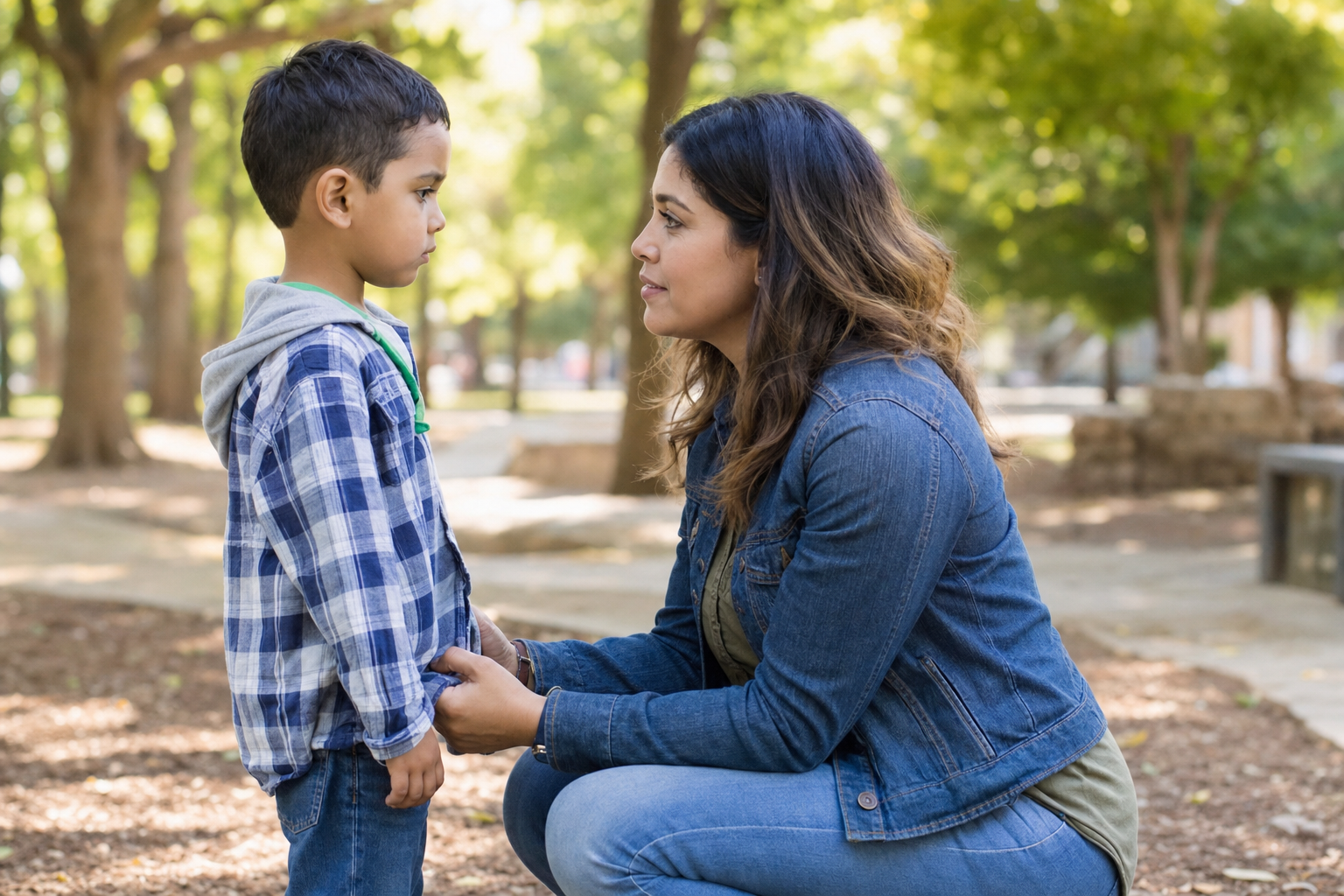
While the attitude is understandable, in light of the many news stories to which they are exposed, it’s possible for parents to go overboard and do harm along with the good.
Childhood attitudes about other people tend to persist into adulthood. It’s a rare individual who is sufficiently enlightened that they can entirely erase incorrect views of others learned early in life. As a result, [tag-ice]parents[/tag-ice] – while taking reasonable precautions against real risks – will want to carefully consider the extent and manner of their warnings about strangers.
The first difficulty parents encounter, though they are sometimes unaware of it, is the difference in the meaning of ‘stranger’ for the parent and the child. To a child, the person behind the counter at a local store may not be a [tag-self]stranger[/tag-self]. They’ve seen Mom talk to him many times.
Still, [tag-tec]children[/tag-tec] are often capable of finer distinctions than adults give them credit for. They can, beyond the age of three or so, be taught that looks alone don’t define who is or isn’t a stranger. Just because the elderly man looks ‘nice’ doesn’t make him not a stranger.
Also, they can be taught that there are circumstances where seeking the aid of a stranger is safe and reasonable. If they become separated from the parent in the library, the teenager wearing an employee badge and pushing a cart of books who directs them to the front desk shouldn’t necessarily be regarded fearfully.
Parents are right to be concerned, but they should also try to be objective. Objective does not mean being emotionally or value neutral. It simply means assessing facts honestly and without bias.
Some relevant facts:
– Most child abductions and harm originate from someone familiar to the child – a male relative or neighbor
– Only a very small percentage of children are abducted or harmed by strangers
– Those abducted or harmed tend more often to be children who display fear or lack of confidence when approached by strangers. Also, those who travel alone are more at risk.
Good data is difficult to obtain, owing to an array of different definitions of criminal abduction. Approx. 58,000 children per year are abducted by non-family members. Most are returned within 24 hours. That’s a horrifying tragedy for those parents, but it does mean the odds are low.
However, it’s understood that since the consequences can be so severe, parents will want to take precautions even against this unlikely event.
Long term harm to a person’s view of others can result from succumbing to media-induced paranoia. There are several, reasonable precautions parents often learn in order to protect their children. Teaching children to travel in groups, to stay at arms length when a person appears mistrustful, to run away and/or say ‘NO!’ loudly and continually when a stranger attempts to lead them away and other common practices are healthy and reasonable.
Its a difficult balence as we don’t want to raise paranoid children, and as parents we should attempt to instill a sense of confidence in dealing with the world – a world that includes strangers. The alternative risks raising children who have never been harmed to have the same fear as those who have.
Should I teach my child to be afraid of all strangers?
Teaching a blanket fear of all strangers can actually backfire. Childhood attitudes about other people tend to persist into adulthood, and raising a child to distrust everyone can leave them socially limited — and ironically, no safer. The goal is to help children develop honest, confident judgment: recognizing when a situation feels wrong, knowing how to ask for help from a safe person (like a store employee with a badge), and traveling in groups when possible. Confidence and awareness offer more protection than fear.
Are most child abductions carried out by strangers?
No — most child abductions and harm actually originate from someone the child already knows: a male relative or neighbor, not a random stranger. Only a small percentage of children are harmed by strangers. Around 58,000 children per year are abducted by non-family members, and most are returned within 24 hours. These are still devastating events, and precautions matter — but realistic risk awareness helps parents teach the right lessons rather than causing disproportionate fear.
What practical safety skills should I teach my child about strangers?
Teach your child to travel in groups whenever possible, since children alone are more at risk. They should stay at arm’s length if approached by someone unfamiliar who makes them uneasy, and practice saying ‘NO!’ loudly and clearly while moving away if a stranger tries to lead them somewhere. Also teach them when it IS safe to ask a stranger for help — such as finding a uniformed store employee when lost in a store. Children should know that asking for help from a trusted adult is always allowed.
When can children start learning to make safe decisions around strangers?
Children beyond about age three can begin understanding nuanced safety concepts — that strangers are not always visually identifiable by how they look, and that a friendly appearance does not mean someone is safe. At this age they can start learning that certain contexts are safer than others. The key is building confidence rather than anxiety: a child who knows how to read a situation, ask for help, and act assertively is far more protected than one taught only to be afraid.


Latest posts by More4kids (see all)
- The Best Bedtime Stories for Kids, Grouped by Age - September 2
- Kids Jokes and Humor - August 27
- Parenting Teens: Helping Your Teenager Make Good Decisions - August 27