













 by Alan Hammond
The playground is a bittersweet place. On the playground children grow and develop interaction skills, but they can also become severely injured or worse. According to the Centers for Disease Control (CDC), more than 200,000 children 14 years of age and younger are treated in hospital emergency rooms across the United States. Most accidents, nearly 70 percent, occur on public playgrounds. They are usually associated with climbing equipment, slides and swings. More than one-third of all playground injuries are severe, with children incurring fractures, internal injuries, concussions, dislocations and amputations. Approximately 15 children die each year from those injuries, about half of which are from strangulation and one-quarter from falls from equipment. (Centers for Disease Control, Injury Fact Book, 2001-2002) Are you scared yet?

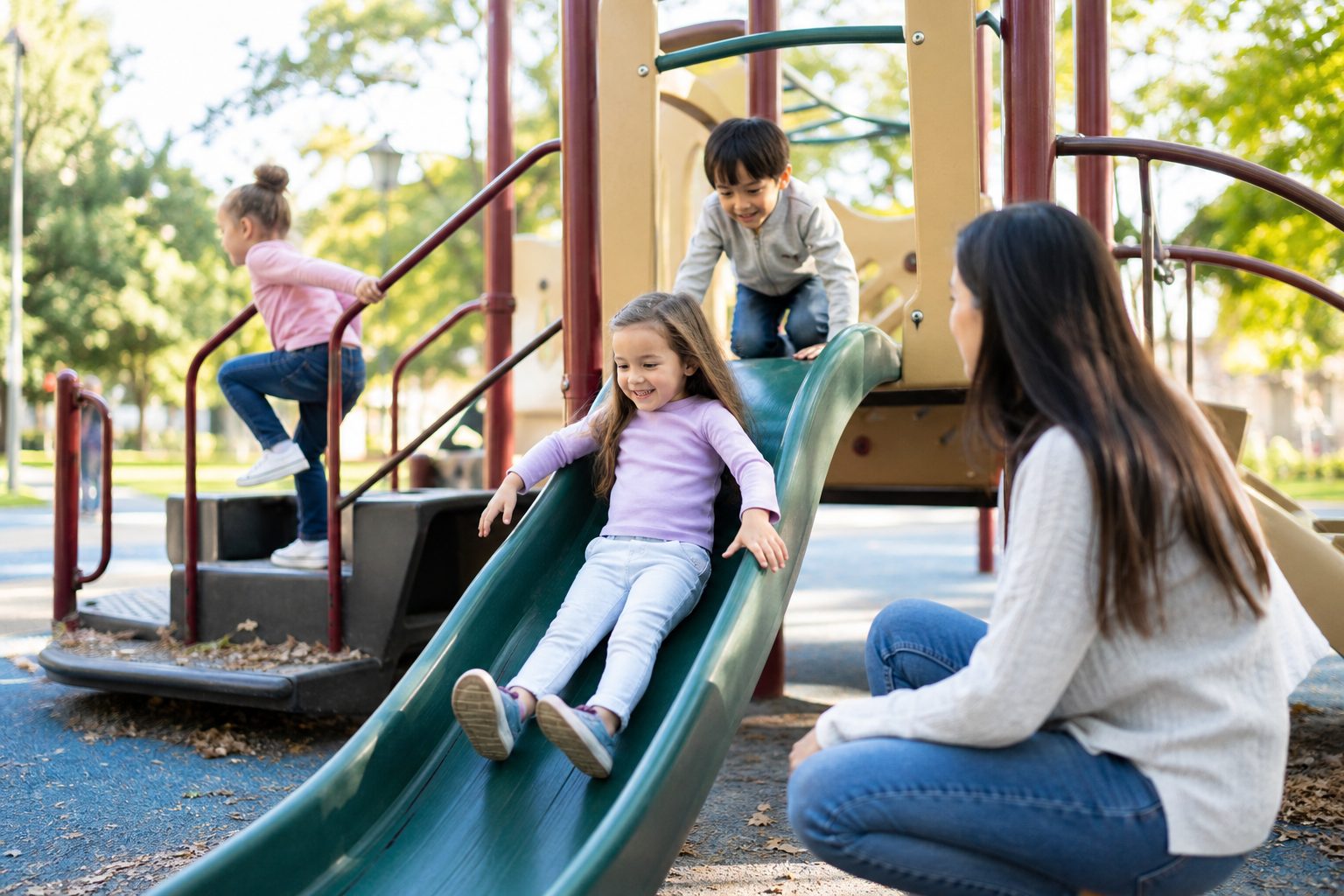
Supervision. Although not confirmed by statistics, inadequate adult supervision is the likely culprit in many accident cases. All children under the age of five should have constant adult supervision while on the playground. Children of that age are prone to falls and they often don’t have a healthy fear of too many things, which is a recipe for catastrophe. Older children also require supervision. They too become injured and, as younger children are also nearby or using the same equipment (although they should not be), could pose a danger to smaller children.
How common are playground injuries in children?
According to the Centers for Disease Control (CDC), more than 200,000 children under 14 are treated in emergency rooms for playground injuries each year in the United States. About 70% of those accidents happen on public playgrounds, most involving climbing equipment, slides, and swings. More than one-third of playground injuries are severe — including fractures, concussions, dislocations, and internal injuries. Approximately 15 children die each year from these injuries, about half from strangulation and one-quarter from falls.
What clothing should children avoid when playing on playground equipment?
Loose clothing and accessories pose a serious strangulation risk on playground equipment. Remove or avoid drawstrings on jackets and sweatshirts, and skip scarves on cold days — use a neck warmer instead. Interestingly, some physicians note that bike helmets worn during playground play can also be dangerous, because the chin straps can become entangled in equipment and cause strangulation. In short, anything loose or dangling that could catch on equipment should stay at home.
What makes a safe playground surface, and how deep should it be?
A forgiving surface greatly reduces the risk of serious injury from falls. Safe materials include sand, wood chips, synthetic chipped rubber, and pea gravel. For a preschool playground, surface coverage should be six to eight inches deep; for a main playground, 12 to 14 inches. Avoid playgrounds with hard, unforgiving surfaces like asphalt or bare dirt. If you notice inadequate coverage, report it to the responsible agency — the municipal government, school, or neighborhood association — and follow up to make sure it is fixed.
What level of supervision do children need on the playground?
All children under age five require constant adult supervision on the playground, since they are prone to falls and often do not have a developed sense of danger. Older children also need supervision — both for their own safety and to prevent them from accidentally injuring smaller children who may be nearby. Inadequate adult supervision is considered a likely factor in many playground accidents, even when direct statistics are hard to confirm.
Alan Hammond is a criminal justice professional, writer and former educator. He can be reached in care of this publication or at [email protected].
No part of this article may be copied or reproduced in any form without the express permission of More4Kids Inc © 2008 All Rights Reserved

Alan and Shonna Hammond