
















By Sophia Richards
My middle one came home one October afternoon, dropped his backpack by the door, and told me his teacher said he “drifts off” during morning math. My first instinct was to worry that something was wrong. What I found, once I stopped spinning, was much more ordinary and much more fixable: he was staying up too late, skipping most of his breakfast, and sitting down to work at a kitchen table that had a tablet buzzing two feet away. None of that meant something was wrong with him. It was just life, and life is where most focus problems actually live.
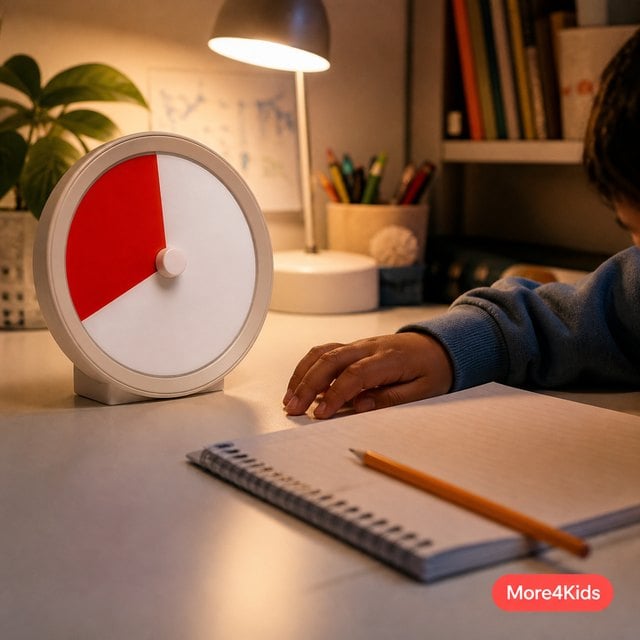
If you are wondering how to help kids focus in school, I want to start by taking a little pressure off. A child who has trouble concentrating is not broken, lazy, or doomed to struggle. Attention is a skill that grows, and it grows fastest when the everyday scaffolding around a child is solid: enough sleep, real food, room to move, a calm place to work, and fewer things pulling at them. Most of the levers are at home, in your reach, tonight.
As a mom of three and a former early-childhood educator, I have watched this from both the kitchen and the classroom. So this is not a lecture about executive function, though the science is real. It is the plain, warm version: the small habits that help kids focus in school, why they work, and how to fold them into a normal, busy family week without turning your house into a boot camp.
Start With Sleep: The Habit Under Every Other Habit
Table of Contents
If you change only one thing this week, change bedtime. I know that is the least exciting answer on earth, and I know how hard it is to protect on a school night. It is also the single biggest lever I have ever found for helping kids focus in school.
A tired brain cannot pay attention. It is that simple. The American Academy of Pediatrics points out that regular sleep loss makes concentration harder and shows up in a child’s day as irritability, moodiness, and trouble learning, while kids who get enough rest tend to have better school performance. School-age children generally need somewhere around nine to twelve hours in a twenty-four-hour period, which usually means an earlier bedtime than most of us are actually running.
You do not need a perfect routine, just a predictable one. In my house, the thing that finally worked was backing bedtime up in fifteen-minute steps instead of one dramatic hour, and putting screens to bed before the kids. A wound-up brain full of bright light and fast video does not drift off gracefully. If bedtime is a nightly battle at your place, our piece on ending the bedtime struggle has gentle, realistic starting points that do not require you to become a different person.
Feed the Brain Before You Ask It to Work
The second habit is breakfast, and I say that as someone who has handed a kid a granola bar in the car more mornings than I would like to admit. A child running on sugar and not much else will crash by second period, and a crashing brain does not concentrate.
You are not aiming for a gourmet spread. You are aiming for something with a little protein and staying power instead of pure sugar: eggs, yogurt, oatmeal, peanut butter on whole-grain toast, a banana. Steady fuel keeps blood sugar even, and even blood sugar is quietly one of the things that helps kids focus in school through that long stretch before lunch. Our guide to the best brain foods for children breaks down easy, kid-friendly options if you want ideas that will actually get eaten.
And do not forget water. Mild dehydration makes anyone foggy and fidgety. A full water bottle in the backpack is a tiny, boring thing that pays off all day.
One small mindset shift helped me here: I stopped thinking of breakfast as a nice-to-have and started treating it as the first tool that helps kids focus in school. On the mornings we actually sit down for two minutes with something real, the reports from teachers are noticeably better. On the granola-bar-in-the-car mornings, less so. It is not a coincidence, and it is not a guilt trip either, just a pattern worth noticing on the days you can do something about it.
Let Them Move: Focus Is Built on the Playground
Here is the counterintuitive one. If you want a child to sit still and attend, let them move first, and move often. Physical activity is not the enemy of focus. It is the setup for it.
The American Academy of Pediatrics encourages daily physical activity for children, roughly an hour a day, and there is a real reason that recess and P.E. help learning rather than steal from it. Movement burns off the wiggly energy that otherwise leaks out as squirming and distraction, and it gets blood and oxygen flowing to a brain that is about to be asked to work.
At home, this looks like protecting outdoor time instead of trading it away for one more worksheet. Bike to school if you can. Twenty minutes at the park before homework. A dance-break in the kitchen. When my kids are climbing the walls, the fastest route to a calm, focused evening is almost never “sit down and settle.” It is “go run around the yard for fifteen minutes first,” and then the sitting down actually works.
If your child sits a long stretch at school without much of a break, that afternoon energy release matters even more. Think of movement not as a reward you dangle after the work, but as part of the setup that helps kids focus in school in the first place. A body that has been allowed to move is a brain that is far more willing to hold still and pay attention when it counts.

Build a Calm Launch Pad for Homework and Study
Where a child works matters more than most of us realize. A cluttered, noisy, high-traffic spot with a TV flickering nearby is asking a young brain to do the impossible: ignore everything interesting in order to attend to fractions.
You do not need a Pinterest-perfect study nook. You need a consistent, low-distraction spot and a consistent time. Nemours KidsHealth recommends giving kids a regular, well-lit place to do schoolwork with the supplies they need within reach, so the work can start without a ten-minute hunt for a pencil. Same corner, same rough time each day, so their brain learns “this is where we focus.”
A few things that help the launch pad do its job:
- Clear the surface of everything except the current task. A busy tabletop is a buffet of distractions.
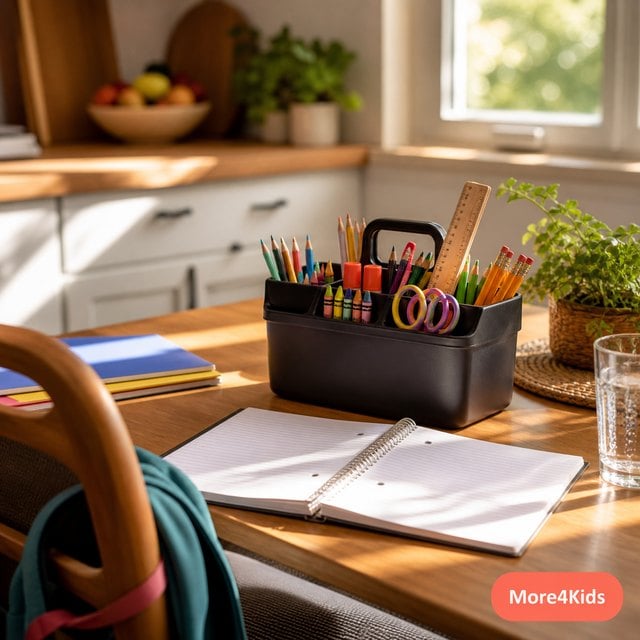
- Keep supplies stocked in one caddy so nobody leaves to “find a ruler” and returns twenty minutes later, mysteriously holding a snack and a toy.
- Put the phone or tablet in another room during work time, not face-down on the table. Out of sight genuinely beats willpower, for kids and grown-ups alike.

When we finally gave each of my kids a defined spot, the change was not instant, but it was real. The nightly “where do I even do this” wandering stopped, and the work started sooner. A launch pad does not have to be big or fancy. A cleared end of the dining table with a supply caddy counts. What matters is that it is the same place, so sitting down there becomes a small cue that it is time to concentrate.
Tame the Distractions, Especially the Glowing Ones
Speaking of screens: they are the biggest focus thief in most modern homes, mine included. A device within reach fractures attention even when it is not being used, because part of the brain is always waiting for the next buzz.
This is not about banning technology. It is about putting a fence around it during the parts of the day that need concentration. Screens off during homework. A charging spot that lives in the kitchen, not the bedroom. Notifications silenced while work is happening. If you want a bigger-picture approach to keeping devices from running the show, our overview of screen time and kids walks through setting limits without a nightly war.
For the child who needs to fidget to think, and some genuinely do, a quiet outlet can actually help rather than hurt. A stress ball, a bit of putty, or a simple fidget tool gives busy hands something to do so the mind can settle on the lesson. The trick is choosing something quiet and non-flashy, so it channels energy instead of becoming the main event.
Work in Short Bursts, Not Marathons
One of the most freeing things I ever learned is that focus is not one long unbroken beam. It comes in bursts, especially for kids, and fighting that fact just makes homework miserable for everyone.
The learning experts at Understood suggest simple, doable moves like setting a timer and taking frequent breaks so a child knows there is a finish line in sight. Knowing “I only have to focus until the timer beeps” makes it far easier to actually start, and starting is usually the hardest part.
Here is what this looks like in practice:
- Break big work into small chunks. “Do these five problems,” not “do all your math.”
- Set a short timer, ten to twenty minutes depending on your child’s age, then a real break to move, snack, or breathe.
- Give one instruction at a time. A string of directions overwhelms a young brain; a single clear step is something they can actually hold onto.
- Celebrate finishing a chunk, not just finishing everything. Small wins keep the tank full.
Younger kids need shorter bursts and more breaks; older ones can stretch the timer longer. The goal is not to force marathon concentration. It is to match the work to how attention actually behaves, so your child ends the session feeling capable instead of defeated.
Routine: The Anchor That Helps Kids Focus in School
Every habit above works better inside a predictable rhythm. When a child knows what comes next, their brain spends less energy bracing for the unknown and has more left over for actual learning. This is quietly one of the most powerful ways to help kids focus in school, because it makes every other habit easier to keep.
A simple after-school flow, snack, then movement, then a set homework window, then downtime, removes a hundred small negotiations and helps kids focus in school the next day because their whole system is steadier. Our guides on building a back-to-school routine and why a simple daily routine makes such a difference are worth a read if mornings and evenings feel like chaos right now.
The magic is not rigidity. It is predictability. Kids relax into a rhythm they can count on, and a relaxed child is a child who can pay attention.
When to Look a Little Deeper
Most focus struggles are ordinary and respond beautifully to the habits above. Give the changes a few weeks. Consistency, not intensity, is what moves the needle, and small habits practiced daily beat a dramatic overhaul that fizzles by Friday.
That said, trust your gut. If your child’s trouble concentrating is persistent across settings, clearly out of step with their peers, causing real distress, or coming with big frustration and falling grades despite your best efforts, it is worth a conversation with their teacher and pediatrician. You are not overreacting, and you are not looking for a label. You are gathering information. Our article on parenting a child with attention challenges can help you think through what that next step might look like.
Asking for input is not a failure. It is the same good parenting as taking a kid to the doctor for a cough that will not quit. You know your child better than anyone, and there is no shame in bringing in another set of eyes.

Frequently Asked Questions
Why does my child lose focus at school so easily?
Most everyday focus trouble comes down to ordinary causes: not enough sleep, a sugary or skipped breakfast, too little movement, or a distracting environment. Attention is also still developing in children, so shorter focus spans are normal, especially in younger kids. Start by shoring up the basics at home before assuming something is wrong, and give the changes a few weeks to show up.
How can I help my kids focus in school without nagging?
Build the supportive habits into the day so you are not relying on reminders in the moment. A steady bedtime, a real breakfast, daily movement, a consistent low-distraction study spot, and screens fenced off during work do the heavy lifting for you. When the environment and routine carry the load, you can drop the nagging and let the structure do the work.
How much sleep does my child actually need to concentrate?
School-age children generally need about nine to twelve hours of sleep in a twenty-four-hour period, and teens somewhat less. Regular sleep loss makes concentration noticeably harder, so a consistent, earlier bedtime is often the fastest way to see better focus. A predictable wind-down routine matters as much as the total hours.
Are fidget tools helpful or just a distraction?
For some kids, a quiet fidget genuinely helps by giving busy hands an outlet so the mind can settle on the lesson. The key is choosing something quiet and non-flashy, like putty or a simple stress ball, rather than a noisy or flashy toy that becomes the main attraction. Watch your own child and keep what actually helps them focus.
How long should my child focus on homework at one time?
Match the work to their age and attention span. Younger children do best with short ten-to-fifteen-minute bursts and frequent breaks, while older kids can stretch to twenty or thirty minutes before pausing. Breaking work into small chunks with a timer and a clear finish line usually works far better than demanding one long stretch of concentration.
The Bottom Line
Helping kids focus in school is less about willpower and more about setup. Protect sleep. Feed the brain. Let them move. Give them a calm place to work and fewer glowing distractions. Chunk the work into short, doable bursts, and wrap the whole thing in a routine they can count on.
None of these are dramatic. That is exactly why they work. Small, steady habits, practiced most days, are what quietly build a child who can settle in and concentrate. Start with one this week, maybe an earlier bedtime, and let it take hold before you add the next. Focus, like most good things in parenting, is grown one ordinary evening at a time.
Related Articles
- Do You Dread Bedtime
- Nutrition And Your Child
- Screen Time And Kids
- Fidget Toys
- Back To School Schedules
- A Secret To Happy Kids Daily Routines

Meet Sophia Richards Sophia Richards is an early childhood educator, passionate writer, and the proud mom of three energetic kids. With a degree in Education and over a decade of hands-on classroom experience, Sophia bridges the gap between professional teaching strategies and everyday family life. At More4Kids, she translates complex child development concepts into practical, actionable parenting tips that families can use at home.
Whether she is sharing positive reinforcement techniques, educational crafts, or honest reflections on the chaos of raising three children under one roof, Sophia’s goal is to empower parents to foster resilience and joy in their kids. When she isn't writing or lesson planning, you can find her organizing neighborhood scavenger hunts or trying out new kid-friendly recipes.
Areas of Expertise: Early Childhood Education, Positive Parenting, Sibling Dynamics, Educational Play, Family Wellness.

Add Comment