









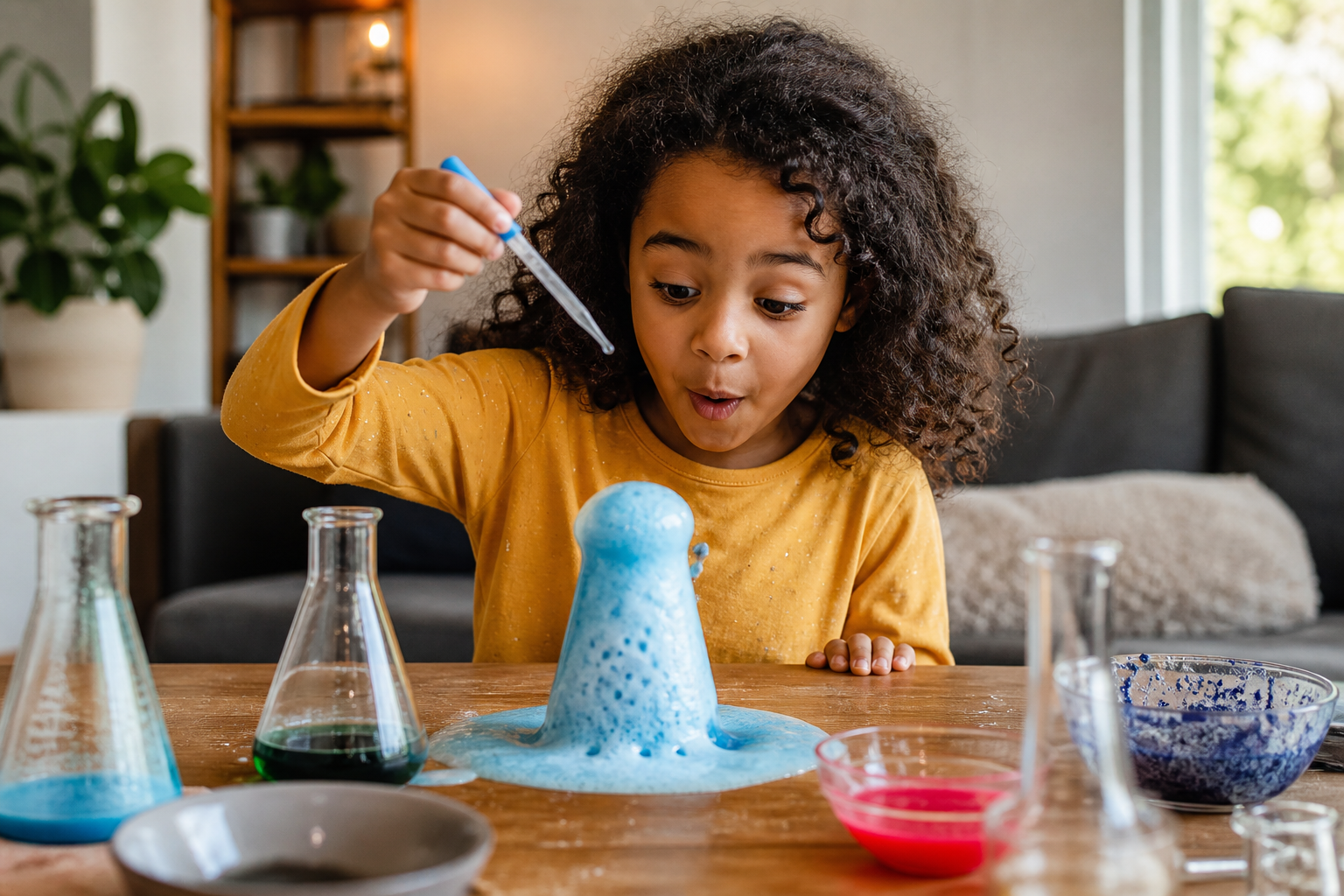
 There are a large number of beginning science experiments for the homeschooler. Parents should ensure that these types of projects are worked into the curriculum of the homeschool classroom because of the fact that these experiments enhance and develop the critical thinking skills, experimental curiosity skills, and basic research skills of the students in the home.
It is important to integrate these experiments as early as kindergarten. Science plays a large role in our day to day lives, and it is absolutely essential to provide both young and older students with the ability to work with it and excel in the subject. Here, I will provide some beginning science experiments for the homeschooler in the kindergarten to first grade bracket.

Rock Candy
Creating rock candy is a big hit among homeschoolers that are in kindergarten and the first grade level. You will need to gather a few supplies in order to do this project. The following will detail the essentials needed for one student. If you have multiple students, it is essential to ensure that increase the materials as appropriate:
1. You should collect a cup of water.
2. Next, it is important to collect about two cups of sugar.
3. Look through the kitchen cabinets and locate a clear glass, or even a jar.
4. Locate an unsharpened pencil to use.
5. Find a piece of string. This should be a good size. I would say about a foot will work.
6. Next, locate an extra paperclip in the home.
Steps:
1. Take the paperclip that you have gathered and tie it to one end of the string that you have for the project. Next, you should take the other end of the string and tie it on to the pencil.
2. Next, take the water that you gathered and boil it thoroughly. Once the water gets warm enough to boil, add the sugar that you set aside earlier. Be certain to stir it until there is no longer a visible appearance of the sugar.
3. Now, once the water is all done, it is time to take either the clear glass or the clear jar and pour it into this container.
4. Now, take the pencil and place it on top of the container so that the paperclip is towards the bottom of the jar.
5. Now, you will want to provide your student with something that they can use to make notes or draw the changes that occur in the container over a three day period.
Once the experiment is complete, it is important to inform your homeschooler that they have learned that sugar never fully dissolves. Once the water becomes cold, the sugar will start to stick on the paperclip and the string. Eventually, the sugar will turn to crystals because of the changes that occur. Children will love this experiment because of the fact that they can see the change, and eventually eat it too!
Create a Pet Tornado
Many homeschoolers in the kindergarten and first grade bracket will enjoy the science experiment that allows them to create their very own pet tornado.
Supplies:
1. You will need at least two twenty ounce soda bottles that are completely empty and clean.
2. You will want to purchase a washer that is about one inch in diameter.
3. Next, gather up some strong duct tape to assist in the project.
Steps:
1. The first thing that you will want to do is fill one bottle with some regular tap water. This bottle should be a little over half full. Be sure to leave the second bottle empty.
2. Now, you will want to take that little washer and put it where the cap goes on the bottle that has the water in it.
3. Once the washer is secure on the first bottle, it is important to take the other bottle and attach it.
4. Now, simply take the duct tape that you purchased for the project and wrap some around the washer.
5. Next, simply have your homeschooler flip the bottle and move it in a circular motion. As this is done, the tornado will form.
Conclusion
Remember that parental supervision is required with the above experiments. As you can see, there are a number of beginning science experiments for the homeschooler. Creating rock candy and creating a pet tornado are easy experiments for the students that are in kindergarten and first grade. They are fun, entertaining, and easy to do.
Why should homeschoolers include science experiments in their curriculum?
Science experiments develop critical thinking, experimental curiosity, and basic research skills. The article stresses integrating hands-on projects as early as kindergarten, because science is part of everyday life and early exposure builds a foundation for more complex learning. Kids who work with science concepts early tend to engage with the subject more confidently as they grow.
How do you make rock candy as a beginner science experiment for kids?
Boil one cup of water and stir in two cups of sugar until fully dissolved. Pour the solution into a clear glass or jar. Tie a paperclip to one end of a piece of string and tie the other end to a pencil resting across the top of the jar so the paperclip hangs inside. Over three days, have your child observe and sketch the changes. As the water cools, the sugar crystallizes on the string—and kids get to eat the result, which makes this experiment a big hit.
How do you make a pet tornado at home with kids?
Fill one 20-oz plastic bottle slightly more than halfway with water. Place a one-inch washer over its opening, then attach a second empty bottle on top. Wrap duct tape firmly around the connection. Flip the bottles so the full one is on top, then swirl them in a circular motion—a water vortex (mini tornado) forms as the water drains into the lower bottle. Parental supervision is required for both this and the rock candy project.
What age level are these beginning science experiments designed for?
Both the rock candy and pet tornado projects are designed for the kindergarten to first-grade bracket—typically ages five to seven. They use inexpensive household supplies and require parental supervision, making them safe, engaging, and accessible for young learners in a homeschool or at-home setting.
No part of this article may be copied or reproduced in any form without the express permission of More4Kids Inc © 2008 All Rights Reserved

Latest posts by More4kids (see all)
- The Best Bedtime Stories for Kids, Grouped by Age - September 2
- Kids Jokes and Humor - August 27
- Parenting Teens: Helping Your Teenager Make Good Decisions - August 27



Add Comment