Playing an instrument is a wonderful experience for any child. Instrumental lessons provide your child with a wealth of knowledge, including the basics of music such as note reading and rhythm skills. When learning an instrument leads to playing in an ensemble as well, the child increases his skills to include teamwork and cooperation
by Patricia Guth
Playing an instrument is a wonderful experience for any child. Instrumental lessons provide your child with a wealth of knowledge, including the basics of music such as note reading and rhythm skills. When learning an instrument leads to playing in an ensemble as well, the child increases his skills to include teamwork and cooperation.
When it comes to choosing an instrument that best fits your child, many parents will find that their children have their own ideas as to what instrument they’d like to study. Perhaps they want to study the same instrument that a friend or older sibling plays or maybe they’ve chosen an instrument because they find the sound pleasing.
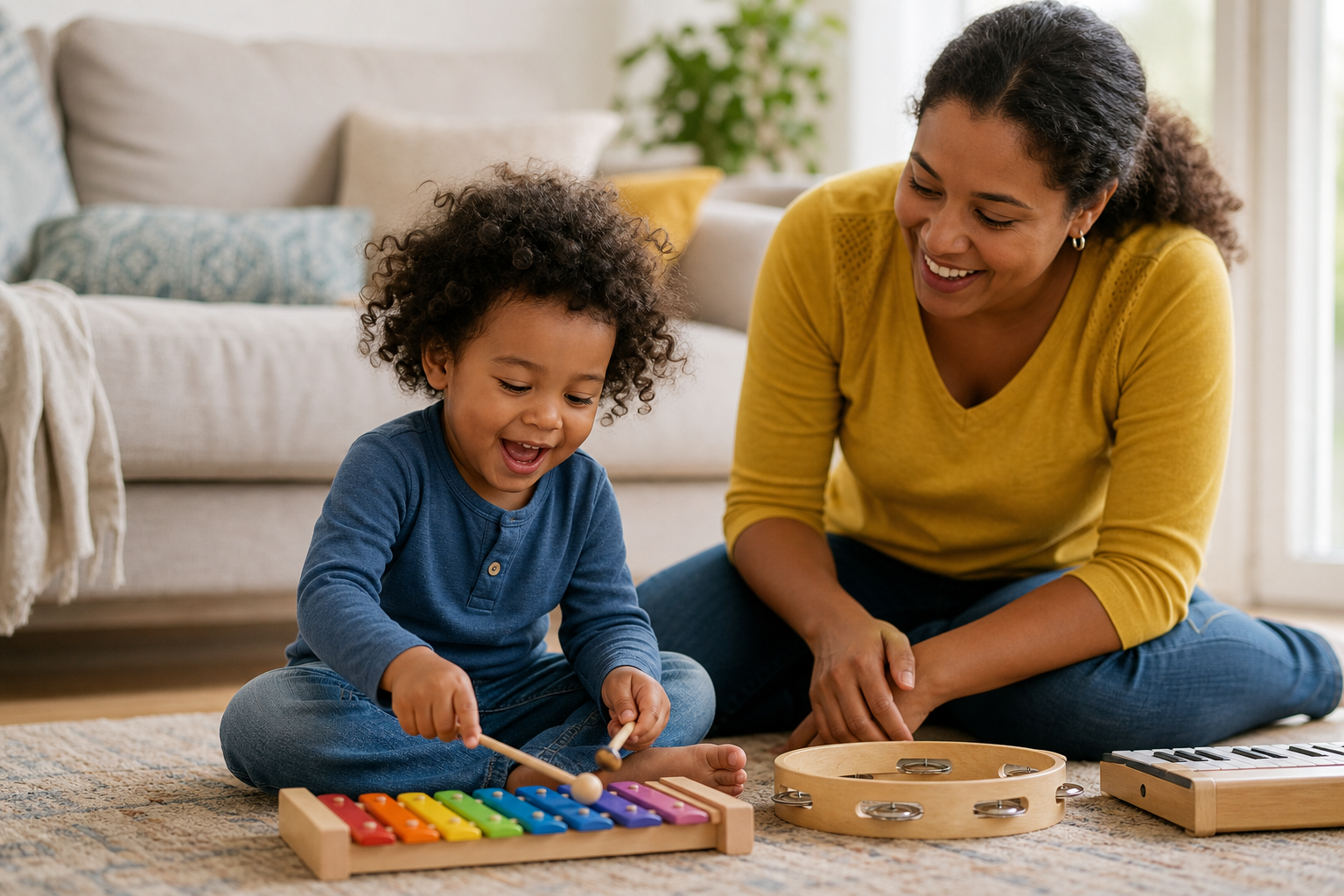
Starting an instrument early helps kids build focus and confidence that lasts.
Choosing an appropriate instrument, however, will depend largely on the age of the child. Some instruments, for example, just aren’t meant for younger children but may be learned at a later age. Price may affect your choice as well. While many schools and/or music stores offer rental programs, prices do vary. If budget is an issue, check out the prices of various instruments before you make a selection so your child isn’t disappointed when a particular instrument turns out to be unaffordable.
Tickling the Ivories
A good place for any child to start their musical instruction is with piano lessons. Piano provides a great foundation for learning to play other instruments later in life. There are many advantages to choosing piano. First of all, it may not be necessary to make a large investment at the start of lessons. Most piano teachers will tell you that children can start with an electronic keyboard rather than an acoustic piano, as long as it has a certain number of keys – preferably at least 60. That will be sufficient until your child begins playing music that goes beyond that range. By that time, you’ll be able to determine whether or not your child is enjoying his/her lessons.
Piano can also be started quite early. Both traditional and “Suzuki” method teachers often take students as young as 4 or 5 years old. However, if after taking several lessons the teacher thinks your child isn’t yet ready, respect his/her opinion and wait a year or two and try again. If you don’t, your child may become frustrated and never want to play again. Suzuki is especially designed to accommodate the learning styles of young players so consider a teaching trained in this method.
Band and Orchestra Instruments
If your child is in public school, they’ll probably be offered the opportunity to choose an instrument sometime during the mid-elementary school years, around 3rd or 4th grade. If you child is home-schooled, this may also be the time you’re starting to think about investing a bit more in his/her musical education.
Strings are most often introduced in 3rd grade, sometimes 2nd. If your child is of average height and weight, violin or viola would be a sound choice. Bigger 3rd graders might consider cello. String bass may be offered by 5th or 6th grade.
Because string instruments aren’t fixed-noted instruments (with buttons, valves, etc.), strings help your child develop their musical ear by teaching them to “find” the right pitches by placing their fingers on the correct spot on each string. You can usually purchase an inexpensive yet suitable violin or viola for around $100 to $150. Cellos are a bit more. Rental programs for strings are fairly inexpensive as well.
By 4th grade, woodwinds, brass, and percussion instruments are offered. At this point, your child should have the ability to play any of the instruments in those families, accept perhaps tuba, baritone, or bassoon. You can purchase “student” models of many of these instruments at an affordable price. If cost is an issue, consider flute, clarinet, or trumpet.
Instruments and Orthodontics
If your child wants to play a brass or woodwind instrument but wears braces, don’t automatically rule it out. Check with your orthodontist. Often, what instruments your child can play may depend on the dental problem they’re trying to correct. For example, if your child has a severe overbite, playing the clarinet (which involves placing the front teeth over the instrument) may not be the best choice.
Stick With It!
Playing an instrument is always fun at the start but the hard part usually comes about 60-90 days from the first lesson. Encourage your child to persevere during this tough period. It will get easier again once they’ve scaled a few hurdles!
What is a good first instrument for a young child?
Piano is an excellent starting point for almost any child. It provides a strong foundation for learning other instruments later, and children can begin on an affordable electronic keyboard (with at least 60 keys) rather than a full acoustic piano. Both traditional and Suzuki method teachers often accept students as young as 4 or 5 years old, making piano one of the most accessible early instrument choices.
What age should a child start playing a band or orchestra instrument?
Most schools introduce string instruments in 2nd or 3rd grade, while woodwinds, brass, and percussion typically come in 4th grade. For homeschooled children, those mid-elementary years (around ages 8–10) are generally a good time to add a second instrument beyond piano. The choice often depends on your child’s size — for example, average-sized 3rd graders do well with violin or viola, while bigger kids might try cello.
Can my child play an instrument if they wear braces?
Often yes — but it depends on the type of orthodontic correction they need. Don’t rule out brass or woodwind instruments automatically; instead, check with your orthodontist first. For example, a child with a severe overbite may find the clarinet uncomfortable since it requires placing the front teeth over the instrument. Your orthodontist can guide you toward instruments that work with your child’s specific treatment.
What should I do when my child wants to quit their instrument lessons?
Expect a difficult stretch around 60 to 90 days into lessons — that’s when the initial excitement fades and the real work of learning kicks in. Encourage your child to push through this period rather than quitting. The hard part is temporary, and once they clear a few musical hurdles the enjoyment comes back stronger. Remind them that every musician — even their favorites — went through this same phase.
Biography for Patricia Guth
Patricia Guth, a resident of the Philadelphia area, holds a degree in music education from Westminster Choir College, Princeton, NJ. For the past 25 years, Mrs. Guth has taught in both public and private elementary schools and has directed both community choirs and church choral and instrumental ensembles. She has been trained in a number of different musical methods, including Kindermusik and Kodaly.
As artistic director of the Young Singers of Pennsylvania since 1998, Mrs. Guth has traveled extensively with this award-winning choir, performing in such venues as Walt Disney World, Quebec City’s Canada Day celebration, Boston’s Faneuil Hall, Central Park in New York City, and many other locations throughout the eastern U.S. and Canada.
Mrs. Guth is also currently the Director of Music at the Ivyland (PA) Presbyterian Church, where she oversees a graded choir program.
Patricia has been married for 25 years to Gary, also a music teacher, and has two children. Son Ryan is a music teacher and daughter Emily is a dancer.
















Add Comment