














By Sophia Richards
Here is a scene that has played out in approximately every household with a child between the ages of three and twelve: your kid discovers knock-knock jokes, and for the next several weeks, you cannot walk past a closed door — any closed door, in your house, at the grocery store, theoretically at a funeral if you let your guard down — without being interrogated. “Knock knock.” You say “who’s there,” because you are a good sport and also because refusing only escalates the situation. What comes back is sometimes a genuinely solid pun. More often, at first, it’s nonsense with the confidence of a stand-up special. Either way, they are delighted, and you are contractually obligated to laugh, and honestly? After the fortieth repetition, the laugh gets a little more real than you’d expect.
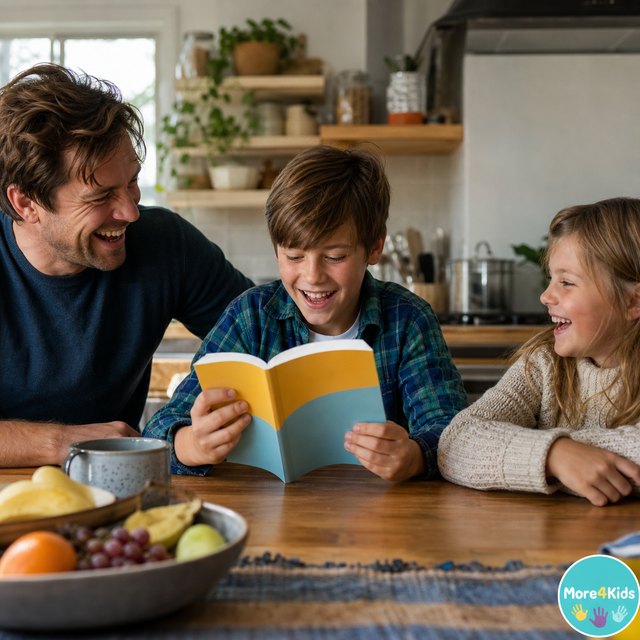
I went and did the actual work here: 100 knock-knock jokes, sorted by the age they’ll actually land at, so you’re not fishing through a pun about mortgage rates for something a four-year-old will understand, or handing your ten-year-old something so simple they’ll look at you with the specific disappointment only a ten-year-old can produce. (If you want the wider net — riddles, dad jokes, animal jokes, the lot — that all lives in our collection of clean jokes for kids. This page is the knock-knock deep dive.) I ranked them. I flagged the ones that are going to get told 400 times by Thursday. I tell you which ones are objectively terrible and why your kid is going to love them anyway. And because this is a parenting site and not just a joke aggregator, there’s real, sourced research woven through on why this dumb little door-based comedy format is quietly doing something useful for your kid’s brain — plus an infographic on the anatomy of the format itself, and a practical section on what to actually do when the same joke comes at you for the four-hundredth time.
Why Knock Knock Jokes for Kids Work So Well
Table of Contents
Before we get into the jokes: there’s a real developmental story running underneath knock-knock humor, and it’s more interesting than you’d guess for something that peaked culturally around the same time as Lisa Frank folders. Preschoolers laugh at knock-knock jokes for a completely different reason than eight-year-olds do, and eight-year-olds laugh for a different reason than eleven-year-olds. It’s not that older kids are “better” at the joke — their brains are doing a genuinely different kind of processing at each stage, and the knock-knock format happens to be flexible enough to meet all three of them where they are. I’ll flag the research as we go, in small doses, because nobody wants a parenting lecture wedged between “banana who” and “orange you glad.” But it’s real, and it’s cited, and it explains a lot about why this format has survived approximately forever.
One more thing before the jokes: every single one below was checked for accidental double meanings, checked against every other joke on this list so nothing repeats, and checked for whether it secretly only works in a specific accent (a shocking number of classic knock-knock jokes quietly require you to drop your R’s — those got cut). What’s left is 100 jokes that work read straight, out loud, in a normal American accent, by a kid who is proud of themselves for delivering it correctly.
The Toddler Tier: Ages 3-5 (Nonsense, Noise, and Pure Delighted Chaos)
Here’s the thing about knock-knock jokes for the youngest crowd: most of them aren’t really jokes. They’re noise and repetition wearing a joke costume, and that is exactly the point. A three-year-old does not care that “Cow says who? No, a cow says MOO!” isn’t technically a punchline in the pun sense. They care that something happened that they expected NOT to happen, and that is, according to actual humor researchers, the entire mechanism.
> The science, in one sentence: Developmental psychologists describe early humor as built on playing with expectations — a cow is supposed to say moo, so a cow saying woof is the joke, no pun-decoding required. This is a real, studied phase of humor development, not a sign your toddler broke the joke.
Which is why this age band leans hard into sound-repetition and pure nonsense rather than actual wordplay — that’s not a lesser version of the format, it’s the correct one for this age, and if you’ve ever wondered why your preschooler thinks “the cow says woof” is the funniest thing that has ever happened, now you know it’s basically on brand for their brain.
Here’s the toddler tier, all 30, in order:
1. Boo
Knock knock. Who’s there? Boo. Boo who?
Aw, don’t cry, it’s just a joke!
2. Cow says
Knock knock. Who’s there? Cow says. Cow says who?
No, a cow says MOO!
3. Woof
Knock knock. Who’s there? Woof. Woof who?
Wow, I didn’t know you could bark!
4. Banana
Knock knock. Who’s there? Banana. Banana who?
Banana split so ice creamed!
5. Orange
Knock knock. Who’s there? Orange. Orange who?
Orange you glad I knocked?
6. Duck
Knock knock. Who’s there? Duck. Duck who?
Duck! Something’s flying at you!
7. Moo
Knock knock. Who’s there? Moo. Moo who?
Make up your mind — are you a cow or an owl?
8. Cheese
Knock knock. Who’s there? Cheese. Cheese who?
Cheese a very good friend of mine!
9. Water
Knock knock. Who’s there? Water. Water who?
Water you waiting for, open up!
10. Beetle
Knock knock. Who’s there? Beetle. Beetle who?
Beetle you knock on the right door!
11. Snow
Knock knock. Who’s there? Snow. Snow who?
Snow use, I forgot my name!
12. Wooden shoe
Knock knock. Who’s there? Wooden shoe. Wooden shoe who?
Wooden shoe like to hear another knock-knock joke?
13. Owl
Knock knock. Who’s there? Owl. Owl who?
Owl be your friend if you open the door!
14. Tank
Knock knock. Who’s there? Tank. Tank who?
You’re welcome!
15. Pig
Knock knock. Who’s there? Pig. Pig who?
Pig me up after school?
16. Little old lady
Knock knock. Who’s there? Little old lady. Little old lady who?
I didn’t know you could yodel!
17. Cows go
Knock knock. Who’s there? Cows go. Cows go who?
No, cows go MOO!
18. Toot
Knock knock. Who’s there? Toot. Toot who?
Are you a train or an owl?
19. Honeybee
Knock knock. Who’s there? Honeybee. Honeybee who?
Honeybee a dear and open the door!
20. Dishes
Knock knock. Who’s there? Dishes. Dishes who?
Dishes me, your favorite friend!
21. Interrupting cow
Knock knock. Who’s there? Interrupting cow.
Interrupting cow w— MOO!
22. Hatch
Knock knock. Who’s there? Hatch. Hatch who?
Bless you!
23. Icy
Knock knock. Who’s there? Icy. Icy who?
Icy you peeking through the window!
24. Bee
Knock knock. Who’s there? Bee. Bee who?
Bee careful, I might sting!
25. Justin
Knock knock. Who’s there? Justin. Justin who?
Justin time for a joke!
26. Alpaca
Knock knock. Who’s there? Alpaca. Alpaca who?
Alpaca the lunch if you pack the snacks!
27. Sheep
Knock knock. Who’s there? Sheep. Sheep who?
Sheep said to knock twice!
28. Broccoli
Knock knock. Who’s there? Broccoli. Broccoli who?
Broccoli doesn’t have a last name, silly!
29. Turnip
Knock knock. Who’s there? Turnip. Turnip who?
Turnip the volume, this is my favorite song!
30. Woo
Knock knock. Who’s there? Woo. Woo who?
Wow, I didn’t know we were celebrating!

The joke this image depicts: “Knock knock. Who’s there? Interrupting cow. Interrupting cow w— MOO!”
Let’s talk rankings, because I promised you honesty. #21, the interrupting cow, is the single best joke on this entire 100-joke list, and I will not be taking questions. It requires zero pun comprehension, it has a physical performance element (you get cut off, which is genuinely funny to watch a toddler execute), and it will be told to you no fewer than 400 times over the coming month. Buckle up. #1, “Boo who,” is the reigning classic for a reason — it’s the training-wheels joke, the one that basically every kid cuts their comedic teeth on, and there’s something sweet about how it’s engineered to comfort the “sad” character inside the joke itself. #16, the yodeling little old lady, is objectively unhinged — there is no internal logic to it whatsoever, it’s a non sequitur wearing a knock-knock costume — and that is exactly why toddlers find it hilarious. Nonsense doesn’t need to make sense at this age; it just needs to be surprising. #28, the broccoli joke, is the kind of joke that only works if you deliver it completely deadpan, like broccoli having a last name was ever a real possibility anyone considered, and toddlers somehow instinctively nail that delivery every time.
Fair warning on #12, “wooden shoe”: this one is doing quiet, sneaky work. Say it out loud a couple of times and you’ll notice it’s actually a homophone joke smuggled into the toddler section — a slightly early example of the wordplay mechanism the next age group is about to fall in love with. Consider it a preview.
The Sweet Spot: Ages 6-8 (Where Puns Suddenly Click)
This is the age range where something genuinely clicks in a kid’s brain, and it happens fast enough that you’ll notice it in real time. One month your six-year-old is delivering nonsense jokes with total confidence and no idea why they’re funny; a few months later, they’re making up their own puns, badly, proudly, and demanding you rate them.
> The science, in one sentence: Riddle and pun comprehension appears to come online gradually through the early elementary years — humor-development research and summaries of McGhee’s stage work point to kids beginning to understand double meanings around ages 6 or 7, which is the window where this stuff stops being noise and starts being wordplay.
There’s a real developmental shift — right around age six to eight — where a kid goes from “the punchline means nothing to me” to “I am now insufferable about puns, please respond to my pun.” You are currently watching this window open, possibly in real time as you read this. Godspeed.
This band leans hard into split-word and homophone jokes — the answer to “who’s there” splitting apart into two real words on the punchline, or sounding like an unrelated phrase — because that’s precisely the kind of wordplay a 6-8-year-old’s brain is newly wired to catch. Here’s all 40:
31. Lettuce
Knock knock. Who’s there? Lettuce. Lettuce who?
Lettuce in, it’s cold out here!
32. Doris
Knock knock. Who’s there? Doris. Doris who?
Doris locked, that’s why I’m knocking!
33. Ice cream
Knock knock. Who’s there? Ice cream. Ice cream who?
Ice cream if you don’t let me in!
34. Harry
Knock knock. Who’s there? Harry. Harry who?
Harry up, I’m freezing out here!
35. Wanda
Knock knock. Who’s there? Wanda. Wanda who?
Wanda come outside and play?
36. Anita
Knock knock. Who’s there? Anita. Anita who?
Anita use your bathroom, it’s an emergency!
37. Ken
Knock knock. Who’s there? Ken. Ken who?
Ken I come in already?
38. Butter
Knock knock. Who’s there? Butter. Butter who?
Butter let me in before I melt!
39. Olive
Knock knock. Who’s there? Olive. Olive who?
Olive right next door to you!
40. Nobel
Knock knock. Who’s there? Nobel. Nobel who?
Nobel, that’s why I knocked!
41. Dwayne
Knock knock. Who’s there? Dwayne. Dwayne who?
Dwayne the bathtub, it’s overflowing!
42. Amos
Knock knock. Who’s there? Amos. Amos who?
A mosquito just bit me!
43. Ivan
Knock knock. Who’s there? Ivan. Ivan who?
Ivan to know you better!
44. Alaska
Knock knock. Who’s there? Alaska. Alaska who?
Alaska one more time — can I come in?
45. Wendy
Knock knock. Who’s there? Wendy. Wendy who?
Wendy you gonna open this door?
46. Pasta
Knock knock. Who’s there? Pasta. Pasta who?
Pasta salt, please, I’m cooking!
47. Says
Knock knock. Who’s there? Says. Says who?
Says me, that’s who!
48. Cash
Knock knock. Who’s there? Cash. Cash who?
No thanks, I prefer peanuts!
49. Sadie
Knock knock. Who’s there? Sadie. Sadie who?
Sadie magic word and I’ll let you in!
50. Adore
Knock knock. Who’s there? Adore. Adore who?
Adore is between us, open it!
51. Yukon
Knock knock. Who’s there? Yukon. Yukon who?
Yukon say that again!
52. Radio
Knock knock. Who’s there? Radio. Radio who?
Radio not, here I come!
53. Ferdinand
Knock knock. Who’s there? Ferdinand. Ferdinand who?
Ferdinand out what’s going on, open the door!
54. Handsome
Knock knock. Who’s there? Handsome. Handsome who?
Hand some snacks through the door, please!
55. Tuba
Knock knock. Who’s there? Tuba. Tuba who?
Tuba toothpaste is empty, got more?
56. Iowa
Knock knock. Who’s there? Iowa. Iowa who?
Iowa you an apology for all these jokes!
57. Weevil
Knock knock. Who’s there? Weevil. Weevil who?
Weevil see about that!
58. Kanga
Knock knock. Who’s there? Kanga. Kanga who?
No, kangaROO!
59. Zippy
Knock knock. Who’s there? Zippy. Zippy who?
Zippy your coat, it’s cold!
60. Mustache
Knock knock. Who’s there? Mustache. Mustache who?
Mustache you a question, but I’ll shave it for later!
61. Chicken
Knock knock. Who’s there? Chicken. Chicken who?
Chicken your pockets, I think you dropped your keys!
62. Waffle
Knock knock. Who’s there? Waffle. Waffle who?
Waffle you do if I said I forgot the punchline?
63. Turtle
Knock knock. Who’s there? Turtle. Turtle who?
Turtle you what, open the door and find out!
64. Panther
Knock knock. Who’s there? Panther. Panther who?
Panther no pants, I need to borrow some!
65. Cereal
Knock knock. Who’s there? Cereal. Cereal who?
Cereal-y, you don’t recognize my knock?
66. Denial
Knock knock. Who’s there? Denial. Denial who?
Denial is a river, not just a feeling!
67. Egg
Knock knock. Who’s there? Egg. Egg who?
Egg-cellent, you finally answered!
68. Sherwood
Knock knock. Who’s there? Sherwood. Sherwood who?
Sherwood like to come in, thanks!
69. Pecan
Knock knock. Who’s there? Pecan. Pecan who?
Pecan someone your own size!
70. Alien
Knock knock. Who’s there? Alien. Alien who?
Alien to you if I said I saw a spaceship?

The joke this image depicts: “Knock knock. Who’s there? Lettuce. Lettuce who? Lettuce in, it’s cold out here!”

The joke this image depicts: “Knock knock. Who’s there? Olive. Olive who? Olive right next door to you!”

The joke this image depicts: “Knock knock. Who’s there? Egg. Egg who? Egg-cellent, you finally answered!”

Rankings: #31, “lettuce in,” is the platonic ideal of this age band’s humor — a clean split-word gag, instantly gettable, and it has genuine staying power because there’s a whole vegetable drawer’s worth of follow-up jokes once your kid figures out the mechanism (see also #39, olive, and note that once they crack one homophone joke, they will start trying to invent their own, and roughly 80% of those attempts will not work, and you will need to clap anyway). #58, “kangaROO,” deserves a special mention for being a joke that rewards a second read — the setup (“Kanga who?”) sounds like a totally reasonable question until the punchline reveals it was building to a much dumber pun the whole time. That’s a more sophisticated joke structure than it looks like on paper, which is exactly on schedule for this age. #66, “Denial is a river,” I’ll be honest, is a joke your kid will not fully understand for a couple more years — it’s a pun on “denial” and “the Nile,” and there’s a whole layer of “avoiding a hard truth” subtext that flies right past a seven-year-old, who will laugh anyway because you’re laughing. That’s fine. That’s actually how a lot of comedic education works — kids clock that something is funny before they clock exactly why, and figure out the “why” later, sometimes years later, sometimes at a moment that makes you a little sad about how fast that happened.
#64, “panther, no pants,” has a very good chance of getting an actual room-wide laugh at a birthday party, because elementary kids remain, as a group, deeply committed to pants-based comedy. #54, “hand some snacks,” is a joke you should be strategically prepared to have used against you at dinner time, because your kid absolutely will figure out that this one doubles as an actual snack request with comedic cover.
The Anatomy of a Knock-Knock Joke
Before we get to the big kids, here’s something worth pinning to your fridge or saving to your phone: a full breakdown of exactly how the knock-knock format is built, why each of its five lines exists, and how the humor ladder climbs from toddler nonsense to tween wordplay. It’s genuinely useful if you ever want to help your kid build their own joke from scratch instead of just reciting one — the structure is more deliberate than it looks.

Save or pin this one — it breaks down the five-line structure of every knock-knock joke on this page, plus the age-by-age humor ladder and three fully worked examples.
There’s real research behind why this exact structure is doing something useful, not just being cute: the predictable back-and-forth of “Knock knock / Who’s there? / [name] / [name] who? / [punchline]” is, according to speech and language practitioners, one of the first fully scripted conversations most kids ever memorize — and because the pattern is so consistent, a child can plug in any word they like and still produce something that sounds like a real exchange, which is exactly the kind of low-stakes practice that builds real conversational turn-taking. Long before your kid can hold an actual back-and-forth about their day, they can hold this one. That’s not nothing.
The Connoisseurs: Ages 9-12 (Longer Setups, Sharper Groans)
By the time a kid hits nine or ten, something shifts again, and it’s not really about comprehension anymore — they’ve had comprehension for a while now. What shifts is what they want from the joke. This age group isn’t satisfied being the audience; they want to be the one telling it, timing it, and watching your face for the exact moment the pun lands. If you deliver a groan on cue, you have made their entire day.
> The science, in one sentence: Researchers studying humor comprehension have found that full riddle understanding isn’t actually “complete” until around age eight — which tracks with why 9-12-year-olds aren’t laughing at the wordplay so much as evaluating whether you delivered it correctly. They’ve graduated from “getting it” to “judging your performance.”
Which, if you have a preteen in your house, will sound extremely familiar as a general life pattern, not just a joke thing.
This band goes for longer setups and sharper, sometimes layered wordplay — the kind of joke that makes an adult groan out loud, which, to a 9-12-year-old, is the whole point. Here’s all 30:
71. Europe
Knock knock. Who’s there? Europe. Europe who?
Europe early, the show doesn’t start till noon!
72. Arthur
Knock knock. Who’s there? Arthur. Arthur who?
Arthur any more cookies left, or did you eat them all?
73. Norway
Knock knock. Who’s there? Norway. Norway who?
Norway am I leaving until I tell you this joke!
74. Interrupting sloth
Knock knock. Who’s there? Interrupting sloth.
Interrupting sloth wh— (long pause) …oo.
75. Atch
Knock knock. Who’s there? Atch. Atch who?
Bless you, that’s a big sneeze!
76. Gladys
Knock knock. Who’s there? Gladys. Gladys who?
Gladys almost the weekend, aren’t you?
77. Alma
Knock knock. Who’s there? Alma. Alma who?
Alma homework is done, wanna hang out?
78. Isabelle
Knock knock. Who’s there? Isabelle. Isabelle who?
Is a bell working, or do I have to keep knocking?
79. Amazon
Knock knock. Who’s there? Amazon. Amazon who?
A-mazin’ you still haven’t guessed this one!
80. Canoe
Knock knock. Who’s there? Canoe. Canoe who?
Canoe keep a secret? I forgot the rest of the joke!
81. Philip
Knock knock. Who’s there? Philip. Philip who?
Philip my water bottle, I’m parched!
82. Warrior
Knock knock. Who’s there? Warrior. Warrior who?
Warrior been all my life?
83. Thermos
Knock knock. Who’s there? Thermos. Thermos who?
Thermos be a better joke than this one somewhere!
84. Anee
Knock knock. Who’s there? Anee. Anee who?
Anee-body home, or should I keep knocking?
85. Ketchup
Knock knock. Who’s there? Ketchup. Ketchup who?
Ketchup with me later, I’ve got places to be!
86. Nunya
Knock knock. Who’s there? Nunya. Nunya who?
Nunya business, just open the door!
87. Anthem
Knock knock. Who’s there? Anthem. Anthem who?
Anthem question is, are you gonna let me in?
88. Gorilla
Knock knock. Who’s there? Gorilla. Gorilla who?
Gorilla cheese sandwich and I’ll let you in!
89. Fanta
Knock knock. Who’s there? Fanta. Fanta who?
Fanta Claus, and I brought you jokes instead of presents!
90. Utah
Knock knock. Who’s there? Utah. Utah who?
Utah-ly forgot the punchline, give me a second!
91. Cantaloupe
Knock knock. Who’s there? Cantaloupe. Cantaloupe who?
Cantaloupe tonight, we’re not old enough to drive!
92. Distress
Knock knock. Who’s there? Distress. Distress who?
Distress is way too tight, I can barely breathe!
93. Genoa
Knock knock. Who’s there? Genoa. Genoa who?
D’you Genoa good joke? Because this isn’t one!
94. Havana
Knock knock. Who’s there? Havana. Havana who?
Havana great time, wish you were here!
95. Irish
Knock knock. Who’s there? Irish. Irish who?
Irish you’d hurry up and open this door!
96. Juno
Knock knock. Who’s there? Juno. Juno who?
Juno how long I’ve been standing out here?
97. Missile
Knock knock. Who’s there? Missile. Missile who?
Missile toe, stand under it and see what happens!
98. Statue
Knock knock. Who’s there? Statue. Statue who?
Statue-pid question, obviously it’s me!
99. Toby
Knock knock. Who’s there? Toby. Toby who?
Toby or not Toby, that is the question!
100. Yaya
Knock knock. Who’s there? Yaya. Yaya who?
Yaya sister told me you’d say that!

The joke this image depicts: “Knock knock. Who’s there? Missile. Missile who? Missile toe, stand under it and see what happens!”

The joke this image depicts: “Knock knock. Who’s there? Ketchup. Ketchup who? Ketchup with me later, I’ve got places to be!”

The joke this image depicts: “Knock knock. Who’s there? Statue. Statue who? Statue-pid question, obviously it’s me!”
Rankings for this crowd: #74, the interrupting sloth, is a genuinely great piece of joke construction — it’s a callback to the interrupting cow structure from the toddler section, except the entire punchline is a timing joke, built on the fact that a sloth would take forever to say anything. A kid who can land this one with the correct dramatic pause has actually developed real comedic timing, and you should tell them so. #99, “Toby or not Toby,” is the most ambitious joke on this entire list — it’s riffing on Shakespeare, which means it will sail completely over some kids’ heads and land as an instant favorite with others, usually the ones who’ve just discovered they like being the smartest person in a room. Either reaction is a win. #97, “missile toe,” is the kind of joke that gets funnier the more you think about it, which is a rare quality in a pun, and it will absolutely get deployed at every family gathering between now and New Year’s. #91, “cantaloupe,” is doing something a little sly for this age group — “can’t elope” is a joke about marriage, of all things, delivered to ten-year-olds, and it works precisely because they don’t need to fully understand elopement to get that the sounds match up. That’s the split-word mechanism operating at its most sophisticated: the joke lands on sound before meaning ever has to show up.
#86, “Nunya business,” and #98, “statue-pid question,” both carry a hint of sass, and I checked both of these carefully — they’re mild, self-aware, and squarely in the range of humor you’d find in a published grade-school joke book, not actual rudeness. If your kid tries “Nunya business” on you as an actual answer to an actual question, that’s a parenting problem knock-knock jokes did not create, but I do apologize for handing them the ammunition.
When They Tell the Same Joke 400 Times
Here’s a thing that will almost certainly happen: your kid will find one joke on this list — probably the interrupting cow, or lettuce, or the missile toe one if they’ve got a slightly darker sense of comedic timing — and they will tell it to you, and then to your spouse, and then to a sibling who has clearly already heard it, and then to a stranger at the grocery store, roughly 400 times over the following two weeks.
This is not a bug. For young kids, telling a joke over and over is, functionally, rehearsal. Every time they land the timing correctly, they’re reinforcing something: the structure, the confidence, the specific thrill of watching an adult’s face do the thing they were hoping for. Your job in this phase is genuinely simple and does not require inventing new reactions each time: laugh like you mean it, or as close to that as you can manage on repetition #312. You don’t need to fake surprise at the punchline — kids this age generally aren’t looking for surprise, they’re looking for confirmation that the joke still works, which, weirdly, is a pretty reasonable thing to want.
Coaching a Kid Who Fumbles the Punchline
The flip side, and the one that actually needs a little parent skill: what do you do when your kid gets halfway through a joke, forgets the punchline, and looks at you in mild panic? The instinct is to jump in and save them — supply the missing word, smooth it over, keep things moving. Resist that instinct, if you can stand to.
The reason knock-knock jokes are useful for turn-taking in the first place is that the format is a rehearsal of real conversational structure — call, response, pause, payoff. A fumbled delivery isn’t a failure of that rehearsal, it’s the rehearsal actually happening, mid-repetition. The more useful move, when a kid stalls out, is to hold the pause a beat longer than feels comfortable and let them recover the line themselves — “who’s there again?” works as a gentle prompt without just handing them the answer. It’s a small thing, but it’s the difference between a kid who learns they can recover from a stumble and a kid who learns an adult will always catch them mid-sentence. Jokes are a genuinely low-stakes place to practice the first one.
There’s a second, quieter thing happening underneath a lot of these jokes too, especially the homophone-heavy 6-8 section: jokes built on a word with two meanings — “olive” sounding like “all of,” “egg” turning into “egg-cellent” — force a kid to hold two meanings of one word in their head at the same time. That specific skill, semantic flexibility, is the same one that later helps with figurative language in books and with the trickier reading-comprehension questions that show up once “the sky was crying” stops being confusing and starts being a metaphor. The groan a bad pun produces is basically a side effect of a brain successfully juggling two meanings at once — which is a nicer way to think about the collective family groan than “everyone is annoyed.”
Even the pure sound-and-repetition jokes from the toddler section are quietly on-task: hearing that “Boo” and “Boo-hoo” share a sound is exactly the kind of sound-structure awareness early-literacy resources call phonological awareness — a foundational pre-reading skill built through playful, repetitive sound-play. Your kid’s ear is doing homework it doesn’t know it’s doing, disguised as a joke about a crying ghost.

Sometimes the best part isn’t the punchline — it’s watching them wait for your reaction.
Frequently Asked Questions
What age are knock-knock jokes best for?
Knock-knock jokes work for a surprisingly wide age range, but not for the same reason at every age. Preschoolers usually love the rhythm, repetition, and nonsense. Kids around 6-8 start catching the wordplay. Older kids often like controlling the delivery, especially if they can make an adult groan on schedule.
Why does my child tell the same knock-knock joke over and over?
Because it worked once, and now they are testing whether the comedy machine still turns on. Repeating the same joke lets kids practice the pattern, timing, and confidence of the delivery. You do not have to perform Oscar-level surprise every time. A warm laugh and “you nailed the timing” will usually do more good than pretending you have never met the interrupting cow before.
Do knock-knock jokes help with reading skills?
They can support some of the same early language muscles kids use for reading. Sound-based jokes help kids notice shared sounds, and wordplay jokes ask them to hold two meanings or two sound-alike phrases in mind. That does not turn a joke book into a reading curriculum, thank goodness, but it does mean the groaning has a tiny educational halo.
How can I help my kid tell a joke better?
Keep the structure steady and let them recover when they stumble. If they forget the punchline, try a gentle prompt like “who was at the door again?” instead of jumping straight to the answer. The goal is not a flawless comedy set. The goal is a kid learning timing, turn-taking, and the lovely little thrill of making someone laugh.
The Bottom Line
A hundred knock-knock jokes is, on paper, just a list. What actually makes it worth your time is everything happening underneath the list: a three-year-old who thinks a cow saying “woof” is the funniest sentence ever constructed, a seven-year-old whose brain just cracked open the entire concept of wordplay and will not shut up about it, and an eleven-year-old who wants credit for landing the timing on a joke about Shakespeare. None of them are laughing for the same reason. All of them are, genuinely, doing something real with their brains while you’re both just standing at a door pretending to be surprised.
So: pick a joke, any joke — I’d start with the interrupting cow if you want the safest bet in the building, or lettuce if your kid’s ready for their first real pun — and go knock on something. You’ve got 99 more where that came from, whenever they’re ready.
If your kid burns through all 100 of these by the weekend (they will), we’ve got a full stash of kid-friendly riddles, a pile of groan-worthy dad jokes, and the rest of our clean joke collection waiting for round two — plus a deeper look at why play time matters for kids if you want the parenting-brain version.
Related Articles
- Kids Jokes: 75+ Clean, Funny Jokes for Kids (with Comics!)
- Dad Jokes for Kids: 30 Clean, Groan-Worthy Favorites
- Riddles for Kids: 30 Fun, Clever Brain-Teasers
- The Science of Play Time

Meet Sophia Richards Sophia Richards is an early childhood educator, passionate writer, and the proud mom of three energetic kids. With a degree in Education and over a decade of hands-on classroom experience, Sophia bridges the gap between professional teaching strategies and everyday family life. At More4Kids, she translates complex child development concepts into practical, actionable parenting tips that families can use at home.
Whether she is sharing positive reinforcement techniques, educational crafts, or honest reflections on the chaos of raising three children under one roof, Sophia’s goal is to empower parents to foster resilience and joy in their kids. When she isn't writing or lesson planning, you can find her organizing neighborhood scavenger hunts or trying out new kid-friendly recipes.
Areas of Expertise: Early Childhood Education, Positive Parenting, Sibling Dynamics, Educational Play, Family Wellness.

Add Comment