
















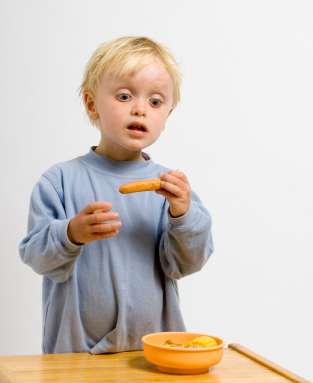
 Most parents are faced with this problem. Would’nt it be nice if our children ate everything put in front of them? As parents we all want our kids to have a healthy diet, but a toddler can make that task nearly impossible. My son, who is 4 1/2 can definitetly be a challenge. Children at that age and younger are notoriously picky eaters, and sometimes getting them to eat a well balanced meal can be quite a challenge. Even when a child eats well as a baby, a toddler may all of a sudden hate everything you try to feed him. Parents can only hope that the foods the little guy chooses are healthy and nutritious, but unfortunately that is not always the case.

The reason for this sudden change is unknown, but several studies point to boredom as a possible cause. If you take a look why many [tag-ice]children[/tag-ice] choose the foods they do, you will notice that they are usually bright in color or made of interesting texture. Toddlers get bored with food easily, so a parent must take the initiative to make meals interesting and unique. Here are some fool-proof tips to try with your toddler and their food, to create a well balanced diet for your little one.
Make Toddler Food Interesting
As previously mentioned, make it interesting. [tag-cat]Toddlers[/tag-cat] get bored with food, so make sure they don’t get the same thing twice in a row, or even in the same week, depending on your toddler (some have seemingly uncanny memories). You might also wish to try incorporating bright foods such as carrots, peppers, cucumbers, or tomatoes to make for an aesthetically pleasing plate. Bright foods are interesting food to toddlers, and hence they may be more inclined to eat them. These foods are also crunchy and crisp, so they have interesting textures. Parents frequently make the mistake of feeding their toddler bland food because they don’t want to feed them anything unhealthy, but bland food gets boring and unappetizing very quickly. Children don’t need salt, sugar or chocolate to be satisfied; just colors, textures and plenty of time to eat.
Use Your Imagination
If your toddler enjoys imaginary games, you may wish to go even further with trying to impress her with fun toddler food. Fun treats usually imitate something they like, such as ants on a log (celery sticks with peanut butter and raisins) or marshmallow men made from pretzel sticks and mini marshmallows. You could also choose the approach of making sandwiches into fun shapes with cookie cutters. This method works great with cheese too, as it is nutritious and fun. Your best bet is to continue to try different foods, since something he doesn’t like on day may become his new favorite food the next. Barring any [tag-tec]food allergies[/tag-tec], you child can try any food you choose to offer him, and over time he will learn that a variety of foods is much more interesting than one or two favorites.
Why does my toddler suddenly refuse foods they used to eat?
Table of Contents
This kind of sudden shift is pretty common and can catch parents off guard. One reason researchers point to is boredom — toddlers get bored with food easily, and something that felt new and interesting a few weeks ago can lose its appeal fast. The good news is that continuing to offer a variety of foods, without pressure, gives them the chance to come around on their own.
What kinds of foods are most appealing to picky toddlers?
Toddlers tend to be drawn to foods that are bright in color or have interesting textures. Colorful vegetables like carrots, peppers, cucumbers, and tomatoes can catch a toddler’s eye and feel satisfying to eat because of their crunch and crispness. Avoiding bland, uniform-looking food is one of the simplest ways to spark a little curiosity at the table.
How can I make meals more interesting for a picky toddler?
Mix things up regularly — some toddlers remember exactly what they ate last time and can tune out a repeat before they even taste it. Using cookie cutters to make fun shapes out of sandwiches or cheese, or trying playful combinations like celery sticks with peanut butter and raisins, can turn a meal into something worth exploring. Making food feel like part of imaginative play often works better than pressure.
Do I need to add salt, sugar, or sweet sauces to get my toddler to eat?
Not at all. What toddlers really respond to is color, texture, and variety — not added salt, sugar, or chocolate. Keeping food simple, visually interesting, and giving them enough time to eat at their own pace usually does more good than loading a plate with flavors designed to please adults.



Add Comment