















By Sophia Richards
The Candy Land board went airborne on a Tuesday. My middle one, seven at the time, had been one square from Queen Frostine when his little sister drew the peppermint card that shot her to the finish, and before I could even say “oh, tough break,” the cards were raining down and he was facedown on the rug howling like the world had ended. His sister burst into tears at the noise. The dog left the room. And I sat there in the confetti of a game we’d played a hundred times, thinking the same thing you’re probably thinking right now: how on earth do I teach this child to lose without a category-five meltdown?

If you have a kid who crumbles after a loss — flips the board, sobs over a soccer game, accuses everyone of cheating, or announces they’re “never playing again” — come sit with me. I want to walk you through how to teach kids to lose gracefully, and I want to start by taking a weight off your shoulders: a child who falls apart when they lose is not spoiled, not a bad sport for life, and not evidence that you’ve done something wrong. They are a young human whose feelings are enormous and whose brakes are still being installed. Losing well is a learned skill — one of the most useful ones we ever hand our kids — and the good news is that it’s absolutely teachable, gently, over time. Let me show you what’s really going on when your child loses, what a “good sport” actually is, and seven warm, doable ways to teach kids to lose gracefully — growing a gracious loser (and an even more gracious winner) at your own kitchen table.
Why Losing Feels So Big (It’s Development, Not Defiance)
Table of Contents
Here’s the reframe that got me off that rug and back into compassion: my son wasn’t being dramatic, his brain was doing exactly what a seven-year-old brain does. The part of us that manages disappointment, controls impulses, and talks us down from a big feeling — the emotional brakes — is one of the last things to finish developing, well into the teen years. So when a young child loses, the flood of frustration arrives at full volume with almost nothing yet to dial it down. What looks like a tantrum is very often a genuine overwhelm.
And sports and games, it turns out, are one of the main places kids get to practice those brakes. The American Academy of Pediatrics, in its guidance on organized sports, points out that “the camaraderie and teamwork needed on a playing field offers lasting lessons on personal responsibility, sportsmanship, goal-setting and emotional control.” Emotional control is right there on the list — not as a prerequisite kids show up with, but as a lesson they learn through playing. In other words, the meltdown isn’t the failure. The meltdown is the raw material. Every lost game is a rep in the gym of learning to handle big feelings, and our job isn’t to prevent the losses — it’s to coach the recovery. If your child’s feelings routinely run away from them, our guide to helping kids manage big emotions pairs beautifully with everything here.
What “Good Sport” Really Means
Before we get to the how, let’s get clear on what we’re actually aiming for, because “be a good sport” is one of those phrases we say a lot and define almost never. Stanford Medicine Children’s Health puts it about as clearly as I’ve seen in its piece on teaching children good sportsmanship: “Good sportsmanship may seem hard to define, but its hallmarks include being able to win without gloating, respecting one’s opponents, and being able to lose gracefully.”
I love that it’s three things, not one — because it means being a good sport, and practicing good sportsmanship, isn’t only about losing. The kid who rubs a win in his sister’s face needs this lesson exactly as much as the kid who cries when he loses. The Stanford team lays out the everyday version for kids in plain language: “If you lose, don’t make up excuses. If you win, don’t rub it in. Learn from mistakes and get back in the game. Always do your best.” And when the other side wins? “Accept defeat, acknowledge their abilities, and move on.” That’s the whole picture we’re building toward — not a stone-faced kid who feels nothing when they lose, but a child who feels the disappointment and can still shake the other person’s hand and mean it.
Notice what good sportsmanship is not: it’s not never minding that you lost. Grace isn’t the absence of feeling; it’s what you do with the feeling. We’re not raising kids who don’t care. We’re raising kids who care — and cope.
How to Teach Kids to Lose Gracefully: 7 Gentle Steps
None of what follows is a lecture delivered in the heat of a meltdown (lectures land about as well as that airborne Candy Land board). Think of these as slow, warm, repeatable habits you build on ordinary game nights and car rides home — long before and long after the hard moment itself.
1. Model it yourself — let them watch you lose well
This is the big one, the one everything else rests on, and it’s a little uncomfortable: our kids learn to lose by watching us. Nemours KidsHealth says it straight in its guide to raising a good sport: “Kids learn how to be a good sport from the adults in their lives, especially their parents and coaches.”
That means the most powerful lesson isn’t a talk — it’s the face you make when you lose the card game, groan at the referee on TV, or lose your temper in traffic. So I started narrating my own losses out loud, on purpose: “Aw, you beat me fair and square — good game!” and “I really wanted to win that one. Oh well, that was still fun.” I let them catch me being a gracious loser in the small stuff. And when a pro athlete on TV congratulates a rival, I point it out; when one throws a fit, we talk about that too. Your child is always studying you. If you want to teach kids to lose gracefully, the first classroom is your own face. Let them study grace.
2. Praise the effort, not the scoreboard
If winning is the only thing that earns a celebration in your house, losing will always feel like a catastrophe. So I shifted what I make a big deal about. Instead of “You won! You’re the best!” I try for “You never gave up even when you were behind — that was awesome to watch.” KidsHealth suggests exactly this refocus, encouraging kids to “accept a loss and focus on what they can do to improve rather than getting upset or blaming others.”
This is where losing and a growth mindset meet: when a child learns that effort, improvement, and courage are the real prizes, a loss stops being proof they’re worthless and starts being information they can use. The AAP goes so far as to urge families to put “enjoyment of sports—instead of winning—as the ultimate goal.” Say that with your praise, over and over, and you slowly rewrite the scoreboard in your child’s head.
3. Name the feeling before you fix the behavior
In the hot moment, skip the sportsmanship speech. A flooded child cannot hear “we don’t throw the cards” — the thinking part of their brain has temporarily left the building. What they can feel is you, staying calm and putting words to the storm: “You are so disappointed. You really wanted to win, and it stinks that you didn’t.” That’s it. That’s the whole intervention in the moment.
Naming the feeling does something almost magical — it tells your child the emotion is allowed, which is the very thing that lets it start to pass. Only once they’ve come back down do you gently coach the behavior. This “feel it first, then fix it” order is the heart of emotional regulation for kids, and it’s the difference between a child who buries their feelings and one who learns to ride them. You’re not excusing the flipped board; you’re just handling the human before the lesson.

4. Give them a simple recovery routine
Grace under pressure is easier when there’s a plan to reach for. So we built a tiny, three-step recovery routine my kids now know by heart: take one big breath, say “good game” (even through gritted teeth at first), and shake hands or tap gloves. Stanford’s sportsmanship guidance ends on exactly this note — a good sport knows to “end with a handshake” and to “end a game on a positive note, whether or not they won.”
The magic of a routine is that it gives the body something to do with the disappointment other than explode. The breath buys a beat; the “good game” is a small act of respect that, said enough times, starts to become sincere; the handshake closes the loop. We practiced it when the stakes were tiny — losing at Uno on a rainy afternoon — so that by the time a real soccer loss came, the routine was already in muscle memory. A calm-down step or two from your family’s go-to calming tools slots right in here.
5. Practice losing in small, safe doses at home
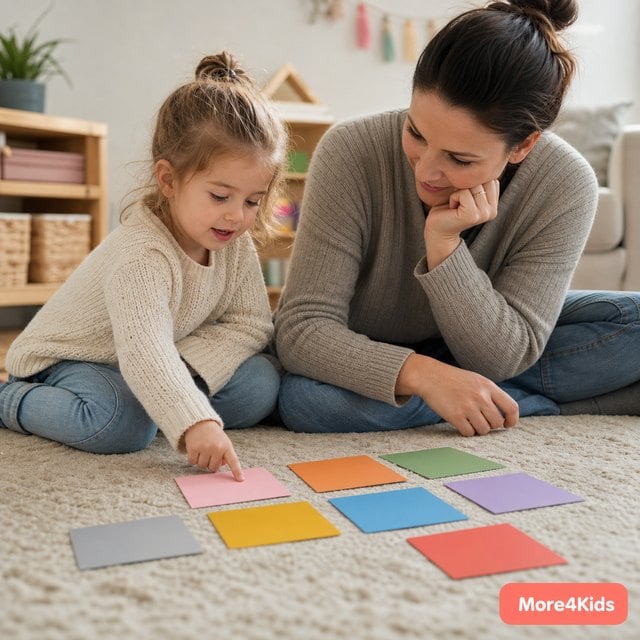
Here’s a mistake I made for a while: I let my kids win. Every time. I thought I was being kind. Really, I was robbing them of practice — sending them into the world with zero reps at losing and then acting surprised when they buckled. So we changed the rules. Now, at family game night, sometimes Mom wins, sometimes Dad wins, sometimes the four-year-old wins, and sometimes everybody loses to the baby who can’t even read the cards. Losing at home, wrapped in warmth and snacks and “good game,” is the safest possible place to practice.
Board games, card games, backyard races — these are low-stakes gyms for a gracious loser. Keep them fun, keep them frequent, and resist the urge to throw the game. A child who has lost a hundred rounds of Candy Land in a loving living room, and practiced being a good sport each time, walks onto the real field already a little bit brave. This is also fertile ground for teaching healthy competition — the kind that pushes kids to try hard without teaching them that the other player is the enemy.
6. Debrief with curiosity, not the score
The car ride home after a loss is holy ground, and for years I fumbled it — leading with “so what happened out there?” in a tone that landed as blame. KidsHealth offers a far better script: after a competition, “don’t focus on who won or lost,” and instead try asking, “What did you do well during the game?” and “Was there something you wish you could have done better?”
Those two questions changed our car rides completely. They tell my child that I’m not keeping score of their worth, that a loss is worth talking about with warmth and curiosity, and that there’s always a next time to work toward together. The AAP is clear that “parent support should be general and positive” — our job in the debrief is to be a soft place to land and a gentle coach, never a second referee. End every debrief with genuine pride in something real, and your child will actually want to get back in the game.
7. Separate the child from the outcome
This is the deepest one. A young child doesn’t naturally distinguish between “I lost the game” and “I am a loser” — the two feel like the same sentence. Our steady job is to keep prying them apart: “You lost the game. You are still exactly as smart, as fun, and as loved as you were before the whistle.” A loss is a thing that happened, not a verdict on who they are.
When kids know their worth isn’t riding on the scoreboard, losing gets so much less scary — and that’s the quiet engine under a gracious loser. Everything we do to build genuine confidence in a child makes losing survivable, because a secure kid can afford to be generous. It also feeds the flip side of sportsmanship: a child who feels good about themselves has room to respect an opponent, which is really just empathy with cleats on. The ability to lose gracefully and to win kindly grows from the very same root — a kid who knows they’re okay no matter what the score says.
What NOT to Do With a Sore Loser
Sometimes knowing what to skip helps as much as knowing what to try. A few gentle cautions from my own missteps:
- Don’t always let them win. It feels loving; it’s actually skipping the practice. Let them lose sometimes, safely, at home.
- Don’t shame the meltdown. “Don’t be such a sore loser” pins a label on a kid who is genuinely overwhelmed. Name the feeling, then coach the behavior — never mock it.
- Don’t overvalue winning yourself. If your face falls when your child loses, they learn that their loss is a disaster for the people they love. Keep your own reactions warm and light.
- Don’t compare them to a sibling or the kid who took it in stride. “Why can’t you lose like your brother?” only teaches a struggling child that they’re failing at feelings, too.
- Don’t force the sport. The AAP notes plainly that “forcing sports participation is not likely to help the child achieve long-term benefits,” and that “the interest should start with the child, not the parent.” A pressured kid has more to lose and less joy to fall back on.
- Don’t expect an overnight flip. You’re not curing sore-loserdom this Tuesday; you’re growing a skill across months and years of small, warm reps.
When a Sore Loser Might Need a Closer Look
Almost every young child struggles to lose sometimes — a few tears, a grumpy car ride, a dramatic “I quit” are all squarely, developmentally normal, and the warm approach above is exactly what grows them out of it. Big feelings about losing usually shrink steadily as a child matures and racks up practice.
Now and then, though, it’s worth a closer look. If your child’s reactions to losing are genuinely extreme for their age and not easing at all over time — real aggression toward other kids, rage that frightens them or others, distress so intense it’s souring friendships or making them refuse activities they used to love, or meltdowns wildly out of proportion long past the age you’d expect — those can be signs that something bigger is going on beneath the surface, sometimes anxiety, sometimes a difficulty with emotional regulation that would benefit from support. Kids who struggle mightily to bounce back may also need extra help building general resilience. Start with your pediatrician, who knows your child and can help you tell ordinary big-feelings-about-losing from something that could use a professional’s hand — and refer you onward if it’s warranted. Reaching out isn’t a failing grade on your parenting; it’s the attentive, loving move a struggling kid needs.
The Handshake That Finally Happened
That board-flipping seven-year-old? A couple of years later I watched him lose a close backyard soccer game to the neighbor kids — a real loss, the kind that used to end in cards on the ceiling. His shoulders dropped. His face went tight. And then, while I held my breath on the porch, he took a big breath of his own, walked over to the boy who’d scored the winning goal, and stuck out his hand. “Good game,” he said. He didn’t smile. He didn’t have to. He’d felt the whole disappointment and done the gracious thing anyway — which is the entire ballgame.

That’s what we’re really building when we teach kids to lose gracefully. Not a child who never minds losing — the world doesn’t need more people who’ve stopped caring. We’re building a good sport who can hold a hard feeling in one hand and someone else’s dignity in the other, and choose grace on purpose — a child who can lose gracefully and mean the handshake. It takes years, it takes a grown-up willing to model it in the small stuff, and it takes about a thousand rounds of Candy Land. But it lands. As Nemours puts it, the respect and self-control kids learn from good sportsmanship “can help them manage other parts of their lives” — long after the game is over. For more warm, everyday parenting help, the rest of our parenting guides are here whenever you need them, and if your struggles center on the field specifically, our companion piece on kids, sports, and handling disappointment digs into that lane.
Frequently Asked Questions
Why does my child get so upset when they lose?
Because the part of the brain that manages disappointment and controls impulses is still developing well into the teen years, so a young child feels the frustration of losing at full volume with very little yet to turn it down. What looks like a tantrum is usually genuine overwhelm, not defiance or spoiled behavior. It’s also completely normal — most kids struggle to lose at some point. The American Academy of Pediatrics actually frames games and sports as a place where children learn “emotional control,” meaning the hard moments are how the skill gets built. Your calm coaching through each loss is exactly what helps those emotional brakes grow stronger over time.
At what age should kids be able to lose gracefully?
There’s no hard switch-flip age — it’s a gradual skill, not a milestone. Toddlers and preschoolers will melt down over losing almost every time, and that’s developmentally expected. Early-elementary kids can start learning a recovery routine (a breath, a “good game,” a handshake) even if they still get upset. By later childhood many kids can lose with real grace most of the time, though everyone has an off day. Rather than watching the calendar, watch the trend: as long as your child is slowly getting better at recovering from a loss, they’re right on track, whatever their exact age.
Should I let my child win to avoid a meltdown?
It’s tempting, but letting them win every time actually backfires — it robs your child of practice at the very skill they need, and sends them into real-world games with zero reps at losing. Far kinder is to let them lose sometimes in the safest possible place: a warm family game night wrapped in snacks and “good game.” Mix it up so sometimes you win and sometimes they do. A child who has lost a hundred low-stakes rounds at home, and been comforted and coached through each one, walks onto the real field already braver and more resilient than one who’s only ever won.
How do I handle a sore winner who rubs it in?
Good sportsmanship cuts both ways, so treat gloating like the flip side of the same coin. Stanford’s guidance is blunt and useful for kids: “If you win, don’t rub it in.” In the moment, keep it warm but clear — “You won, and that’s great; now let’s make sure the other player still feels good too” — and model gracious winning yourself by congratulating your opponents genuinely. Teach your child to offer a specific compliment to the person who lost (“you had some great moves out there”). A kind winner and a gracious loser grow from the same root: caring how the other person feels, win or lose.
What if my child refuses to play games at all to avoid losing?
Avoidance is a common, understandable move for a child who finds losing painful, but skipping the game entirely also skips the growth. Ease back in with very low-stakes, cooperative, or luck-based games where losing feels less personal, and pour your praise onto effort and fun rather than the outcome. Keep your own energy light and stay a soft place to land after a loss. If the avoidance is intense, persistent, and spilling into a lot of anxiety across other parts of life, it’s worth checking in with your pediatrician — sometimes a strong fear of losing is one thread of a bigger worry that responds well to gentle support.
Related Articles
- How To Help Kids Manage Big Emotions
- Growth Mindset For Kids
- Emotional Regulation For Kids
- Parenting Tips For Encouraging Healthy Competition
- How To Build Confidence In A Child
- Teaching Kids Empathy

Meet Sophia Richards Sophia Richards is an early childhood educator, passionate writer, and the proud mom of three energetic kids. With a degree in Education and over a decade of hands-on classroom experience, Sophia bridges the gap between professional teaching strategies and everyday family life. At More4Kids, she translates complex child development concepts into practical, actionable parenting tips that families can use at home.
Whether she is sharing positive reinforcement techniques, educational crafts, or honest reflections on the chaos of raising three children under one roof, Sophia’s goal is to empower parents to foster resilience and joy in their kids. When she isn't writing or lesson planning, you can find her organizing neighborhood scavenger hunts or trying out new kid-friendly recipes.
Areas of Expertise: Early Childhood Education, Positive Parenting, Sibling Dynamics, Educational Play, Family Wellness.

Add Comment