















By Sophia Richards
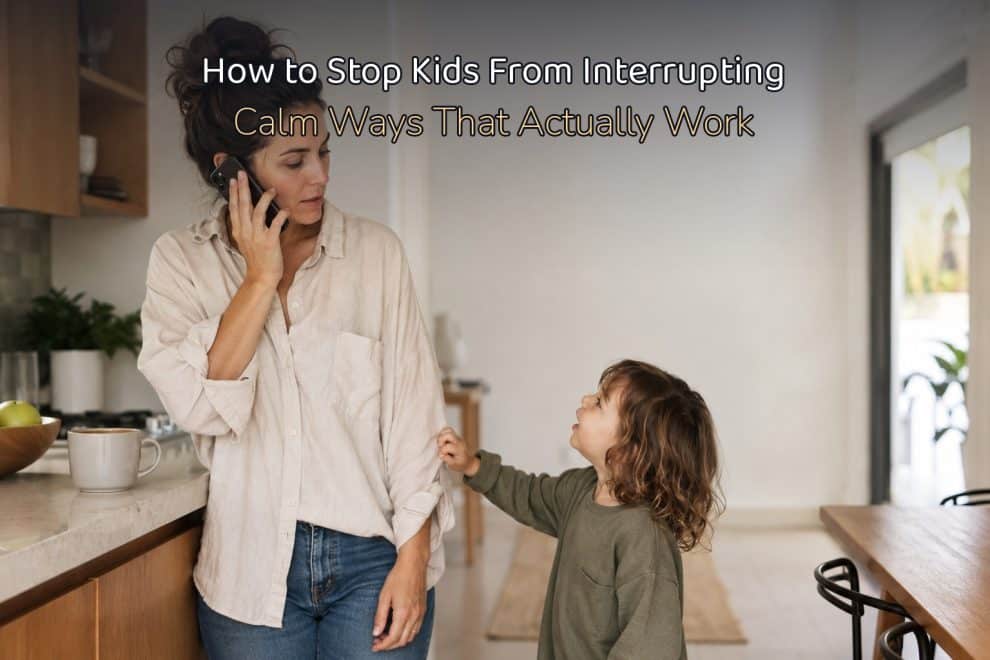
You are two sentences into a phone call with the pediatrician’s office when it starts. “Mom. Mom. Mommy. MOM.” A tug on your sleeve. A hand waving in front of your face. A very urgent report about a spider that may or may not still be on the porch. You hold up one finger, you turn slightly away, and the volume only climbs. If you have ever wondered how to stop kids from interrupting every single conversation, phone call, and grown-up sentence in your house, you are in very good company — and you are not raising a rude child.
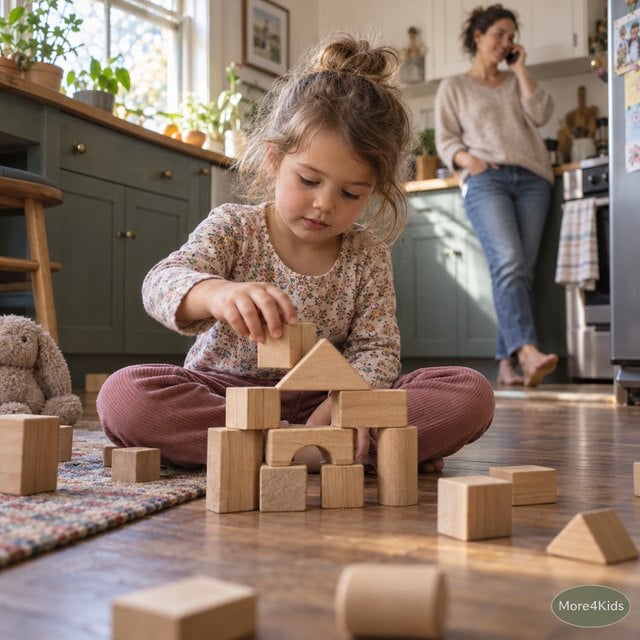
I have three kids, and for a solid stretch there I could not finish a thought out loud in my own kitchen. What finally helped was realizing that interrupting is not defiance and it is not a character flaw — it is a skill gap, and skills can be taught. So take a breath. Your child is not broken, and neither is your dinner table. Let me walk you through why kids interrupt, what actually works to teach them to wait, and the small handful of calm, repeatable moves that turned the tide in our house.
Why Do Kids Interrupt So Much?
Table of Contents
Before we fix anything, it helps to understand what is really happening when your child interrupts, because once you see it clearly it stops feeling like a battle of wills.
The first thing to know is that a young child’s brain is still very much under construction. The part that lets a person hold a thought, notice that someone else is talking, and wait for a gap — that is impulse control, and it develops slowly across early childhood. A three-year-old who blurts out the second a thought arrives is not being disrespectful; their brain genuinely has not built the “pause” muscle yet. Even many school-age kids are still very much in progress. When your child interrupts, the thought and the mouth are firing at the same time, with almost nothing in between.
The second thing is that, to your child, the thought feels enormous and it feels like it is happening right now. Little kids live in the present tense. The spider on the porch is not something that can wait five minutes — in their world, it is a five-alarm event that must be shared immediately or it will be lost forever. Interrupting, from the inside, does not feel rude. It feels necessary.
And there is often a third layer: connection. When you are on the phone, or talking to another adult, or scrolling, your attention has gone somewhere your child cannot follow — and that can feel a little bit like being left behind. Interrupting is one of the fastest, most reliable ways a child knows to pull you back. Sometimes the message underneath “Mom, Mom, Mom” is not really about the spider at all. It is “I need to know you are still here.”
Seeing all three of these at once changes the whole project. You are not fighting a defiant kid. You are coaching a young person whose brain, sense of time, and need for connection are all pushing in the same direction — straight through the middle of your sentence.
Is It Normal for Kids to Interrupt?
In a word: completely. If you take one thing from today, let it be that a child who interrupts is a child whose development is right on schedule. Waiting for a turn to talk is a genuinely advanced skill that layers together patience, attention, and reading a social situation — and those come online gradually, with a lot of practice and a lot of forgetting.
It is worth keeping perspective on ordinary limit-testing, too. As Cleveland Clinic notes, “most kids become defiant at times. They test their — and other people’s — boundaries to learn what’s appropriate and what’s not.” Pushing on the “wait your turn” rule is part of how children figure out where the edges are. Your job is not to eliminate every interruption overnight; it is to keep gently, consistently showing your child where the edge is until, over months, the pause starts to hold.
So when I talk about how to stop kids from interrupting, I do not mean turning your child into a small adult who sits in respectful silence. I mean steadily building the skill of waiting — a little more this month than last — while keeping your relationship warm the whole way through. The good news is that the same handful of calm moves works for most children, and none of them require yelling, shaming, or a single time-out.
How to Stop Kids From Interrupting: A Calm Plan That Works
Here is the plan that actually moved the needle in my house. Think of these less as a checklist to race through and more as habits you layer in over a few weeks. Consistency, not intensity, is what teaches the skill.
1. Teach the replacement behavior, not just “don’t interrupt”
This is the big one, and it is the step most of us skip. Telling a child “don’t interrupt” tells them what to stop, but not what to do instead — and a young brain mid-blurt needs a specific alternative, not a prohibition. So give them one.
The move that worked for all three of my kids is the quiet hand signal. I taught them that when I am talking to someone and they have something to say, they come over and gently place a hand on my arm, then wait. In that moment, I put my hand over theirs — that is my promise that says I know you’re there, I’ve got you, hang on. Then, at the next natural pause, I turn to them. No words needed from either of us, no shouting over the top of a conversation, no being ignored. It gives your child a job to do with all that urgent energy: put your hand on Mom’s arm and wait for the squeeze.
You can pick any signal that fits your family — a hand on the arm, a squeeze, a special word. What matters is that it replaces the blurt with a clear, doable action, and that you always, always acknowledge it quickly at first so your child learns the new way works even better than the old way.

2. Practice the skill when nobody is upset
You cannot teach a new skill in the middle of the meltdown it is meant to prevent. The hand signal, or any waiting skill, has to be learned in calm, low-stakes moments — not for the first time while you are on an important call.
So practice it like a game when everyone is relaxed. Set up a pretend phone call and let your child practice coming over, placing a hand on your arm, and waiting for the squeeze. Make a big warm deal of the wait. You can even practice the other direction: you put a hand on their arm while they are talking to a sibling, so they feel what a patient wait looks like from both sides. Ten cheerful rehearsals when it does not count are worth more than fifty corrections when it does.
3. Acknowledge fast, then hold the boundary
Two things have to be true at once, and holding both is the whole art of it. Your child needs to know you have registered them quickly — and they also need to learn that “I see you” is not the same as “you get the floor this instant.”
So when your child uses the signal, respond right away with your hand over theirs, then finish your sentence and turn to them within a reasonable stretch. Early on, “reasonable” might be ten seconds; you are teaching a toddler that the wait actually ends. As the skill grows, you can gently stretch it. The key is that the wait must reliably pay off. If your child waits patiently and then gets forgotten, they learn that waiting does not work and the blurting comes right back — louder, because now it is the only thing that gets a response.
4. Set them up to succeed before you need to focus
A huge amount of interrupting is preventable with a little planning. When your child interrupts a phone call, part of the story is that they were left with nothing to do and a parent who suddenly went unavailable. So close that gap before it opens.
Before a call or a conversation you need to protect, tell your child what is about to happen and what they can do: “I’m going to talk to Grandma for ten minutes. Here’s your busy bag — when the timer dings, I’m all yours.” A special box of activities that only comes out during your calls works wonders, because it turns your unavailable stretch into their special stretch. Keep the calls short when you can, and give a heads-up before the boring grown-up talk starts. You are not bribing your child to leave you alone; you are giving a young kid a realistic, engaging plan for the exact moment they usually struggle.

5. Narrate your own patience so they can see it
Children learn far more from what we do than from what we tell them to do, and waiting is a skill you can model out loud all day long. When you catch yourself wanting to jump into someone else’s sentence, say so: “Ooh, I have something to add — but Daddy’s still talking, so I’m going to hold my idea and wait.” When your child is telling you something and you have a thought, model it back to them: “I want to say something, but you’re not done yet, so I’ll wait for you to finish.” Hearing you name your own pause, over and over, teaches the pause better than any lecture. It also quietly tells your child that waiting is something everyone does, not a punishment invented just for them.

6. Catch them waiting well and say so
We are quick to notice the interruption and slow to notice the beautiful, quiet moment our child waited. Flip that. The fastest way to grow a behavior is to shine a light on it the second it happens, so make a point of catching the pause: “You waited so patiently while I finished talking to Ms. Lee — thank you. I know that was hard.” Specific, warm, immediate. You are not handing out prizes; you are telling your child, in the clearest way a kid understands, that thing you just did — do that again. Praised patience grows. Nagged impatience just gets louder.
7. Check the basics underneath the behavior
When interrupting spikes out of nowhere, it is often not about manners at all. A hungry, tired, or disconnected child has almost no impulse control left in the tank — the pause muscle is the first thing to go when a kid is running on empty. Before you correct the behavior for the fifth time, run the quick check: When did they last eat? How did they sleep? Have we had any real, undivided connection today?
Sometimes the fix for the 5 p.m. interrupting storm is a snack and ten minutes of your full attention before you get on the phone, not a better consequence after. Filling the tank first prevents more interruptions than any correction ever will.
What Not to Do When Your Child Interrupts
A few well-meaning moves quietly make interrupting worse, and they are worth naming so you can sidestep them.
Don’t shame or label. “Stop being so rude” attaches a character verdict to a developmental skill gap. Your child is not rude; they are learning to wait. Correct the behavior — “hand on my arm, please, and wait” — without handing your child an identity to live down to.
Don’t reward the blurt. This one is subtle. If you consistently stop mid-sentence and give your full attention the instant your child blurts, you are teaching, very efficiently, that blurting works. Acknowledge the signal, not the interruption. When the blurt comes, a calm “I want to hear you — hand on my arm and wait for me” redirects to the skill without rewarding the shout.
Don’t expect adult patience from a small child. A two-minute wait is an eternity to a four-year-old. Match the wait to the age, stretch it slowly, and celebrate progress instead of demanding perfection. You are aiming for better than last month, not silent, grown-up composure.
Don’t only correct — also connect. If the only time your child reliably gets your eyes and your voice is when they interrupt, the interrupting is doing an important job for them. Pour attention in during the calm times, on purpose, and the desperate bids to pull you back tend to fade.
When Interrupting Might Be More Than a Phase
For most kids, the calm plan above is enough, and the constant interrupting softens over weeks and months as the pause muscle grows. But sometimes the impulsivity runs deeper and more persistently than typical, and it helps to know where that line is.
If your child seems truly unable to stop the blurting despite lots of patient practice — if it shows up everywhere, all the time, and comes bundled with trouble sitting still, waiting, or holding attention — it can be worth a conversation with your pediatrician. Interrupting is one of the recognized signs of hyperactive-impulsive attention issues. As developmental pediatrician Dr. Carrie Cuffman of Cleveland Clinic describes it, a child with hyperactive-impulsive ADHD may be “blurting out answers, interrupting or talking over others,” alongside constant movement and “acting without thinking.”
Crucially, she adds that these behaviors are not misbehavior: “These kids feel a constant internal push to move or act.” That reframing matters. A child who cannot stop interrupting despite genuinely trying is not choosing to be difficult, and no amount of consequences will teach a skill their brain needs extra support to build. If that sounds like your child, reaching out is not overreacting — it is exactly the attentive parenting that gets a struggling kid the right help. Your pediatrician can help you sort ordinary, age-appropriate blurting from something that would benefit from more support.
And trust your gut. You know your child. If the intensity, the constancy, or the toll it is taking on your child’s friendships or school day feels off to you, that instinct is worth acting on. Naming a concern out loud to a professional does not make it bigger; it just gets more hands helping you carry it.
You Will Get Your Sentences Back
I promise this gets better. The blurting that feels endless right now is a stage, and the calm, boring, repeat-it-a-hundred-times work of teaching the wait really does add up. One day you will be on the phone and feel a small hand rest gently on your arm — and just wait. You will squeeze it, finish your sentence, and turn to hear all about the spider. That is the whole win, and it is completely reachable.
Go gently with yourself in the meantime. You are teaching one of the harder social skills there is, and you are doing it in real time, mid-sentence, over and over. If you want more steady help in this same lane, our guide to emotional regulation for kids pairs beautifully with everything above, and if the bigger struggle at your house is getting heard in the first place, how to get kids to listen is a natural next read. For the days it all boils over, how to help kids manage big emotions is here, and our whole parenting section has a next step whenever you need one.

Frequently Asked Questions
At what age should a child stop interrupting?
There is no hard cutoff, because waiting to talk is a skill that grows gradually rather than switching on at a certain birthday. Toddlers and preschoolers interrupt constantly because their impulse control is still developing, and even many early-elementary kids need frequent reminders. What you are looking for is steady progress — a little more patience this month than last — rather than a child who never interrupts. With calm, consistent practice, most kids get noticeably better through the early school years.
How do I teach my child to wait instead of interrupting?
Give them a specific replacement behavior instead of just telling them to stop. A simple, reliable method is a quiet hand signal: your child places a hand on your arm when they have something to say, you place your hand over theirs to show you know they are there, and then you turn to them at the next natural pause. Practice it as a game in calm moments, acknowledge the signal quickly so waiting reliably pays off, and warmly praise the times your child waits well.
Is it normal for kids to interrupt all the time?
Yes, frequent interrupting is developmentally normal, especially for toddlers and preschoolers. Their brains are still building the impulse control it takes to hold a thought and wait for a turn, and to a young child an idea feels urgent and impossible to delay. Interrupting is a skill gap, not rudeness or defiance. It improves with patient teaching and modeling over time rather than with punishment.
Why does my child interrupt me the moment I get on the phone?
Because a phone call sends your attention somewhere your child cannot follow, and interrupting is a fast, dependable way to pull you back. It is often as much about connection as about the actual thing they want to tell you. Setting your child up before the call — a heads-up, a rough time frame, and a special “busy bag” of activities that only appears during your calls — prevents a lot of it, as does topping up connection with a little undivided attention first.
When should I worry about my child interrupting?
Most interrupting is normal and fades with gentle, consistent support. It is worth talking to your pediatrician if your child seems truly unable to stop despite lots of patient practice, if the impulsivity shows up everywhere and all the time, or if it comes bundled with constant movement, trouble waiting, and difficulty holding attention — signs associated with hyperactive-impulsive attention issues. Effective help is available, and checking in is attentive parenting, not overreacting.
Related Articles

Meet Sophia Richards Sophia Richards is an early childhood educator, passionate writer, and the proud mom of three energetic kids. With a degree in Education and over a decade of hands-on classroom experience, Sophia bridges the gap between professional teaching strategies and everyday family life. At More4Kids, she translates complex child development concepts into practical, actionable parenting tips that families can use at home.
Whether she is sharing positive reinforcement techniques, educational crafts, or honest reflections on the chaos of raising three children under one roof, Sophia’s goal is to empower parents to foster resilience and joy in their kids. When she isn't writing or lesson planning, you can find her organizing neighborhood scavenger hunts or trying out new kid-friendly recipes.
Areas of Expertise: Early Childhood Education, Positive Parenting, Sibling Dynamics, Educational Play, Family Wellness.

Add Comment