
















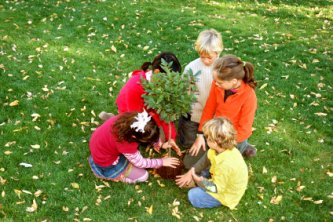
 As parents we can help teach and prepare our children for what lies ahead in their lives, to show them what the values of Green Living, and learning about the earth are really all about. These Green Living Tips are targeted more to the parents than to the children, simply because the child will be at such a young age. Whatever a parent does with their kids will be as much fun for the parent as for the child.
When a parent starts teaching their children while they are young, it sets in their mind and most of the time, the things you teach them will always be with them. If you live in a rural area, and you have a garden spot, give your child a small space for them to grow something of their own. For instance, Don’t just plant vegetables, make it fun for the youngsters, let them plant things that they would like, even if it is something like gourds, or watermelons. A parent would take the time to make sort of a game with their young ones, buying some seeds, showing the child how to plant them and then taking their child outside often to check the progress of the plants. Once the plant blooms, if it is a flower, the child will get to see and smell the work that they have put into this project. If the plant was a food source, the child will get to taste the fruit of their hard work. There is not only gardening in the spring, but there are fall veggies that can be planted. You can even sit down with your children and let them help pick out the flowers and vegetables for next years garden.
This will begin to teach children responsibility and dedication to a project, which is needed in our world today. These are the basic steps for teaching our leader for tomorrow’s leaders.
As a parent, you should spend time with your child. Such as going bike riding, showing your child how to build things, how to start a project and especially how to finish it.
If a family lives in the city instead of in a rural area there are still things that can be done almost the same way. Most plants can be started and grow inside a pot and put outdoors on a terrace, or inside near a window where it will get some sunlight. You could even teach kids about the pigeons and how they came to the city, and how they survive in the city. Let the child figure out several purposes that a pigeon has in a city. You could take the children a nearby park, find an ant hill and teach them the purpose of the ants.
Reading books to them about the values of the earth and always telling them the dos and the dont’s of polluting the earth. For instance, don’t throw paper or garbage of any kind on the ground, or if you pull up a tree, plant another tree somewhere else to take its place. Teach them the art of recycling things.
Teach your children to watch nature channels on TV, such as The Discovery Channel, Animal Planet, and other nature related shows. Take them outside for a walk and show them the butterflies and the bees, explain what the purpose of the small animal have in this world.
The library and the Internet is a wonderful place to learn about different animals, plants and places. Make it a fun experience to learn more about 1 endangered animal a week. Discuss why it is endangered and come up with ideas how you may help.
Giving your children small chores at home and making sure they do them will also help in building their minds, preparing them for the future. After all, cleaning up after themselves, taking care of their house, plants, yard, is the first step in taking care of the environment.
Kids watch their parents every move, so if you as a parent turn off lights that aren’t being used and saving water whenever it is possible, recycling things, your children will follow your example.
If given the support and education, young people will change the world. They could be our future conversationalist, environmentalist and humanitarians.
By helping train our children about green living, each parent will realize what their children like best and can direct them in the right path, so that later on in life they may be trained and further educated in their particular field, coming together with other such groups and developing a much more Green Lifestyle for the entire planet.
The funny thing is before you know it your kids will be teaching you. Our five year old has caught me a few times throwing things away that should have been recycled for example. Boy, have I empowered him!! And that is the key in teaching your child anything, making your children feel they can make a difference and empowering them is the most a parent can ask for. Even though I have been embarrassed a couple of times by my son correcting me, I am extremely proud of him.
It is not only our children that we should teach, but by trying to educate other adults around the world the values of Green Living, they in turn will educate their children as well. Since, it is all to true that mankind has polluted our world up to now, and we are just realizing how important it is to take care of our Earth.
As parents we can help teach and prepare our children for what lies ahead in their lives, to show them what the values of Green Living, and learning about the earth are really all about. These Green Living Tips are targeted more to the parents than to the children, simply because the child will be at such a young age. Whatever a parent does with their kids will be as much fun for the parent as for the child.
When a parent starts teaching their children while they are young, it sets in their mind and most of the time, the things you teach them will always be with them. If you live in a rural area, and you have a garden spot, give your child a small space for them to grow something of their own. For instance, Don’t just plant vegetables, make it fun for the youngsters, let them plant things that they would like, even if it is something like gourds, or watermelons. A parent would take the time to make sort of a game with their young ones, buying some seeds, showing the child how to plant them and then taking their child outside often to check the progress of the plants. Once the plant blooms, if it is a flower, the child will get to see and smell the work that they have put into this project. If the plant was a food source, the child will get to taste the fruit of their hard work. There is not only gardening in the spring, but there are fall veggies that can be planted. You can even sit down with your children and let them help pick out the flowers and vegetables for next years garden.
This will begin to teach children responsibility and dedication to a project, which is needed in our world today. These are the basic steps for teaching our leader for tomorrow’s leaders.
As a parent, you should spend time with your child. Such as going bike riding, showing your child how to build things, how to start a project and especially how to finish it.
If a family lives in the city instead of in a rural area there are still things that can be done almost the same way. Most plants can be started and grow inside a pot and put outdoors on a terrace, or inside near a window where it will get some sunlight. You could even teach kids about the pigeons and how they came to the city, and how they survive in the city. Let the child figure out several purposes that a pigeon has in a city. You could take the children a nearby park, find an ant hill and teach them the purpose of the ants.
Reading books to them about the values of the earth and always telling them the dos and the dont’s of polluting the earth. For instance, don’t throw paper or garbage of any kind on the ground, or if you pull up a tree, plant another tree somewhere else to take its place. Teach them the art of recycling things.
Teach your children to watch nature channels on TV, such as The Discovery Channel, Animal Planet, and other nature related shows. Take them outside for a walk and show them the butterflies and the bees, explain what the purpose of the small animal have in this world.
The library and the Internet is a wonderful place to learn about different animals, plants and places. Make it a fun experience to learn more about 1 endangered animal a week. Discuss why it is endangered and come up with ideas how you may help.
Giving your children small chores at home and making sure they do them will also help in building their minds, preparing them for the future. After all, cleaning up after themselves, taking care of their house, plants, yard, is the first step in taking care of the environment.
Kids watch their parents every move, so if you as a parent turn off lights that aren’t being used and saving water whenever it is possible, recycling things, your children will follow your example.
If given the support and education, young people will change the world. They could be our future conversationalist, environmentalist and humanitarians.
By helping train our children about green living, each parent will realize what their children like best and can direct them in the right path, so that later on in life they may be trained and further educated in their particular field, coming together with other such groups and developing a much more Green Lifestyle for the entire planet.
The funny thing is before you know it your kids will be teaching you. Our five year old has caught me a few times throwing things away that should have been recycled for example. Boy, have I empowered him!! And that is the key in teaching your child anything, making your children feel they can make a difference and empowering them is the most a parent can ask for. Even though I have been embarrassed a couple of times by my son correcting me, I am extremely proud of him.
It is not only our children that we should teach, but by trying to educate other adults around the world the values of Green Living, they in turn will educate their children as well. Since, it is all to true that mankind has polluted our world up to now, and we are just realizing how important it is to take care of our Earth.
How can I teach my young kids to care about the environment?
Table of Contents
Start with something they can see and touch. Give your child a small patch of garden — or a pot on the windowsill if you live in the city — and let them choose what to grow, even if it’s gourds or watermelons rather than vegetables. Checking the plant’s progress regularly teaches patience, responsibility, and the connection between effort and results. Add nature walks, library books about endangered animals, and nature channels like Animal Planet or Discovery to build that foundation over time.
What green activities can city kids do without a backyard or garden?
Most plants grow fine in pots on a terrace or near a sunny window, so a container garden is accessible anywhere. Urban nature is all around, too: take your child to a nearby park to find an ant hill and talk about what ants do for the ecosystem, or point out pigeons and explain how they’ve adapted to city life. The library and the internet offer a world of animals, plants, and habitats — making it a weekly habit to learn about one endangered species keeps curiosity growing year-round.
How do I model eco-friendly habits for my children?
Kids notice everything. If you turn off lights in empty rooms, save water while brushing teeth, and put recyclables in the right bin, your child will follow your lead — and, as the author discovered, may even start correcting you when you forget. Make those small habits visible and name them out loud (‘I’m turning this off so we don’t waste electricity’) so your child understands the why behind the action rather than just copying the motion.
What household chores help teach kids environmental responsibility?
Cleaning up after themselves is the foundation. A child who tidies their room, waters their own plant, and cares for their part of the yard is already learning that the spaces around us need tending — and that neglect has consequences. These habits, practiced at home first, are the same ones that translate into caring about the wider environment as they grow. Small chores build the mindset that stewardship begins right where you are.
Parenting at More4kids: More4Kids Inc © and All Rights Reserved



Thanks for participating in this week’s very special Memorial Day Edition of the Carnival of Family Life at Colloquium! Stop by and check out some of the other wonderful articles included in this edition!
Thanks for your article that focuses on planting trees and helping to educate our children to live a green lifestyle that protects the planet.
Thanks for contributing to All Things Eco. Your article and others were posted yesterday, I hope that you will check out the other contributors 🙂
I apologize that I didn’t trackback, I put the trackback info in after publishing, and for some reason, it will not work!
That is awesome that your son is correcting you with recycling. Must mean that you taught him well!