











By Sophia Richards
I do most of my podcast listening in eleven-minute stretches — the drive to school drop-off, folding a basket of laundry that multiplies the second I turn my back, the fifteen minutes before everyone else wakes up. That’s not a lot of time to find something actually useful, which is exactly why I got tired of “best podcasts” lists that were clearly written by someone who Googled a headline and never listened to a single episode. Half the shows were on hiatus. A few hadn’t published anything since before my youngest was born.
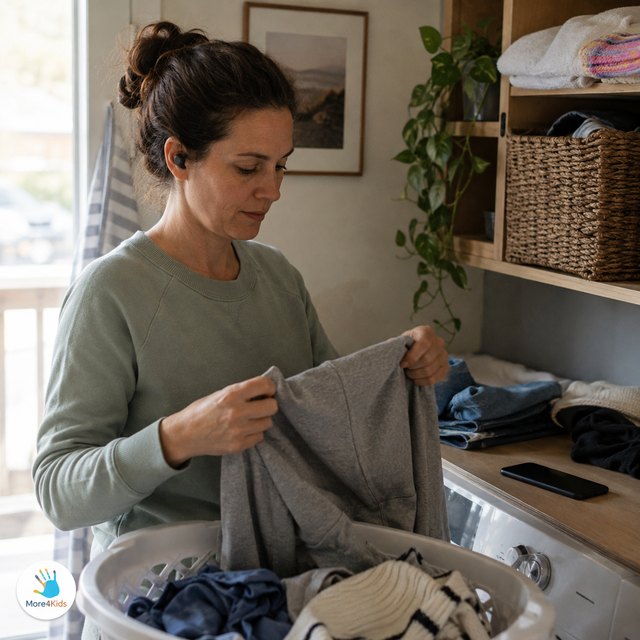
So this list is different in one specific way: every single show below is one I actually checked — current episode activity, who’s behind it, what it’s really about — as of right now, in 2026. No dead shows, no defunct feeds, no guessing. I’ve grouped them by what kind of parenting season you’re in, because “best parenting podcast” means something completely different to a mom of a newborn than it does to a dad navigating his daughter’s first year of high school.
A quick note on how to actually listen: every show here is free and available on Spotify and Apple Podcasts, so you don’t need any special equipment — a phone and one earbud while you empty the dishwasher will do it. If you’re looking for more everyday parenting ideas beyond what you can absorb through headphones, this list pairs naturally with a lot of that reading.
The Best Parenting Podcasts for New Parents
Table of Contents
Good Inside with Dr. Becky — Clinical psychologist Dr. Becky Kennedy built her Good Inside framework around one idea: your child isn’t giving you a hard time, they’re having a hard time. Episodes are short and built for exactly the fifteen-minute window most new parents actually have, tackling real submitted questions — meltdowns, sibling conflict, the moment a toddler hits another kid at the park. Why I rate it: it’s the rare parenting-advice show that makes you feel more capable after listening, not more anxious.
The Longest Shortest Time — Hosted by radio veteran Hillary Frank, this one leans into honest, sometimes funny, sometimes raw storytelling about the identity-scrambling parts of early parenthood that don’t make it into the milestone books. Why I rate it: it’s less “here’s what to do” and more “here’s what this actually feels like,” which is its own kind of relief at 2 a.m.
For Toddlers
Respectful Parenting: Janet Lansbury Unruffled — Janet Lansbury has spent over 25 years working with infants and toddlers, and this show takes one listener-submitted issue per episode — a biting phase, a bedtime standoff, a toddler who won’t get in the car seat — and reframes it through a respectful-parenting lens that trades scripts and tricks for a genuine perspective shift. Why I rate it: it’s the show I recommend most often to friends in the thick of the toddler years, because it actually changes how you see the behavior, not just how you react to it.
After Bedtime with Big Little Feelings — Kristin and Deena, who built the massive Big Little Feelings online community, host this one like a conversation with your funniest, most honest mom friend — imperfect marriages, toddler mania, the pressure to look like you have it together on social media when you very much do not. Why I rate it: it’s genuinely funny, which matters more than people admit when you’re this tired.

For Parents of Teens and Tweens
Ask Lisa: Untangling Family Life — Psychologist Dr. Lisa Damour teams up with a different expert most weeks to answer a real parent’s real question about raising a tween or teen — academics, friendships, mental health, screens, the meltdowns that don’t look like toddler meltdowns anymore but absolutely still happen. Why I rate it: no fluff, no judgment, and Damour is one of the clearest, calmest voices in adolescent psychology working today.
Care and Feeding — Slate’s long-running advice show takes listener letters across every age range, but it earns its spot in this category because the teen-and-tween questions are where it’s sharpest — messy friendships, phone drama, the parenting decisions that don’t have a clean right answer. Why I rate it: it’s opinionated in a way that’s genuinely useful, not wishy-washy advice dressed up as neutrality.
For Neurodivergent Kids and Families
Beautifully Complex — Parenting coach Penny Williams built this show around her SIGNAL Framework, a nervous-system-first approach centered on one core idea: regulation has to come before any skill or strategy can actually take hold. Weekly episodes cover honest, practical strategies for raising kids with ADHD, autism, anxiety, and learning differences. Why I rate it: it treats neurodivergent kids as “wired differently,” not broken — the framing shift alone is worth the listen.
Chaos & Caffeine: ADHD Parenting Podcast — A newer, fast-growing show built specifically around the exhausting, unglamorous reality of parenting a kid with ADHD — the mornings that fall apart before 8 a.m., the executive-function battles nobody warns you about. Why I rate it: it doesn’t pretend the hard days aren’t hard, which makes the strategies land differently.
For Dads
Modern Dadhood — Hosts Adam Flaherty and Marc Checket built this show to unpack fatherhood specifically, though plenty of moms listen too — identity shifts, partnership dynamics, the parts of modern dad life that older generations never had to think about out loud. Why I rate it: it treats fatherhood as something worth examining, not just enduring, without ever getting preachy about it.
For Faith-Centered Families
The Christian Parenting Podcast — Steph Thurling covers intentional, Christ-centered parenting — teaching kids about faith at different ages, motherhood identity, building family rhythms around belief without it feeling like homework. Why I rate it: it stays practical and warm rather than preachy, which is a harder balance than it sounds.
Pardon the Mess — Author Scarlet Hiltibidal hosts a Christian parenting show that leans hard into humor and honesty about the actual mess of raising kids in faith — imperfect days, imperfect parenting, grace as the throughline rather than a performance of having it together. Why I rate it: it’s one of the funniest shows on this whole list, faith-based or not.
For the Science-Minded Parent
Raising Good Humans — Developmental psychologist Dr. Aliza Pressman translates real child-development research into usable, everyday parenting guidance, spanning ages and stages rather than sticking to one narrow lane. Why I rate it: she cites her sources and still sounds like a person, not a textbook.

The Balanced Parent Podcast — Dr. Laura Froyen blends respectful-parenting philosophy with a genuine psychology background, covering emotional regulation (yours and your kid’s), family systems, and the research behind why certain parenting approaches actually work. Why I rate it: it treats the parent’s own regulation as just as important as the child’s, which most parenting advice quietly skips.
The Science of Parenting — Produced by Iowa State University Extension and Outreach, this is about as close to a peer-reviewed parenting show as exists, translating actual child-development and family research into short, digestible episodes. Why I rate it: when I want to know if a parenting trend is backed by anything real, this is where I check first.
How I Actually Chose These
I didn’t just recycle an old list. Every show here was checked for current activity — real, recent episodes, not a feed that quietly went dark two years ago — because nothing is more frustrating than queuing up a “must-listen” recommendation only to find the last episode dropped in 2021. I also skipped anything I couldn’t verify was still being made by a real host with a real, ongoing show. If a podcast isn’t here, it’s not necessarily bad — it might just not have been active when I checked, and I’d rather under-promise than send you into a dead feed.
None of these are sponsored placements or affiliate arrangements — just fourteen shows genuinely worth the drive-time or the folding-laundry minutes, organized so you can find the ones that match your actual parenting season instead of scrolling through a generic top-ten that assumes every parent needs the same thing. A podcast is also a good example of screen time that isn’t really screen time — audio-only, hands-free, and often something you can let older kids listen in on too.
Frequently Asked Questions
What are the best parenting podcasts for new parents in 2026?
Good Inside with Dr. Becky and The Longest Shortest Time are strong starting points for new parents. Good Inside focuses on short, actionable episodes for common early-parenting flashpoints, while The Longest Shortest Time leans into honest storytelling about the identity shifts that come with a new baby — useful in different ways depending on whether you want strategies or solidarity.
Are there good parenting podcasts for raising teenagers?
Yes — Ask Lisa: Untangling Family Life, hosted by psychologist Dr. Lisa Damour, is built specifically around tween and teen parenting questions like friendships, academics, screens, and mental health. Care and Feeding from Slate also handles teen-specific advice letters regularly within its broader age-range format.
Is there a good parenting podcast for kids with ADHD or autism?
Beautifully Complex and Chaos & Caffeine: ADHD Parenting Podcast both focus specifically on raising neurodivergent kids. Beautifully Complex is built around a nervous-system-first coaching framework for ADHD, autism, anxiety, and learning differences, while Chaos & Caffeine focuses more narrowly on the day-to-day realities of ADHD parenting.
What podcast should dads listen to about parenting?
Modern Dadhood is built specifically around the fatherhood experience — identity, partnership, and the parts of modern dad life that don’t get talked about much elsewhere — though it’s a genuinely useful listen for moms too.
Are any of these parenting podcasts backed by real research or experts?
Yes. The Science of Parenting is produced by Iowa State University Extension and Outreach and translates academic child-development research directly into episodes. Raising Good Humans (hosted by a developmental psychologist) and The Balanced Parent Podcast (hosted by a psychologist) both root their advice in real research rather than opinion alone.
A Note on Language and Listening With Kids Around
Care and Feeding carries an explicit content rating on Apple Podcasts, mostly for casual adult language rather than anything inappropriate about the advice itself. If you’re the type to have a podcast playing in the background while kids are within earshot, it’s worth checking the explicit flag before you hit play, or saving that particular show for a solo drive instead of carpool. Every other show on this list is rated clean, though the subject matter — dating, mental health, ADHD, faith — is naturally written for the parent, not the child.
How to Actually Make Time for Parenting Podcasts
Nobody has a spare hour of quiet to sit and listen intentionally — that’s not a realistic picture of most parents’ days, mine included. What’s realistic is stacking a podcast onto something you’re already doing:
- The commute, even a short one. A ten-minute school drop-off is enough for a chunk of an episode, and most shows are built in digestible segments specifically so you can pick up mid-episode without losing the thread.
- The mindless chores. Folding laundry, unloading the dishwasher, meal-prepping on a Sunday — anything repetitive and hands-busy-but-brain-free is a natural podcast slot.
- The in-between minutes. Waiting in the pickup line, the last ten minutes before a toddler wakes from a nap, a solo walk around the block — these add up faster than a single “sit down and listen” session ever will.
- Download before you need it. Most podcast apps let you download episodes over WiFi so a bad connection at pickup or on a road trip doesn’t interrupt anything. Worth doing the night before if you know tomorrow is going to be a full one.
- Speed it up if the content allows. Advice-format shows especially hold up well at 1.25x or 1.5x speed, which turns a 45-minute episode into something that fits inside a genuinely short window.
The goal isn’t to consume every episode of every show on this list. It’s to have two or three reliable options queued up for the pockets of time that already exist in your day, instead of doom-scrolling through the same fifteen minutes you could’ve spent learning something that actually helps.
One Last Thing
You don’t need to subscribe to all fourteen of these. Pick the two or three that match where you actually are right now — a new baby, a defiant three-year-old, a teenager who’s suddenly gone quiet at dinner — and let the rest wait for the season that needs them. It’s the same logic behind building any small daily routine that actually sticks: a couple of good habits, repeated, beat a long list you never get through. That’s really the best use of a podcast list anyway: not “listen to everything,” but “know where to go when you need it.”
Related Articles

Meet Sophia Richards Sophia Richards is an early childhood educator, passionate writer, and the proud mom of three energetic kids. With a degree in Education and over a decade of hands-on classroom experience, Sophia bridges the gap between professional teaching strategies and everyday family life. At More4Kids, she translates complex child development concepts into practical, actionable parenting tips that families can use at home.
Whether she is sharing positive reinforcement techniques, educational crafts, or honest reflections on the chaos of raising three children under one roof, Sophia’s goal is to empower parents to foster resilience and joy in their kids. When she isn't writing or lesson planning, you can find her organizing neighborhood scavenger hunts or trying out new kid-friendly recipes.
Areas of Expertise: Early Childhood Education, Positive Parenting, Sibling Dynamics, Educational Play, Family Wellness.

Thanks for submitting this post to the Carnival of Parenting Podcasts. It’s always exciting to find new podcasts.