













By Elena Marsh
The first Gaelic name I ever fell for was Tadhg, and I fell for it precisely because I could not say it. A friend of a friend named her son Tadhg — you say it tyg, like the start of “tiger” — and when I asked what it meant and heard “poet, a person skilled in verse,” I was hooked for life. That is the quiet magic of Gaelic baby names for me, as a mom of two and a lifelong name-meaning nerd: so many of them began as plain, strong old words — poet, champion, hound, fair warrior, the yew tree — and traveled down through Ireland and Scotland until they landed, softened and often respelled, on a modern birth certificate.
Gaelic baby names come from the Goidelic branch of the Celtic languages — Irish, Scottish Gaelic, and Manx — and they are some of the oldest living name-roots in the Western world. I am a fellow parent and not a linguist, so I treat these meanings with care. Gaelic etymology is genuinely hard, the records are thin, and honest sources sometimes disagree, so where a meaning is debated or a name has traveled through more than one language, I say so instead of handing you a tidy invention. The notes below come from our own published baby-name directory, with every name linked to its page, and you can browse the whole set at our Gaelic origin hub or start wider at the main baby names directory. If you love hunting for just the right fit, our Baby Name Finder is a lovely place to wander.
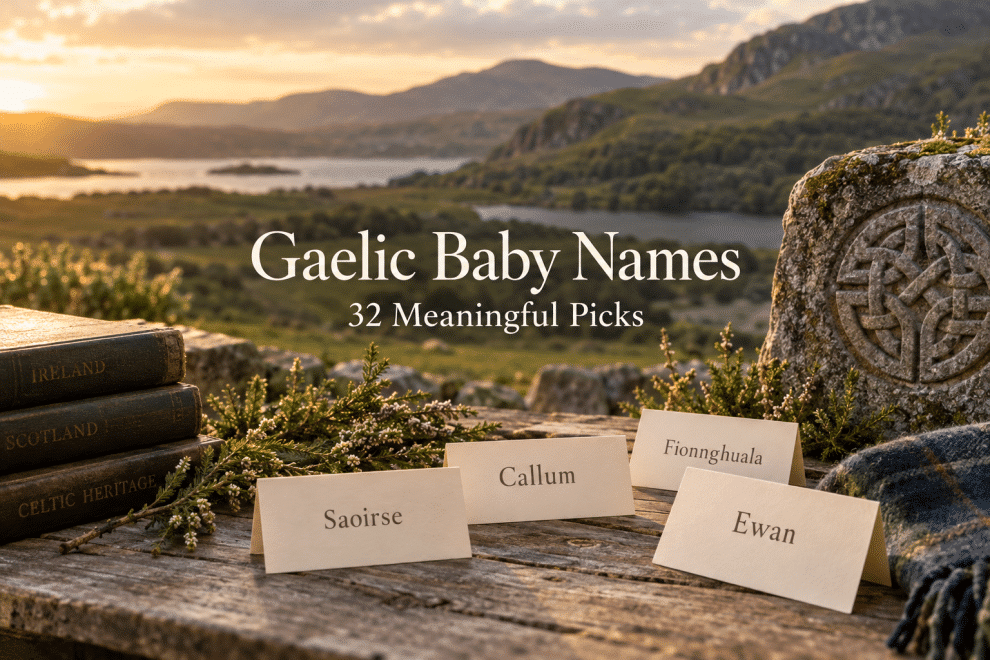
I gathered 32 Gaelic baby names from our live directory and verified every single name page before including it, because a name guide should never send you to a dead end. These are real published pages with their own pronunciation and meaning, not a list copied from a random corner of the internet. A few are rugged and traditional — Tadhg, Conall, Ossian — while many more are the gentle, modern American respellings that Gaelic roots have grown into, like Kynlee, Finnleigh, and Ayden. One honest note before we begin: Gaelic names have crossed through Irish, Scottish, and English mouths for well over a thousand years, so several carry more than one thread. I point those out rather than flattening them, and I keep the sourced meaning separate from my own fondness for a name.
Gaelic Baby Girl Names
Gaelic baby girl names often carry a soft, grounded poetry — words for fair and slender, for a chief, a hill, a champion, and the old green land itself. Many reach back to Irish and Scottish Gaelic roots and then bloom into the flowing, modern spellings so many families love today. Others arrive layered, carrying a Gaelic thread beside a root from another language, and I think that honesty is part of their charm. Together they make a list of Gaelic baby girl names that feel gentle and strong at once.

Quinn (KWIN) — From the Irish Gaelic, read as chief or descendant of Conn, where Conn itself carries a sense of chief or wisdom. Quinn is published in our directory with its own pronunciation and meaning page. Quinn is crisp, modern, and wonderfully unisex, and I love that this little one-syllable name carries the weight of “chief” inside it — a quietly confident choice among Gaelic baby girl names.
Alanna (uh-LAN-uh) — Often read as dear child, or as fair and bright, with some sources also offering little rock; the roots are layered and gently debated. Alanna is published in our directory with its own pronunciation and meaning page. Alanna is warm and lilting, a three-beat name that feels like an endearment because, in Irish, a leanbh really is one — a tender way to say “my child.”
Nyla (NY-luh) — A layered name: most commonly traced to the Arabic nayl, meaning winner or one who attains, and also connected in our directory to the Gaelic Niall, meaning champion. Nyla is published in our directory with its own pronunciation and meaning page. I want to be honest here — Nyla’s strongest root is Arabic, and it sits among Gaelic baby names through its thread to Niall. Either way it means a winner, which is a lovely thing to wish on a daughter.
Keyla (KAY-luh) — A modern blend that joins the Hebrew Michaela (who is like God) with the Irish Gaelic caol, meaning slender or narrow. Keyla is published in our directory with its own pronunciation and meaning page. Keyla is a contemporary respelling born in American naming culture, and I like being upfront that it braids two heritages together rather than belonging purely to one.
Kailey (KAY-lee) — Read as slender and fair; a variant of Kayleigh, from the Gaelic caol (slender). Kailey is published in our directory with its own pronunciation and meaning page. Kailey is bright and friendly, one of the many sunny modern spellings that grew out of a genuine Gaelic root, and it pairs easily with almost any surname.
Aira (EYE-rah) — Softly read as air or breath, and possibly connected to Eire, the Irish name for Ireland itself. Aira is published in our directory with its own pronunciation and meaning page. Aira is airy and uncommon in the loveliest way, and I find the possible tie to Eire sweet — a whisper of Ireland tucked into a name that sounds like a breath.
Kynlee (KIN-lee) — A modern compound often read as royal meadow, joining a Gaelic element kin (head, chief) with the Old English leah (clearing or meadow). Kynlee is published in our directory with its own pronunciation and meaning page. Kynlee is current and melodic, and I like pointing out the real chief-and-meadow roots inside it — proof that even very new-sounding Gaelic baby names can carry old words.
Kaylin (KAY-lin) — Read as slender and gentle, from the Gaelic caol. Kaylin is published in our directory with its own pronunciation and meaning page. Kaylin is smooth and modern, sharing the same slender root as Kailey and Keyla, and families often choose between these spellings purely on the look they love best.
Brea (BREE-ah) — From the Irish Gaelic brí, meaning hill, high place, or noble; a shortened, feminine form related to Brie. Brea is published in our directory with its own pronunciation and meaning page. Brea is simple and pretty, and I love that such a short name reaches back to a word for a hill or a high, noble place — small on the page, grand underneath.
Cailey (KAY-lee) — A layered name read as slender, from the Irish Caoladh, or linked to ceilidh, a Gaelic word for a social gathering or celebration. Cailey is published in our directory with its own pronunciation and meaning page. Cailey is cheerful and a little festive, and the possible tie to a ceilidh — a night of music and dancing — gives it a warmth I cannot resist.
Callen (KAL-ən) — Here used for girls, from the Scottish Gaelic Cailean, read as a whelp or young hound, and sometimes linked to rock or powerful in battle; the routes are layered. Callen is published in our directory with its own pronunciation and meaning page. Callen is soft but sturdy, an easygoing modern pick that works beautifully for a girl while keeping its old Gaelic roots intact.
Locklyn (LOK-lin) — A spelling of Lochlan or Lochlann, from the Scottish Gaelic, read as from the land of lakes, or as a Norseman. Locklyn is published in our directory with its own pronunciation and meaning page. Locklyn is striking and contemporary, and I love the image inside it — a land of lakes — which gives this modern spelling a genuinely scenic Gaelic heart.
Neely (NEE-lee) — From the Irish surname (Mac)Neely, meaning descendant of Niall, from the Gaelic Niall (champion; also read as cloud or passionate); here used for girls, with layered routes. Neely is published in our directory with its own pronunciation and meaning page. Neely is spunky and warm, a surname-turned-first-name that carries the champion root of Niall in a friendly, feminine shape.
Finnleigh (FIN-lee) — A spelling of Finley, from the Gaelic Fionnlagh, joining fionn (fair, white) and laoch (hero) — a fair warrior; here used for girls. Finnleigh is published in our directory with its own pronunciation and meaning page. Finnleigh is one of my favorites on this list for its meaning alone — fair warrior — dressed up in a soft, modern -leigh spelling that feels gentle and brave together.
Sheridan (SHER-ə-dən) — From the Irish surname Ó Sirideáin, variously read as a seeker or searcher, and sometimes as the wild, untamed one; the routes are layered. Sheridan is published in our directory with its own pronunciation and meaning page. Sheridan is distinctive and literary, and I love that its oldest reading — a seeker — feels like such a hopeful thing to hand a curious girl.
Gaelic Baby Boy Names
Gaelic baby boy names often ring with grit and story — champions and poets, hounds and warriors, the yew tree, and words for fire and fair. Many come straight from Irish and Scottish Gaelic roots honored for centuries, while others reach us softened into easy modern spellings. Together they feel sturdy without being harsh — dignified Gaelic baby boy names a boy can carry from the playground into adulthood.

Declan (DEK-lan) — An Old Irish name of uncertain meaning, possibly read as full of goodness, or related to the Irish word for prayer; honestly, the roots are debated. Declan is published in our directory with its own pronunciation and meaning page. Declan is a cornerstone of modern Gaelic baby names — warm, strong, and easy to wear — carried first by an early Irish saint, and I like saying plainly that its exact meaning is a gentle mystery.
Connor (KON-er) — From the Old Irish, read as lover of hounds, with alternatives such as strong-willed or wolf-lover. Connor is published in our directory with its own pronunciation and meaning page. Connor is a beloved classic, friendly and familiar, and that hound-loving root gives it a loyal, big-hearted feeling that suits so many little boys.
Ayden (AY-den) — From Irish Gaelic, read as little fire or fiery one, a modern spelling of Aidan and Aodhán. Ayden is published in our directory with its own pronunciation and meaning page. Ayden is bright and current, and I love that beneath this very modern spelling sits Aodh, an old Irish word for fire — a small, spirited name with real heat in its roots.
Desmond (DEZ-mund) — From the Irish territorial name Deas-Mhumhan, meaning South Munster; later used as a given name for one from that region. Desmond is published in our directory with its own pronunciation and meaning page. Desmond is dignified and a touch vintage, and I find it lovely that it began as the name of a place in Ireland — a name that quite literally means where you are from.
Madden (MAD-en) — An Anglicization of the Irish surname Ó Madáin, from the Gaelic madán, read as little dog or hound; the exact route is debated. Madden is published in our directory with its own pronunciation and meaning page. Madden is a sporty, surname-style pick that has grown popular as a first name, and it keeps good company with Connor in the gentle Gaelic theme of names that love a hound.
Kallen (KAL-en) — Read in our directory as pure and slender, and also as a mighty warrior. Kallen is published in our directory with its own pronunciation and meaning page. Kallen is sleek and modern, pairing a soft sound with a strong meaning, and it fits neatly beside the many caol-rooted Gaelic baby names that mean slender or fair.
Ewan (YOO-uhn) — The Anglicized form of the Gaelic Eoghan, read as born of the yew, a tree the old Gaels held sacred. Ewan is published in our directory with its own pronunciation and meaning page. Ewan is handsome and unfussy, a Scottish favorite, and I love the quiet nature inside it — the yew tree, ancient and evergreen, standing behind a very wearable name.
Breck (BREHK) — From the Gaelic, read as speckled or freckled. Breck is published in our directory with its own pronunciation and meaning page. Breck is short, rugged, and refreshingly plain in its meaning, and there is something charming about a Gaelic name that simply, affectionately means freckled.
Nilan (NYE-lan) — An Anglicization of the Irish Gaelic Niallán, a diminutive of Niall, read as champion or winner (and sometimes cloud). Nilan is published in our directory with its own pronunciation and meaning page. Nilan is uncommon and easy to say, carrying the proud champion root of Niall in a softer, gentler form — a little champion, you might say.
Tadhg (TYG) — An Old Irish name read as poet or philosopher, a person skilled in verse and learning. Tadhg is published in our directory with its own pronunciation and meaning page. Tadhg is the name that started my love of Gaelic baby names, and I still think it is one of the most beautiful meanings a parent can give — a poet — wrapped in a spelling that rewards anyone willing to learn it.
Ewen (YOO-ən) — A Scottish form of the Gaelic Eógan, usually read as born of the yew tree; related to Ewan and Eoghan, with routes that are gently debated. Ewen is published in our directory with its own pronunciation and meaning page. Ewen is the trimmer Scottish cousin of Ewan, carrying the same evergreen yew-tree root, and families usually pick between the two on sound and look alone.
Blane (BLAYN) — From the Gaelic Bláán, possibly read as yellow or slender, and borne by an early Scottish saint; a spelling of Blaine. Blane is published in our directory with its own pronunciation and meaning page. Blane is clean and understated, and I like that behind this simple one-syllable name stands a real Scottish saint and a softly debated old Gaelic word.
Conall (KON-əl) — From the Irish and Gaelic Conall, joining con (hound or wolf) with a strength element — a strong wolf or mighty hound. Conall is published in our directory with its own pronunciation and meaning page. Conall is bold and traditional, a hero’s name from old Irish legend, and that meaning — mighty hound — is about as sturdy and Gaelic as a boy’s name can be.
Torrin (TOR-in) — From the Gaelic and Irish, linked either to chief (through the Toirdhealbhach lines) or to tor, a rocky peak; the routes are layered. Torrin is published in our directory with its own pronunciation and meaning page. Torrin is fresh and outdoorsy, and I love that its two possible roots — a chief, or a rocky mountain peak — are both strong, grounded images to hand a son.
Darrow (DAIR-oh) — From an English and Gaelic surname, variously read as spear or as a rocky or oak place; the routes are layered. Darrow is published in our directory with its own pronunciation and meaning page. Darrow is distinctive and surname-cool, and I keep its origin honest — spear, or a place of rock and oak — rather than forcing it into a single tidy meaning.
Ossian (AH-shən) — An Anglicized form of the Irish Oisín, from os (a deer) plus a diminutive — a little deer, a fawn. Ossian is published in our directory with its own pronunciation and meaning page. Ossian is lyrical and legend-rich — Oisín was the great poet-warrior of Irish myth — and that gentle meaning, a little fawn, gives this strong old name a surprising tenderness.
Roark (RORK) — From the Irish surname Ó Ruairc (O’Rourke), variously read as a champion, or as mighty and illustrious; the root is genuinely debated. Roark is published in our directory with its own pronunciation and meaning page. Roark is punchy and modern-sounding while reaching back to a real Irish clan name, and I like being honest that its meaning is debated — champion is the reading I would happily tell a son.
How to Choose Gaelic Baby Names with Care
The first question I would ask about any of these Gaelic baby names is not whether it is trending. It is whether you understand the story you are carrying, and whether you are comfortable that the story is sometimes uncertain or layered. Gaelic names and meanings are often genuinely debated — the languages are ancient, the written records are thin, and honest scholars disagree. I think that is part of their beauty. A name like Declan may simply be a gentle mystery. A name like Nyla sits in this family through one thread while its strongest root lies in another language entirely. You are not choosing a tidy label; you are choosing a thread that often runs back more than a thousand years.
Say the name out loud with the pronunciation from its More4Kids page — some Gaelic names, like Tadhg, surprise you — then say it with your last name, then imagine explaining it to a curious child someday. That explanation does not need to be academic; it just needs to be honest. “Your name means poet.” “Your name means little fire.” “Your name means fair warrior.” Those small stories tend to stick, and children carry them proudly. It is also worth remembering that many of the loveliest Gaelic baby names today are modern American respellings — Kynlee, Finnleigh, Ayden — of much older roots, and there is nothing wrong with that, so long as you know the real word underneath.
For careful background on the languages themselves, I like starting with educational sources such as Encyclopaedia Britannica’s overview of the Goidelic languages and the name-by-name notes at Behind the Name. They are not baby-name lists to shop from, but they help place these names inside a real history and culture rather than treating them as a passing style.
Gaelic Baby Names and Meanings: A Few Patterns to Notice
A few patterns show up again and again in Gaelic names and meanings, and noticing them makes the whole list easier to love. These Gaelic baby names are not a random grab-bag; they share real roots. First, fair and slender run through so many of them. The Gaelic fionn (fair) stands behind Finnleigh, and caol (slender) hides inside Kailey, Kaylin, and Keyla. Once you hear those two little words, you start to recognize them tucked inside name after name.
Second, strength and loyalty sit at the heart of many Gaelic baby boy names. Niall, meaning champion, lives inside Nilan and Neely; con, the hound or wolf, stands behind Connor, Conall, and Madden; and Kallen is read outright as a mighty warrior. There is something grounding about handing a child a name that quietly means champion, or loyal hound, or strong.
Third, the natural and sacred world is everywhere. Ewan and Ewen carry the yew tree, Ossian carries a fawn, Breck means freckled, Aira means breath or air, Locklyn means a land of lakes, and Torrin may name a rocky mountain peak. That is part of why so many Gaelic baby names feel both ancient and alive — they began as the plain, beautiful words the old Gaels used for the living land around them.
Frequently Asked Questions
What are popular Gaelic baby names?
Popular Gaelic baby names in our directory include Declan, Connor, Ayden, and Desmond for boys, and Quinn, Alanna, Kaylin, and Kynlee for girls. Some, like Connor and Quinn, are well-loved modern classics, while traditional picks like Tadhg, Conall, and Ossian carry the oldest Irish and Scottish Gaelic roots and a good deal of legend behind them.
What do Gaelic baby names usually mean?
Gaelic names and meanings often center on nature, strength, and old words for fair and slender. Many of these Gaelic baby names began as plain, grounded words — a champion in Nilan, the yew tree in Ewan, a poet in Tadhg, a little fire in Ayden, a fair warrior in Finnleigh. Because the Gaelic languages are so old, a good number of these meanings are genuinely debated, and a careful guide should say so rather than pretend every name is tidy.
Are Gaelic and Irish baby names the same thing?
Not quite. Irish names are Gaelic, but Gaelic is the larger Goidelic family that also includes Scottish Gaelic and Manx. So a name like Tadhg or Conall is Irish-Gaelic, while Ewan and Locklyn lean Scottish Gaelic. Think of Gaelic as the branch and Irish as one strong limb of it — and remember that the broader Celtic family stretches wider still, taking in Welsh and Breton too.
Where can I find more Gaelic baby names?
You can browse the full More4Kids Gaelic baby names origin page for the larger list, then open each name page for meaning, pronunciation, and popularity details. This article highlights 32 verified names, but the directory includes many more.
A Warm Send-Off
Gaelic baby names reward careful listening. Some arrive rugged and traditional — Tadhg for a poet, Conall for a mighty hound, Ossian for a little fawn. Some are soft, modern spellings with old hearts — Kynlee for a royal meadow, Finnleigh for a fair warrior, Ayden for a little fire. Some ask you to learn them before you can love them, and I think that is a gift, not a burden. The best of these Gaelic baby names for your family may not be the rarest or the trendiest. It may simply be the name whose story you can imagine telling your child with a full heart — even when that story ends with an honest “and some say it means something a little different.”
Related Articles

Elena Marsh
Elena Marsh is a writer, historian, and lover of names and where they come from. A mom of two, she went down the rabbit hole of name meanings and the cultures and stories behind them, and now writes warm, parent-to-parent guides to baby names from around the world. She researches and sources every meaning, and writes as a curious fellow parent rather than a credentialed linguist.

Add Comment