
















By Sophia Richards
It usually starts around eight o’clock, in a doorway. You have done the bath, read the book, sung the song, refilled the water for the third time, and just as you back out of the room like a burglar, a small voice pipes up: “Mama? Stay.” And your heart does that thing where it melts and clenches at the same time, because you love this little person more than air, and you also would very much like ten quiet minutes and your own pillow. If getting your toddler to sleep in their own bed has turned into a nightly negotiation you did not sign up for, I promise you are not doing anything wrong, and you are in very good company.
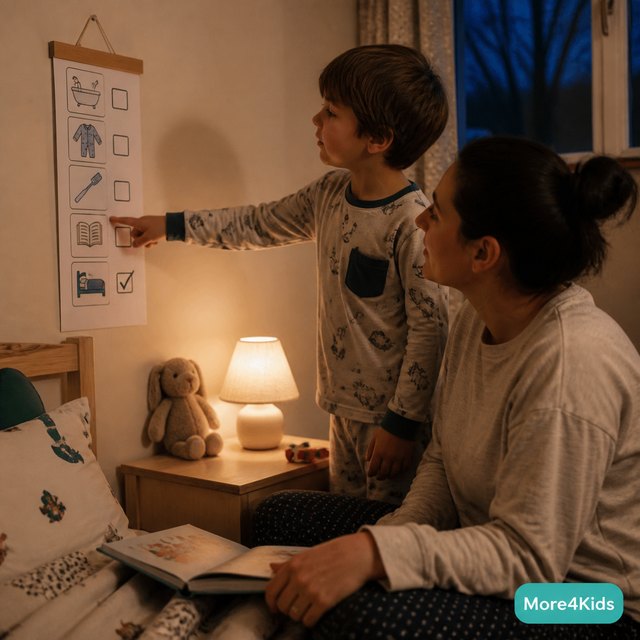
I have three kids, I have been an early-childhood educator for years, and I have stood in that exact doorway more times than I can count. So let me say the reassuring part first: this is not a discipline problem, and it is not a sign you have “let it go too far.” A toddler who wants you nearby at bedtime is a toddler whose brain is working exactly the way it is supposed to. The good news is that helping your child learn to settle in their own bed is a skill you can teach, gently and gradually, without a single night of cold cry-it-out if that is not your style. Let me walk you through why this happens and the calm, doable plan that actually works.
Why It Is So Hard to Get Your Toddler to Sleep in Their Own Bed
Table of Contents
Before we fix anything, it helps to understand what is really going on, because once you see it through your toddler’s eyes, the whole thing stops feeling like defiance and starts feeling like development.
The single biggest driver is separation anxiety. According to pediatrician Dr. Lena van der List of UC Davis Health, bedtime becomes a struggle largely because separation anxiety kicks in around eight months of age and lingers well into the toddler years. At this stage your child is also wrestling with something called object permanence: when you leave the room, a very young brain can genuinely feel like you have disappeared, not just stepped down the hall. So when your toddler cries the second you cross the threshold, they are not being manipulative. In their world, the person who keeps them safe just vanished into thin air. That is a big feeling for a small body.
There is a deeper piece too. As Dr. Gene Beresin of the Massachusetts General Hospital Clay Center writes, learning to fall asleep alone is actually one of a child’s earliest experiences of what the pediatrician Donald Winnicott called “the capacity to be alone” — the ability to feel safe and settled in your own company. It is a real developmental skill, not something children are simply born knowing, and putting themselves to sleep is often the very first place they practice it. When you help your toddler learn to sleep in their own bed, you are not just reclaiming your evening. You are teaching a life skill: how to self-soothe, how to feel secure even when no one is holding you, how to be okay on your own.
Knowing that reframes the whole project. You are not fighting your child. You are coaching them through something genuinely hard, at a pace they can handle.
How Much Sleep Your Toddler Actually Needs
It is worth getting clear on the target, because a child who is overtired or not tired enough will fight bedtime no matter how perfect your routine is. The American Academy of Sleep Medicine’s consensus guidelines, published by Children’s Hospital of Philadelphia, lay out how much sleep children need across a full 24-hour period, naps included:
- Infant (4 to 11 months): 12 to 15 hours
- Toddler (1 to 2 years): 11 to 14 hours
- Preschool (3 to 5 years): 10 to 13 hours
- School-age (6 to 12 years): 9 to 12 hours
If your toddler is fighting sleep hard, look at the whole day, not just the bedtime moment. A nap that runs too late, or has quietly gotten too long, can steal the sleep pressure your child needs to settle at night. Most toddlers drop to a single afternoon nap somewhere around age two, and by around age five most children have stopped napping altogether. If bedtime keeps sliding later and later, an earlier or slightly shorter nap is often the quiet fix nobody thinks to try first.
The Calm Bedtime Routine That Sets the Stage
Here is the foundation everything else rests on: a predictable, boring, same-every-night routine. Toddlers are little pattern-matchers. When the sequence of events is identical, their nervous system starts winding down before you have even reached the bed, because their body knows what comes next.
Keep it simple and keep it consistent. The classic bath-book-bed rhythm works for a reason — a warm bath, pajamas, one or two books in a dim room, a song or a snuggle, lights out. The exact steps matter less than the sameness. What you are building is a runway, and every night you land the plane the same way.

Two small things make an outsized difference here. First, give your toddler a lovey — a special stuffed animal or blanket that stays in their bed. This is not just sweet; it is developmentally smart. Dr. Beresin points to Winnicott’s idea of the “transitional object”: that beloved blanket or bear is a stand-in for you, a little piece of safety your child can hold when you are not there. Linus and his blanket were onto something. Second, do the winding-down in your toddler’s own room, on their own bed, so the room itself becomes the place where calm happens — not the place where you disappear.
The Gradual-Retreat Method: Staying Close While They Learn
If your toddler currently falls asleep only with you lying next to them, or only in your bed, you do not have to rip that away overnight. The gentlest path is to fade your presence out a little at a time, over a week or two, so your child barely notices the ground shifting.
It looks like this. For the first few nights, sit on the edge of the bed with a calm hand on their back until they drift off. Once that feels settled, move to a chair right beside the bed. A few nights later, move the chair halfway to the door. Then to the doorway. Then just outside it, calling in a soft “I’m right here” if they need it. Each step is small enough that your toddler still feels you close, but every night they are doing a little more of the falling-asleep on their own. This is the same principle as a “silent return” — you stay reassuring and boring, you do not turn it into playtime or a long conversation, and you let sleep become something they own.

Go at your child’s pace, not a calendar’s. If a hard day — a new sibling, a move, a cold — sends you back a step, that is fine. Drop back a rung on the ladder for a night or two and climb again. Slow and steady beats fast and tearful every time.
What to Do When They Show Up at Your Door at 2 a.m.
Even with a lovely routine, most toddlers will test the edges, and many will pad down the hall in the middle of the night to find you. This is where consistency quietly wins the whole thing.

The move is calm, brief, and boring: walk your child straight back to their own bed, tuck them in with a short, loving phrase — “It’s still sleepy time, I love you, back to bed” — and leave. No lecture, no negotiation, no climbing into your bed “just this once,” because “just this once” is exactly how a new habit is born. You may have to do this five times the first night, and three the next, and once the night after. That downward count is the sound of it working. What makes the walk-back land is doing it the same, unremarkable way every single time, so there is no jackpot to hold out for.
A Realistic First Week: What to Expect
Let me set your expectations honestly, because knowing what a normal week looks like keeps you from quitting on night two. The first night or two are often the hardest, and sometimes they can even go worse than usual before they get better. Your toddler has learned, over many nights, that enough protest brings you back or brings them into your bed. When that stops paying off, the very natural response is to protest louder for a night or two, just to check whether the rule really changed. Sleep specialists sometimes call this an extinction burst, and it is not a sign the plan is failing — it is a sign your toddler noticed the plan is real.
So here is a gentle map. Nights one and two: expect the most testing, the most walk-backs, and the most doubt in your own head. Stay boring, stay kind, keep the bedtime routine identical, and hold your rung on the gradual-retreat ladder. Nights three and four: most families notice the walk-backs dropping and the falling-asleep-in-their-own-bed happening a little faster. By the end of the first week, many toddlers are settling in their own bed with far less fuss, even if a stray hard night still shows up now and then.
A few things smooth the road. Keep the room set up for sleep — cool, dark, and quiet, with the lovey in its spot and the same soft nightlight every night, so the environment itself signals rest. Guard the daytime nap so your toddler arrives at bedtime genuinely tired but not overtired. And take care of yourself too; this stretch is tiring for the grown-ups, and tag-teaming the walk-backs with a partner, or simply going to bed earlier yourself, makes it far easier to stay calm and consistent when a small person tests the new boundary at midnight.
What Not to Do (Even Though You’ll Be Tempted)
When you are exhausted, some very natural moves quietly backfire. A few worth naming:
- Do not invent a new bribe every night. Toddlers are brilliant. A fresh sticker, then a cookie, then a new toy teaches them that bedtime is a bargaining table, and the price only goes up.
- Do not get pulled into long negotiations. Dr. van der List notes that toddlers delay bedtime with an endless string of “one more” requests — one more book, one more glass of water, one more kiss — and that all the extra attention actually reinforces the stalling. Answer the first genuine need, then keep your responses short and your face gently boring.
- Do not sneak away. It feels efficient, but a child who falls asleep with you there and wakes to find you gone often gets more anxious and clingier, not less. It is kinder to let them practice settling while they know exactly where you are.
- Do not scrap the whole plan after one rough night. Consistency is the active ingredient. A single hard night is not evidence it failed; it is just Tuesday.
When It Is More Than a Habit
Sometimes bedtime resistance is not really about the bed. If your toddler is genuinely frightened of the dark or of being alone, that fear deserves a gentler, more direct answer than a walk-back — that is a whole calm plan of its own, and it is worth reading up on how to help a child who is afraid of the dark rather than treating fear like stalling.
Dr. Beresin’s reminder is a good one to keep in your pocket: one size does not fit all. It is always worth checking whether something else is in the way. Is there a new stress at home — a new baby, a move, tension in the house? Is something physical bugging your child, like a cold, an upset tummy, or itchy skin? Is the routine actually consistent, or has it quietly drifted? And are you, understandably, rushing in a little too fast at the first peep? Any one of those can make settling harder, and none of them mean you are failing.
And if your gut says something is off — if the resistance is extreme, if your child seems to stop breathing or gasps in their sleep, if they are exhausted in the day no matter how much they sleep — call your pediatrician. Trusting that instinct is good parenting, not overreacting.
You will get there. One calm, consistent, slightly boring night at a time, your toddler will learn that their own bed is a safe, cozy place where good sleep happens — and that you are still right there, even when the light is off. For more gentle, practical help with winding down the day, our parenting section and our guide to what to do when you dread bedtime are here whenever you need a steadier next step. If your little one is younger, our baby sleep schedule by age walks through the earlier stages too.

Frequently Asked Questions
How long does it take to get a toddler to sleep in their own bed?
For most families using a gentle gradual-retreat approach, it takes one to three weeks of consistent nights to see real change, though a rough patch like illness or a new sibling can stretch that. The key is staying consistent night to night rather than expecting a single perfect evening; steady repetition is what teaches the new pattern.
Is it okay to let my toddler have a stuffed animal or blanket in bed?
Yes, and it is actually helpful for a toddler. Pediatric experts describe a beloved lovey as a “transitional object” — a comforting stand-in for you that helps your child feel safe and self-soothe when you are not right beside them. For toddlers past the infant safe-sleep window, a small lovey in the bed is a genuine support, not a crutch.
Should I use cry-it-out to get my toddler to sleep in their own bed?
You do not have to. A gradual-retreat method, where you slowly fade your presence from the bed to a chair to the doorway over a week or two, teaches the same independent-sleep skill without leaving your child to cry alone. Pick the approach that fits your family and your child’s temperament; there is no single method that works for everyone.
Why does my toddler keep getting out of bed at night?
Night wakings and wandering are extremely common in toddlers, driven by separation anxiety and normal sleep cycles. The most effective response is to calmly and quietly walk your child back to their own bed with a short reassuring phrase every single time, without long talks or bringing them into your bed, so there is no exciting payoff for getting up.
Related Articles

Meet Sophia Richards Sophia Richards is an early childhood educator, passionate writer, and the proud mom of three energetic kids. With a degree in Education and over a decade of hands-on classroom experience, Sophia bridges the gap between professional teaching strategies and everyday family life. At More4Kids, she translates complex child development concepts into practical, actionable parenting tips that families can use at home.
Whether she is sharing positive reinforcement techniques, educational crafts, or honest reflections on the chaos of raising three children under one roof, Sophia’s goal is to empower parents to foster resilience and joy in their kids. When she isn't writing or lesson planning, you can find her organizing neighborhood scavenger hunts or trying out new kid-friendly recipes.
Areas of Expertise: Early Childhood Education, Positive Parenting, Sibling Dynamics, Educational Play, Family Wellness.


Add Comment