
















By Maya Bennett
If you are reading this at 3 a.m. with a baby on your chest and one eye open, first: I see you. The hunt for a workable baby sleep schedule is one of the most googled, most whispered-about, most quietly desperate parts of the first year, and there is zero shame in that. As a mom of two who weathered two very different babies, I have rocked, shushed, paced, and prayed through more night wakings than I can count. So let me say this gently and up front: a baby sleep schedule in the first year is less a rigid timetable and more a rhythm you grow into together. Some weeks it sings. Some weeks it falls apart. Both are completely normal, and neither one means you are doing it wrong.
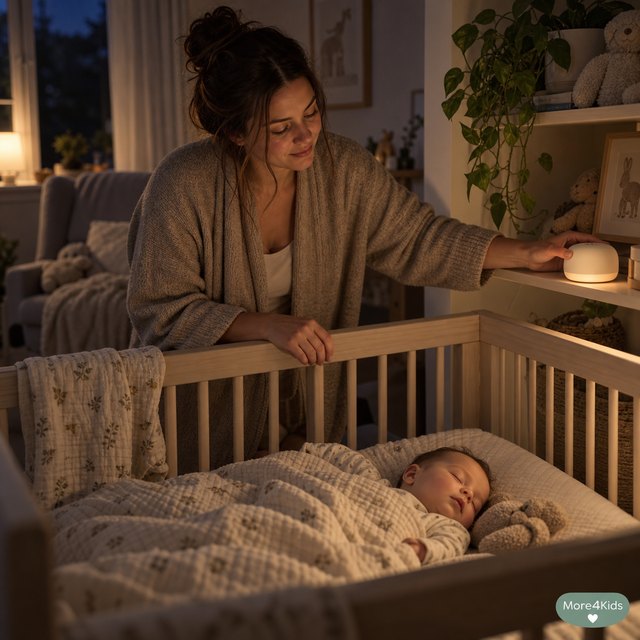
This guide walks through what sleep tends to look like month by month, how to nudge a gentle routine into place without forcing it, and what to do when the whole thing seems to unravel overnight. Think of it as a map, not a contract. Your baby has not read it, and that is okay.
One important note before we go further: I am a mom writing from experience, not a doctor. Everything here is about routine and expectation-setting. For anything involving your baby's health, sleep position, or safety, always follow your pediatrician's guidance and current safe-sleep recommendations. When in doubt, call them. That is exactly what they are there for.
Newborn Sleep (0–3 Months): There Is No Schedule Yet, and That's Okay
Table of Contents
Here is the truth nobody puts on the cute nursery sign: newborns do not have a schedule, and trying to impose one in these early weeks usually just leads to tears (often yours). A brand-new baby sleeps a lot in total across a full day and night, but it comes in short, scattered bursts. Their tiny tummies empty fast, so they wake to eat around the clock, and their internal day-night clock simply has not developed yet.
In these first weeks, your job is not to build a schedule. It is to follow your baby's cues and keep everyone fed, safe, and as rested as the situation allows. Watch for early tired signs: glazed staring, a turn away from stimulation, jerky little movements, the start of a fuss. Catching that window before the overtired meltdown is honestly the single most useful newborn skill I ever learned.
You can, however, plant tiny seeds of newborn sleep rhythm without any pressure. Keep daytime feeds bright, chatty, and full of light. Keep nighttime feeds boring on purpose: dim, quiet, low-key, back to bed. You are not training anything. You are just whispering to their developing body clock that day is for living and night is for sleeping. That gentle contrast is the foundation everything else gets built on later.
If you want a broader sense of what these early weeks hold beyond sleep, our baby care section walks through the fourth-trimester fog with the same parent-to-parent honesty.
Building a Baby Sleep Schedule at 3–6 Months: The First Real Rhythm
Somewhere in this stretch, things often start to feel a little more human. This is usually when a loose but recognizable baby sleep schedule begins to emerge, and you may notice longer stretches at night and naps settling into something closer to a pattern. I always tell parents not to count on it before it shows up, and not to panic if it shows up later than the baby down the street. Range is enormous here, and "average" is just a number a lot of very different babies are standing near.
Around this age, many babies move toward a handful of daytime naps and a longer first stretch of night sleep. You can gently support that by watching wake windows, the awake time between sleeps, which naturally stretch a bit as your baby matures. An overtired baby actually fights sleep harder, so the goal is to ride that wake window and offer sleep before the wheels come off.
This is also a lovely time to introduce a short, predictable wind-down. Nothing elaborate. A dim room, a feed, a quiet song, into the crib drowsy. The point of a baby sleep routine is not the specific steps. It is the predictability. Babies feel safe in patterns, and a routine you can do half-asleep is one you will actually keep doing.
Sleep at 6–9 Months: Naps Consolidate, Nights Get Interesting
By the middle of the year, a lot of babies settle toward two solid naps a day and a more defined bedtime. That is also about when a short story starts to earn its place at the end of the day; here are good bedtime stories for babies and toddlers. On paper, this sounds like the dream you have been waiting for. In practice, it often arrives hand-in-hand with new wrinkles: rolling, sitting, maybe the first crawl attempts, and a brain that suddenly finds the crib much more interesting than sleep.
This is a good moment to lean into consistency rather than chase perfection. A steady bedtime, a familiar wind-down, and a consistent sleep space do more heavy lifting than any single technique. If your baby has started practicing new physical skills, you may catch them rehearsing at all hours, popping up to sit or rolling like it is their job. Annoying at midnight, yes, but developmentally it is a wonderful sign.
Separation awareness can also bloom around now, which means your baby may protest being put down when they were perfectly easygoing a month ago. A calm, predictable goodnight, repeated the same way each night, helps them trust that the pattern is safe even when you step out of the room.
The 9–12 Month Stretch: Closing Out the First Year
As you approach the first birthday, many babies hold a fairly stable shape to their day: two naps trending toward one, an earlier and more reliable bedtime, and longer overnight stretches. Some families ride this happily. Others hit a patch where a baby who slept beautifully suddenly does not, often around big leaps in mobility, language, or that famous nap transition.
If a nap starts falling apart, resist the urge to drop it the very first rough day. Transitions are messy and rarely clean. I usually watched for a consistent pattern over a couple of weeks, not a single bad afternoon, before changing anything. Babies are wonderfully inconsistent, and one disrupted day is just Tuesday.
The other thing I wish someone had told me sooner: your own consistency matters more than your baby's. When bedtime, the wind-down, and the sleep space stay steady on your end, your baby has a stable rhythm to settle back into after every wobble. For more on navigating these developmental waves across the whole first year, our parenting section is full of grounded, real-life guidance.

Gentle Tips for Building a Baby Sleep Routine That Actually Lasts
A routine only helps if you can sustain it on your worst, most exhausted day. So I always keep it simple and forgiving:
- **Anchor the day, not the clock.** Predictable order beats precise minutes. Feed, wind-down, sleep space, repeat. The sequence is the comfort.
- **Watch the baby, not just the time.** Tired cues will tell you more than any chart. A baby sleep schedule is a starting hypothesis, not a verdict.
- **Make nights boring on purpose.** Low light, low voices, minimal interaction. You are gently reinforcing that night is for sleeping.
- **Protect the wind-down.** Even five quiet minutes signals to your baby that sleep is coming. Consistency is the magic, not the length.
- **Let it flex.** Travel, teething, growth spurts, and visits from grandparents will all blow holes in your routine. They are detours, not failures. You return to the rhythm when the storm passes.
- **Tag-team when you can.** If there is another caregiver, trade nights or naps. Rest is not a luxury here. It is how you keep showing up kindly.
The aim of a baby sleep routine is not a perfect baby. It is a predictable, loving container that makes the hard nights a little softer for everyone in the house.
When Things Go Sideways: Sleep Regressions and Rough Patches
Let me name the thing that breaks so many parents' spirits: the regression. Your baby finally found a groove, you finally got a few good nights, and then, seemingly overnight, it all comes apart. A sleep regression is usually not a step backward at all. It tends to line up with a leap forward: a new skill, a developmental burst, a brain busy building something new. Knowing that did not make me less tired, but it did make me less afraid.
During a rough patch, I held two things steady: the routine and my own calm. When everything else is changing, your unchanged response becomes the safe handrail your baby grips. Resist the urge to overhaul everything at once. Big, sudden changes during an already disorienting week usually add more chaos, not less.
That said, please know the difference between a normal rough patch and a reason to call your pediatrician. Persistent sleep trouble, anything that worries you, or any question about your baby's breathing, health, or safe-sleep setup is a conversation for your doctor, full stop. A trustworthy, plain-language resource for general guidance is the American Academy of Pediatrics' parent site, HealthyChildren.org, but it is a starting point for questions, never a substitute for your own pediatrician knowing your specific child.
And on the genuinely hard nights, the ones where nothing works and you are running on fumes, be as gentle with yourself as you are trying to be with your baby. You are not failing. You are parenting a small human through a season that, I promise from the other side, does not last forever.
Frequently Asked Questions
When do babies start following a real baby sleep schedule?
Most babies begin showing a recognizable, loose schedule somewhere in the early-to-middle months, but the range is wide and completely normal. Follow your baby's cues rather than a fixed calendar, and let the rhythm emerge instead of forcing it before they are developmentally ready.
How many naps should my baby take during the first year?
Nap needs shift constantly across the year, generally moving from many short, scattered newborn naps toward fewer, longer, more predictable ones as your baby matures. Watch your baby's tired signs and wake windows, and let nap counts evolve naturally rather than adhering to a strict number.
What is a baby sleep regression and how long does it last?
A sleep regression is a temporary disruption that usually coincides with a developmental leap, new skill, or growth spurt rather than an actual decline. They typically pass within a few weeks, and holding your routine and your calm steady through them helps your baby find the rhythm again.
Should I wake my baby to keep them on a schedule?
This is genuinely a question for your pediatrician, since the answer depends on your baby's age, weight, feeding, and health, which I cannot assess. As a general routine principle, many families gently cap very long daytime naps to protect night sleep, but always confirm what is right for your specific child with your doctor.
How do I build a gentle baby sleep routine without sleep training?
Start with a short, predictable wind-down you can repeat half-asleep: dim the lights, feed, a quiet song, into the sleep space. The consistency and predictability do the work over time, helping your baby feel safe and learn the rhythm without any rigid method.
A Final, Tired, Loving Word
If you take one thing from this guide, let it be this: a baby sleep schedule is something you grow into together, not something you get perfectly right by a deadline. Some seasons will feel like you have cracked the code. Others will humble you completely. That swing is not a sign of failure. It is simply what the first year is. Be patient with your baby, be kind to yourself, and lean on your pediatrician for anything health-related without a flicker of hesitation. For more warm, real-life support through every stage ahead, the whole team here at More4Kids is in your corner. You are doing beautifully, even at 3 a.m. Especially at 3 a.m.
Related Articles

Meet Sophia Richards Sophia Richards is an early childhood educator, passionate writer, and the proud mom of three energetic kids. With a degree in Education and over a decade of hands-on classroom experience, Sophia bridges the gap between professional teaching strategies and everyday family life. At More4Kids, she translates complex child development concepts into practical, actionable parenting tips that families can use at home.
Whether she is sharing positive reinforcement techniques, educational crafts, or honest reflections on the chaos of raising three children under one roof, Sophia’s goal is to empower parents to foster resilience and joy in their kids. When she isn't writing or lesson planning, you can find her organizing neighborhood scavenger hunts or trying out new kid-friendly recipes.
Areas of Expertise: Early Childhood Education, Positive Parenting, Sibling Dynamics, Educational Play, Family Wellness.




Add Comment