









By Sophia Richards
For a long stretch of my parenting life, the worst twenty minutes of the day happened at the kitchen table. Backpack dumped out, a crumpled worksheet somewhere in the pile, one of my kids slumped sideways in the chair insisting they "already did it at school." I'd hover, I'd nag, I'd end up half-doing the assignment myself just to make the misery stop. If you've been there, you already know the real question isn't about worksheets at all. It's how to help a child with homework in a way that builds them up instead of turning your evenings into a standoff.
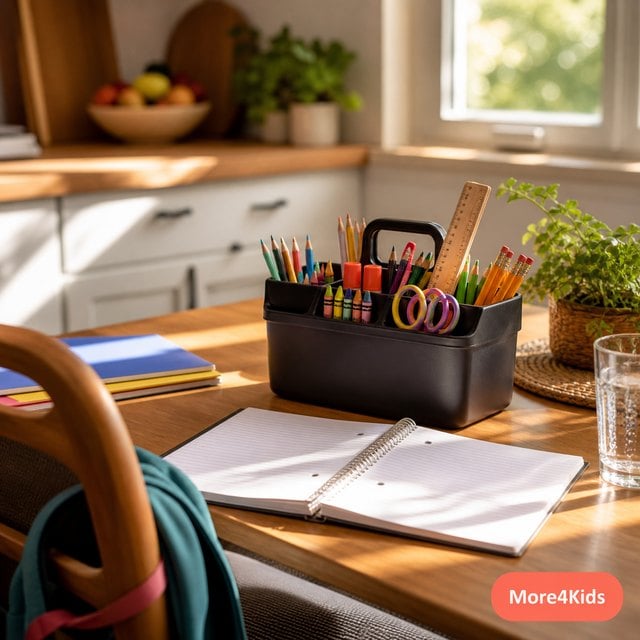
I'm a mom of three, and before that I spent years in the classroom as an early childhood educator. So I've watched this from both sides of the table — the teacher sending work home with good intentions, and the tired parent trying to get it done before bath time. Let me hand you the calmer version I wish someone had handed me.
Start with a steady routine, not a nightly negotiation
Table of Contents
Here's the first thing that changed everything in my house: we stopped deciding *when* homework happened every single day. When the timing is up for debate, every afternoon becomes a fresh fight. So we picked a rhythm and let the rhythm be the boss — snack and a little downtime after school first, then homework at the same spot, same time, before screens ever came on.
Kids settle into predictable patterns far more easily than they settle into willpower. If your evenings feel chaotic, anchoring homework inside a steady daily routine does more of the heavy lifting than any amount of reminding. The American Academy of Pediatrics makes the same point in its guidance for school-age children: consistency and a calm structure matter more than the number of minutes.
Set up a homework spot that helps instead of distracts
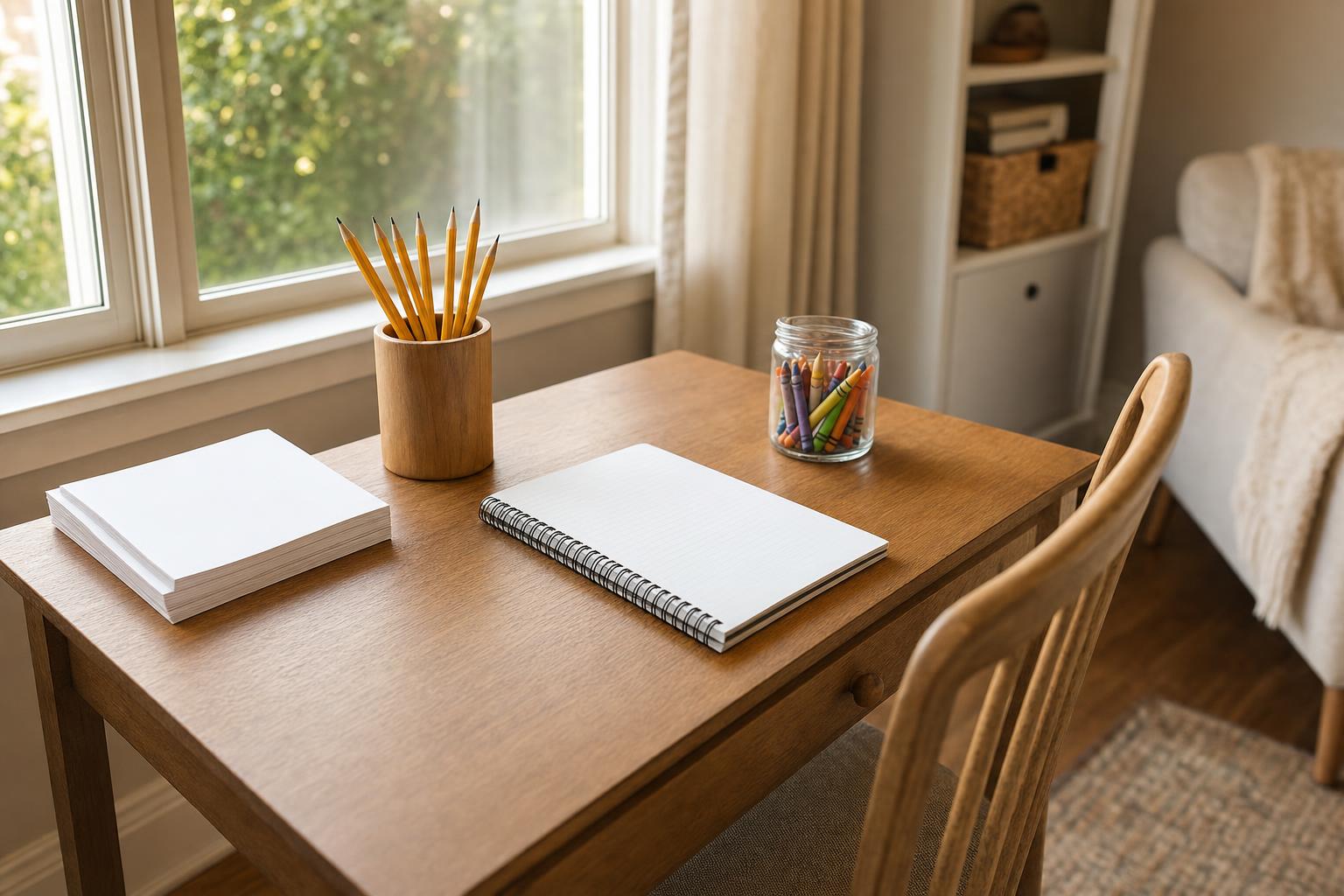
You don't need a Pinterest-perfect study nook. You need a spot with decent light, the supplies already there, and the tablet in another room. In my experience, half of what looks like "not focusing" is really just friction — the pencil is dull, nobody can find the eraser, the TV is murmuring six feet away.
So make the easy stuff automatic. A basket with sharpened pencils, paper, and whatever else gets reached for. A surface that isn't also where dinner is being made. As an early childhood educator I saw it in the classroom constantly: when the environment is calm and ready, children rise to meet it. The same is true at your kitchen table.
How to help a child with homework: coach the thinking, not the answers
This is the part I got wrong for years. When my child got stuck, I'd jump straight to the answer just to move things along — and quietly taught them that getting stuck meant Mom would rescue them. The better kind of help with homework sounds more like questions than solutions. "What's the part that feels confusing?" "What did your teacher show you in class?" "What could you try first?"
Your job isn't to be the answer key. It's to be the calm coach who helps them find their own footing, then steps back. Understood.org has a lovely, practical take on this in their piece on helping kids with tricky math homework — the goal is always to hand the pencil back. If a subject leans on reading and your child is wobbly there, shoring up the foundation with stronger reading skills often does more than any homework hack.
Break big assignments into small, doable pieces
A book report due Friday can look like a mountain to a seven-year-old. One of the kindest things you can teach is how to slice a mountain into stairs. Tonight we just pick the book. Tomorrow we read two chapters. The night after, we jot three notes. Suddenly the impossible thing is just a series of small, finishable steps.
This is also where you protect their stamina. Little kids don't have a long focus tank, and pushing past empty turns homework into something they dread. Short, focused stretches with a quick movement break in between beat one long grind every time — a rhythm the Child Mind Institute echoes in its guide to making homework go more smoothly.

Stay calm when they're not — your steadiness is contagious
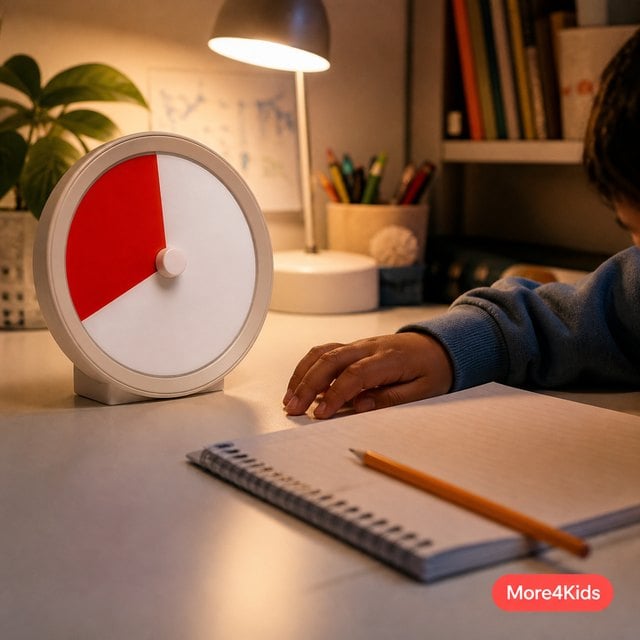
Some nights nothing works. They're tired, you're tired, and the tears arrive before the first math problem does. On those nights, the most useful thing I can offer isn't a strategy — it's a steady voice. Kids borrow our calm. If I meet a meltdown with my own frustration, we both spiral. If I can stay warm and matter-of-fact, the storm usually passes faster than I expect.
It also helps to remember that resistance is often information. A child who melts down over the same subject every single night might not be lazy or defiant — they might be struggling more than they can say. If focus or frustration is a daily battle, it's worth gently looking closer, whether that means a conversation with the teacher, learning what daily life with a child who has ADHD really looks like, or watching for the signs of a learning difference like dyslexia. Homework struggles are sometimes a signal, not a character flaw.
Know where your job ends
Here's the line I had to learn to hold: the homework belongs to my child, not to me. My role is to set the stage, offer support, and keep the peace — not to guarantee a perfect, finished paper. When I started letting my kids hand in work that was genuinely *theirs*, imperfect spots and all, two things happened. Their teachers got an honest picture of where they actually were, and my kids slowly built the muscle of doing hard things without me.
That's the real win hiding inside all of this. We're not raising worksheets — we're raising people who can sit with something difficult, ask for help when they need it, and finish what they start. The homework is just where they practice.
FAQ
How much should I help my child with homework?
Help with the process, not the answers. Set up a calm time and place, talk through what's confusing, and ask guiding questions — but let the actual work stay your child's. If you find yourself doing the assignment for them, that's the signal to step back. The goal is to build independence, so your help should shrink a little as their confidence grows.
What is a good homework routine for young kids?
A good homework routine is predictable and tied to the same time and place each day. Many families do well with a short break and snack right after school, then homework at a set spot before screens or play. Keep work sessions short for younger children, with movement breaks built in, and end on a calm note rather than pushing to exhaustion.
How do I help a child who refuses to do homework?
Start by staying calm and getting curious instead of going straight to consequences. Refusal is often a sign that the work feels too hard, too long, or too overwhelming. Break the assignment into small steps, sit nearby for support, and notice whether the same subject triggers it every time — that pattern can point to a learning need worth discussing with the teacher.
How long should homework take at home?
It varies by age and the school's expectations, but a common rule of thumb is roughly ten minutes per grade level per night. If homework regularly stretches far beyond that or ends in nightly tears, it's worth talking with your child's teacher. The amount of struggle matters more than the clock, and teachers usually want to know when something isn't working.
Should I correct my child's homework mistakes?
It's better to point toward a mistake than to fix it for them. You might say, "Take another look at number four," and let them find it. Handing in work with a few honest errors gives the teacher an accurate picture of what your child has and hasn't mastered yet — which is far more useful than a flawless page you quietly corrected.
A gentle word before you go
So how do you help a child with homework without the nightly battle? You build a steady routine, set up a calm spot, coach the thinking instead of supplying answers, break big things into small steps, and keep your own voice warm when theirs isn't. Then you let the work be theirs.

Some nights will still be hard. That's parenting. But you can trade the standoff for something steadier — and hand your child the quiet, lasting gift of knowing they can do difficult things, with you in their corner instead of on the other side of the table.
Related Articles
- A Secret To Happy Kids Daily Routines
- Parents Guide To Phonics
- Parenting A Child With Adhd 2
- Signs Of Dyslexia In Kids

Meet Sophia Richards Sophia Richards is an early childhood educator, passionate writer, and the proud mom of three energetic kids. With a degree in Education and over a decade of hands-on classroom experience, Sophia bridges the gap between professional teaching strategies and everyday family life. At More4Kids, she translates complex child development concepts into practical, actionable parenting tips that families can use at home.
Whether she is sharing positive reinforcement techniques, educational crafts, or honest reflections on the chaos of raising three children under one roof, Sophia’s goal is to empower parents to foster resilience and joy in their kids. When she isn't writing or lesson planning, you can find her organizing neighborhood scavenger hunts or trying out new kid-friendly recipes.
Areas of Expertise: Early Childhood Education, Positive Parenting, Sibling Dynamics, Educational Play, Family Wellness.

Add Comment