













By Ava Gardner
If there's one thing I've learned chasing curiosity around the house with my own kids — and happily stealing ideas from every teacher and parent I admire — it's that the best learning activities for preschoolers at home almost never look like "school." They look like play. They look like a kitchen counter dusted with flour, a basket of mismatched buttons, a puddle worth jumping in. Preschoolers are wired to learn through their hands, their senses, and their endless, glorious questions. Our job as parents isn't to run a tiny classroom in the living room. It's to set up little invitations to explore and then get out of the way.


I want this guide to feel doable, not daunting. You don't need a laminator, a Pinterest-perfect playroom, or a single thing you have to special-order. Most of what I'll share uses what's already in your cupboards and junk drawers. I've gathered these ideas from teachers, fellow parents, and a whole lot of trial and error at my own kitchen table — the kind with sticky floors and laundry piles and a little one asking "why" for the eleventh time before breakfast. Let's dive in.
Why Play Is the Best of All Learning Activities for Preschoolers
Table of Contents
Before the activities, one gentle mindset shift. At this age, play *is* the work. When a child stacks blocks and watches them topple, she's experimenting with balance, gravity, cause and effect. When he narrates an elaborate story for his stuffed animals, he's building vocabulary and sequencing skills that will one day power his reading and writing.
The leading voice in this field, the National Association for the Education of Young Children, describes play as a vehicle for learning across every domain — language, math, social skills, and self-regulation. So when you feel that little tug of "should we be doing something more academic?" — take a breath. Following your child's curiosity is the academic work. The activities below simply give that curiosity somewhere to land.
Early Literacy and Pre-Reading Activities for Preschoolers
Reading readiness starts long before a child sounds out a single word. It begins with loving language, recognizing sounds, and understanding that those squiggles on a page actually mean something.
- **Sound hunts.** Pick a letter sound for the day — say, "mmm" for M. Then wander the house together hunting for things that start with it: mug, mat, mirror, mommy. This builds phonemic awareness, the single most important pre-reading skill, and it costs nothing but a few minutes.
- **Story-stones or picture retelling.** After reading a favorite picture book, close it and ask your child to tell *you* the story. Wobbly, out-of-order versions are perfect — they're practicing sequencing and recall.
- **Name-building with what you've got.** Write your child's name in large letters, then have them lay dry pasta, pebbles, or torn paper along the lines. Seeing and tracing their own name is hugely motivating.
- **A "post office" corner.** Set out junk mail, old envelopes, and crayons. Scribbling "letters" to Grandma is early writing in disguise, and it teaches that print carries meaning.
The goal isn't drilling the alphabet. It's helping your child fall in love with words. The same is true on screen — our picks for the best educational shows for preschoolers lead with story, not flashcards. Wrapping a few minutes of these learning activities for preschoolers into your daily rhythm does more than any flashcard set ever could.
Math and Counting Games Hiding in Plain Sight
Math at the preschool level isn't worksheets — it's noticing patterns, sorting, comparing, and counting real things in the real world. Your home is bursting with it.
- **Sort the laundry.** Matching socks is genuine math: sorting, pairing, comparing sizes. Hand your child a clean pile and let them partner the matches while you fold.
- **Snack-time counting.** Count crackers onto a plate, then eat them one by one, counting down. "We had five, now we have four." That's subtraction, served with cheese.
- **Set the table.** One plate per person, one fork per plate — this is one-to-one correspondence, the foundation of counting. It's also genuinely helpful, which preschoolers love.
- **Pattern strings.** Thread cereal loops or beads in a simple pattern (red, blue, red, blue) and ask, "What comes next?" Recognizing and extending patterns is early algebraic thinking.
Talk math out loud as you go — "this glass is taller," "you have more than me," "let's split it in half." Narrating quantity and comparison plants vocabulary that makes formal math feel familiar later on.
Fine Motor Activities That Build Strong Little Hands
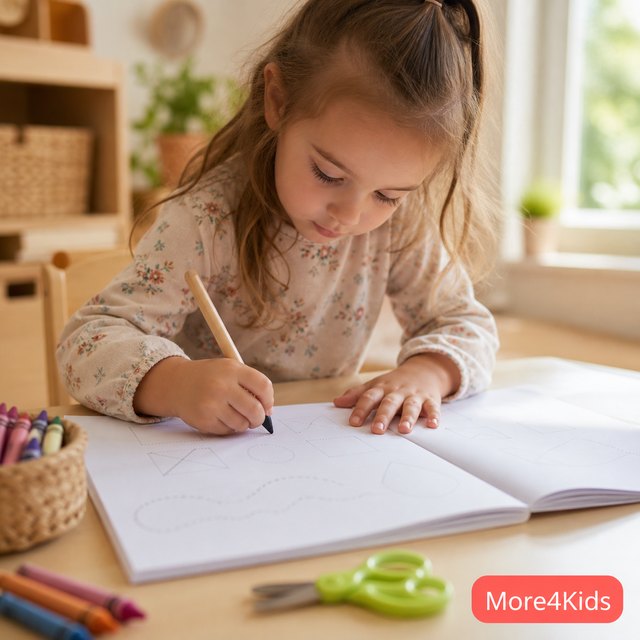
Those small hand muscles are doing big work — they're preparing for the day your child holds a pencil and writes their name unassisted. Fine motor work is some of the most valuable learning activities for preschoolers you can offer, and it's wonderfully low-tech.
- **Tongs and pom-poms.** Give your child kitchen tongs (or even clothespins) and a bowl of cotton balls, pom-poms, or dry beans to transfer into an empty container. It's quiet, focused, and strengthens the exact grip used for writing.
- **Threading and lacing.** Punch holes around the edge of a paper plate and let them lace yarn through. Or thread penne pasta onto a shoelace.
- **Playdough everything.** Rolling, pinching, and squishing dough builds hand strength like nothing else. A quick homemade batch — flour, salt, water, a little oil — costs pennies.
- **Sticker peeling.** Underrated and brilliant. Peeling a sticker off its backing demands a precise pincer grasp. Hand over a sheet of stickers and a piece of paper and watch the concentration.
Keep sessions short and pressure-free. Ten focused minutes beats a forced half hour every time.
Sensory Play for Curious Minds
Sensory play looks messy, and yes, sometimes it is. But it's how young children make sense of the physical world — texture, temperature, volume, transformation. It's also remarkably calming for many kids.

- **The rice or bean bin.** Pour a bag of dry rice into a large bin, add cups, scoops, and small toys, and let them pour and dig. (A shower curtain or old sheet underneath catches the strays.) This builds focus and pre-math concepts like full and empty.
- **Water station.** A basin of water with cups, a sponge, and a few unbreakable items to test what floats. Add a drop of food coloring for magic.
- **Cloud dough.** Mix flour with a little baby oil until it's moldable and soft. It's mesmerizing to squish and shape.
- **Texture treasure hunt.** Gather items from around the house — something rough, smooth, soft, bumpy — and talk through how each one feels. You're building descriptive vocabulary while their fingers do the learning.
If the mess feels like too much, take it outside or onto a towel. The cleanup is real, but so is the deep, absorbed focus these sensory play sessions create — and few learning activities for preschoolers hold their attention longer.
Outdoor and Gross Motor Fun
Big-body movement isn't a break from learning — it *is* learning. Balance, coordination, and spatial awareness all develop through running, climbing, and jumping. Fresh air does wonders for mood and sleep too, which every parent can appreciate.
- **Obstacle courses.** Use cushions to crawl over, a broom to limbo under, a chalk line to balance along. Narrate the prepositions — over, under, around, through — and you've sneaked in language learning.
- **Nature scavenger hunt.** Hunt for something green, something round, a smooth stone, a feather. Observing and categorizing the natural world is real science.
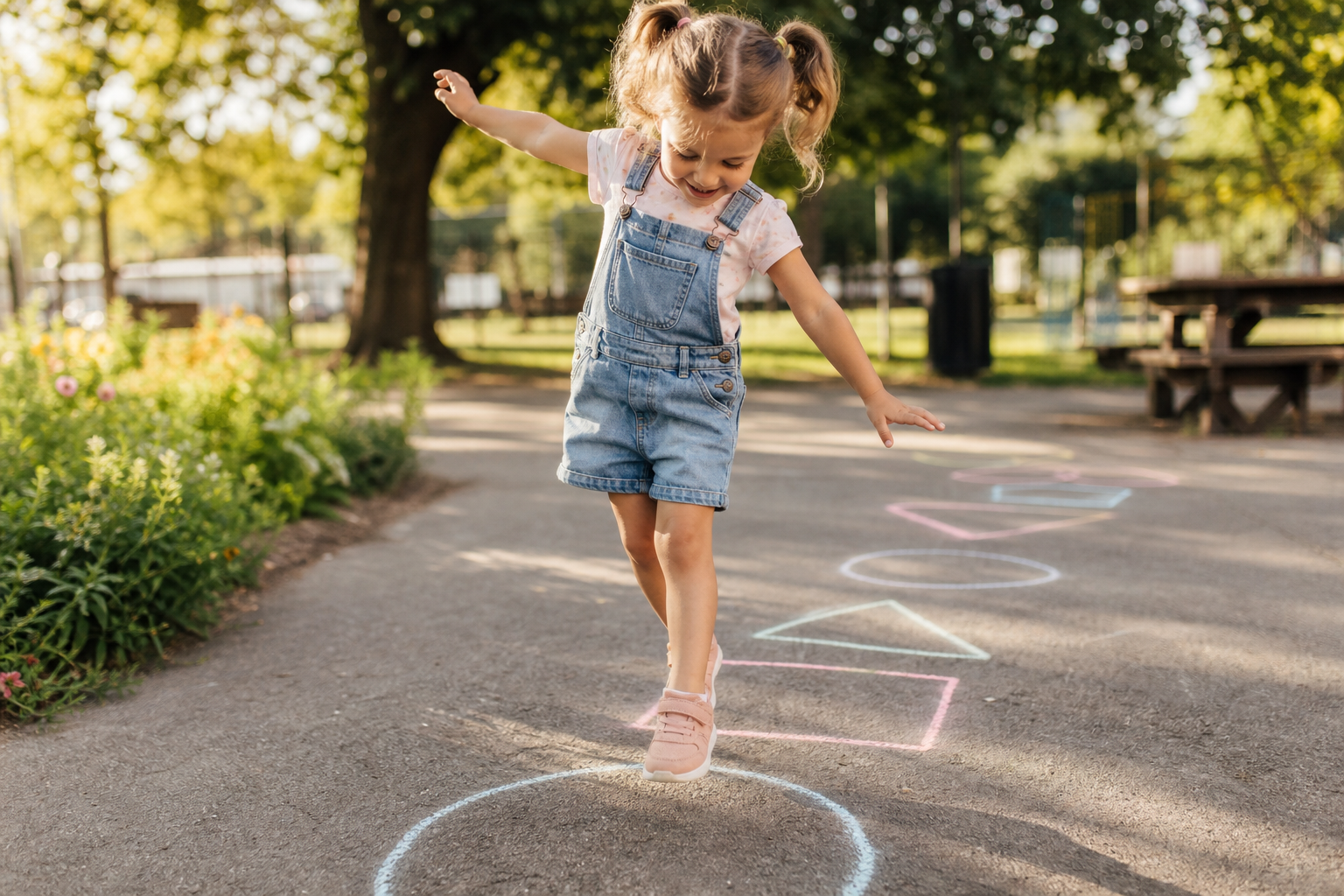
- **Chalk games.** Draw numbers or letters on the pavement and call out which to hop to. Movement plus recognition makes learning stick.
- **Freeze dance.** Put on music, dance, and freeze when it stops. It's joyful, and it quietly builds self-regulation — the skill of stopping and controlling the body on cue.
You don't need a big yard. A balcony, a sidewalk, or a trip to the local park all count beautifully — some of the best learning activities for preschoolers happen on the move.
Science and Curiosity: Little Experiments at Home
Preschoolers are natural scientists — they observe, predict, and test theories all day long. You don't need a kit. You need a question and a willingness to wonder out loud together.
- **Sink or float.** Fill a bowl and gather small objects. Ask, "Do you think this will sink or float?" *before* dropping each in. That prediction step is the heart of scientific thinking.
- **Color mixing.** A few drops of food coloring in clear cups, then mix and watch blue and yellow become green. Pure wonder.
- **Plant a seed.** Pop a dried bean into a damp paper towel in a clear jar and watch the roots unfurl over days. Caring for it teaches patience and observation.
- **Shadow play.** On a sunny day, trace shadows with chalk, then check them an hour later. "Why did it move?" Let the question hang — wondering together matters more than the answer.
The most powerful phrase in your science toolkit is simply, "What do you think will happen?" It turns your child from a spectator into an investigator.

Frequently Asked Questions
How much time should preschoolers spend on structured learning activities each day?
Keep it short and led by your child's interest — many preschoolers thrive on just a handful of brief, playful sessions across the day rather than one long block. Stop before they tire of it, and let their engagement, not the clock, set the pace.
Do I need to buy special materials for these learning activities?
Not at all. Nearly every activity here uses everyday household items like pasta, socks, cardboard, water, and food coloring. The learning comes from the interaction and exploration, not from anything you purchase.
What if my preschooler loses interest in an activity quickly?
That's completely normal at this age, since their attention spans are still developing. Follow their lead, switch things up freely, and remember that even a few minutes of engaged play is genuinely valuable learning.
Are screens ever okay for preschool learning?
A small amount of high-quality, interactive content can have a place, but hands-on play and real conversation build far more at this age. Aim to keep the balance tilted heavily toward active, real-world exploration.
How do I know if these activities are actually helping my child learn?
Look for engagement, curiosity, and growing confidence rather than measurable "results." When your child is absorbed, asking questions, and trying again after a flop, real learning is happening right in front of you.
A Gentle Word to Wrap Up
If you take nothing else from this, take this: you are already your child’s first and best teacher, and you’re doing more than you realize. The richest learning activities for preschoolers at home aren’t the fancy ones — they’re the ordinary moments where you slow down, get curious alongside your little one, and let play do its quiet, powerful work.
Some days will be glorious and some will dissolve into snacks and screen time, and that’s all part of it. Be gentle with yourself. Pick one idea from this list, try it this week, and let the rest wait. For more ideas to grow alongside your family, browse our education and parenting sections, and explore everything else we share at More4Kids. Now go make a happy mess — your preschooler will be learning the whole time.
Related Articles

My job is the research most people don't have time for: tracing where a name really comes from, what it honestly means (and flagging when the "meaning" is more legend than fact), how it's actually pronounced — with a tap-to-listen clip on every name — and how its popularity has shifted over the decades. I curate the guides, the origin and meaning collections, and the "names like…" suggestions.
I believe a name is one of the first gifts you give your child, so I'd rather tell you "this one's uncertain" than make something up. Everything I write is checked by a human editor on the More4Kids team before it reaches you — I do the digging; they make sure it's right. Between us, the goal is simple: help your family find a name you'll love saying for a lifetime.


Add Comment