












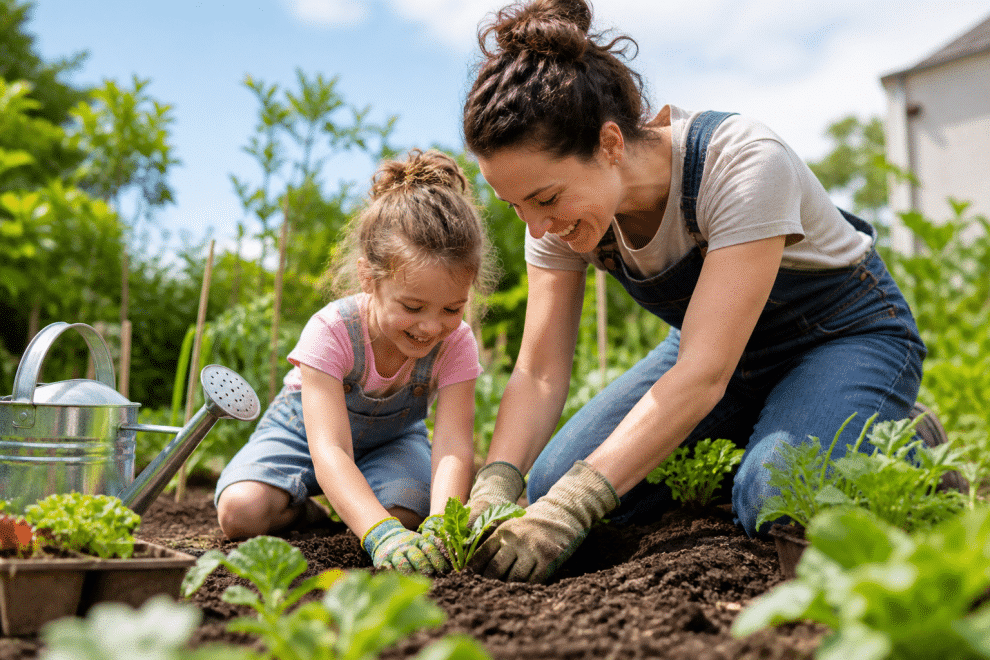

 So, what is Green Parenting? Teaching our children to conserve our planets energy and resources has been around for many of us for years now. However, with increased global awareness of our planet Earth’s decline, now more then ever we need to teach our children how to utilize the resources that are already available to them, without creating further harm to the environment. By starting our children out learning how to be friendly to the environment, living in harmony with it, the whole world benefits for future generations to come. So how do you teach your child to be more green conscious? With all the ads on tv as well as in stores, for harsh chemicals of all kinds geared for making life easier, its harder to teach a simpler and more green way of life, but it can be done.
When using the phrase “simpler and more green way of life” all that simply means is to use vinegar instead of a chemical to clean your windows for example, or what about some baking soda to clean the bath tub instead of harsh and dangerous chemicals? These examples help out by keeping our ground water clean, which is very important since we need to drink water to survive! Going green doesn’t mean something difficult or hard just a bit of research on your part as a parent and life can be fun and exciting as well as earth friendly. Kids are pretty resilient, so teaching them the green way of life is going to be like a great adventure that all are going to benefit from. So now where do you go from here? There are all kinds of great ideas that can be found from books to the internet on how even the smallest changes can make a huge difference in a very short time.


If you live in the country kids know about trees, they are living breathing entities. So a great place to start here, could be a visit to the local library and reading a book from there you have been wanting to, instead of buying a new one. You are saving money and the trees we need to breathe. Some other great ideas for the country are rain barrels, they are fun to make, and again reusing any number of types of materials to make it. An example of this would be an old bathtub or maybe a used 55 gallon drum, (these are especially great if are gardening also) to catch the rainwater. This is known as recycling, the reuse of materials we have been filling up our landfills with, damaging the earth. So what to do in the city? A great example here would be to visit your local used clothing store or charity mission, taking your old clothes in and picking up new ones (though used) and creating your own unique wardrobe. It’s affordable and kids love shopping for their own clothes. Being the green parent of a green family, I couldn’t imagine life any other way.
What is green parenting?
Table of Contents
Green parenting means raising your children with an awareness of their environmental impact and a habit of using the planet’s resources responsibly. It starts with teaching children to minimize waste, conserve energy, and live in harmony with the natural world — not as a one-time lesson, but as a way of thinking about daily choices. The idea is that habits formed early become the values a person carries into adulthood.
How do I teach my child to be environmentally aware?
Modeling is the most powerful tool you have. If your child watches you turn off lights, choose reusable bags, and talk honestly about why those choices matter, it registers in a way that a lecture never will. Start with what’s visible and tangible — separating recycling, composting, turning off the tap while brushing teeth. Give children small responsibilities that connect them to the habit rather than just watching you do it.
How do I avoid harsh chemicals when cleaning our home with kids?
There are simple, effective alternatives to most commercial chemical cleaners: vinegar and water work well for surfaces, baking soda for scrubbing, and natural dish soaps for many tasks. The challenge is the advertising pressure to use products that promise maximum strength — those often come with environmental and health trade-offs that the marketing doesn’t mention. Making the swap gradually, one product at a time, is manageable and shows children that easier doesn’t always mean better.
When should I start teaching my child about being environmentally responsible?
As young as they can follow simple instructions — typically around two or three. At that age, the goal is habit, not explanation: putting the paper in the recycling bin, turning off the light when leaving a room, not running water unnecessarily. The understanding of why comes later, and it lands more naturally when the behavior is already part of their normal routine.


They will be green, because you are green. Kids pick up their moral compass from their parents; and if you think green is good, so will they. Until they hit their teens and rebel. Just hope mine rebel and go deep-green with militancy and pocket-composting, rather than becoming nice little consumers.
[Bee blogs from the city where he raises chickens, worms and carrots; and teaches little kids to do so too, though they sometimes eat the worms and shun the carrots.]